The best graphics cards for video editing can shorten export times, improve timeline playback, and accelerate demanding effects in applications such as DaVinci Resolve and Adobe Premiere Pro.
This roundup compares 10 current AMD and NVIDIA options across different budgets, workloads, memory capacities, and software needs so you can choose a GPU that fits your editing system.
Best 10 Graphics Cards for Video Editing Picks for 2026
Professional Workstation Power

- 32GB GDDR6 for 8K editing and large projects
- AI accelerators and RDNA 4 compute features
- Two-slot blower design for dense workstations
Best For: Professional editing, AI development, and multi-GPU workstations
High-End Creative Performance

- 16GB GDDR7 on a 256-bit interface
- Blackwell architecture with DLSS 4
- Three-fan WINDFORCE cooling system
Best For: Demanding desktop video editing and creative workloads
Compact 1440p Creator Value

- 16GB GDDR6 for creative applications
- Compact two-slot, 249mm design
- Dual-fan cooling with 0dB silent mode
Best For: Compact editing PCs and budget-conscious creators
Durable NVIDIA Editing Upgrade

- 12GB GDDR7 with Blackwell architecture
- Three-fan cooler and phase-change thermal pad
- Five modern DisplayPort and HDMI outputs
Best For: Durable NVIDIA-based editing desktops
High-Performance AMD Pick
Radeon RX 9070 XT Gaming OC 16G

- 16GB GDDR6 memory
- 3060MHz listed GPU clock
- WINDFORCE cooling system
Best For: High-performance video editing workstations
Compact NVIDIA Option

- 16GB GDDR7 memory
- Compact 2.5-slot design
- Quiet and Performance BIOS modes
Best For: Space-conscious editing desktops
Balanced Blackwell Performance

- Blackwell architecture and DLSS 4
- 8GB GDDR7 memory
- Two-fan WINDFORCE cooling
Best For: Modern desktop editing builds seeking NVIDIA features and fast memory
High-Memory Quiet Choice
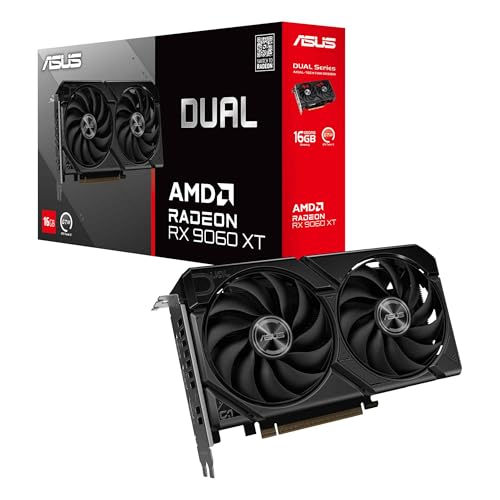
- 16GB GDDR6 memory
- 0dB technology for quieter light use
- Dual BIOS and modern display outputs
Best For: Editors needing more VRAM and flexible acoustic or performance profiles
Cooler-Focused 16GB Workhorse
GIGABYTE RX 9060 XT Gaming OC 16G

- 16GB GDDR6 memory
- WINDFORCE and Hawk Fan cooling
- Thermal gel and RGB lighting
Best For: Desktop editing systems prioritizing VRAM and substantial cooling hardware
Professional Workstation Power – Radeon AI PRO R9700
For demanding graphics cards for video editing, the ASRock Radeon AI PRO R9700 stands out with 32GB of GDDR6 memory, a 256-bit bus, and workstation-focused cooling. It is built for 8K editing, complex 3D work, AI development, and sustained professional workloads.
Best For: Professional editors, AI developers, and multi-GPU workstation or server builds.
Pros:
- 32GB memory provides capacity for 8K video editing, large AI models, and complex 3D projects.
- Dedicated AI accelerators, RDNA 4 architecture, and 3rd-generation ray tracing support advanced visual workloads.
- Blower cooling exhausts heat directly from the chassis, while the compact two-slot design suits dense systems.
- Four DisplayPort 2.1a outputs and PCIe 5.0 support modern high-resolution workflows.
Cons:
- Its professional workstation and server focus means software and driver compatibility should be verified.
- The single-blower design prioritizes chassis exhaust and density over typical gaming-style cooling.
With its unusually large memory pool and workstation-oriented thermal design, the R9700 is a strong choice when editing projects and compute workloads demand capacity more than consumer-gaming features.
High-End Creative Performance – GeForce RTX 5080 Gaming OC
The GIGABYTE GeForce RTX 5080 Gaming OC is a high-performance option among graphics cards for video editing, combining NVIDIA Blackwell architecture with 16GB of GDDR7 memory. Its PCIe 5.0 interface and WINDFORCE cooling system suit demanding desktop editing and creative workloads.
Best For: Editors who want a powerful desktop GPU with fast memory and robust active cooling.
Pros:
- 16GB of GDDR7 memory with a 256-bit interface supports demanding creative applications.
- NVIDIA Blackwell architecture and DLSS 4 provide current-generation GPU features.
- WINDFORCE cooling uses three fans for sustained desktop performance.
- DisplayPort and HDMI outputs support high-resolution displays up to 7680×4320.
Cons:
- The large 13.46-inch card requires careful case-clearance planning.
- Its 16GB capacity is lower than the 32GB offered by some workstation-focused cards.
This RTX 5080 model balances fast GDDR7 memory, a strong modern GPU platform, and triple-fan cooling, making it a compelling fit for editors building a powerful desktop system.
Compact 1440p Creator Value – Radeon RX 9060 XT 16GB
The ASRock Radeon RX 9060 XT Challenger 16GB offers a practical balance for graphics cards for video editing in a compact two-slot format. Its 16GB of GDDR6 memory, RDNA 4 architecture, and DisplayPort 2.1a and HDMI 2.1b outputs support mainstream creative applications and high-resolution displays.
Best For: Budget-conscious editors and creators building compact PCs for 1440p work and general creative use.
Pros:
- 16GB of GDDR6 memory provides useful capacity for creative applications and modern projects.
- Compact 249mm, two-slot design fits more cases than larger triple-fan cards.
- Dual fans and 0dB silent operation help balance cooling and low-noise use.
- RDNA 4 includes ray-tracing and AI-accelerator features.
Cons:
- The 128-bit memory bus offers less bandwidth than higher-tier cards with wider interfaces.
- Buyers must confirm 249mm clearance, an available 8-pin connector, and a recommended 550W power supply.
This Challenger model is a sensible compact option when 16GB of memory is sufficient and system size, quiet operation, and straightforward power requirements matter.
Durable NVIDIA Editing Upgrade – GeForce RTX 5070 TUF OC
The ASUS TUF Gaming GeForce RTX 5070 OC is a durable desktop choice among graphics cards for video editing, offering 12GB of GDDR7 memory and NVIDIA Blackwell architecture. Its substantial three-fan cooler, protective PCB coating, and phase-change thermal pad are suited to sustained workloads.
Best For: Editors seeking a well-built NVIDIA card with modern display connectivity and robust cooling.
Pros:
- 12GB of GDDR7 memory and Blackwell architecture support current creative workloads.
- Three Axial-tech fans and a large fin array are designed for airflow and thermal performance.
- Phase-change GPU thermal pad, military-grade components, and protective PCB coating emphasize durability.
- Three DisplayPort 2.1a outputs and two HDMI 2.1b outputs support flexible display setups.
Cons:
- The 12GB memory capacity provides less headroom than 16GB and 32GB alternatives.
- Its 3.125-slot, 13-inch design requires adequate case space.
The RTX 5070 TUF OC is a strong middle-ground option for editors who value NVIDIA’s current platform, durable construction, and extensive display connectivity in addition to GPU performance.
High-Performance AMD Pick – Radeon RX 9070 XT Gaming OC 16G
The GIGABYTE Radeon RX 9070 XT Gaming OC 16G is a strong option for video editors who want a dedicated graphics card with 16GB of GDDR6 memory, a high listed GPU clock speed, and support for resolutions up to 7680 × 4320. Its WINDFORCE cooling system and server-grade thermal conductive gel are designed for sustained desktop workloads.
Best For: Video editors building a high-performance desktop workstation with demanding GPU workloads and high-resolution display needs.
Pros:
- 16GB of GDDR6 memory for graphics-intensive editing tasks.
- Radeon RX 9070 XT GPU with a listed 3060MHz clock speed.
- WINDFORCE cooling system and Hawk Fan design.
- Supports a maximum listed resolution of 7680 × 4320.
Cons:
- Its 11.34-inch length and 5.2-inch width require careful case clearance checks.
- At 1.78kg, it is a relatively substantial component.
- The supplied specifications identify DisplayPort as the video output interface without listing port counts.
With 16GB of VRAM, robust cooling features, and a three-year manufacturer warranty, this GIGABYTE card is suited to editors prioritizing workstation-class capacity and long-session thermal management.
Compact NVIDIA Option – ASUS RTX 5060 Ti 16GB
The ASUS Dual GeForce RTX 5060 Ti 16GB is one of the more compact graphics cards for video editing, combining 16GB of GDDR7 memory with NVIDIA Blackwell architecture and DLSS 4. Its 2.5-slot design, dual BIOS, and 0dB technology make it a practical choice for compatible desktop builds.
Best For: Editors who want 16GB of VRAM, modern NVIDIA features, and a shorter card for a smaller desktop chassis.
Pros:
- 16GB of faster GDDR7 memory.
- Compact 9-inch length and 2.5-slot design.
- DisplayPort 2.1b and HDMI 2.1b connectivity.
- Dual BIOS provides Quiet and Performance profiles.
Cons:
- The supplied specifications list a maximum resolution of 7680 × 4320 but do not provide editing application benchmarks.
- Its two-fan design may offer less cooling headroom than larger three-fan cards in sustained workloads.
- It still requires a PCIe x16 desktop slot and adequate 2.5-slot clearance.
This ASUS model stands out for balancing 16GB capacity with a relatively compact footprint. Its Blackwell platform, connectivity, and quiet-mode features make it a flexible fit for editing PCs where space and acoustics matter.
Triple-Fan AMD Alternative – Sapphire Nitro+ RX 9070 XT
The Sapphire Nitro+ AMD Radeon RX 9070 XT is a capable choice for video editors seeking 16GB of GDDR6 memory and a 256-bit memory interface. Its three-fan cooler, 2 × HDMI and 2 × DisplayPort outputs, and listed 3.06GHz GPU clock make it well equipped for a multi-display editing setup.
Best For: Video editors who value three-fan cooling and flexible multi-monitor connectivity.
Pros:
- 16GB of GDDR6 memory with a 256-bit memory interface.
- Three-fan cooling design for sustained desktop use.
- Includes two HDMI and two DisplayPort outputs.
- Radeon RX 9070 XT GPU with a listed 3060MHz clock speed.
Cons:
- At 2.6kg, it is heavier than the other listed options.
- The supplied maximum display resolution is listed as 3840 × 2160.
- Its larger cooler may require additional case space, though exact dimensions are not provided.
The Nitro+ is a sensible pick for editors planning multiple monitors or extended rendering sessions. Its generous memory capacity and triple-fan design favor sustained workloads, while the two HDMI and two DisplayPort outputs add setup flexibility.
Balanced Blackwell Performance – RTX 5060 WINDFORCE OC 8G
For shoppers comparing graphics cards for video editing, the GIGABYTE GeForce RTX 5060 WINDFORCE OC 8G offers NVIDIA Blackwell architecture, DLSS 4, and 8GB of GDDR7 memory in a two-fan design. Its PCIe 5.0 interface and DisplayPort/HDMI connectivity make it a practical fit for a modern desktop editing workstation.
Best For: Editors who want a current-generation NVIDIA card with fast GDDR7 memory and a compact cooling design.
Pros:
- NVIDIA Blackwell architecture with DLSS 4
- 8GB of GDDR7 memory on a 128-bit interface
- WINDFORCE two-fan cooling system
- Supports DisplayPort and HDMI video output
Cons:
- 8GB of VRAM may be limiting for especially memory-intensive projects
- Uses a 128-bit memory interface
The RTX 5060 is a sensible option for editors prioritizing newer NVIDIA features, fast memory, and a relatively compact card. Those working with larger or more demanding media projects may prefer a model with 16GB of VRAM.
High-Memory Quiet Choice – ASUS RX 9060 XT 16GB
Among graphics cards for video editing, the ASUS Dual Radeon RX 9060 XT stands out for its 16GB of GDDR6 memory and flexible cooling controls. Its 2.5-slot design, dual BIOS, and native DisplayPort 2.1a and HDMI 2.1b outputs suit editors building a capable desktop system.
Best For: Video editors who value 16GB of VRAM, multiple modern display connections, and quiet operation during lighter workloads.
Pros:
- 16GB of GDDR6 memory
- 0dB technology supports relatively silent light workloads
- Dual BIOS offers Quiet and Performance profiles
- Native DisplayPort 2.1a and HDMI 2.1b outputs
Cons:
- 2.5-slot design requires sufficient case clearance
- GDDR6 memory is not as fast as GDDR7
With twice the listed memory capacity of the RTX 5060 option, this ASUS card is appealing for projects that benefit from additional VRAM. Its quiet-mode features and 2.5-slot format are worth weighing against available case space.
Cooler-Focused 16GB Workhorse – GIGABYTE RX 9060 XT Gaming OC 16G
The GIGABYTE Radeon RX 9060 XT Gaming OC 16G is a strong candidate among graphics cards for video editing when memory capacity and cooling are priorities. It combines 16GB of GDDR6 memory with a WINDFORCE cooling system, Hawk Fan technology, and a large triple-digit millimeter-class card footprint.
Best For: Desktop editors seeking a 16GB Radeon card with an emphasis on cooling hardware and sustained workstation use.
Pros:
- 16GB of GDDR6 memory
- WINDFORCE cooling system with Hawk Fan technology
- Server-grade thermal conductive gel
- RGB lighting for system customization
Cons:
- Approximately 11.06 inches long, so case clearance should be checked
- GDDR6 memory runs at a listed 20,000 MHz, below the RTX 5060’s listed memory speed
This model makes the most sense for editors who want 16GB of VRAM alongside a cooling-focused design. Its longer 11.06-inch form factor means compatibility should be confirmed before purchase.
How We Picked the Best Graphics Cards for Video Editing
We evaluated these GPUs by looking at the factors that most affect real-world editing: video-memory capacity, hardware encoding and decoding support, acceleration for effects and color work, overall performance, power requirements, cooling, and likely value. We also considered the different needs of 1080p editors, 4K creators, and professionals working with multicamera, HDR, or high-resolution footage.
Specifications can vary by board partner, so check the exact model’s dimensions, power connectors, clock speeds, and warranty before buying. Software support also matters: an otherwise powerful card may not be the best fit if your preferred editor or plug-ins favor a particular GPU ecosystem.
Quick Comparison
- Professional and AI-focused: The ASRock Radeon AI PRO R9700 Creator stands out for its 32GB of memory and creator-oriented feature set.
- High-end performance: The GeForce RTX 5080 and Radeon RX 9070 XT models suit demanding 4K workflows and intensive GPU effects.
- Upper midrange: The GeForce RTX 5070 offers a strong balance of performance, features, and system compatibility.
- 16GB value choices: The Radeon RX 9060 XT and GeForce RTX 5060 Ti provide useful memory headroom for modern editing projects.
- Budget-conscious builds: The GeForce RTX 5060 can work well for lighter 1080p and entry-level 4K editing when its 8GB capacity is sufficient.
Key Buying Factors for Graphics Cards for Video Editing
Video Memory
VRAM affects how comfortably a system handles high-resolution footage, layered timelines, effects, and large still assets. For basic 1080p projects, 8GB may be adequate. Editors working in 4K should generally prioritize 12GB or 16GB, while complex professional workloads can benefit from 32GB.
Codec and Application Support
Look for hardware acceleration for the codecs you use most, including H.264, HEVC, and AV1. NVIDIA and AMD cards can both perform well, but support for specific encoders, plug-ins, effects, and AI tools varies by application. Check your editing software’s current GPU recommendations before purchasing.
Power, Size, and Cooling
Confirm that your case has enough clearance for a large triple-slot card and that your power supply can handle the GPU’s recommended wattage and connectors. Effective cooling helps sustain performance during long exports without excessive noise or thermal throttling.
Performance Versus Price
A faster GPU is not always the best upgrade if your processor, storage, or memory is limiting playback. Allocate your budget across the full system, especially for 4K and multicamera work, where fast storage and sufficient RAM are also important.
Who Should Buy Which Graphics Cards for Video Editing?
Choose the ASRock Radeon AI PRO R9700 Creator if you need unusually high VRAM capacity or a creator-focused professional card. Choose the RTX 5080 for demanding effects, accelerated workflows, and high-end editing performance. Choose an RX 9070 XT or RTX 5070 for a powerful 4K workstation without moving to the most expensive tier.
Choose an RTX 5060 Ti or RX 9060 XT with 16GB for a practical balance of price and memory headroom. Choose the RTX 5060 for entry-level editing, compact builds, or lighter projects where 8GB is enough. Before ordering, match the card to your software, footage resolution, power supply, case, and expected project complexity.