The best audio mixers with effects make it easier to shape vocals, instruments, and playback sources without adding a separate effects processor. The 10 models in this roundup cover compact home setups, gaming and streaming, DJ use, rehearsals, and small live performances.
Before choosing, consider channel count, input types, phantom power, USB connectivity, built-in effects, and how much control you need during a session or performance.
Best 10 Audio Mixers with Effects Picks for 2026
Best Overall

- 10 channels with USB and SPX digital effects
- D-PRE preamps with EQ, filters, and compressors
- Rugged metal chassis for studio or live use
Best For: Home studios and small live mixing setups
Best Feature-Packed Budget Option

- Eight channels with reverb and 48V phantom power
- Bluetooth 5.0 plus MP3/USB playback
- Ultra-thin design with a large LED display
Best For: Karaoke, events, and casual live audio
Best Compact Analog Mixer

- 12 channels in a compact analog format
- 12 built-in reverbs, choruses, and delays
- RCA connectivity for playback and recording
Best For: Small bands and hands-on home mixing
Best for Gaming and Streaming
PUPGSIS T12 Gaming Audio Mixer

- Voice changing, soundpads, and reverb presets
- Independent controls with mute and zero-latency monitoring
- Bluetooth 5.3, RGB lighting, and three mic inputs
Best For: Gaming, livestreaming, and interactive content creation
Versatile Starter Pick
Compact 6-Channel Bluetooth Mixer
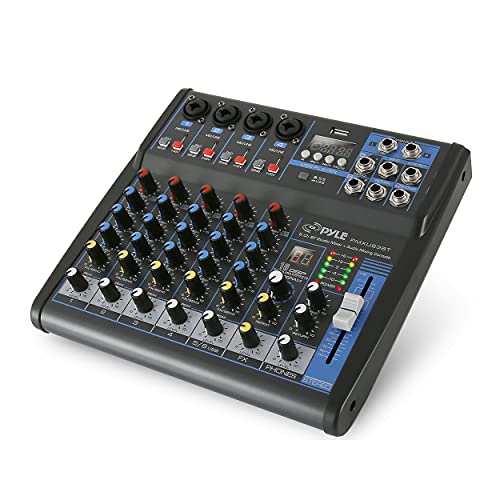
- Six channels with XLR and 1/4-inch inputs
- Bluetooth, USB, flash-reader, and MP3 support
- 3-band EQ, +48V phantom power, and DSP FX
Best For: Karaoke, small gigs, and basic studio setups
Effects-Focused Compact Pick
4-Channel Mixer with 99 DSP Effects

- 99 DSP adjustments including reverb and delay
- Plug-and-play USB-C PC recording
- Bluetooth, USB playback, phantom power, and 3-band EQ
Best For: Podcasts, streaming, karaoke, and effect-heavy setups
Control-Rich Studio Pick
6-Channel Mixer with DSP Effects

- DSP effects and 3-band EQ on every channel
- Per-channel faders and dedicated control-room output
- Bluetooth, USB audio, MP3 player, and 2-track I/O
Best For: Home studios, podcasts, live performance, and monitoring-focused setups
Versatile 6-Channel Pick
6-Channel Mixer with DSP Reverb

- Four XLR inputs with 48V phantom power
- Bluetooth and USB playback or recording
- 16 DSP effects with 3-band EQ
Best For: Karaoke, small live setups, and home recording
Stage-to-Studio Choice
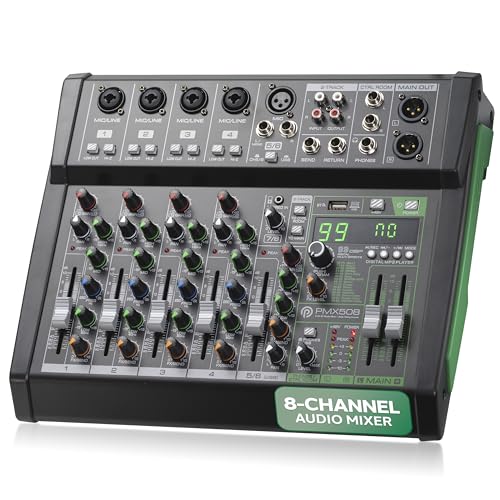
- XLR, 1/4-inch, and RCA input options
- Echo, reverb, delay, and other DSP modes
- Bluetooth 5.0, USB playback, and PC recording
Best For: Live events, DJ setups, and studio sessions
Compact Streaming Pick

- Three XLR inputs with 48V phantom power
- USB, Bluetooth, and headphone monitoring
- Echo and delay effects for voice-focused use
Best For: Podcasting, live streaming, and compact recording setups
Best Overall – Yamaha MG10XU
The Yamaha MG10XU is a strong all-purpose choice among audio mixers with effects, pairing 10 channels with USB connectivity and Yamaha SPX digital effects. Its studio-grade D-PRE preamps, flexible EQ, high-pass filters, and one-knob compressors give you practical control for cleaner, more polished mixes.
Best For: Home studios, small live setups, and users who want USB recording with reliable analog mixing controls.
Pros:
- 10-channel layout with USB connectivity and SPX digital effects
- Studio-grade discrete Class A D-PRE preamps
- Three-band EQ, high-pass filters, and one-knob compressors
- Rugged powder-coated metal chassis
Cons:
- Heavier than some compact alternatives at 7.7 pounds
- Effects and controls may be more than casual users need
The MG10XU stands out for combining useful effects, recording connectivity, and durable construction in a compact mixer. It is a particularly balanced option when sound shaping and long-term dependability matter.
Best Feature-Packed Budget Option – CT-80S 8-Channel Mixer
The CT-80S is a feature-heavy option for shoppers comparing audio mixers with effects for karaoke, small performances, and casual recording. It combines eight channels with reverb, MP3/USB playback, Bluetooth 5.0, a 48V phantom power supply, and a large LED display.
Best For: Family KTV, karaoke, campus events, conferences, and small live music setups needing wireless playback.
Pros:
- Eight-channel design supports microphone and instrument connections
- Built-in reverb, MP3/USB input, and Bluetooth 5.0
- 48V phantom power for compatible microphones
- Ultra-thin design measuring about 1.77 inches high
Cons:
- Product voltage is listed as 110V with an American plug
- At 3.3 kg, it is less lightweight than some compact mixers
- Warranty is listed as 365 days
The CT-80S focuses on convenience and connectivity rather than a minimalist studio workflow. Its wireless audio and built-in playback features make it practical for events where quick setup and flexible sources are priorities.
Best Compact Analog Mixer – Mackie Mix12FX
The Mackie Mix12FX is a straightforward 12-channel choice among audio mixers with effects, offering proven high-headroom, low-noise performance in a compact format. It includes four mic/line inputs, four stereo line inputs, phantom power, and 12 integrated reverbs, choruses, and delays.
Best For: Small bands, home recording, playback systems, and users who prefer hands-on analog controls with built-in effects.
Pros:
- 12-channel compact analog mixing layout
- 12 integrated effects including reverbs, choruses, and delays
- Four mic/line inputs with phantom power
- Dedicated RCA inputs and outputs for playback or recording
Cons:
- Wired design does not include the listed USB connectivity of some alternatives
- Effects are integrated rather than described as customizable software-based tools
The Mix12FX is a sensible pick when you want more channels and useful onboard effects without moving to a larger console. Its RCA connections also make it convenient for simple playback and recording duties.
Best for Gaming and Streaming – PUPGSIS T12 Gaming Audio Mixer
The PUPGSIS T12 takes a streaming-focused approach to audio mixers with effects, combining independent channel volume controls with voice changing, soundpads, reverb presets, Bluetooth 5.3, RGB lighting, and real-time monitoring. It also supports up to three microphone audio inputs for collaborative streaming or recording.
Best For: Gamers, streamers, podcasters, and creators using OBS, Discord, Twitch, TikTok, YouTube, or Zoom.
Pros:
- Six voice-changing modes, four customizable soundpads, and three reverb presets
- Independent faders for microphones, headset mic, Aux/Bluetooth, and line out
- Zero-latency monitoring and one-touch mute
- Bluetooth 5.3, RGB lighting, and support for up to three mic inputs
Cons:
- Feature set is geared toward streaming rather than traditional multi-channel live mixing
- Notes do not specify a traditional channel count or detailed frequency specifications
- Requires a compatible USB-C connection and included cables for computer setup
The T12 is best viewed as a creator-oriented audio interface rather than a conventional venue mixer. Its quick-access effects, monitoring controls, and platform compatibility make it especially useful for interactive gaming and live content.
Versatile Starter Pick – Compact 6-Channel Bluetooth Mixer
For shoppers comparing audio mixers with effects, the Pyle PMXU63BT offers a practical combination of six channels, Bluetooth streaming, USB and flash-drive compatibility, and built-in 16-bit DSP FX. Its 3-band EQ, phantom power, and compact steel chassis make it suitable for straightforward live and home setups.
Best For: Small live performances, karaoke, basic studio work, and users who want wireless playback and recording compatibility.
Pros:
- Six channels with XLR and unbalanced 1/4-inch inputs.
- Bluetooth, USB, flash-reader, and built-in MP3 functionality.
- Includes +48V phantom power, 3-band EQ, and 16-bit DSP effects.
- Compact steel chassis with sealed rotary controls.
Cons:
- The supplied notes do not specify the number or type of DSP effect presets.
- Its feature set is aimed at practical versatility rather than advanced routing.
The PMXU63BT is a sensible value-oriented choice when you need multiple inputs and convenient playback options without a large console. It is especially appealing for compact rigs that benefit from Bluetooth and USB support.
Effects-Focused Compact Pick – 4-Channel Mixer with 99 DSP Effects
If a large selection of onboard effects is your priority, this Aveek mixer stands out among audio mixers with effects by offering 99 DSP effect adjustments, including reverb and delay. It also combines Bluetooth playback, USB recording, PC connectivity, phantom power, and flexible input and output options in a compact four-channel design.
Best For: Podcasts, live streaming, karaoke, small music setups, and users who want extensive built-in effect adjustment.
Pros:
- Provides 99 DSP effect adjustments with reverb and delay.
- USB-C PC recording and playback are described as plug-and-play.
- Supports Bluetooth and USB flash-drive MP3 playback and recording.
- Offers 48V phantom power, 3-band EQ, headphone monitoring, and AUX output.
Cons:
- Four channels provide less input capacity than the six-channel models in this roundup.
- Bluetooth is intended for playback; the notes state it cannot connect an output device.
- The supplied notes do not identify the individual DSP presets.
The Aveek F4 is a strong fit when effect variety matters more than maximum channel count. Its recording features and monitoring connections also make it well suited to content creation and small-format audio production.
Control-Rich Studio Pick – 6-Channel Mixer with DSP Effects
The Pyle PMX406ST is a compelling option among audio mixers with effects for users who want more hands-on control in a small footprint. Along with Bluetooth, USB audio, and a built-in MP3 player, it provides DSP effects, per-channel 3-band EQ, channel faders, control-room output, and dedicated monitoring connections.
Best For: Home studios, podcasters, musicians, small venues, houses of worship, and live or streaming setups needing detailed level control.
Pros:
- Six channels with dual XLR/mic/line combo inputs on channels 1 and 2.
- Built-in DSP effects, 3-band EQ, gain controls, peak LEDs, and per-channel faders.
- Includes Bluetooth, USB audio interface functionality, and an MP3 player.
- Provides control-room output, headphone volume control, and 2-track input/output.
Cons:
- The supplied notes do not specify the number of DSP presets.
- Only channels 1 and 2 are described as having independent phantom-power activation and Hi-Z switching.
Choose the PMX406ST if precise monitoring and fader-based control are more important than the smallest possible mixer. Its combination of effects, recording connectivity, and routing features gives it a more complete desktop signal chain than a basic compact board.
Versatile 6-Channel Pick – 6-Channel Mixer with DSP Reverb
This 6-channel option is a practical choice among audio mixers with effects for karaoke, small live setups, studio recording, and streaming. It combines four XLR inputs, 48V phantom power, Bluetooth, USB playback, a 3-band EQ, and 16 built-in DSP effects in a compact analog console.
Best For: Users who need several microphone or instrument connections plus Bluetooth playback and adjustable reverb or delay.
Pros:
- Four XLR inputs support condenser microphones with switchable 48V phantom power.
- Includes Bluetooth, USB playback, and USB audio connectivity for mixing and recording.
- Offers 3-band EQ and 16 DSP effects, including delay and reverb.
Cons:
- The analog controls may require careful setup to avoid operation-related no-sound issues.
- The manufacturer warranty is listed as 90 days.
Choose this mixer if flexible input options and a broad selection of built-in effects matter more than a streamlined interface. Its combination of phantom-powered XLR inputs and wireless or USB playback makes it adaptable for modest performance and recording rigs.
Stage-to-Studio Choice – Pyle 8-Channel DSP Mixer
The Pyle PMX508 is a useful option for shoppers comparing audio mixers with effects for live events, studio sessions, and DJ setups. It provides multiple input formats, channel-level gain, EQ, FX, and level controls, along with Bluetooth 5.0, USB playback, PC recording, and an LED display.
Best For: Performers, DJs, and creators who want visible level monitoring and convenient wireless or USB audio features.
Pros:
- Provides four XLR combo microphone inputs plus 1/4-inch and RCA connectivity.
- DSP modes include echo, reverb, delay, and other selectable effects.
- Bluetooth 5.0, USB MP3/WAV playback, and direct PC recording add flexibility.
- Includes +48V phantom power, stereo level meters, and low-cut or HI-Z switches.
Cons:
- The listing title says 8 channels, while the supplied details specify six channels; confirm the configuration before buying.
- Its effects and controls may be more than necessary for a very simple two-source setup.
With its display, level indicators, and broad connection range, this is a strong fit when quick visual monitoring is important. The one-year warranty is also longer than that of several compact mixer alternatives, though buyers should verify the exact channel layout.
Compact Streaming Pick – BOMGE 5-Channel Echo Mixer
The BOMGE BM-05 is a compact choice among audio mixers with effects for podcasting, live streaming, small performances, and basic recording. It pairs three XLR inputs and stereo line connections with USB recording, USB playback, Bluetooth, headphone monitoring, 48V phantom power, and adjustable echo or delay.
Best For: Streamers, podcasters, and small-format creators who need a portable mixer with vocal effects and computer or mobile connectivity.
Pros:
- Three XLR inputs include switchable 48V phantom power for condenser microphones.
- Provides USB-B recording, USB-A music playback or recording, and Bluetooth streaming.
- Includes headphone monitoring, 2-band EQ, gain controls, echo, and delay effects.
- Compact 0.78 kg design suits desktop recording and streaming setups.
Cons:
- Bluetooth works within a listed range of 1.5 feet.
- Bluetooth, USB, and channels 4/5 cannot be used simultaneously.
- Connecting a phone for data transfer requires a USB OTG adapter.
This mixer is best when portability and straightforward creator-focused features are priorities. Its routing limitations and short stated Bluetooth range make it less suitable for complex multi-source productions, but the headphone monitoring and echo or delay controls are useful for voice-centered work.
How We Picked the Best Audio Mixers with Effects
We focused on mixers that combine practical input options with built-in effects such as reverb, echo, delay, or DSP processing. The selection includes compact four-channel units, larger boards with multiple microphone inputs, and models designed for Bluetooth playback, USB recording, gaming, DJ work, or live sound.
We also considered connection flexibility, including XLR and combo inputs, 48V phantom power for condenser microphones, stereo line inputs, computer connectivity, and the physical layout of controls. Because intended use varies widely, the list includes both established audio brands and feature-rich budget alternatives.
Quick Comparison
| Best For | What to Look For |
|---|---|
| Live vocals and instruments | Multiple XLR inputs, reliable gain controls, monitor outputs, and usable reverb |
| Streaming and gaming | Independent volume controls, USB connectivity, headset support, and simple operation |
| DJ and playback | Bluetooth, USB or MP3 playback, stereo channels, and fast-access effects |
| Home recording | USB computer input, phantom power, clean preamps, and separate channel control |
| Small setups | Four to six channels, a compact footprint, and only the connections you actually need |
Key Buying Factors for Audio Mixers with Effects
Channel Count and Inputs
Count the microphones, instruments, playback devices, and other sources you plan to connect at the same time. XLR inputs suit microphones, while combo inputs can accept both XLR and quarter-inch connections. Leave some room for future expansion instead of choosing a mixer that will immediately run out of channels.
Effects and Control
Built-in effects are useful for adding vocal reverb, echo, or delay during live use. Check whether effects apply globally or can be assigned to individual channels, and look for dedicated effect-send and return controls if you need more precise mixing.
USB, Bluetooth, and Playback
USB can connect a mixer to a computer for recording, streaming, or playback. Bluetooth and built-in MP3 players are convenient for background music and DJ-style use, but they do not replace a proper wired input when low latency and maximum reliability matter.
Phantom Power and Monitoring
48V phantom power is important when using condenser microphones, though it should be enabled carefully and only when compatible equipment is connected. Headphone outputs, main outputs, monitor controls, and clear level meters also make troubleshooting and live operation easier.
Who Should Buy Which Audio Mixers with Effects?
Choose the Yamaha or Mackie if you prioritize a familiar audio-brand design for rehearsals, small performances, or straightforward recording. Compact Pyle and Aveek models suit buyers who want Bluetooth, USB, and playback features in a small footprint. The Pyle eight-channel mixer and other larger boards are better for multiple microphones, instruments, or performers. The PUPGSIS gaming mixer is the most targeted option for streamers who need independent control over voice, game audio, and connected sources. Budget CT-80S, BOMGE, and similar feature-heavy models can work well for casual DJ, karaoke, or home setups, but verify the included inputs and controls before relying on one for demanding professional work.