Choosing the right hard drive can make a major difference in a media server’s capacity, reliability, noise, and long-term operating cost. The best internal hard drives for media servers balance sustained performance with NAS compatibility and dependable workload ratings.
This roundup compares 10 options ranging from compact 2TB drives to high-capacity 26TB enterprise models, including CMR-based NAS and renewed enterprise hard drives.
Best 10 Internal Hard Drives for Media Servers Picks for 2026
Maximum-Capacity NAS Powerhouse

- 24TB CMR drive with 7200 RPM and 512MB cache
- Rated for 550TB/year and 2.5M-hour MTBF
- Includes three-year Rescue Data Recovery Services
Best For: Large, always-on NAS media libraries
Budget Enterprise Capacity

- 14TB 7200 RPM SATA enterprise HDD
- Helium-sealed nine-disk design with 256MB cache
- Renewed drive with a listed 90-day limited warranty
Best For: Value-focused media-server expansion
RAID-Ready Workhorse

- 16TB CMR HDD with 7200 RPM and 512MB cache
- Rated for 550TB/year in demanding NAS use
- Designed and tested for broad multi-bay NAS compatibility
Best For: Busy multi-user NAS and RAID arrays
Home NAS Value Pick

- 10TB 7200 RPM NAS HDD with SATA 6Gb/s
- Offers up to 210MB/s sustained transfer rate
- Includes rotational vibration sensing and a three-year warranty
Best For: Home media servers and personal NAS storage
Best NAS Value

- CMR recording for NAS use
- NASware firmware and up to eight-bay support
- Up to 180TB/year workload rate
Best For: Small and medium 24x7 NAS systems
Best High-Capacity Pick

- Massive 26TB capacity
- 7200 RPM with 512MB cache
- CMR enterprise drive with hot-plug support
Best For: Large media servers and data-intensive storage
Best Desktop Alternative

- 10TB capacity for media storage
- 7200 RPM and 512MB cache
- Includes Acronis cloning software
Best For: Desktop-based media storage builds
High-Capacity NAS Choice

- 16TB capacity for extensive media libraries
- 7200 RPM, CMR, and 256MB cache
- Three-year Rescue Data Recovery Services
Best For: Large, multi-user NAS media servers
Professional NAS Pick
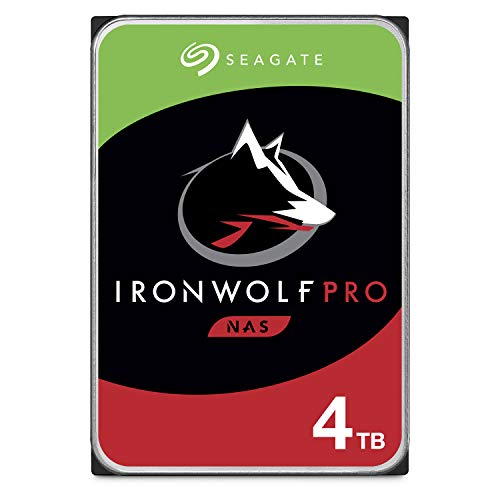
- Supports NAS systems up to 24 bays
- Up to 214MB/s at 7200 RPM
- Five-year warranty plus recovery services
Best For: Business and advanced multi-bay NAS users
Balanced Storage Option
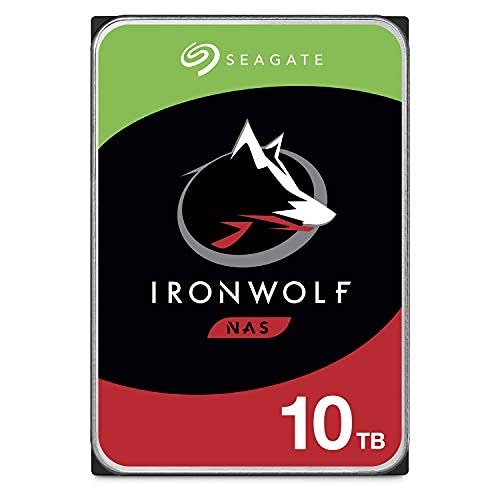
- 10TB capacity for growing media libraries
- 7200 RPM, CMR, and 256MB cache
- Designed for NAS systems up to eight bays
Best For: Home and small-business NAS media servers
Maximum-Capacity NAS Powerhouse – IronWolf Pro 24TB
For buyers comparing internal hard drives for media servers, the Seagate IronWolf Pro 24TB stands out with very high capacity, 7200 RPM performance, CMR recording, and features designed for multi-bay NAS and RAID environments.
Best For: Large media libraries, demanding 24/7 NAS systems, and multi-bay RAID setups where capacity and workload endurance matter.
Pros:
- Massive 24TB capacity with a 512MB cache
- CMR recording and 7200 RPM operation support consistent performance
- 550TB/year workload rating, 2.5M-hour MTBF, and a five-year limited warranty
- Includes three years of Rescue Data Recovery Services and IronWolf Health Management
Cons:
- Its enterprise-grade capacity and features may be more than smaller servers need
- As a 3.5-inch 7200 RPM HDD, it requires a compatible drive bay and produces mechanical-drive noise
This is the strongest capacity-focused option in the group. Its NAS-specific features and high workload rating make it well suited to serious media servers, although smaller setups may get better value from a lower-capacity drive.
Budget Enterprise Capacity – Toshiba MG07 14TB Renewed
The Toshiba MG07ACA14TE offers 14TB of internal storage for media servers, plus 7200 RPM operation, a SATA 6Gb/s interface, and a helium-sealed nine-disk design. Because this is a renewed drive, buyers should pay close attention to the shorter stated warranty.
Best For: Cost-conscious buyers who want enterprise-class capacity for a compatible desktop or media-server enclosure.
Pros:
- Generous 14TB capacity for expanding a media collection
- 7200 RPM spindle speed and SATA 6Gb/s connectivity
- 256MB cache and persistent write cache technology
- Helium-sealed nine-disk design in a standard 3.5-inch form factor
Cons:
- Renewed condition may offer less purchasing confidence than a new drive
- Supplied warranty information lists only 90 days
- Its 26.1mm height should be checked against the server or enclosure bay
The MG07 can deliver substantial storage at an attractive price, but the renewed status and 90-day warranty make it a higher-risk choice. It is best suited to buyers comfortable validating the drive and maintaining a separate backup.
RAID-Ready Workhorse – WD Red Pro 16TB
The WD Red Pro 16TB is built for internal hard drives for media servers that run continuously and serve multiple users. Its CMR design, 7200 RPM speed, 512MB cache, and RAID-focused positioning make it a practical fit for demanding NAS systems.
Best For: High-intensity 24/7 NAS environments, multi-user media servers, and RAID arrays with extensive bay requirements.
Pros:
- 16TB capacity with CMR recording and a 512MB cache
- 550TB/year workload rating for demanding storage use
- Designed for RAID-optimized NAS systems with an unlimited number of bays
- Backed by a five-year manufacturer’s limited warranty and broad NAS compatibility testing
Cons:
- Its 7200 RPM design may be unnecessary for light-duty or mostly archival servers
- Performance and compatibility still depend on the NAS hardware and configuration
WD Red Pro is a balanced choice for buyers who want substantial capacity without moving to the 24TB tier. Its workload rating and NAS compatibility focus make it especially compelling for larger arrays and busy shared libraries.
Home NAS Value Pick – IronWolf 10TB
For smaller media servers, the Seagate IronWolf 10TB provides a practical capacity level while retaining NAS-oriented features such as a rotational vibration sensor, 7200 RPM speed, and SATA 6Gb/s connectivity.
Best For: Home media servers, personal storage systems, and smaller NAS arrays that need dependable capacity without stepping up to enterprise-sized drives.
Pros:
- 10TB capacity offers ample room for many home media libraries
- 7200 RPM spindle speed and up to 210MB/s sustained transfer rate
- Rotational vibration sensor supports NAS use
- 256MB buffer and a three-year warranty
Cons:
- Its 180TB/year multi-user workload rating is lower than the Pro models here
- 256MB cache is smaller than the 512MB caches on the larger comparison drives
- The supplied listing contains inconsistent product-description fields, so buyers should verify the exact model before purchase
This IronWolf is a sensible starting point for a home or personal media server. It delivers useful NAS features and solid capacity, but heavier workloads or larger arrays may justify choosing one of the higher-rated Pro alternatives.
Best NAS Value – WD Red Plus 2TB
For buyers comparing internal hard drives for media servers, the 2TB WD Red Plus is a practical NAS-focused option. Its 5400 RPM performance class, CMR recording, NASware firmware, and support for systems with up to eight bays suit small or medium business NAS environments.
Best For: Small or medium NAS setups operating continuously in a 24×7 environment.
Pros:
- CMR technology for NAS-oriented storage
- NASware firmware supports compatibility with NAS systems
- Supports up to 180 TB per year workload rate
- Available in capacities from 1TB to 14TB
Cons:
- 2TB capacity may be limiting for large media libraries
- 5400 RPM performance class is less performance-focused than 7200 RPM alternatives
The WD Red Plus is a sensible choice when NAS compatibility and continuous operation matter more than maximum spindle speed. Its CMR design and three-year limited warranty add useful reassurance for everyday server storage.
Best High-Capacity Pick – Seagate Exos 26TB
For media servers holding large libraries, the renewed Seagate Exos 26TB delivers substantial capacity in a 3.5-inch SATA drive. Its CMR recording, 7200 RPM speed, 512MB cache, and enterprise-oriented design are suited to sustained, data-intensive workloads.
Best For: Large-scale media servers and storage systems that need 26TB in a single drive.
Pros:
- Very high 26TB storage capacity
- 7200 RPM operation for sustained enterprise workloads
- CMR, SATA 6Gb/s, and hot-plug support
- Helium-sealed design and 2.5M MTBF specification
Cons:
- This listing is for a renewed drive
- Includes a two-year seller warranty rather than the manufacturer warranty details provided for new enterprise drives
- Enterprise specifications may be more than a basic home server requires
The Exos 26TB stands out when minimizing drive count is a priority. Its renewed condition and enterprise-oriented feature set are worth weighing against your budget, system compatibility, and preferred warranty coverage.
Best Desktop Alternative – WD Blue 10TB
The 10TB WD Blue is a straightforward desktop-class choice for buyers seeking internal hard drives for media servers. It combines a 7200 RPM speed, SATA 6Gb/s interface, and 512MB cache, making it suitable for compatible desktop-oriented storage builds.
Best For: Desktop-based media storage where a large 10TB drive and everyday computing features are the priority.
Pros:
- 10TB capacity for sizable media collections
- 7200 RPM operation and 512MB cache
- SATA 6Gb/s interface for broad compatibility
- Includes Acronis True Image WD Edition cloning software
Cons:
- Listed for desktop use rather than dedicated NAS operation
- Not positioned with the NAS-specific firmware and workload features of WD Red Plus
- Two-year limited warranty
The WD Blue offers a useful balance of capacity and desktop performance for a home-built server or storage PC. If the drive will run in a multi-bay, always-on NAS, a purpose-built NAS model may be a better fit.
High-Capacity NAS Choice – Seagate IronWolf 16TB
For shoppers comparing internal hard drives for media servers, the Seagate IronWolf 16TB is built for high-capacity NAS storage and multi-user file access. Its 7200 RPM speed, CMR recording, 256MB cache, and SATA 6Gb/s interface suit demanding storage setups with up to eight bays.
Best For: Large media libraries and multi-user NAS systems that prioritize maximum capacity.
Pros:
- Generous 16TB capacity for expanding media collections.
- 7200 RPM performance with read speeds up to 210MB/s.
- NAS-focused design with IronWolf Health Management and a 1-million-hour MTBF rating.
- Includes a three-year limited warranty and three years of Rescue Data Recovery Services.
Cons:
- Designed for 3.5-inch NAS or desktop installations rather than compact enclosures.
- Its high capacity may be more than smaller personal media servers require.
This is the strongest capacity-focused option in the group. Choose it when your media server needs substantial room for video, backups, and shared files, while keeping in mind that its 16TB capacity may exceed a modest setup’s needs.
Professional NAS Pick – Seagate IronWolf Pro 4TB
The Seagate IronWolf Pro 4TB is a practical option among internal hard drives for media servers when you want a NAS-oriented drive with professional coverage. It supports systems with up to 24 bays and delivers 7200 RPM performance at speeds up to 214MB/s.
Best For: Business or advanced home NAS users who value warranty coverage and data recovery support.
Pros:
- Supports NAS environments with up to 24 bays.
- Up to 214MB/s read speed and 7200 RPM rotation.
- IronWolf Health Management helps monitor drive health.
- Includes a five-year limited warranty and three years of Rescue Data Recovery Services.
Cons:
- Its 4TB capacity is smaller than the other drives in this roundup.
- Professional features may be unnecessary for a basic, single-user media server.
The IronWolf Pro stands out for expandable NAS deployments and stronger included coverage. It is a sensible fit when reliability services and multi-bay compatibility matter more than maximizing capacity per drive.
Balanced Storage Option – Seagate IronWolf 10TB
For internal hard drives for media servers that balance capacity and NAS-focused performance, the Seagate IronWolf 10TB is a well-rounded choice. It combines 10TB of storage with CMR recording, a 7200 RPM spindle speed, and a 256MB cache for systems supporting up to eight bays.
Best For: Home or small-business NAS media servers needing substantial capacity without moving to the largest available drive.
Pros:
- 10TB capacity provides room for sizable media collections.
- 7200 RPM performance with read speeds up to 210MB/s.
- NAS-optimized design supports multi-user file sharing and reduced vibration.
- Includes IronWolf Health Management and a three-year limited warranty.
Cons:
- Limited to NAS environments of up to eight bays.
- Does not include the three-year Rescue Data Recovery Services listed for the 16TB model.
This model offers a useful middle ground: more capacity than a small NAS typically needs, but less commitment than a 16TB drive. It is a strong choice for growing media libraries and everyday shared storage.
How We Picked the Best Internal Hard Drives for Media Servers
We focused on drives suited to large media libraries, Plex and Jellyfin servers, home labs, and NAS enclosures. Key considerations included recording technology, rotational speed, cache size, capacity, NAS or enterprise positioning, workload suitability, and RAID compatibility. CMR drives receive priority because they generally deliver more predictable sustained write performance than SMR drives during transfers, parity operations, and array rebuilds.
We also included a range of capacities and price tiers. NAS-focused models are typically the safest fit for always-on enclosures, while enterprise options can offer higher workload ratings and capacity at the cost of greater noise, heat, or power consumption. Renewed drives may provide attractive value, but their remaining service life and warranty should be checked carefully.
Quick Comparison
- Best high-capacity NAS option: Seagate IronWolf Pro 24TB.
- Best enterprise-capacity choice: Seagate Exos 26TB, provided renewed-drive terms are acceptable.
- Best premium NAS balance: Western Digital Red Pro 16TB or Seagate IronWolf 16TB.
- Best midrange storage: Seagate IronWolf 10TB.
- Best budget or secondary-drive option: Western Digital Red Plus 2TB.
Key Buying Factors for Internal Hard Drives for Media Servers
Capacity and Expansion Plans
Estimate usable capacity rather than raw capacity. RAID, filesystem overhead, snapshots, backups, and free-space headroom all reduce available storage. A media library can grow quickly, so a larger drive may offer better value than adding several small disks later.
CMR, Speed, and Workload
Choose CMR when the server will regularly write downloads, record live video, rebuild arrays, or handle frequent library changes. A 7200 RPM drive can improve transfer and scan performance, but it usually produces more heat, noise, and power draw than a 5400 RPM model.
NAS Compatibility and Reliability
NAS-oriented drives are designed for continuous operation and commonly support features intended for RAID environments. Check your enclosure’s drive-size limit, supported interfaces, vibration requirements, and compatibility list before buying. Enterprise drives can work well in a server, but acoustics and thermals matter in living spaces.
New Versus Renewed
Renewed enterprise drives can reduce the cost per terabyte, but inspect the seller’s warranty, return policy, power-on hours, and testing process. For primary media storage, keep an independent backup regardless of the drive’s advertised reliability.
Who Should Buy Which Internal Hard Drives for Media Servers?
Choose a high-capacity IronWolf Pro, IronWolf, or WD Red Pro model for an always-on NAS with multiple users, frequent transfers, or a large growing library. Consider an Exos drive when maximum capacity and enterprise-class specifications matter more than quiet operation, especially if the enclosure has strong cooling.
For a smaller home server, a 4TB or 10TB NAS drive can provide a practical balance of price, capacity, and performance. The 2TB WD Red Plus is better suited to a small library, backup target, or secondary array than a demanding multi-user server. The WD Blue 10TB may fit a desktop-style media server with lighter workloads, but NAS-rated storage is generally the more appropriate choice for 24/7 RAID use.
Whichever model you choose, configure monitoring, maintain adequate airflow, and use a backup strategy that protects irreplaceable media and configuration data.