Choosing among resin printers for prototypes means balancing fine detail, print speed, build volume, material compatibility, and the cleanup work that follows every print.
These 10 models cover compact desktop options, high-resolution machines, fast printers, and large-format systems so you can match your prototype workflow to the right hardware.
Best 10 Resin Printers for Prototypes Picks for 2026
Top Detail Pick

- 16K resolution for highly detailed models
- Heated resin tank supports consistent adhesion
- Auto-leveling and AI monitoring streamline printing
Best For: Detailed prototypes and intricate models
Fast Production Pick
ANYCUBIC Photon Mono M7 PRO 14K

- Up to 170 mm/h with high-speed resin
- 14K screen supports fine prototype details
- Automatic filling and temperature-controlled vat
Best For: Rapid prototype iteration and detailed parts
Connected Workflow Pick

- 9K LCD provides 18 μm XY resolution
- WiFi supports remote and cluster printing
- AI camera and sensors help detect print issues
Best For: Connected workspaces and detailed prototypes
Compact Value Pick

- 22-micron XY resolution for fine details
- Compact tabletop design with a 16.5 x 7.2 x 17 cm volume
- Works with popular open-source slicers
Best For: Beginners and small detailed prototypes
Best for Fast, Precise Iteration
Reflex RS Turbo Resin 3D Printer

- High-contrast amber screen for crisp, fast curing
- Automated leveling, repair, supports, and failure detection
- Precision Z-axis and calibrated lighting for consistency
Best For: Detailed prototype iteration and professional workflows
Best for Large Prototype Runs
UniFormation GK3 Ultra 16K Resin Printer
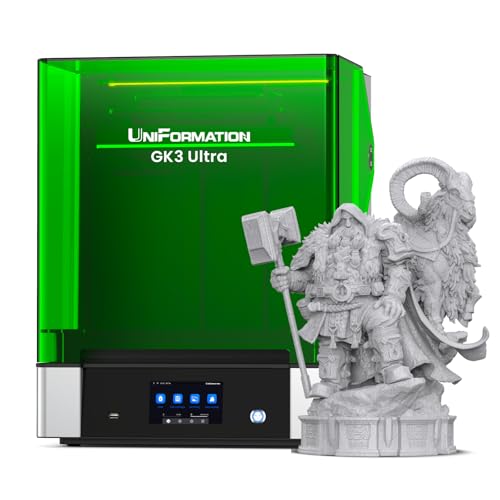
- 300 x 160 x 300mm build volume for large or multiple parts
- 16K LCD with a 20 x 26μm pixel size
- Heating and automatic resin feeding support long jobs
Best For: Large-format prototyping and higher-volume production
Best Compact Value for Detailed Prototypes
ANYCUBIC Photon Mono 4 10K Resin Printer
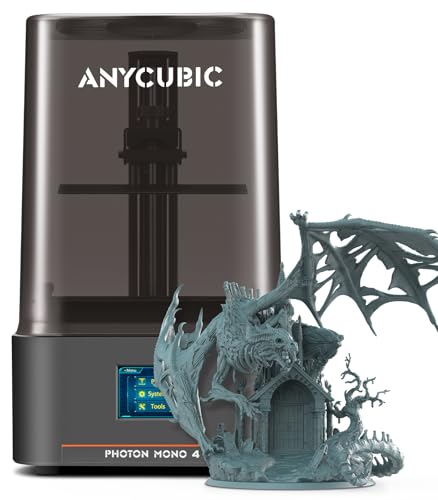
- 10K screen with 17 x 17μm pixel precision
- 1.5-second exposures and stabilized matrix lighting
- Preassembled setup with power-failure recovery
Best For: Compact, detail-focused prototype printing
Best Entry-Level Pick
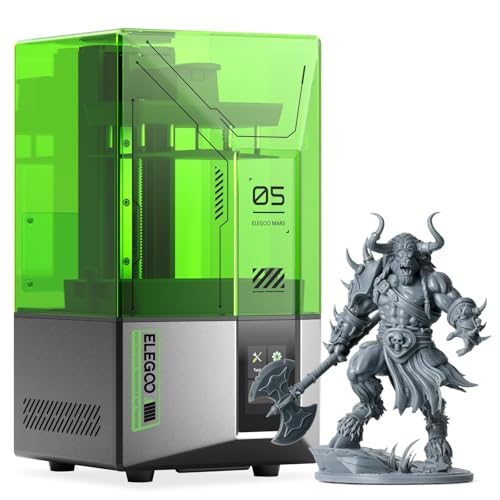
- One-click automatic leveling
- 4K detail with smart print safeguards
- Overheat protection and self-checks
Best For: Beginners and small-format prototype projects
Best Everyday Workhorse

- 10K LCD with 17 μm XY pixels
- Useful 153.4 × 87 × 165 mm build volume
- Power-loss recovery and stable platform design
Best For: High-detail prototype iterations and routine project work
Best High-Resolution Large-Format Pick

- 16K resolution for intricate details
- Larger build area with heated resin tank
- AI monitoring and up to 150 mm/h printing
Best For: Large, detailed prototypes and higher-throughput workflows
Top Detail Pick – ELEGOO Saturn 4 Ultra 16K
For resin printers for prototypes that require exceptionally fine surface detail, the ELEGOO Saturn 4 Ultra 16K combines high resolution with features intended to make repeat printing easier. Its heated resin tank, automatic leveling, monitoring camera, and tilt-release system address several common workflow concerns.
Best For: Detailed prototypes, intricate models, and users who want automated print monitoring and leveling.
Pros:
- 16K resolution is designed for smooth surfaces and fine textures.
- Smart tank heating maintains resin at approximately 30 °C for improved fluidity and layer adhesion.
- Automatic leveling, residue detection, and resin-shortage alerts simplify the workflow.
- Tilt-release printing can reach speeds of up to 150 mm/h.
Cons:
- At 35.5 pounds and 24 x 17 x 15 inches, it requires a sturdy, dedicated workspace.
- AI detection performance can vary with the environment, model, and resin type.
The Saturn 4 Ultra is a strong choice when prototype fidelity is the priority and you value hands-off setup and monitoring. Its larger footprint and weight are worth considering before purchase.
Fast Production Pick – ANYCUBIC Photon Mono M7 PRO 14K
If your resin printers for prototypes need to handle frequent iterations, the ANYCUBIC Photon Mono M7 PRO emphasizes speed without giving up fine detail. It pairs a 14K monochrome screen with temperature control, automatic resin handling, and multiple startup checks.
Best For: Rapid prototype cycles, detailed parts, and users who want automated resin management.
Pros:
- Prints up to 170 mm/h with high-speed resin and up to 130 mm/h with standard resin.
- 14K resolution and 16.8 × 24.8 μm XY resolution support fine features.
- Dynamic vat heating and automatic resin filling help maintain print conditions.
- Six detection functions include resin level, residue, failed-print, and build-plate checks.
Cons:
- The listed dimensions are 25 x 15 x 35 inches, so it needs substantial vertical clearance.
- Its top advertised speed depends on using high-speed resin and a 0.1 mm layer test condition.
The M7 PRO is particularly appealing for prototype work where reducing iteration time matters. Its automated filling and diagnostic features may also reduce routine interruptions, provided you account for the printer’s large dimensions.
Connected Workflow Pick – ELEGOO Mars 5 Ultra 9K
The ELEGOO Mars 5 Ultra is a practical option among resin printers for prototypes when you want detailed output, quick model separation, and convenient remote operation. Its 9K screen is complemented by mechanical sensing, an AI camera, WiFi file transfer, and interruption recovery.
Best For: Small-to-medium detailed prototypes, connected workspaces, and users managing multiple printers.
Pros:
- 9K monochrome LCD delivers 18 μm XY resolution for fine detail.
- Tilt-release printing reaches up to 150 mm/h and includes fast and slow modes.
- WiFi transfer supports 2.4G and 5G networks, cluster printing, and OTA updates.
- Mechanical sensing can flag low resin, foreign objects, and high light-board temperature.
Cons:
- Its listed dimensions are 21.96 x 13.5 x 14.8 inches, requiring dedicated workspace.
- The supplied notes do not specify the build volume, so confirm part-size requirements before buying.
Choose the Mars 5 Ultra if remote file transfer and diagnostic assistance are as important as print detail. It is a well-rounded prototype tool, especially for a connected studio or a small printer cluster.
Compact Value Pick – Phrozen Sonic Mini 8K S
For makers seeking resin printers for prototypes in a compact tabletop format, the Phrozen Sonic Mini 8K S focuses on precise detail and straightforward compatibility. Its 22-micron XY resolution, 8K monochrome LCD, and support for popular slicers make it suitable for small models and iterative design work.
Best For: Beginners, miniatures, action figures, and smaller prototypes where fine detail matters.
Pros:
- 22-micron XY resolution and an 8K monochrome LCD capture fine features.
- Supports Lychee, Chitubox, Tango, and other open-source software options.
- Precise Z-axis calibration is designed to promote even, accurate printing.
- Its listed print volume is 16.5 x 7.2 x 17 cm.
Cons:
- The build volume is better suited to small models than large prototype assemblies.
- The supplied notes do not list automated monitoring, heating, or resin-filling features.
The Sonic Mini 8K S is a sensible entry point when workspace, software flexibility, and detailed small prints matter more than automation or large-part capacity. Check the 16.5 x 7.2 x 17 cm volume against your intended prototype dimensions.
Best for Fast, Precise Iteration – Reflex RS Turbo Resin 3D Printer
For resin printers for prototypes that prioritize speed, dimensional consistency, and automated safeguards, the Reflex RS Turbo is designed for demanding iteration work. Its high-contrast amber screen, precision Z-axis, and adaptive motion features support crisp details while reducing hands-on setup and failure monitoring.
Best For: Engineers, designers, and professional users producing detailed prototype parts with an emphasis on repeatability and fast turnaround.
Pros:
- High-contrast amber screen supports sharper details and faster curing with standard and high-speed resins.
- Automatic model repair, support generation, and floating-screen auto-leveling simplify preparation.
- Force sensors can detect resin residue, pause jobs, and generate post-print diagnostic reports.
- C5 ball-screw Z-axis and calibrated lighting are designed for repeatable, consistent results.
Cons:
- At 50.6 pounds, it is relatively heavy for a desktop printer.
- The advanced controls and process packages may be more than casual users need.
The Reflex RS Turbo stands out when prototype work benefits from automation and repeatable accuracy. Its compact 15 x 23 x 15-inch footprint is manageable, but the machine’s weight and professional feature set make it better suited to a dedicated workspace than occasional hobby printing.
Best for Large Prototype Runs – UniFormation GK3 Ultra 16K Resin Printer
The UniFormation GK3 Ultra is one of the more production-oriented resin printers for prototypes, pairing a 300 x 160 x 300mm build volume with a 16K LCD. It can accommodate large models or several parts at once, while its heated resin system and automatic feeder are useful for longer jobs.
Best For: Industrial prototyping, studios, small and medium-sized businesses, and users who need large-format or higher-volume resin printing.
Pros:
- Large build volume supports oversized models and multiple parts in one print.
- 16K resolution and 20 x 26μm pixel size are designed for sharp details.
- Built-in heating maintains resin at 25°C or 30°C, including in cold conditions down to 0°C ambient.
- Automatic resin feeding helps maintain supply during large prints.
Cons:
- Its 85.8-pound weight and large 19 x 21 x 26-inch dimensions require substantial space.
- Large-format operation may be excessive for small, occasional prototypes.
Choose the GK3 Ultra when capacity and unattended convenience matter more than a compact footprint. The quick-release vat, drip hanger, and carbon filter support a cleaner maintenance routine, while the rigid Z-axis architecture is intended to improve repeatability across prints.
Best Compact Value for Detailed Prototypes – ANYCUBIC Photon Mono 4 10K Resin Printer
The ANYCUBIC Photon Mono 4 is a compact option for resin printers for prototypes when detailed output and a quick start matter. Its 7-inch 10K screen, stabilized light source, and upgraded build plate target fine surface detail and reliable adhesion without requiring an extended setup process.
Best For: Beginners, hobbyists, and designers making small, highly detailed prototype parts in a compact workspace.
Pros:
- 10K resolution with 17 x 17μm pixel precision captures fine model details.
- LighTurbo matrix lighting supports stable curing and 1.5-second exposures.
- Laser-engraved build plate improves adhesion and helps reduce shedding and warping.
- Factory assembly and calibration allow printing to begin shortly after unboxing.
Cons:
- The supplied notes do not specify the printer’s build volume.
- Its 7.7-pound design is convenient, but may be less suited to large prototype parts.
With a 10 x 10 x 15-inch footprint and a straightforward setup, the Photon Mono 4 is a practical entry point for detail-focused prototype work. Power-failure recovery adds protection against interruptions, making it especially appealing for users who want capable features without a complex installation.
Best Entry-Level Pick – ELEGOO Mars 5
For beginners seeking resin printers for prototypes, the ELEGOO Mars 5 emphasizes simple setup and dependable operation. One-click automatic leveling, self-checks, and a 4K mono LCD make it a practical choice for detailed prototype work without extensive calibration.
Best For: Beginners and makers who want straightforward setup, reliable monitoring, and detailed small-format prototypes.
Pros:
- One-click automatic leveling simplifies setup.
- 4K mono LCD and COB lighting reproduce fine details.
- Residue detection, resin-shortage alerts, and leveling-failure alarms help reduce waste.
- Overheat protection automatically stops printing if LED temperature exceeds 80°C.
Cons:
- The supplied notes do not specify the printer’s build volume.
- Its 14.52-pound weight and compact dimensions may limit larger prototype projects.
The Mars 5 is a sensible starting point when ease of use matters as much as print detail. Its automated checks and safety features can help reduce setup errors, while the 4K screen supports precise prototype features.
Best Everyday Workhorse – ANYCUBIC Photon Mono 4
The ANYCUBIC Photon Mono 4 is a well-rounded option among resin printers for prototypes, combining a 10K display, a practical build area, and features designed to support stable repeat printing. Its pre-shipment calibration and power-loss recovery are especially useful for routine project work.
Best For: Hobbyists and prototype users who need high detail, a useful mid-size build volume, and dependable day-to-day operation.
Pros:
- 7-inch 10K mono LCD provides 17 × 17 μm XY pixel resolution.
- 153.4 × 87 × 165 mm build volume accommodates a range of prototype sizes.
- LighTurbo matrix lighting is designed to provide uniform exposure and smoother surfaces.
- Supports print resume after a power outage and includes a redesigned build platform for adhesion.
Cons:
- Initial leveling is still required before printing.
- The supplied notes do not mention automatic leveling or onboard monitoring.
With its combination of high resolution, efficient 1.5-second exposure times, and recovery after power interruptions, the Photon Mono 4 offers a balanced workflow for repeated prototype iterations. It also includes a one-year warranty and lifetime technical support according to the supplied notes.
Best High-Resolution Large-Format Pick – ELEGOO Saturn 4 Ultra 16K
For demanding resin printers for prototypes, the ELEGOO Saturn 4 Ultra 16K pairs exceptionally fine resolution with a larger build area and automated process controls. Heated resin, automatic leveling, AI-assisted monitoring, and up to 150 mm/h printing are aimed at users producing larger or more intricate parts.
Best For: Advanced makers, designers, and prototype teams working on large, highly detailed models or multiple parts.
Pros:
- 16K LCD delivers 14 × 19 μm XY resolution for intricate details.
- 8.33 × 4.66 × 8.66-inch printing volume supports larger prototypes.
- Automatic resin heating helps maintain suitable printing temperatures below 25°C.
- AI camera, automatic leveling, smart sensors, Wi-Fi transfer, and power-on resume support a monitored workflow.
Cons:
- At 35.4 pounds, it is substantially heavier than the smaller printers in this roundup.
- The larger 12.8 × 12.9 × 21.5-inch footprint requires more workspace.
- Its advanced features may be more than needed for simple, small prototypes.
The Saturn 4 Ultra 16K is the strongest fit here when prototype scale, detail, and throughput take priority. Its heated tank and automated monitoring can improve consistency, while tilted release technology is designed to shorten printing time.
How We Picked the Best Resin Printers for Prototypes
We focused on the factors that matter most during repeated prototype cycles: resolution, dimensional consistency, build volume, print speed, usability, and expected operating cost. A printer that produces sharp detail but requires excessive calibration or has limited replacement parts may be less practical than a slightly slower, easier-to-maintain model.
We also considered the range represented here, from compact desktop printers such as the ELEGOO Mars 5 and Phrozen Sonic Mini 8K S to larger systems such as the UniFormation GK3 Ultra. Claimed resolution and speed are useful comparison points, but real-world results also depend on resin, layer height, exposure settings, model orientation, and support design.
Quick Comparison
- Best for maximum detail: High-resolution 14K and 16K models are well suited to small parts, textured surfaces, and visible fit-check features.
- Best for fast iteration: Look for high-speed printing, automatic functions, and reliable release behavior that reduce hands-on time between versions.
- Best for larger prototypes: A larger build platform lets you print bigger housings or multiple components in one batch, but it increases resin consumption and machine footprint.
- Best for compact workspaces: Smaller Mars and Photon models are easier to place, clean, and operate on a desktop.
Key Buying Factors for Resin Printers for Prototypes
Resolution and Dimensional Detail
Higher XY resolution can improve edges, lettering, holes, and fine textures, but it does not automatically guarantee better dimensions. Exposure calibration, resin shrinkage, temperature, and support placement are equally important when parts must fit together.
Build Volume
Measure the largest prototype you expect to print, then leave room for supports and model orientation. A modest build area is efficient for small engineering parts, while a larger machine is more useful for enclosures, ergonomic mockups, and batch production.
Speed and Workflow Automation
Fast printing can shorten iteration time, especially when producing several versions per day. Features such as automatic leveling, resin monitoring, mechanical sensors, and failure detection can also reduce setup errors, though they should not replace correct calibration and maintenance.
Resin, Cleanup, and Safety
Budget for resin, wash fluid, disposable gloves, ventilation, curing equipment, replacement films, and build-plate maintenance. Standard resins are useful for visual prototypes, while tough, flexible, heat-resistant, or water-washable materials may be better for functional testing. Always follow the resin manufacturer’s handling and curing guidance.
Software and Replacement Parts
Check slicer compatibility, profile availability, firmware support, and the cost and availability of screens, release films, vats, and build plates. These details affect the printer’s long-term value more than headline resolution alone.
Who Should Buy Which Resin Printers for Prototypes?
Choose a compact 9K or 10K printer if you are learning resin printing, working in a small space, or mainly making small product concepts and fit checks. Choose an 8K or higher-detail tabletop model when surface quality and miniature features matter more than throughput.
Choose a fast 14K or 16K machine for frequent design revisions, small-batch prototype work, or teams that want less waiting between iterations. Choose a large-format 16K printer when your prototypes are physically large or you need to print multiple parts together.
For most buyers, the best choice is not simply the printer with the highest resolution. Match the build volume and material capabilities to your parts, then prioritize dependable calibration, manageable cleanup, and readily available replacement components.