The best resin printers make it possible to produce highly detailed miniatures, prototypes, display models, and functional parts with smooth surface quality. The right choice depends on more than resolution alone: build volume, print speed, leveling, workflow, and resin handling all affect the experience.
We selected 10 standout resin printers for 2026, ranging from compact beginner-friendly machines to large-format models built for demanding production work.
Best 10 Resin Printers Picks for 2026
Best Entry-Level Detail

- 7-inch 10K screen with 17 μm XY pixels
- Beginner-friendly four-point leveling
- Laser-engraved platform supports adhesion
Best For: Beginners and hobbyists seeking detailed everyday prints
Best Large-Format Precision

- 10-inch 12K LCD for intricate details
- Generous 250 mm vertical build capacity
- Multiple print modes and open-source GOO format
Best For: Larger models and ambitious resin-printing projects
Best for Speed and Automation
ANYCUBIC Photon Mono M7 PRO 14K

- Up to 170 mm/h with high-speed resin
- 14K screen supports 16.8 × 24.8 μm XY detail
- Automatic refill and temperature-controlled vat
Best For: High-throughput workflows needing assisted monitoring
Best Smart Compact Option
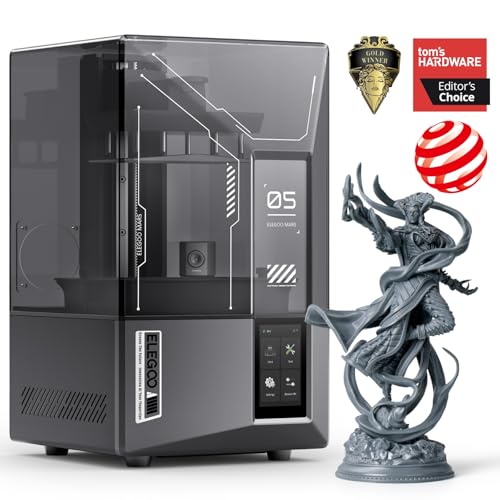
- 9K LCD with 18 μm XY resolution
- Up to 150 mm/h with tilt-release technology
- AI camera and sensors help monitor failures
Best For: Hobbyists wanting fast prints and smart monitoring
Fast Smart Choice

- Tilt release supports speeds up to 150mm/h
- One-touch automatic leveling
- AI monitoring and power-loss resume
Best For: Fast, automated resin printing with added monitoring
High-Detail Beginner-Friendly Pick

- 14K LCD for crisp fine details
- Factory-calibrated automatic leveling
- Supports resins up to 8,000cps viscosity
Best For: Detailed prints and advanced high-viscosity resin workflows
Easy-Setup Detail Maker
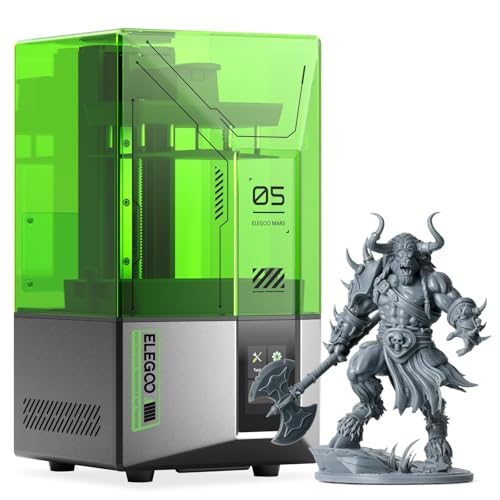
- One-click automatic leveling
- 4K mono LCD with COB light source
- Self-check and safety monitoring features
Best For: Beginners and hobbyists seeking simple setup
Fast 10K Precision Pick

- 7-inch 10K mono LCD
- Up to 120mm/h with high-speed resin 2.0
- Self-check system and multilingual touchscreen
Best For: Detailed models and faster resin printing
Large-Format Production Workhorse
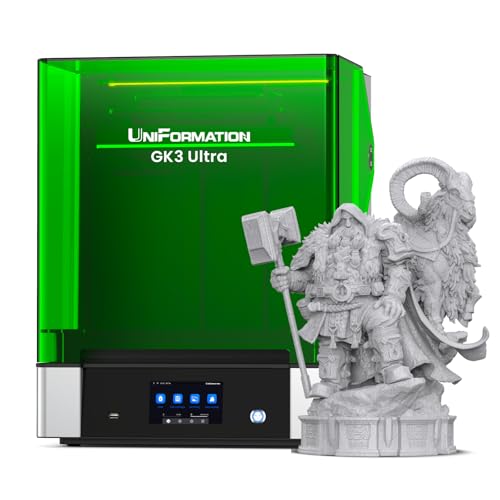
- 300 × 160 × 300mm build volume
- 16K LCD with precise Z-axis motion
- Heated resin system and automatic feeder
Best For: Professional and high-volume large-format printing
Best Entry-Level Detail – ANYCUBIC Photon Mono 4
The ANYCUBIC Photon Mono 4 is a practical choice for shoppers comparing resin printers for detailed everyday models. Its 7-inch 10K screen, uniform LighTurbo illumination, and beginner-friendly leveling system balance print quality with straightforward setup.
Best For: Beginners and hobbyists who want high-resolution prints in a compact, easy-to-use machine.
Pros:
- 10K resolution with 17 × 17 μm XY pixels for detailed models.
- 153.4 × 87 × 165 mm build volume accommodates many daily projects.
- Laser-engraved platform improves adhesion while keeping removal manageable.
- Four-point leveling does not need repeating after the initial setup.
Cons:
- Anycubic app service is not supported.
- Its build volume is smaller than the larger-format options in this roundup.
The Photon Mono 4 is a sensible starting point for resin printing when detail and simple setup matter more than maximum capacity or advanced automation.
Best Large-Format Precision – ELEGOO Saturn 3 12K
The ELEGOO Saturn 3 stands out among resin printers for its spacious build area and 12K monochrome LCD. It is designed for larger models or batch-oriented projects while maintaining consistent exposure through its COB and Fresnel collimating light system.
Best For: Makers who need a larger build volume for ambitious models and flexible slicing workflows.
Pros:
- 10-inch 12K LCD delivers 19 × 24 μm XY resolution.
- Large 218.88 × 122.88 × 250 mm build volume supports bigger projects.
- Uniform 405 nm light source is specified at over 90% uniformity.
- Supports static, smooth, and high-speed printing modes through Voxeldance Tango.
Cons:
- At 33 pounds, it is relatively heavy to move.
- The larger chassis requires more workspace than compact resin printers.
Choose the Saturn 3 if capacity is a priority. Its generous volume and high-resolution screen make it particularly appealing for larger or more involved prints.
Best for Speed and Automation – ANYCUBIC Photon Mono M7 PRO 14K
The ANYCUBIC Photon Mono M7 PRO is built for shoppers who want fast resin printers without giving up fine detail. Its 14K screen is paired with high-speed printing, temperature-controlled resin handling, automatic refill, and multiple detection features intended to simplify longer print jobs.
Best For: Experienced hobbyists and productive workflows where speed, precision, and assisted monitoring are important.
Pros:
- Prints up to 170 mm/h with high-speed resin and 130 mm/h with standard resin.
- 14K resolution and 16.8 × 24.8 μm XY resolution support fine features.
- Temperature-controlled vat helps maintain the resin’s optimal print temperature.
- Automatic resin filling and six detection functions reduce manual intervention.
Cons:
- Its 33.3-pound weight and 25 × 15 × 35-inch dimensions require substantial space.
- Top speed depends on using high-speed resin and the stated test conditions.
The M7 Pro is the strongest fit here for throughput-focused users. Its advanced assistance features add convenience, while the 14K display keeps detail at the center of the design.
Best Smart Compact Option – ELEGOO Mars 5 Ultra 9K
The ELEGOO Mars 5 Ultra combines detailed output with speed-focused features in a more manageable resin printer format. Its 9K LCD, tilt-release technology, AI camera, and mechanical sensors are aimed at reducing failed prints and making routine operation easier.
Best For: Hobbyists who want fast, detailed printing with built-in error monitoring and networked workflow options.
Pros:
- 7-inch 9K mono LCD provides 18 μm XY resolution.
- Up to 150 mm/h printing speed with fast and slow modes.
- AI camera can detect issues such as empty build plates and model warps.
- Wi-Fi cluster printing can control multiple Mars 5 Ultra printers from one device.
Cons:
- AI detection results can vary with the environment, models, and resin types.
- The supplied notes do not specify its build volume.
The Mars 5 Ultra is a compelling choice when convenience features matter as much as resolution. Its monitoring and release innovations can make repeated printing more efficient, though camera alerts should not replace visual checks.
Large-Format Pick – Anycubic Photon Mono M7 Max
For resin printers buyers who need substantial build capacity, the Anycubic Photon Mono M7 Max is designed for large models without cutting and assembling. Its spacious build area, temperature-managed resin system, and automated resin handling make it a practical choice for masks, cosplay props, terrain, and other oversized projects.
Best For: Large-format models, cosplay props, masks, and detailed game terrain.
Pros:
- Large 298 × 164 × 300mm build volume.
- 7K printing with a light source offering over 90% uniformity and reduced aliasing.
- Temperature-controlled resin vat, auto-fill, and one-key resin recycling.
- Flip-open cover supports one-handed opening and hovering at angles above 45 degrees.
Cons:
- Its 52.8-pound weight and large footprint require substantial workspace.
- The large format may be unnecessary for users who mainly print small models.
The M7 Max prioritizes capacity and convenience over compactness. Choose it when printing large pieces in one go matters more than minimizing the printer’s footprint.
Fast Smart Choice – ELEGOO Saturn 4 Ultra
The ELEGOO Saturn 4 Ultra stands out among resin printers for speed-oriented workflows and automated setup. Tilt release technology, one-touch leveling, failure monitoring, and power-loss recovery are aimed at reducing hands-on intervention during demanding print jobs.
Best For: Users who want fast printing, automatic leveling, and built-in monitoring features.
Pros:
- Tilt release technology enables speeds up to 150mm/h.
- One-touch automatic leveling helps simplify setup.
- AI camera supports failure detection, print monitoring, and time-lapse capture.
- Foreign-object detection, resin shortage alerts, self-checks, and resume printing add safeguards.
Cons:
- AI detection results can vary with the environment, models, and resin types.
- Its 40-pound weight and 24 × 16 × 16-inch dimensions call for dedicated space.
This Saturn model is a strong fit when throughput and automation are priorities. Its monitoring features can help, but users should still supervise prints and account for the stated limits of AI detection.
High-Detail Beginner-Friendly Pick – Anycubic Photon P1 14K
The Anycubic Photon P1 is a practical option among resin printers for users who want detailed output with less manual setup. Factory-calibrated auto-leveling, AI inspection, wave release technology, and support for high-viscosity industrial resins give it a broad range of capabilities.
Best For: Detail-focused creators seeking auto-leveling and compatibility with high-viscosity resins.
Pros:
- 14K mono LCD delivers 13,312 × 5,120 resolution and a 16.8 × 24.8-micrometer XY pixel size.
- Factory-calibrated Smart Leveling 3.0 performs self-checks and pressure feedback.
- Wave Release Technology reduces release force by 60%.
- Handles resins with viscosity up to 8,000cps and includes pre-configured Anycubic resin settings.
Cons:
- Its 16.93 × 24.41 × 16.54-inch footprint requires more than a compact desk area.
- Advanced resin capability may be more than casual users need.
The Photon P1 combines fine-detail potential with extensive automation. It is especially compelling for creators who want to explore industrial or high-viscosity materials without giving up guided setup and monitoring.
Easy-Setup Detail Maker – ELEGOO Mars 5
The ELEGOO Mars 5 is a practical choice among resin printers for beginners and hobbyists who want detailed output without extensive manual calibration. Its one-click leveling, self-check tools, and 4K mono LCD simplify setup while supporting precise prints.
Best For: Beginners, hobbyists, and makers who prioritize straightforward setup and dependable detail.
Pros:
- One-click automatic leveling reduces setup work.
- 4K mono LCD and COB light source support detailed models.
- Residue detection, resin-shortage alerts, and self-check functions help reduce preventable failures.
- Overheat protection automatically stops printing if LED temperature exceeds 80°C.
Cons:
- Its listed 4K resolution is lower than the 10K and 16K alternatives in this roundup.
- The compact printer dimensions may be less suitable for larger models.
The Mars 5 stands out for reducing routine setup and monitoring tasks. Choose it if easy operation and reliable, finely detailed prints matter more than maximum resolution or build volume.
Fast 10K Precision Pick – Anycubic Photon Mono 4 Ultra
The Anycubic Photon Mono 4 Ultra is one of the more resolution-focused resin printers, pairing a 7-inch 10K mono screen with a COB light source and precision motion hardware. Its release system and 120mm/h maximum speed with high-speed resin 2.0 also make it appealing for users who want detailed prints with shorter print times.
Best For: Detail-focused makers who want high resolution, faster printing, and guided operation.
Pros:
- 10K LCD provides 9024 × 5120 resolution with 17 × 17μm pixels.
- COB light source with Fresnel lens is rated for at least 90% light uniformity.
- ACF film and intelligent release algorithms help reduce release force and printing time.
- 360° self-check and an eight-language touch interface support easier operation.
Cons:
- The higher-resolution feature set may be more than casual users need.
- The listed dimensions are relatively tall, so placement requires planning.
For users comparing resin printers on detail and speed, the Photon Mono 4 Ultra offers a strong balance of 10K resolution, guided checks, and faster release performance. It is especially compelling for intricate models and efficient repeat printing.
Large-Format Production Workhorse – UniFormation GK3 Ultra
The UniFormation GK3 Ultra is a large-format option among resin printers, built for users who need to print bigger models or multiple parts in one job. Its 300 × 160 × 300mm build volume, 16K LCD, heated resin system, and automatic feeder target higher-volume and professional workflows.
Best For: Professional studios, small and medium-sized businesses, prototyping, and large or multi-part prints.
Pros:
- Large 300 × 160 × 300mm build volume supports sizable models and batch printing.
- 16K LCD and 20 × 26μm pixels deliver sharp detail.
- Heating system can warm resin to 25°C or 30°C in cold conditions.
- Automatic resin feeding, quick-release vat, drip hanger, and carbon filter support a cleaner workflow.
Cons:
- At 85.8 pounds, it is substantially heavier than the other listed printers.
- Its 19 × 21 × 26-inch footprint requires considerable workspace.
- Its large-format features may be unnecessary for small, occasional prints.
The GK3 Ultra is the most capacity-oriented choice here. Its combination of large build volume, 16K detail, resin heating, and automatic replenishment makes it better suited to sustained production than casual desktop printing.
How We Picked the Best Resin Printers
We evaluated this lineup by comparing resolution, print area, advertised speed, automation, connectivity, user feedback, and overall practicality. We also considered whether each printer serves a distinct need, such as affordable entry-level printing, high-detail miniatures, rapid prototyping, or large models.
Specifications can vary by firmware, resin, exposure settings, and manufacturer testing conditions, so advertised speed and resolution should be treated as useful indicators rather than guarantees. Reliable results also depend on proper washing, curing, ventilation, and routine maintenance.
Quick Comparison
| Best For | Recommended Type | What to Prioritize |
|---|---|---|
| Beginners | Compact entry-level printer | Auto-leveling, simple setup, and replacement-part availability |
| Miniatures and fine detail | 10K to 16K MSLA printer | Pixel size, exposure consistency, and dependable Z-axis movement |
| Fast prototyping | High-speed resin printer | Print speed, release-film performance, and workflow automation |
| Large models | Large-format resin printer | Build volume, resin capacity, and a rigid motion system |
| Frequent production | Feature-rich premium model | Reliability, monitoring, maintenance, and operating cost |
Key Buying Factors for Resin Printers
Resolution and Surface Detail
Higher LCD resolution can produce finer detail, but it is not the only factor. Optical quality, exposure calibration, anti-aliasing, model orientation, and resin selection also influence the final surface. A well-tuned 10K printer may outperform a poorly calibrated model with a higher advertised resolution.
Build Volume
Check the usable build dimensions rather than focusing only on the printer’s exterior size. Larger platforms can print bigger parts or more pieces at once, but they typically require more resin, more workspace, and greater attention to platform leveling and support placement.
Speed and Reliability
Fast printing is valuable for batches and prototypes, but acceleration, layer height, resin type, and model geometry affect actual results. Features such as automatic leveling, smart exposure controls, failure detection, and improved release films can reduce setup time and failed prints.
Resin Handling and Safety
Resin printing requires gloves, eye protection, ventilation, washing, and UV curing. Budget for cleaning supplies, replacement films, build plates, filters, and resin waste disposal. A printer with convenient access and a well-sealed cover can make regular use easier, but it does not eliminate the need for safe handling.
Who Should Buy Which Resin Printers?
Choose a compact model if you are learning resin printing, have limited workspace, or mainly make miniatures and small parts. Buyers who want sharper detail for figures, jewelry, or display models should focus on a high-resolution MSLA printer with dependable exposure control.
For repeated batches or time-sensitive prototypes, prioritize a fast model with automation and stable mechanical performance. If you regularly print helmets, large character pieces, or multiple parts together, a large-format option can save time despite its higher resin and workspace demands.
Finally, select the printer that matches your complete workflow, not just its headline specifications. Confirm software support, replacement-part availability, warranty coverage, ventilation options, and the total cost of resin and post-processing before buying.