Choosing among low-power computer processors is less about chasing peak benchmark scores and more about matching energy use, platform compatibility, graphics capability, and upgrade potential to your build.
This roundup covers efficient AMD and Intel desktop chips suited to compact PCs, everyday office systems, media boxes, and budget-friendly upgrades. Check socket, chipset, memory support, and cooling requirements before buying.
Best 10 Low Power Computer Processors Picks for 2026
Best Budget AM4 Pick
- 35W TDP with cooler included
- 2 cores and 4 threads
- Built-in Radeon graphics
Best For: Affordable AM4 desktops and entry-level gaming
Legacy Low-Wattage Option

- 2.6 GHz processor speed
- 3 MB cache
- Uses LGA1155 socket
Best For: Compatible legacy desktop repairs and upgrades
Efficient Everyday AM4 Choice

- 35W power rating
- Radeon Vega 3 graphics
- AM4 with DDR4-2667 support
Best For: Everyday desktops and light gaming
Simple Intel Budget Processor
- 2.9 GHz processor speed
- Integrated HD Graphics 610
- LGA1151 socket support
Best For: Basic compatible Intel desktops
Balanced Entry-Level Pick

- 3.3 GHz dual-core performance
- 47-watt desktop processor
- LGA 1151 socket
Best For: Budget desktops and basic everyday computing
Mini PC Efficiency Pick

- 35W low-power design
- 2.9 GHz dual-core CPU
- Integrated Intel HD Graphics 510
Best For: Tiny and small-form-factor PCs
Higher-Clock Celeron Value

- 3.5 GHz dual-core performance
- 4 MB cache
- LGA 1200 and Intel 400 Series compatible
Best For: Entry-level desktops with compatible LGA 1200 boards
Legacy Value Pick

- 2.8 GHz dual-core processor
- 54-watt power rating
- LGA 1150 socket
Best For: Compatible Z87 or Z97 desktop upgrades
Mainstream Budget Pick

- 3.2 GHz dual-core design
- 54-watt power rating
- Optane Memory support
Best For: Entry-level 300 Series desktop systems
Newest Platform Pick

- 3.4 GHz dual-core processor
- 58-watt power rating
- LGA 1200 socket
Best For: Basic Intel 400 Series desktop builds
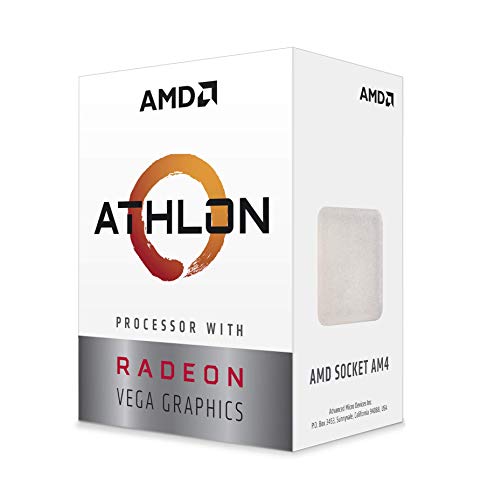
Best Budget AM4 Pick – Athlon 3000G
AMD Athlon 3000G 2-Core, 4-Thread Unlocked Desktop Processor with Radeon Graphics
Check Price On AmazonThe AMD Athlon 3000G is one of the more flexible low power computer processors for an affordable desktop. Its 35W TDP, built-in Radeon graphics, and included near-silent cooler suit compact everyday systems, while the unlocked design leaves room for overclocking.
Best For: Budget AM4 desktops, everyday computing, and entry-level 720p gaming without a separate graphics card.
Pros:
- 2 cores and 4 threads for responsive everyday use
- Built-in Radeon graphics support 720p esports gaming
- 35W TDP and near-silent cooler included
- Unlocked for overclocking and compatible with graphics card upgrades
Cons:
- Only 2 cores, so it is not intended for demanding multitasking
- Built-in graphics are positioned for entry-level rather than high-end gaming
Choose the Athlon 3000G when low energy use and an upgrade-friendly AM4 platform matter more than maximum processing power. Its integrated graphics also simplify a basic build.
Legacy Low-Wattage Option – Intel Core i3-2120T
The Intel Core i3-2120T is a low-power desktop processor for systems built around the older LGA1155 socket. Its 2.6 GHz speed and 3 MB cache make it a practical replacement option when maintaining a compatible legacy computer is the priority.
Best For: Upgrading or repairing an existing LGA1155 desktop that specifically supports this processor.
Pros:
- Designed as a low-power LGA1155 processor
- 2.6 GHz processor speed
- 3 MB cache
Cons:
- Requires an LGA1155 motherboard
- Older platform may limit upgrade flexibility
This model makes the most sense for a compatible legacy build rather than a new system. Confirm the motherboard socket and platform requirements before purchasing.
Efficient Everyday AM4 Choice – Athlon 200GE
The AMD Athlon 200GE combines a 35W power rating with two cores, four threads, and integrated Radeon Vega 3 graphics. Among low power computer processors, it is a sensible fit for an everyday AM4 desktop that needs video playback and light gaming without a discrete graphics card.
Best For: Everyday computing, smooth video playback, and entry-level gaming in an AM4 system.
Pros:
- 35W design with a near-silent cooler included
- 2 cores and 4 threads for routine workloads
- Radeon Vega 3 integrated graphics included
- Supports DDR4-2667 and an AM4 platform upgrade path to Ryzen
Cons:
- Two cores limit performance for heavier workloads
- Radeon Vega 3 is intended for light gaming rather than demanding titles
The Athlon 200GE is a balanced choice for a modest AM4 build where low power consumption, integrated graphics, and future platform flexibility are useful. It is less suitable for intensive creation or multitasking.
Simple Intel Budget Processor – Celeron G3930
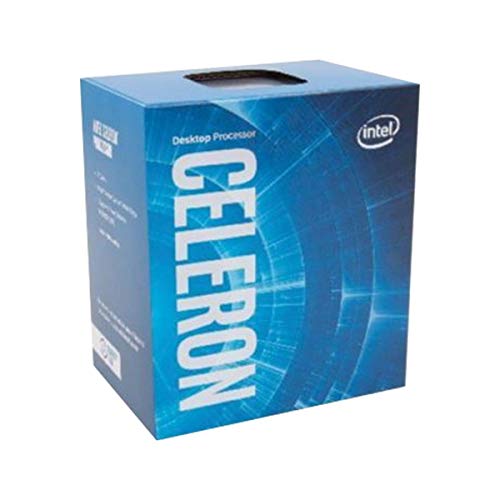
The Intel Celeron G3930 is a straightforward desktop processor for an LGA1151 system. Its 2.9 GHz speed and integrated Intel HD Graphics 610 make it suitable for basic computing builds, though its single-core design keeps expectations focused on lighter workloads.
Best For: Basic desktops using a compatible Intel 200- or 100-series chipset and LGA1151 socket.
Pros:
- 2.9 GHz processor speed
- Integrated Intel HD Graphics 610
- Compatible with Intel 200/100-series chipsets as specified
Cons:
- Single processor core limits multitasking capability
- 51W wattage is higher than the 35W AMD options in this roundup
- Requires a compatible LGA1151 motherboard
The Celeron G3930 can work well for a simple, compatible Intel desktop, but buyers should account for its single-core configuration and platform requirements. It is best selected for basic use rather than demanding applications.
Balanced Entry-Level Pick – Intel Pentium G4400
The Intel Pentium G4400 is a straightforward option among low power computer processors for basic desktop systems. Its 3.3 GHz dual-core design, LGA 1151 socket, and 47-watt rating suit everyday computing when you have a compatible motherboard.
Best For: Budget desktops, office work, web browsing, and other basic Windows tasks.
Pros:
- 3.3 GHz speed supports responsive basic computing.
- Dual-core design with two concurrent threads.
- 47-watt rating is modest for a desktop processor.
- Includes 3 MB of cache and 64-bit instruction support.
Cons:
- Requires an LGA 1151 motherboard.
- Only two cores and two threads limit heavier multitasking.
- Supplied details do not confirm the warranty information.
The G4400 offers a practical balance of clock speed and moderate power use for a basic compatible PC. Confirm motherboard compatibility before purchasing.
Mini PC Efficiency Pick – Intel Pentium G4400T
The Intel Pentium G4400T is designed for compact systems and stands out among low power computer processors with its 35W TDP. Its 2.9 GHz dual-core configuration, integrated Intel HD Graphics 510, and LGA 1151 compatibility make it suitable for space-saving builds.
Best For: Tiny, Micro, and Desktop Mini PCs handling office work, browsing, and media streaming.
Pros:
- 35W TDP helps limit heat output in compact chassis.
- Integrated Intel HD Graphics 510 supports 4K at 60Hz according to the supplied notes.
- Supports DDR4-1866/2133 and DDR3L-1333/1600 memory.
- Compatible with Intel 100 and 200 Series chipset motherboards.
Cons:
- 2.9 GHz speed is lower than the standard G4400.
- Dual-core, two-thread design is intended for lighter workloads.
- Requires an LGA 1151 motherboard and compatible memory.
For compact computers where heat and power draw matter, the G4400T is the more specialized choice. Check the chassis, chipset, and memory requirements before upgrading.
Higher-Clock Celeron Value – Intel Celeron G5905
Intel® Celeron® G5905 Desktop Processor 2 Cores 3.5 GHz LGA1200 (Intel® 400 Series chipset) 58W
Check Price On AmazonThe Intel Celeron G5905 is a 3.5 GHz dual-core processor for LGA 1200 systems. As a choice among low power computer processors, its 58-watt rating is best considered for compatible entry-level desktops rather than ultra-compact builds.
Best For: Basic Windows 10 desktops using Intel 400 Series chipset motherboards.
Pros:
- 3.5 GHz clock speed is suitable for everyday desktop tasks.
- Includes two cores and two concurrent threads.
- Provides 4 MB of cache.
- Compatible with Intel 400 Series chipset-based motherboards.
Cons:
- 58-watt power rating is higher than the G4400T’s 35 watts.
- Limited to two cores and two threads.
- Requires the newer LGA 1200 socket, so it is not compatible with LGA 1151 boards.
The G5905 combines the highest listed clock speed in this group with a newer LGA 1200 platform. It is a sensible basic-desktop option when your motherboard uses an Intel 400 Series chipset.
Legacy Value Pick – Intel Celeron G1840
The Intel Celeron G1840 is a practical option for a compatible older desktop build needing low power computer processors. Its 2.8 GHz dual-core design uses 54 watts and fits LGA 1150 motherboards.
Best For: Budget upgrades using compatible Z87 or Z97 motherboards.
Pros:
- 54-watt power rating
- 2.8 GHz dual-core performance
- Supports Intel Quick Sync Video
- Compatible with Z87 and Z97 motherboards
Cons:
- Z87 systems may require a BIOS update
- Not compatible with Intel motherboards
- Uses the older LGA 1150 socket
The G1840 makes the most sense when you already have an LGA 1150 system and want an economical processor replacement or upgrade. Confirm motherboard compatibility before purchasing.
Mainstream Budget Pick – Intel Celeron G4930
The Intel Celeron G4930 is a straightforward choice among low power computer processors for basic desktop systems. It provides two cores and two threads at 3.2 GHz while maintaining a 54-watt rating.
Best For: Entry-level desktops with Intel 300 Series chipset motherboards.
Pros:
- 3.2 GHz clock speed
- 2 cores and 2 threads
- 54-watt power rating
- Supports Intel Optane Memory
Cons:
- BIOS update may be required
- Limited to two cores and two threads
- Requires an LGA 1151 motherboard with a 300 Series chipset
Choose the G4930 when its LGA 1151 platform matches your existing motherboard or planned build. It offers a modest step up in clock speed over the G1840 without increasing the listed wattage.
Newest Platform Pick – Intel Celeron G5900
The Intel Celeron G5900 is a compact, entry-level option for shoppers comparing low power computer processors on Intel’s LGA 1200 platform. It has two cores, two threads, a 3.4 GHz speed, and a 58-watt rating.
Best For: Basic desktops built around Intel 400 Series chipset motherboards.
Pros:
- 3.4 GHz clock speed
- 2 cores and 2 threads
- Supports Intel Optane Memory
- Three-year boxed limited warranty listed
Cons:
- Higher listed wattage than the other processors here
- Requires an LGA 1200 motherboard with an Intel 400 Series chipset
- Limited to two cores and two threads
The G5900 is the strongest fit when you are building or upgrading specifically for an LGA 1200 system. Its 3.4 GHz speed is appealing for basic tasks, but platform compatibility should be checked first.
How We Picked the Best Low Power Computer Processors
We selected processors based on a practical balance of power consumption, compatibility, everyday performance, integrated graphics, availability, and value for specific types of builds. The list includes older low-wattage chips for supported legacy systems as well as newer entry-level options for affordable desktops.
Because processor specifications vary by generation, we considered more than the advertised clock speed. Core and thread count, thermal design power, socket type, chipset support, memory compatibility, and whether a usable integrated GPU is included all affect the total cost and suitability of a system.
Quick Comparison
| Best For | What to Prioritize | Examples in This Roundup |
|---|---|---|
| Basic office and web use | Modern platform, integrated graphics, low cost | AMD Athlon 3000G, Intel Celeron G5905 |
| Compact or fan-conscious PCs | Low thermal output and compatible motherboard | Intel Core i3-2120T, Pentium G4400T |
| Legacy upgrades | Exact socket, BIOS support, used-market condition | Celeron G1840, Pentium G4400 |
| Budget multimedia systems | Integrated graphics and AM4 or LGA1200 upgrade path | AMD Athlon 200GE, Celeron G4930 |
Key Buying Factors for Low-Power Computer Processors
Socket and Chipset Compatibility
Socket compatibility is essential, but it is not the only requirement. Confirm that the motherboard chipset, BIOS version, memory type, and firmware support the processor. An LGA1151 chip, for example, may not work in every LGA1151 motherboard because Intel used different generations and chipsets under the same socket family.
Power, Cooling, and Noise
Lower-rated processors generally produce less heat, which can simplify cooling in a small case and reduce fan noise. TDP is a useful planning figure, but actual system consumption also depends on the motherboard, storage, memory, power supply, and workload. Use an appropriate cooler and provide adequate case airflow.
Graphics and Expansion Needs
Integrated graphics can eliminate the cost and power draw of a discrete GPU for web browsing, office software, streaming, and basic display output. Verify display outputs on the motherboard and avoid assuming that every processor includes graphics. For gaming, editing, virtualization, or heavier multitasking, prioritize cores, threads, memory capacity, and expansion options instead.
Age, Availability, and Total Value
Several low-power processors are older models. They can be excellent replacements for an existing compatible system, but a new build may be better served by a newer chip with stronger performance per watt and a longer upgrade path. Compare the processor price with the cost of the motherboard, memory, cooler, and operating-system support.
Who Should Buy Which Low Power Computer Processors?
Choose an AMD Athlon 3000G or 200GE when you want an affordable AM4 platform with integrated Radeon graphics and straightforward everyday performance. Consider the Intel Celeron G5905 or G-5900 for basic LGA1200 office, browsing, or home-server builds where low upfront cost matters.
The Celeron G4930, G3930, G1840, and Pentium G4400 are most appropriate as replacements or budget upgrades for systems already using their supported platforms. The Pentium G4400T and Core i3-2120T make the most sense when low heat, compact-system compatibility, or a specific legacy motherboard is more important than modern performance.
Before ordering, verify the exact socket and chipset, whether a cooler is included, the required memory generation, and the motherboard’s video outputs. For a new system, select the newest compatible platform that fits your budget; for an existing PC, exact compatibility should take priority.