Choosing among commercial laser cutting machines requires more than comparing wattage. Work material, production volume, cutting area, ventilation, automation, and service support all affect the real-world value of a machine.
This roundup compares 10 options spanning fiber, CO2, and hybrid systems, from compact workshop machines to higher-powered platforms built for demanding fabrication and multi-process workflows.
Best 10 Commercial Laser Cutting Machines Picks for 2026
Heavy-Duty Metal Cutting
OMTech 1500W Fiber Laser Cutter

- Cuts stainless steel and carbon steel
- Enclosed design with safety interlocks
- Pass-throughs support oversized materials
Best For: Metal fabrication and larger sheet projects
Automated CO2 Production
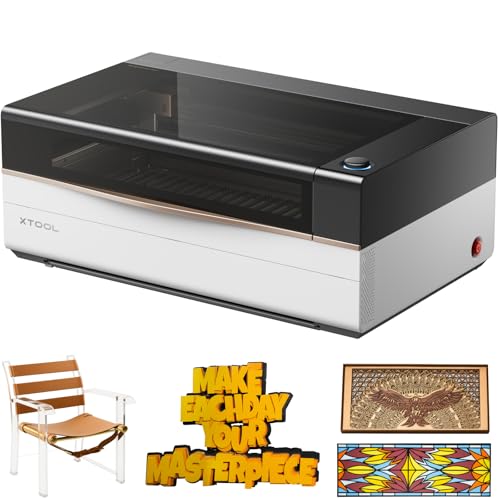
- Cuts up to 20mm wood and 25mm acrylic
- Large 36 x 18-inch work area
- Cameras, LiDAR, and nesting automate workflow
Best For: Batch production with wood and acrylic
Flexible Business Production

- BeamFocus targets 60W-like cutting power
- Conveyor supports projects up to 137 inches
- Enclosure and fume extractor support safer use
Best For: Batch engraving and mixed-material work
Integrated Metal Workshop

- Cuts, welds, cleans, and engraves metal
- Cuts carbon steel up to 10mm thick
- Includes presets, cameras, and touchscreen controls
Best For: Professional multifunction metal fabrication
Large-Format CO2 Workhorse

- 35" x 55" workspace for large projects
- 1,200 mm/s engraving with servo motors
- Built-in CW-5200 chiller and pass-through doors
Best For: Professional non-metal cutting and engraving shops
Enclosed Diode Production Pick

- 32.7" x 31.5" bed for large projects
- 70W diode laser with fine-focus claims
- Enclosed Class 1 design with multiple safety features
Best For: Small businesses and hobbyists processing mixed materials
Autofocus Workhorse

- Automatic autofocus simplifies setup
- 20 x 28-inch bed with four-way pass-through
- Includes water chiller and built-in air assist
Best For: Medium-to-large projects requiring convenient repeat operation
Compact Commercial Option

- 16 x 24-inch work area
- Water chiller and two-way pass-through doors
- Safety interlock and flame-retardant viewing window
Best For: Smaller commercial shops handling standard-size materials
Heavy-Duty Metal Cutting – OMTech 1500W Fiber Laser Cutter
For buyers comparing commercial laser cutting machines for metal fabrication, the OMTech 1500W Fiber Laser Cutter emphasizes cutting power, enclosed operation, and sheet-handling flexibility. It can cut up to 0.2-inch stainless steel and 0.4-inch carbon steel, with a 23.6 x 23.6-inch work area and front-and-back pass-throughs for materials up to 24.8 inches wide.
Best For: Metalworking, custom signage, fabrication, and larger sheet projects.
Pros:
- 1500W fiber laser cuts tough metals at speeds up to 27.56 ips.
- Fully enclosed design includes an OD6+ observation window, safety relays, and interlocks.
- Built-in water chiller and laser supply simplify initial setup.
- Front and back pass-throughs accommodate oversized materials.
Cons:
- Its capabilities are focused primarily on metal cutting rather than general-purpose engraving.
- The large industrial-style system may require substantial workspace.
The OMTech is a strong fit when cutting capacity and enclosed metalworking are higher priorities than compact size. Its pass-through design adds useful flexibility for projects that exceed the standard bed dimensions.
Automated CO2 Production – xTool P3 80W CO2 Laser Cutter
The xTool P3 is one of the more automation-focused commercial laser cutting machines for businesses working with wood, acrylic, and repeatable production jobs. Its 80W CO2 laser cuts up to 20mm wood and 25mm acrylic, while cameras, LiDAR, automated lifting, and nesting tools streamline setup and material use.
Best For: Professional wood and acrylic cutting, batch customization, and automated desktop-scale production.
Pros:
- 80W CO2 power handles materials such as clear acrylic that diode lasers cannot.
- Large 36 x 18-inch workspace supports sizable projects.
- Dual cameras and LiDAR provide autofocus and precise positioning.
- Smart Nesting reportedly achieves up to 98.7% material utilization.
Cons:
- At 363 pounds, it is a substantial machine to place and move.
- Many expansion accessories, including the conveyor feeder and air purifier, are sold separately unless bundled.
Choose the P3 when workflow automation and production consistency matter as much as laser power. Its Class 1 enclosed design and intelligent setup tools make it especially appealing for businesses managing repeat orders.
Flexible Business Production – WECREAT Vision Pro 45W
The WECREAT Vision Pro 45W is a versatile option among commercial laser cutting machines for shops that need both cutting and engraving capabilities. BeamFocus technology is designed to deliver 60W-like cutting performance, while the broad work area, conveyor feeder, rotary support, and optional infrared module expand its production range.
Best For: Small businesses handling batch engraving, wood projects, tumblers, dog tags, and varied materials.
Pros:
- BeamFocus technology targets thicker cuts, faster speeds, and finer details.
- 19.7 x 12.6-inch working area supports batch jobs such as multiple dog tags.
- Conveyor system provides a 137-inch working area for longer projects.
- Class 1 enclosure and AirGuard Ultra fume extraction support safer operation.
Cons:
- The 2W infrared module is sold separately.
- Some advanced capabilities depend on accessories such as the rotary system and extractor.
This Vision Pro is best suited to growing businesses that value material flexibility and batch processing. Its conveyor and rotary options can make it more adaptable than a fixed-bed machine, provided the required accessories are included or budgeted for.
Integrated Metal Workshop – xTool MetalFab 1200W 4-in-1
The xTool MetalFab combines cutting, welding, cleaning, and engraving in one professional system, making it a distinctive choice among commercial laser cutting machines for metal workshops. Its 1200W fiber laser cuts up to 10mm carbon steel and 5mm stainless steel on a 610 x 610mm bed, while presets and cameras support repeatable fabrication work.
Best For: Metal fabrication shops that need cutting, welding, rust removal, and engraving in one system.
Pros:
- Four functions combine CNC cutting, laser welding, cleaning, and engraving.
- Cuts up to 10mm carbon steel and 5mm stainless steel.
- 108+ presets, dual cameras, and an 8-inch touchscreen simplify operation.
- SaveGas airflow optimization can reduce gas consumption by up to 50%.
Cons:
- Its Class 4 laser classification requires serious attention to safety procedures.
- The 610 x 610mm bed is smaller than some dedicated sheet-cutting systems.
- Its 330-pound weight and large package require substantial installation space.
The MetalFab makes the most sense for professional users who would otherwise need several specialized machines. It offers a compact workflow for varied metal jobs, though its Class 4 classification and multifunction design call for appropriate training and workspace planning.
Large-Format CO2 Workhorse – OMTech Pro 130W
For businesses comparing commercial laser cutting machines for non-metal materials, the OMTech Pro 130W combines a powerful CO2 laser with a spacious 35″ x 55″ workspace. Its built-in chiller, servo motors, WiFi control, and pass-through doors support larger production jobs.
Best For: Professional shops cutting and engraving wood, glass, acrylic, and other non-metallic materials.
Pros:
- 130W CO2 laser with a large 35″ x 55″ work area
- Built-in CW-5200 water chiller maintains controlled operating temperatures
- Up to 1,200 mm/s engraving speed with X and Y servo motors
- WiFi control and four-way pass-through doors improve workflow flexibility
Cons:
- Designed for non-metallic materials rather than general metal cutting
- Large-format equipment requires substantial installation space
The OMTech Pro 130W is a strong fit when workspace and throughput matter more than compact size. Its cooling system and production-oriented features make it a practical option for established shops handling larger non-metal projects.
Enclosed Diode Production Pick – SCULPFUN S70 MAX
The SCULPFUN S70 MAX is a sizable diode option among commercial laser cutting machines, with a 32.7″ x 31.5″ bed for large projects and batch work. Its 70W module is intended for cutting and engraving materials including wood, acrylic, leather, and some metal sheets.
Best For: Hobbyists and small businesses needing a large enclosed work area for mixed-material engraving and cutting.
Pros:
- Large 32.7″ x 31.5″ engraving bed supports batch orders
- 70W diode laser with a claimed 0.01mm compressed focus
- Supports materials such as wood, acrylic, leather, paper, ceramics, and metal
- Enclosed Class 1 design includes a flame detector, emergency stop, and safety lock
Cons:
- Diode system is less specialized for high-volume industrial production than larger CO2 or fiber systems
- Supplied dimensions and 41.9-pound weight still require dedicated setup space
Choose the S70 MAX if you want a broad working area and strong diode performance without moving to a multi-process industrial workstation. Its enclosure and safety features are particularly useful for shared studio or small-business environments.
Multi-Process Industrial Platform – GWEIKE M3 Ultra
The GWEIKE M3 Ultra stands apart from conventional commercial laser cutting machines by combining fiber and CO2 systems in one industrial workstation. It handles metal cutting, welding, cleaning, and non-metal engraving or cutting, making it suited to shops that need several laser processes in a single system.
Best For: Factories and professional fabrication shops requiring integrated metal and non-metal processing.
Pros:
- Six-in-one platform combines welding, CNC cutting, cleaning, rust removal, engraving, and cutting
- 1200W fiber laser and 130W CO2 laser cover metal and non-metal materials
- 54″ x 36″ work area with cutting speeds up to 500–600 mm/s
- Claims ±0.03 mm positioning accuracy and up to 10 mm carbon-steel cutting
Cons:
- Large 86″ x 71″ x 43.3″ footprint demands substantial facility space
- Class 4 laser equipment requires controlled, professional operation
- Its broad capabilities may be excessive for shops focused on one process
The M3 Ultra is best evaluated as a production platform rather than a single-purpose cutter. Its combination of metal fabrication and CO2 processing can consolidate equipment, but the size, power, and Class 4 designation make it appropriate for experienced industrial users.
Large-Format Powerhouse – 100W CO2 Laser Engraver
For buyers comparing commercial laser cutting machines, this 100W CO2 model stands out with a spacious 35 x 24-inch work area, pass-through doors, and the power to cut materials up to 15 mm thick in one pass. Its built-in cooling and broad software compatibility make it a versatile option for frequent work with wood, acrylic, glass, leather, and other nonmetallic materials.
Best For: Workshops needing a large cutting bed, high cutting power, and flexible material handling.
Pros:
- 100W output can cut material up to 0.59 inches thick in one pass.
- Large 35 x 24-inch honeycomb work area with front and rear pass-through doors.
- Built-in air pump, 6L water tank, digital controls, and compatibility with LightBurn and other software.
- Supports USB, USB cable, and network-cable file transfers across Windows, Linux, and macOS.
Cons:
- At 327 pounds, it requires substantial floor space and a sturdy setup.
- Class 4 laser equipment requires careful safety procedures and appropriate operation.
- The included tube has a stated service life of up to 8,000 hours, which may eventually require replacement.
This is a strong fit when production flexibility and a generous work envelope matter more than portability. Its integrated cooling, safety features, and high output give it practical appeal for advertising, gifts, signs, and other demanding applications.
Autofocus Workhorse – OMTech Maker 90W CO2 Laser
Among commercial laser cutting machines, the OMTech Maker 90W emphasizes convenient operation and sustained workflow. It combines a 20 x 28-inch work area, four-way pass-through access, automatic autofocus, and a bundled water chiller for engraving and cutting nonmetallic materials such as wood, acrylic, glass, and leather.
Best For: Users who want autofocus convenience and flexible access for medium-to-large projects.
Pros:
- 90W Yongli H2 tube supports engraving speeds up to 600 mm/s.
- Autolift autofocus adjusts the workbed and finds the focal distance automatically.
- Four-way pass-through doors accommodate longer or larger items.
- Bundled water chiller and built-in air assist support extended, cleaner operation.
Cons:
- At 258 pounds, this is a substantial machine rather than a portable unit.
- The stated cutting depth is up to 0.4 inches, less than some higher-powered models.
- Its stated tube life is up to 8,000 hours and may vary with operating settings.
The Maker 90W is a well-rounded choice for a production-minded workspace. Autofocus reduces setup friction, while the four-way pass-through design and included chiller make it easier to handle repeated or oversized jobs.
Compact Commercial Option – OMTech 60W CO2 Laser
For shoppers seeking commercial laser cutting machines in a more compact format, this OMTech 60W model offers a 16 x 24-inch work area, two-way pass-through doors, water chilling, and digital controls. It is designed for engraving and cutting nonmetallic materials including wood, glass, acrylic, and leather.
Best For: Smaller workshops that need commercial features without moving up to a larger 90W or 100W machine.
Pros:
- 16 x 24-inch honeycomb and aluminum-blade workbeds support varied projects.
- Two-way pass-through doors help accommodate longer materials.
- Bundled water chiller supports extended engraving sessions.
- Flame-retardant viewing window and cover interlock add practical safety features.
Cons:
- The 60W DC tube has a stated life of up to 1,000 hours, shorter than the tubes in the listed higher-power models.
- Its smaller work area may limit oversized projects.
- At 187 pounds, it still needs a dedicated, stable installation area.
This model balances capability and footprint for businesses working primarily with standard-size materials. It is a sensible entry point for commercial workflows where a 16 x 24-inch bed is sufficient and integrated cooling is important.
How We Picked These Commercial Laser Cutting Machines
We focused on machines that offer a practical combination of laser power, working area, material compatibility, controls, safety features, and production-oriented design. The selection includes CO2 cutters for wood, acrylic, leather, plastics, and other nonmetal materials; fiber systems for metal cutting, marking, and fabrication; and versatile platforms that combine cutting, engraving, welding, or cleaning.
We also considered features that affect day-to-day ownership, including pass-through capability, water cooling, air assist, fume extraction, conveyor feeding, enclosure design, software compatibility, and the availability of useful automation.
Quick Comparison
| Machine type | Best suited to | Primary advantage |
|---|---|---|
| CO2 laser | Wood, acrylic, leather, plastics, signage | Versatile nonmetal cutting and engraving |
| Fiber laser | Steel, stainless steel, aluminum, and other metals | Fast, precise metal processing |
| Hybrid or multifunction | Mixed fabrication and expanded workflows | Several processes in one platform |
| Conveyor-equipped machine | Long materials and repeat production | Reduced repositioning and larger effective work length |
Key Buying Factors
Material Compatibility
Choose the laser source first. CO2 machines are generally the better fit for organic and nonmetal sheets, while fiber lasers are designed primarily for metals. A higher wattage does not make one laser type interchangeable with the other.
Power and Cutting Thickness
Laser power influences cutting speed and the thickness a machine can handle, but advertised maximums depend on material, focal setup, assist gas, passes, and desired edge quality. Leave headroom if production speed matters.
Work Area and Material Handling
Measure typical sheet sizes before buying. Pass-through doors help with oversized stock, while conveyor systems can improve repeatability for long signs, textiles, or batch work. Confirm that the usable bed dimensions match your workflow rather than relying on exterior dimensions.
Cooling, Ventilation, and Safety
Water-cooled systems need reliable circulation and maintenance. Every enclosed laser requires appropriate exhaust or filtration, and metal cutting may require specialized assist gases. Look for interlocks, emergency controls, viewing protection, and a fully enclosed path where appropriate.
Software and Support
Check file-format support, controller compatibility, included software, autofocus, camera alignment, and replacement-part availability. Responsive technical support can be as important as a small difference in headline specifications.
Who Should Buy Which Commercial Laser Cutting Machines?
Choose a CO2 model if your work centers on wood, acrylic, leather, or signage. A lower-power machine can suit makers, schools, and light-duty shops, while a 90W–130W system is more appropriate for thicker stock and faster batch production.
Choose a fiber laser when metal cutting, engraving, or fabrication is the core business. Higher-powered fiber machines are best for metal-focused shops that can support the required ventilation, gas, electrical supply, and service infrastructure.
Choose a multifunction or hybrid machine when floor space is limited and welding, cleaning, engraving, or cutting must happen within one workflow. These systems can be highly capable, but verify which processes are included, how quickly they can be changed over, and whether the added complexity fits your team.