Engineering prototypes demand more than attractive prints. You need dimensional consistency, dependable operation, suitable materials, and a workflow that can move quickly from CAD file to testable part.
This roundup compares 10 3D printers across resin, high-speed FDM, large-format, and multi-toolhead designs. Use the guide below to match build volume, accuracy, material capability, and automation to your prototyping work.
Best 10 3d Printers for Engineering Prototypes Picks for 2026
High-Detail Speed Pick

- 14K detail with 0.3 mm minimum apertures
- Up to 170 mm/h with high-speed resin
- Temperature control and automatic resin filling
Best For: Detailed, fast resin prototype iterations
Large-Format Professional Pick
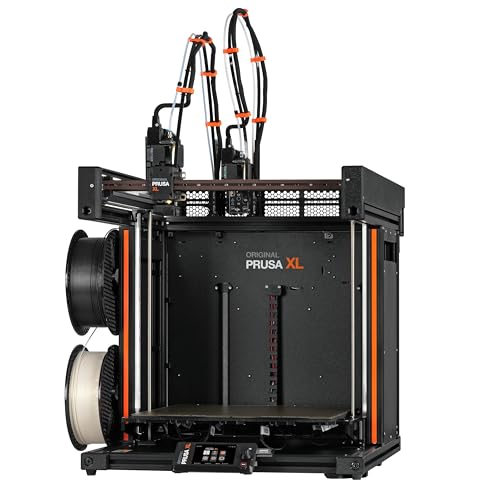
- 14.17-inch cubed build volume
- Dual-tool multi-material printing
- Segmented heated bed for large prints
Best For: Large, complex engineering prototypes
Low-Setup Resin Pick

- 14K detail with 0.3 mm aperture capability
- Factory-calibrated automatic leveling
- Supports resins up to 8,000 cps
Best For: Detailed resin prototypes with easier setup
Multi-Material Filament Pick

- Four toolheads with 5-second changes
- Supports rigid, flexible, and soluble materials
- 500 mm/s CoreXY printing in a 270 mm cube
Best For: Complex functional prototypes with varied materials
Large-Format Engineering Workhorse
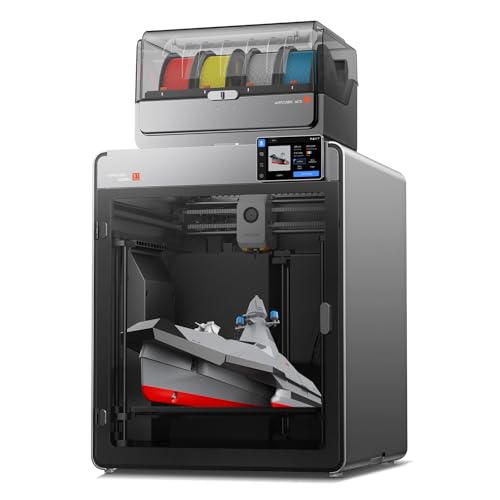
- 350 × 350 × 350 mm build volume
- 65°C chamber and 350°C hotend
- 600 mm/s CoreXY printing
Best For: Large prototypes, enclosures, and advanced materials
Fast Multicolor Prototype Maker

- 500 mm/s CoreXY printing
- Four-color printing included
- Auto leveling and print monitoring
Best For: Fast, compact multicolor prototypes
Fine-Detail Resin Specialist
ELEGOO Mars 5 Resin 3D Printer
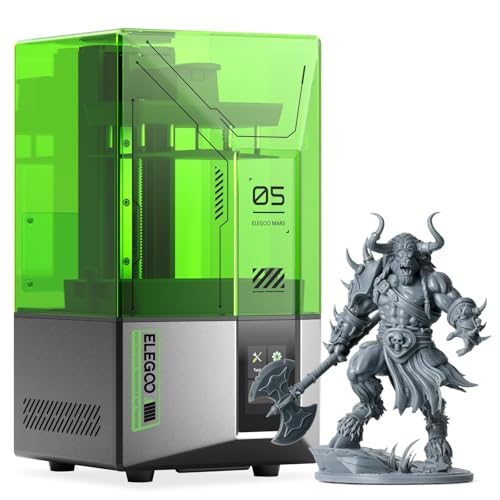
- 4K mono LCD for detailed prints
- One-click automatic leveling
- Resin and overheat protection features
Best For: Small, intricate engineering prototypes
Fast, Low-Maintenance Pick

- Automatic one-click leveling
- CoreXY printing up to 600 mm/s
- Tool-free quick-swap nozzles
Best For: Fast, repeatable prototype iterations with minimal setup
Multicolor Materials Option

- Native four-color printing
- 260 mm cubed build volume
- Supports PLA, PETG, TPU, PVA, and ASA
Best For: Larger, multicolor prototypes using varied filament types
Rapid Prototyping Workhorse

- Automatic bed leveling
- 600 mm/s travel speed
- Three-second detachable nozzle changes
Best For: High-throughput prototype work in a compact build area
High-Detail Speed Pick – Photon Mono M7 Pro
For engineering teams that need highly detailed resin parts quickly, the ANYCUBIC Photon Mono M7 PRO is one of the more specialized 3d printers for engineering prototypes. Its 14K monochrome LCD, 170 mm/h high-speed resin performance, and temperature-managed resin system are suited to detailed prototype iterations.
Best For: Engineers and designers prioritizing fine detail, fast resin printing, and automated resin handling.
Pros:
- 14K resolution and 16.8 × 24.8 μm XY resolution can reproduce holes as small as 0.3 mm.
- Prints at up to 170 mm/h with high-speed resin and 130 mm/h with standard resin.
- Temperature-controlled resin vat and automatic resin filling help simplify longer jobs.
- Six intelligent detection systems can identify issues such as residue, resin level, and failed prints.
Cons:
- Resin printing requires resin-specific handling and post-processing.
- The supplied dimensions and 33.3-pound weight may require dedicated workspace planning.
The M7 Pro is a strong fit when prototype detail and iteration speed matter more than the simpler workflow of filament printing. Its assisted features can also reduce routine setup and monitoring work.
Large-Format Professional Pick – Original Prusa XL 2-Toolhead
The Original Prusa XL 2-Toolhead is designed for engineering groups that need large functional prototypes or multiple materials in one print. Its 14.17-inch cubed build volume, CoreXY motion system, and dual-tool workflow make it a substantial option among 3d printers for engineering prototypes.
Best For: Engineering teams producing large, multi-material prototypes with soluble supports or complex material combinations.
Pros:
- Dual toolheads switch between materials for functional prototypes and soluble support structures.
- Large 14.17 × 14.17 × 14.17-inch build volume supports oversized parts.
- Segmented heated-bed zones help reduce warping and improve adhesion across large prints.
- CoreXY movement provides a stable platform for accurate, fast printing.
Cons:
- Its 35.43-inch-wide footprint and 63.4-pound weight demand substantial workspace.
- Some components require quick assembly after transport before printing.
- The two-toolhead configuration may be more capability than needed for single-material prototypes.
The Prusa XL is best justified when part size, support strategy, and professional multi-material workflows are central requirements. The included print sheet, PLA spool, and Prusa support ecosystem make the package more production-oriented.
Low-Setup Resin Pick – ANYCUBIC Photon P1 14K
The ANYCUBIC Photon P1 combines 14K resin detail with automatic leveling and print monitoring, making it a practical choice for repeatable prototype work. For buyers comparing 3d printers for engineering prototypes, its factory-calibrated setup and support for resins up to 8,000 cps stand out.
Best For: Users who want detailed resin prototypes with less manual leveling and broader industrial-resin compatibility.
Pros:
- 14K monochrome LCD provides 16.8 × 24.8 μm XY resolution and can reproduce 0.3 mm apertures.
- Factory-calibrated Smart Leveling 3.0 performs automatic checks before each print.
- Wave Release Technology reduces plate-release force by 60% to help lower failure rates.
- Supports ultra-high-viscosity resins up to 8,000 cps with pre-configured Anycubic resin settings.
Cons:
- As a resin printer, it involves resin handling and post-print cleanup.
- Its listed dimensions indicate a sizable footprint for a desktop resin machine.
The Photon P1 is a sensible option when fine detail and repeatability are priorities but manual calibration is a concern. AI inspection, resin-level monitoring, and residue detection add useful safeguards during unattended prototype runs.
Multi-Material Filament Pick – Snapmaker U1
The Snapmaker U1 is built for functional prototypes that combine rigid, flexible, engineering, and support materials. Its four independent toolheads, 5-second tool changes, and 270 mm cubed build volume make it a versatile contender among 3d printers for engineering prototypes.
Best For: Product developers and workshops creating multi-material, multi-color, or support-intensive functional parts.
Pros:
- Four toolheads enable mixed-material printing without repeated filament loading and purging.
- Tool changes take about 5 seconds, with reported waste reductions of up to 5×.
- Supports materials including PLA, PVA, TPU, PETG, ABS, ASA, PA, PC, and more.
- Automatic calibration, AI monitoring, remote control, and a 500 mm/s CoreXY system streamline operation.
Cons:
- Its 59-pound weight and 22.6-inch length require a sturdy, dedicated workspace.
- The advanced four-toolhead system may be unnecessary for straightforward single-material parts.
- Multi-material workflows can require more planning than conventional single-extruder printing.
The U1 is particularly compelling when a prototype needs flexible sections, rigid components, soluble supports, or multiple colors in one build. Its automatic calibration and tool management reduce intervention while preserving material flexibility.
Large-Format Engineering Workhorse – Anycubic Kobra S1 Max Combo
For 3d printers for engineering prototypes, the Anycubic Kobra S1 Max Combo stands out when you need to produce large enclosures, tall models, or full-scale prototype components in one piece. Its 350 × 350 × 350 mm build volume, enclosed CoreXY frame, and high-temperature capabilities are suited to demanding workshop projects.
Best For: Large engineering prototypes, enclosures, and advanced-material projects.
Pros:
- Large 350 × 350 × 350 mm build volume can reduce the need to split and assemble prototypes.
- CoreXY motion system and all-metal enclosed frame support smooth, stable printing.
- 65°C heated chamber and 350°C hotend support materials including ABS, ASA, TPU, PLA, and PETG.
- LeviQ 3.0 49-point auto-leveling and flow calibration simplify first-layer setup.
Cons:
- At 77.8 pounds, it is substantially heavier than the other options here.
- The large footprint may require dedicated workspace.
- Color printing beyond the included four colors requires additional ACE 2 Pro boxes.
The Kobra S1 Max Combo is the strongest fit of this group for oversized functional prototypes and material experimentation. Choose it when build volume and chamber control matter more than portability.
Fast Multicolor Prototype Maker – Creality K2 SE 4C
The Creality K2 SE 4C is a practical choice among 3d printers for engineering prototypes when fast iteration, compact multicolor printing, and easy setup are priorities. Its CoreXY system reaches up to 500 mm/s, while automatic leveling and print-protection features help reduce routine failures.
Best For: Compact workspaces, rapid prototype iterations, and multicolor engineering models.
Pros:
- Built-in four-color printing works out of the box without complicated upgrades.
- 500 mm/s printing and 20,000 mm/s² acceleration support quick iteration.
- Automatic leveling, filament monitoring, power-loss recovery, and partial-failure handling improve convenience.
- Supports PLA, PETG, and dual-material breakaway supports.
Cons:
- The listed material compatibility is narrower than the Kobra S1 Max Combo’s.
- Its smaller build area is less suited to very large single-piece prototypes.
- At 35.5 pounds, it is still a substantial desktop machine.
Choose the K2 SE 4C if your engineering workflow benefits from frequent, fast prints and color-coded models without needing a large-format build chamber. Its compact multicolor system also works well in offices, classrooms, and makerspaces.
Fine-Detail Resin Specialist – ELEGOO Mars 5 Resin 3D Printer
The ELEGOO Mars 5 is a compact resin option for 3d printers for engineering prototypes when surface detail and fine textures are more important than large-format parts. Its 4K monochrome LCD and COB light source target precise results, while one-click leveling and self-check functions simplify setup.
Best For: Small, highly detailed prototypes, intricate components, and textured models.
Pros:
- 4K mono LCD and COB light source reproduce intricate details and textures.
- One-click automatic leveling reduces calibration work.
- Residue detection, resin-shortage alerts, and leveling-failure warnings help prevent wasted prints.
- Overheat protection automatically stops printing if LED temperature exceeds 80°C.
Cons:
- Resin printing is better suited to detailed small parts than large enclosures.
- The supplied notes do not indicate a heated chamber or broad engineering-material support.
- Resin workflows generally require more handling and post-processing than the filament printers here.
The Mars 5 is the most appropriate pick when prototype appearance, fine geometry, and small-part detail drive the decision. For large functional parts or high-temperature materials, a filament-based model is likely more suitable.
Fast, Low-Maintenance Pick – FLASHFORGE AD5M
For engineers who need dependable iteration without constant manual adjustments, the FLASHFORGE AD5M is a practical choice among 3d printers for engineering prototypes. Its fully automatic calibration, CoreXY all-metal structure, and 220 x 220 x 220 mm build volume support quick, repeatable prototype work.
Best For: Engineers and makers who value fast setup, easy maintenance, and remotely managed prototype jobs.
Pros:
- Fully automatic one-click leveling helps produce consistent first layers.
- CoreXY motion system supports printing speeds up to 600 mm/s while maintaining a stable, low-noise operation.
- Quick-release nozzles in multiple diameters can be changed without tools in about three seconds.
- Power-loss recovery, a double-sided PEI plate, and remote monitoring add practical workflow convenience.
Cons:
- The 220 x 220 x 220 mm build volume may limit larger engineering prototypes.
- Advanced network monitoring features rely on the Orca-Flashforge slicer and Flash Maker app.
The AD5M stands out when speed and repeatability matter more than maximum build size. Its calibration and nozzle-swapping features reduce downtime between prototype iterations.
Multicolor Materials Option – Anycubic Kobra X
The Anycubic Kobra X brings native four-color printing and a larger 260 x 260 x 260 mm build area to the 3d printers for engineering prototypes category. Its hardened nozzle, 300°C nozzle temperature, and support for rigid and flexible filaments make it adaptable for visual models and varied prototype materials.
Best For: Teams that need multicolor prototypes, larger models, and compatibility with PLA, PETG, TPU, PVA, or ASA.
Pros:
- Built-in four-color printing can expand to as many as 19 colors with additional ACE 2 Pro units.
- Hardened steel nozzle and vibration compensation support high-speed printing up to 600 mm/s.
- 49-point LeviQ 3.0 calibration is designed to improve first-layer consistency.
- Dual-band Wi-Fi, LAN connectivity, app control, and AI detection features support remote oversight.
Cons:
- Filament is not included.
- Expanded 19-color capability requires additional ACE 2 Pro units.
- Its 23 x 13 x 22-inch overall footprint may require substantial desktop space.
Choose the Kobra X when color differentiation or material flexibility is part of the prototyping process. Its larger build volume and broad filament support make it versatile, though the expanded color system adds accessory requirements.
Rapid Prototyping Workhorse – FLASHFORGE Adventurer 5M
The FLASHFORGE Adventurer 5M is built around fast, repeatable production cycles, making it a strong contender among 3d printers for engineering prototypes. Automatic leveling, a CoreXY all-metal structure, and a 280°C direct-drive extruder help streamline prototype production within its 220 x 220 x 220 mm build area.
Best For: Rapid prototyping workflows that prioritize speed, consistent first layers, and quick material or nozzle changes.
Pros:
- Automatic bed leveling reduces setup time and manual adjustment.
- CoreXY mechanics support up to 600 mm/s travel speed and 20,000 mm/s² acceleration.
- Three-second detachable nozzle changes and a 35-second warm-up to 200°C help reduce downtime.
- Direct drive extrusion, dual-fan cooling, vibration compensation, and optional nozzle sizes support varied print requirements.
Cons:
- The 220 x 220 x 220 mm print area is less suitable for oversized prototypes.
- The standard package includes a 0.4 mm nozzle; other diameters are optional.
The Adventurer 5M is a focused option for teams running frequent prototype cycles. It offers the same compact build envelope as the AD5M but emphasizes production-oriented speed, warm-up performance, and fast nozzle replacement.
How We Picked These 3d Printers for Engineering Prototypes
We focused on features that affect real prototype development: print accuracy, repeatability, build volume, material compatibility, machine speed, calibration, tool-changing or multi-color capability, and day-to-day usability. The selection includes both resin printers for fine detail and FDM printers for functional parts, fixtures, enclosures, and larger assemblies.
Speed claims are useful for comparing product classes, but they do not guarantee faster completed prototypes. Layer height, model geometry, infill, support requirements, material, and cooling can all change actual print time. We therefore treated automation, reliability, and practical workflow features as important alongside headline specifications.
Quick Comparison
| Best For | Printer Types to Consider | Why It Matters |
|---|---|---|
| Fine-detail prototypes | Resin printers | Excellent small-feature resolution and smooth surfaces |
| Functional mechanical parts | FDM/CoreXY printers | Broader material choices and useful strength |
| Large components | Large-format FDM printers | Fewer splits and less assembly |
| Multiple materials or colors | Multi-toolhead or multi-color models | Supports varied materials, soluble supports, and visual identification |
| Fast design iteration | Auto-calibrated high-speed printers | Shorter setup and reduced operator intervention |
Key Buying Factors for 3d Printers for Engineering Prototypes
Accuracy and Repeatability
Look beyond advertised resolution. A useful engineering printer should produce consistent dimensions across repeated jobs. Rigid frames, stable motion systems, automatic calibration, controlled extrusion, and a dependable slicer profile can matter more than the smallest stated layer height.
Material Compatibility
Choose the material family around the prototype’s purpose. PLA is easy to print for form studies, while PETG, ABS, ASA, nylon, and reinforced filaments can be better suited to functional testing. Resin is ideal for fine detail, but parts may be more brittle and require washing, curing, and careful handling.
Build Volume and Part Orientation
Measure the largest likely prototype, including supports and clearance. A larger build area can reduce seams, but it also increases machine footprint and may raise heating and maintenance demands. For small precision parts, a compact resin printer may be more efficient than a large-format FDM model.
Workflow, Calibration, and Maintenance
Auto-leveling, filament runout detection, removable build plates, remote monitoring, and quick tool or nozzle changes can save substantial time. Resin users should also budget for ventilation, cleaning supplies, gloves, replacement films, and curing equipment.
Speed Versus Usable Output
High motion speeds are most valuable when paired with good acceleration control, cooling, extrusion consistency, and vibration management. For engineering work, a slightly slower printer that repeatedly produces usable parts may outperform a faster machine that requires frequent tuning.
Who Should Buy Which 3d Printers for Engineering Prototypes?
- Choose a resin model if your prototypes are compact and detail-critical, such as housings, fine mechanisms, visual models, or parts with small lettering.
- Choose a high-speed FDM/CoreXY model for functional prototypes, brackets, jigs, fixtures, and frequent design iterations using common thermoplastics.
- Choose a large-format printer when full-size enclosures, panels, ducts, or other oversized parts are more important than a small footprint.
- Choose a multi-toolhead or multi-color printer if you regularly combine materials, print soluble supports, or need clear visual differentiation between prototype features.
- Choose the simplest auto-calibrated option for a shared workshop, classroom, or small team that values predictable operation over extensive manual tuning.
Before buying, confirm slicer support, replacement-part availability, enclosure and ventilation requirements, compatible materials, and the manufacturer’s usable build-volume specifications. The best choice is the printer that matches your prototype size and material needs while fitting the time, space, and maintenance capacity of your workflow.