A 3D printer with a heated chamber can make demanding engineering filaments more reliable by reducing drafts, temperature swings, and warping during long prints. That makes chamber heating especially useful for materials such as ABS, ASA, PC, nylon, and carbon-fiber blends.
We compare 10 enclosed printers across chamber temperature, nozzle capability, build volume, automation, multicolor options, and overall workflow so you can choose the right machine for prototypes, functional parts, or production-minded projects.
Best 10 3d Printer with Heated Chamber Picks for 2026
Best Overall
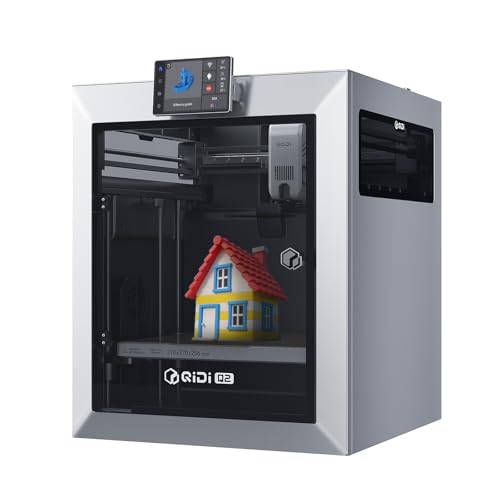
- 65°C heated chamber and 370°C nozzle
- CoreXY printing up to 600mm/s
- Supports technical and composite materials
Best For: All-around makers and engineering projects
Best for Multicolor Printing

- CFS supports up to 16 colors
- 600mm/s speed and 10.24-inch cube
- AI monitoring and automatic leveling
Best For: Multicolor models and larger print batches
Best Large-Format Option

- 390 × 390 × 340mm build volume
- 65°C heated chamber for composites
- Up to 800mm/s with AI monitoring
Best For: Large prototypes and industrial-size parts
Best Easy-Setup Enclosed Printer

- Ready to use in about 15 minutes
- 500mm/s printing with automatic leveling
- Multicolor requires Bambu Lab AMS
Best For: Fast, beginner-friendly enclosed printing
Best Multi-Material Choice

- Four preheated toolheads for fast material changes
- 65°C active chamber and 320°C hardened nozzle
- Supports engineering and composite filaments
Best For: Multi-material prototypes and engineering parts
Best for Everyday Use
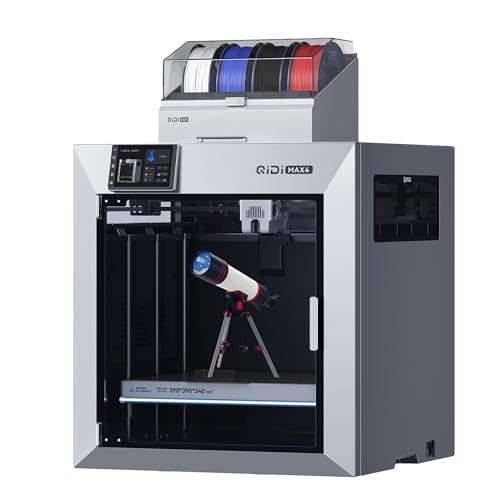
- 390 × 390 × 340mm build volume
- 65°C chamber with high-flow hotend
- AI failure monitoring and expandable multi-color printing
Best For: Large industrial parts and prototypes
Best High-Temperature Value

- 65°C chamber with 400W heating and air circulation
- 370°C nozzle for high-temperature composites
- Large CoreXY build area with remote monitoring
Best For: High-temperature materials and fast production printing
Best Multicolor Speed Pick
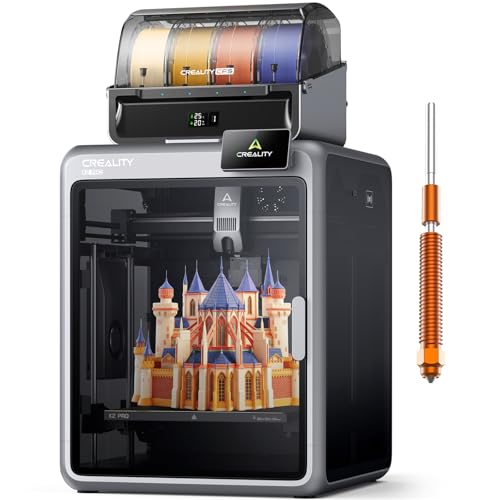
- 60°C active heated chamber
- Up to 16-color printing with included CFS
- 600mm/s printing and 300mm cube build volume
Best For: Fast multicolor prototypes and professional material printing
Best Large-Format Engineering Printer

- 65°C heated chamber and 370°C nozzle
- 320 × 320 × 300mm build volume
- Designed for PPS-CF, PPA-CF, PC, and nylon
Best For: Large functional prototypes and engineering-grade materials
Best Heated-Chamber Multicolor Combo
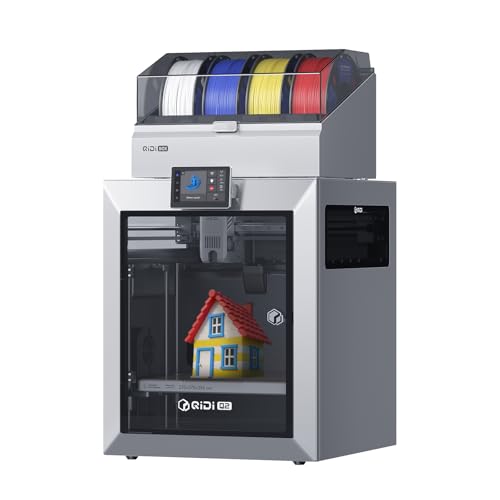
- 65°C chamber and 370°C nozzle
- Up to 16-color printing with dry-while-print filament handling
- Triple filtration and automated safety monitoring
Best For: Hands-off multicolor prototypes and high-temperature materials
Best Overall – QIDI Q2
The QIDI Q2 is a strong all-around 3d printer with heated chamber for users who want beginner-friendly operation alongside professional material capability. Its 65°C heated chamber, 370°C nozzle, automatic leveling, and enclosed filtration system support reliable printing across everyday and engineering-focused projects.
Best For: Beginners, educators, makers, and engineers who want one enclosed printer for materials ranging from PLA and PETG to carbon-fiber composites.
Pros:
- 65°C heated chamber helps reduce warping and improve layer adhesion.
- 370°C nozzle supports advanced materials, including PPS-CF and other composites.
- Full-metal CoreXY design reaches speeds up to 600mm/s.
- Includes automatic leveling, AI camera monitoring, power-loss recovery, and filtration.
Cons:
- Multi-color and multi-material printing requires the separately referenced QIDI BOX system.
- Its nearly 40-pound weight and enclosed design require a sturdy, dedicated location.
The Q2 stands out when versatility and temperature control matter more than having the largest build area. It is a particularly balanced choice for buyers moving from basic filaments into technical materials.
Best for Multicolor Printing – Creality K2 Combo
The Creality K2 Combo is a practical 3d printer with heated chamber for users prioritizing multicolor output and fast, automated workflows. Its included CFS system supports up to 16 colors, while the rigid frame, automatic leveling, and monitoring camera are designed to simplify larger print jobs.
Best For: Creators who want built-in multicolor capability, large-format printing, and fast production of models or multiple smaller parts.
Pros:
- Included CFS enables up to 16-color printing and automatic filament management.
- Prints at up to 600mm/s with 20,000mm/s² acceleration.
- 10.24-inch cubed build volume can accommodate helmets or multiple parts.
- AI camera monitors for issues such as spaghetti failures and foreign objects.
Cons:
- The hotend reaches 300°C, below the maximum temperature of some competing technical-material printers.
- The product’s supplied notes do not specify an active heated-chamber temperature.
- Multicolor printing depends on the included CFS workflow and added filament handling.
The K2 Combo is most compelling for multicolor users who value speed and convenience. Its large cubic build space also makes it useful when splitting models would otherwise be necessary.
Best Large-Format Option – QIDI Max4
The QIDI Max4 is a large 3d printer with heated chamber built for industrial-size parts, molds, and prototypes. Its 390 × 390 × 340mm build volume, 65°C active chamber, hardened nozzle, and high-flow hotend give it the capacity to handle demanding materials without splitting many designs.
Best For: Professionals and serious enthusiasts producing large prototypes, molds, industrial parts, or high-temperature composite prints.
Pros:
- Large 390 × 390 × 340mm build volume supports one-piece production.
- 65°C active heated chamber helps with materials such as ABS-CF, PC, and PPS-CF.
- Closed-loop X/Y motors support up to 800mm/s and 30,000mm/s² acceleration.
- AI failure detection and optional QIDI BOX expansion add workflow flexibility.
Cons:
- At 110 pounds and 28 × 28 × 30 inches, it needs substantial space and support.
- The Polar Cooler is not included and must be purchased separately.
- Its large format may be excessive for small household models.
Choose the Max4 when build volume is the priority. It offers the strongest combination here for large, technically demanding parts, but buyers should budget for installation space and any optional cooling equipment.
Best Easy-Setup Enclosed Printer – Bambu Lab P1S
The Bambu Lab P1S is an easy-to-use enclosed FDM printer for buyers who want quick setup, automatic leveling, and high-speed everyday printing. It is not presented in the supplied notes as an active heated-chamber model, but its enclosure improves performance with advanced filaments and keeps the workflow approachable.
Best For: Beginners and general-purpose users printing PLA, PETG, TPU, ASA, ABS, and similar materials who value fast setup and automated operation.
Pros:
- Ready to use in about 15 minutes.
- Automatic bed leveling simplifies first-layer preparation.
- Prints at up to 500mm/s with 20,000mm/s² acceleration.
- Enclosed design supports advanced filaments and can expand to up to 16 colors with Bambu Lab AMS.
Cons:
- It does not meet the supplied notes’ definition of a dedicated active heated-chamber printer.
- Bambu Lab AMS is required for multicolor printing.
- Carbon- and glass-fiber-reinforced polymers are not recommended.
The P1S is best considered an accessible enclosed alternative rather than a specialist 3d printer with heated chamber. Choose it for speed and convenience when your material list does not require active chamber heating.
Best Multi-Material Choice – FlashForge Creator 5 Pro
The FlashForge Creator 5 Pro is a strong option if you want a 3d printer with heated chamber support for multi-material work and engineering-grade filaments. Its four preheated toolheads simplify material changes, while the actively heated 65°C chamber and 320°C hardened nozzle are designed for demanding prints.
Best For: Multi-material prototypes, engineering parts, and users who want quick toolhead-based material changes.
Pros:
- Four independent toolheads swap materials without repeated filament loading and purging.
- Supports a broad range of materials, including PA-CF, PPA-CF, PPS-CF, and TPU.
- 65°C active chamber heating helps reduce warping and improve layer bonding.
- Adaptive airflow can help sharpen bridges and overhangs when printing low-temperature filaments.
Cons:
- Its four-toolhead system may be more capability than basic single-material users need.
- The listed dimensions and 30.8-pound weight require dedicated workspace planning.
Choose the Creator 5 Pro when material flexibility is as important as chamber control. Its combination of toolhead swapping, active heating, and flow calibration is particularly suited to demanding, repeatable workflows.
Best for Everyday Use – QIDI Max4 Combo
The QIDI Max4 Combo stands out among 3d printer with heated chamber models for its 390 × 390 × 340mm build volume and 65°C active chamber. It is built for large parts, molds, and prototypes, with closed-loop X/Y motors, a high-flow hotend, and support for abrasive engineering materials.
Best For: Large industrial parts, molds, and users who want high-speed printing with future multi-color expansion.
Pros:
- Large build area can accommodate sizable parts without splitting them.
- 65°C active chamber and full-surface silicone heated bed support high-temperature materials.
- Closed-loop X/Y motors, 800mm/s maximum speed, and 30,000mm/s² acceleration support productive printing.
- AI camera can detect abnormalities such as spaghetti-like failures and pause printing.
Cons:
- At 120 pounds, it is substantially heavier and less portable than the other listed options.
- The Polar Cooler is not included and must be purchased separately.
- QIDI BOX is required for the planned 16-color and multi-material expansion.
The Max4 Combo is the practical pick when print volume is the priority. Its chamber heating and motion system are well matched to large engineering jobs, but buyers should budget for its substantial footprint and optional Polar Cooler.
Best High-Temperature Value – QIDI PLUS4
The QIDI PLUS4 is a capable 3d printer with heated chamber features for users printing high-temperature materials. Its 65°C chamber uses 400W heating, air circulation, and dual-layer insulation, while the 370°C integrated nozzle supports demanding filaments such as PPS-CF, PPA-CF/GF, PC, PA, ABS, and ASA.
Best For: High-temperature filament printing, fast CoreXY production, and users who want remote monitoring features.
Pros:
- 400W active chamber heating with circulation and insulation helps maintain consistent conditions.
- 370°C integrated nozzle supports a wide selection of high-temperature and composite filaments.
- Large 12 × 12 × 11-inch build volume supports multiple models in one print session.
- Camera monitoring, remote printing, and filament wrap and break detection add convenience.
Cons:
- The planned QIDI BOX multi-color accessory is listed as a separate future expansion.
- Its approximately 59.4-pound weight and 19.29 × 20.07 × 22.24-inch dimensions need substantial space.
The PLUS4 is a compelling choice if nozzle temperature and chamber consistency matter more than automatic multi-material printing out of the box. Its reinforced motion and bed components also support a stable high-temperature workflow.
Best Multicolor Speed Pick – Creality K2 Pro Combo
The Creality K2 Pro Combo is a capable 3d printer with heated chamber for creators who want fast, large-format, multicolor printing. Its chamber can reach 60°C, while the included CFS system supports up to 16-color and multi-material workflows.
Best For: Professionals and ambitious makers printing large, functional parts with materials such as ABS, ASA, PPA-CF, and PET-CF.
Pros:
- 300 × 300 × 300mm build volume supports large models and batch production.
- Up to 600mm/s speed with 20,000mm/s² acceleration.
- Included CFS enables up to 16-color printing and moisture-proof filament storage.
- Dual AI cameras support print monitoring, flow optimization, and blockage detection.
Cons:
- Its 61.6-pound weight and large footprint require substantial workspace.
- The 60°C chamber is less capable than the 65°C chambers offered by the QIDI alternatives.
The K2 Pro Combo stands out when speed, automation, and included multicolor capability matter most. Its hardened-steel extrusion hardware and heated chamber also make it a strong fit for abrasive and engineering-oriented filaments.
Best Large-Format Engineering Printer – QIDI Plus5
The QIDI Plus5 is a large 3d printer with heated chamber designed for demanding materials and extended production runs. Its 65°C actively heated chamber, 370°C nozzle, and 320 × 320 × 300mm build area support functional parts and oversized prototypes.
Best For: Engineers, makers, and small production teams working with PPS-CF, PPA-CF, PC, nylon, and other high-performance filaments.
Pros:
- Large 320 × 320 × 300mm build volume reduces the need to split models.
- 65°C chamber heating and a 370°C nozzle suit engineering-grade materials.
- CoreXY motion system supports up to 600mm/s and 20,000mm/s² acceleration.
- AI monitoring, remote control, filtration, and thermal sensors support long print sessions.
Cons:
- At 83 pounds, it is the heaviest and least portable option in this group.
- Multi-color printing requires the optional QIDI BOX rather than an included system.
The Plus5 is the practical choice when build volume and high-temperature material compatibility take priority. Its active toolhead cooling option and safety features further support fast, long-duration printing inside the heated enclosure.
Best Heated-Chamber Multicolor Combo – QIDI Q2 Combo
The QIDI Q2 Combo combines a 65°C heated chamber with built-in multicolor functionality, making it a versatile 3d printer with heated chamber for both prototypes and display models. Its 370°C nozzle and dry-while-print system broaden material and color options.
Best For: Users who want an all-in-one multicolor printer with automated filament handling, high-temperature capability, and strong indoor-use filtration.
Pros:
- Supports up to 16-color and multi-material printing with dry-while-print technology.
- 65°C chamber and 370°C nozzle support materials including PA, PC, and fiber composites.
- QIDI BOX offers automatic reloading, NFC filament recognition, and a hardened-steel dual-gear extruder.
- Triple filtration, flame-retardant construction, and automatic power cutoff add safety features.
Cons:
- The 21 × 20 × 23-inch footprint still requires dedicated space.
- Its 54.9-pound weight makes relocation inconvenient.
The Q2 Combo is a strong middle ground for buyers who want heated-chamber performance without giving up convenient multicolor printing. Its automatic leveling, AI camera, filament detection, and power-loss recovery make it particularly well equipped for hands-off operation.
How We Picked the Best 3d Printer with Heated Chamber
We focused on the features that matter most when comparing a 3d Printer with Heated Chamber: maximum chamber temperature, hotend and nozzle temperature, build volume, enclosure design, motion speed, material compatibility, and day-to-day automation. We also considered whether each printer supports multicolor or multimaterial printing, how useful its cameras and sensors are, and whether its controls are practical for frequent printing.
The list includes compact, ready-to-use models as well as large-format and tool-changing machines. Manufacturer specifications can vary by region and configuration, so confirm the exact bundle, power requirements, and supported materials before ordering.
Quick Comparison
- Best balance of features: QIDI Q2 and QIDI Q2 Combo offer 65°C chamber heating and 370°C nozzle capability in a relatively compact format.
- Best for large parts: QIDI Max4 and Max4 Combo provide a 390 × 390 × 340mm build volume with active chamber heating.
- Best for demanding materials: QIDI PLUS4 and Plus5 combine heated chambers with high-temperature nozzles for engineering-focused printing.
- Best for multicolor ecosystems: Creality K2 Combo and K2 Pro Combo pair automatic color systems with high-speed printing features.
- Best for a straightforward enclosed workflow: Bambu Lab P1S is ready to use and widely supported, though it is not positioned as a high-temperature heated-chamber specialist.
- Best for tool-changing production: FLASHFORGE Creator 5 Pro uses four toolheads for mixed-material and multimaterial workflows.
Key Buying Factors for a 3d Printer with Heated Chamber
Chamber Temperature and Enclosure Control
A heated chamber is valuable only when it maintains a stable environment. A rated temperature of 65°C is suited to serious engineering applications, but check whether heating is active, how evenly the chamber is controlled, and whether the printer provides temperature monitoring and safety protections.
Nozzle, Hotend, and Material Support
High nozzle temperatures help process materials such as nylon, polycarbonate, and PPS-based filaments, but the complete filament path matters too. Look for hardened components when printing abrasive carbon-fiber or glass-fiber blends, plus a heated build plate and suitable drying or storage practices.
Build Volume and Machine Footprint
Choose a build area based on the parts you actually make. Large-format models can print bigger housings and prototypes in one piece, but they need more workspace, power, and time to heat. A smaller enclosed printer may be faster and easier to place in a workshop.
Automation and Workflow
Auto bed leveling, first-layer checks, filament sensors, remote monitoring, and failure detection can save substantial time. Multicolor systems add convenience but may increase purge waste, while tool-changing printers can reduce material mixing at a higher purchase price.
Who Should Buy Which 3d Printer with Heated Chamber?
Choose a QIDI Q2 or QIDI Q2 Combo if you want a compact, high-temperature platform with an optional multicolor workflow. Pick the Max4 models for large functional parts, especially when build volume matters more than a small footprint. The PLUS4 or Plus5 is a better fit for users prioritizing engineering materials and chamber heating over entry-level simplicity.
Creality’s K2 and K2 Pro Combo models suit buyers who want fast printing and integrated multicolor features. The FLASHFORGE Creator 5 Pro is aimed at advanced users who can benefit from independent toolheads and mixed-material capability. Choose the Bambu Lab P1S when ease of setup and a polished general-purpose enclosed workflow matter more than a dedicated high-temperature chamber.