A dependable business mesh Wi-Fi system can eliminate dead zones, support busy offices, and provide smoother connectivity across multiple rooms or floors. The right setup depends on your internet plan, device count, building layout, and management needs.
This roundup compares 10 mesh systems spanning Wi-Fi 6, Wi-Fi 6E, and Wi-Fi 7, with options for small offices, expanding businesses, and high-bandwidth environments.
Best 10 Business Mesh Wifi System Picks for 2026
Best Value Coverage

- Wi-Fi 6 coverage up to 6,500 sq. ft.
- Supports up to 150 devices
- Three Gigabit ports per unit
Best For: Small offices needing broad, affordable mesh coverage
Best Wi-Fi 7 Upgrade

- Wi-Fi 7 with plans up to 2.5 Gbps
- Two 2.5 GbE ports per unit
- Coverage up to 6,000 sq. ft.
Best For: Growing offices adopting multi-gigabit networking
Best for High Device Density

- Tri-band Wi-Fi 6E with 6 GHz
- Supports up to 200 devices
- Coverage up to 7,200 sq. ft.
Best For: Busy offices with many devices and compatible Wi-Fi 6E hardware
Best Simple Gigabit Option

- Supports gigabit internet plans
- Covers up to 4,500 sq. ft.
- Supports 75+ devices
Best For: Small offices wanting easy gigabit-class mesh Wi-Fi
Best WiFi 6E Upgrade
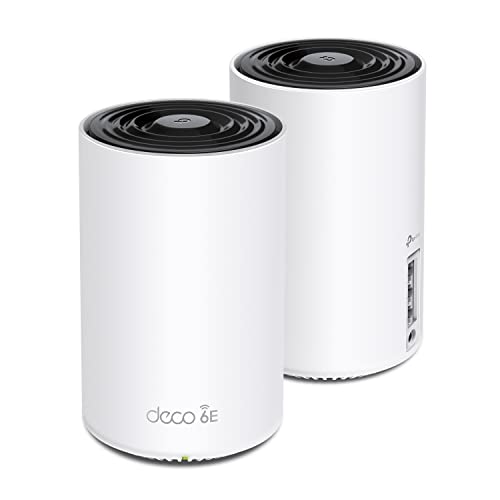
- Tri-band WiFi 6E with a 6 GHz backhaul
- Covers up to 5,500 square feet
- Supports up to 200 devices
Best For: Small businesses and home offices needing WiFi 6E capacity
Best Coverage Value

- Three-pack covers up to 6,000 square feet
- WiFi 7 speeds up to 5 Gbps
- Works with plans up to 2.5 Gbps
Best For: Larger spaces needing broad WiFi 7 coverage
Best for Growing Teams

- Supports 600+ devices across 6,000 square feet
- Two auto-sensing 5 GbE ports per unit
- Supports internet plans up to 5 Gbps
Best For: High-device small and medium-sized businesses
Best with Extra Features
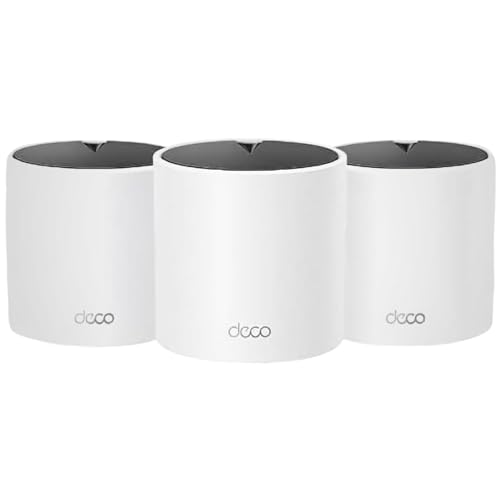
- Wi-Fi 6 AX1500 dual-band mesh
- Up to 5,600 sq. ft. and 120 devices
- Six Gigabit ports with wired backhaul
Best For: Small offices and home businesses seeking affordable, broad coverage
Best High-Performance Upgrade
TP-Link Deco BE63 Wi-Fi 7 Mesh

- Tri-band Wi-Fi 7 with up to 10,000 Mbps combined
- Up to 5,800 sq. ft. and 200+ devices
- 10G and 2.5G Ethernet ports
Best For: Busy offices needing high capacity and multi-gigabit networking
Best Expandable Wi-Fi 7 Value

- Dual-band Wi-Fi 7 BE5000 performance
- Up to 6,600 sq. ft. and 150+ devices
- 2.5G Ethernet and expandable Deco design
Best For: Growing small businesses wanting scalable Wi-Fi 7 coverage
Best Value Coverage – TP-Link Deco X55 3-Pack
For a business mesh wifi system on a practical budget, the TP-Link Deco X55 3-pack combines Wi-Fi 6 performance, broad coverage, and straightforward app-based management. It covers up to 6,500 square feet, supports up to 150 devices, and includes wired Ethernet backhaul for offices that need more consistent node-to-node performance.
Best For: Small businesses and home offices needing broad Wi-Fi 6 coverage and plenty of device capacity.
Pros:
- Up to 6,500 square feet of seamless coverage
- Supports up to 150 connected devices
- Three Gigabit Ethernet ports per unit and wired backhaul support
- Easy setup and management through the Deco app
Cons:
- Dual-band design may provide less dedicated backhaul capacity than a tri-band system
- Most internet providers require a separate modem
The Deco X55 is a well-rounded choice when coverage, device capacity, and wired connectivity matter more than the newest Wi-Fi generation. Its included HomeShield features add basic network security, QoS, and parental controls without requiring a premium subscription for those listed functions.
Best Wi-Fi 7 Upgrade – Amazon eero 7 3-Pack
The Amazon eero 7 3-pack is a forward-looking business mesh wifi system for networks using plans up to 2.5 Gbps. With Wi-Fi 7, two 2.5 GbE ports per unit, coverage up to 6,000 square feet, and support for more than 120 devices, it is built for growing connectivity demands.
Best For: Small businesses that want Wi-Fi 7 features and multi-gigabit wired connectivity.
Pros:
- Supports internet plans up to 2.5 Gbps
- Two auto-sensing 2.5 GbE ports on each unit
- Supports 120+ devices across up to 6,000 square feet
- TrueMesh, TrueRoam, and TrueChannel help optimize connections
Cons:
- Advanced security and additional management tools require the optional eero Plus subscription
- Wireless speeds are listed up to 1.8 Gbps, below the wired 2.5 GbE capability
eero 7 makes the most sense when a business wants newer wireless technology without giving up simple app-based management. Its three-year warranty and stated support options are useful for buyers who value ongoing vendor assistance.
Best for High Device Density – TP-Link Deco XE75 3-Pack
The TP-Link Deco XE75 is a strong business mesh wifi system option when a busy network needs extra wireless capacity. Its tri-band Wi-Fi 6E design covers up to 7,200 square feet, supports up to 200 devices, and can use the 6 GHz band as a dedicated backhaul or for compatible client devices.
Best For: Offices with many connected devices and Wi-Fi 6E-compatible equipment.
Pros:
- Tri-band Wi-Fi 6E with a new 6 GHz band
- Coverage up to 7,200 square feet
- Supports up to 200 devices
- 6 GHz backhaul can help maintain stable node connections
Cons:
- 6 GHz benefits require compatible Wi-Fi 6E devices or use as backhaul
- Gigabit Ethernet ports may limit wired speeds on multi-gigabit internet plans
The XE75 is particularly compelling for offices that need more capacity than a standard dual-band mesh system can provide. Its app, AI-driven mesh behavior, Ethernet connectivity, and HomeShield security features make it flexible, though the 6 GHz advantage depends on the devices and layout involved.
Best Simple Gigabit Option – Amazon eero 6+ 3-Pack
The Amazon eero 6+ 3-pack is a straightforward business mesh wifi system for small offices that want gigabit-class support without a premium price tag. It covers up to 4,500 square feet, supports 75 or more devices, and uses TrueMesh technology to help reduce dead spots and connection drop-offs.
Best For: Small offices and home-based businesses with gigabit internet and moderate device counts.
Pros:
- Supports internet plans up to a gigabit
- Coverage up to 4,500 square feet
- Supports 75+ connected devices
- Simple setup and remote management through the eero app
Cons:
- Smaller coverage and device capacity than the other listed three-packs
- Online security and additional management features require a separate subscription
- Built-in smart-home hub may be unnecessary for business-only deployments
Choose the eero 6+ when ease of installation and reliable everyday connectivity are higher priorities than Wi-Fi 6E or Wi-Fi 7. Automatic updates, customer support, and backward compatibility with previous eero devices also make it a convenient option for gradual expansion.
Best WiFi 6E Upgrade – TP-Link Deco XE75
For a business mesh wifi system serving a busy home office or small workspace, the TP-Link Deco XE75 combines WiFi 6E capacity with broad coverage and app-based management. Its dedicated 6 GHz band can provide a cleaner wireless backhaul between nodes, while the two-pack covers up to 5,500 square feet.
Best For: Small businesses and home offices that want WiFi 6E, tri-band performance, and straightforward network management.
Pros:
- Tri-band WiFi 6E with a 6 GHz band and speeds up to 5,400 Mbps.
- Coverage of up to 5,500 square feet and support for up to 200 devices.
- Deco app offers guided setup, remote management, guest WiFi, QoS, and basic security tools.
Cons:
- WiFi 6E benefits require compatible client devices.
- It is a two-unit system, so larger or multi-floor spaces may need additional nodes.
- Most internet providers require a separate modem.
The XE75 is a practical choice when a business network needs strong device capacity and the efficiency of 6 GHz without moving to WiFi 7. Its feature set is especially appealing for teams already using WiFi 6E devices.
Best Coverage Value – NETGEAR Orbi 370 WiFi 7
The NETGEAR Orbi 370 Series is a business mesh wifi system option for larger spaces that need wide coverage and newer WiFi 7 performance. This three-pack covers up to 6,000 square feet, supports up to 70 devices, and includes enhanced backhaul to help maintain connectivity across the network.
Best For: Larger homes, small offices, and multi-level spaces that prioritize coverage, WiFi 7 compatibility, and simple setup.
Pros:
- Three-unit system provides up to 6,000 square feet of coverage.
- WiFi 7 speeds reach up to 5 Gbps and support internet plans up to 2.5 Gbps.
- Orbi app provides guided setup and management for devices and guest WiFi.
- Automatic firmware updates and built-in router protection are enabled out of the box.
Cons:
- Dual-band design has fewer bands than a tri-band mesh system.
- NETGEAR Armor security requires a separate subscription after the 30-day trial.
- Actual coverage depends on building layout, materials, and satellite placement.
Orbi 370 makes sense for teams that want broad, uncomplicated WiFi 7 coverage and multi-gig connectivity. Its 70-device capacity is more limited than some alternatives, so check expected client counts before buying.
Best for Growing Teams – Amazon eero Pro 7
The Amazon eero Pro 7 is a business mesh wifi system designed for high-bandwidth home networks and small or medium-sized businesses. Its three units cover up to 6,000 square feet, support more than 600 devices, and include two auto-sensing 5 GbE ports per router for wired multi-gig connections.
Best For: Growing teams and high-device environments that need extensive capacity, WiFi 7 features, and easy network management.
Pros:
- Supports internet plans up to 5 Gbps with two 5 GbE ports.
- Three units cover up to 6,000 square feet and support 600+ devices.
- TrueMesh software, TrueRoam, and TrueChannel help maintain reliable connections.
- Includes backward compatibility with previous eero generations and a three-year warranty.
Cons:
- Advanced security, ad blocking, parental controls, VPN, and related tools require an optional eero Plus subscription.
- Wireless speeds are listed up to 3.9 Gbps, below the supported wired internet speed.
- Its feature set may be more than a small office with modest bandwidth needs requires.
With unusually high device capacity and 5 GbE connectivity, eero Pro 7 is a strong fit for busy offices with many simultaneous clients. It is particularly compelling when simple management and long-term WiFi 7 support matter as much as peak speed.
Best with Extra Features – TP-Link Deco X15 3-Pack
The TP-Link Deco X15 is a practical business mesh wifi system for small offices or home-based businesses that need broad coverage without moving to premium Wi-Fi 7 hardware. Its three nodes provide up to 5,600 square feet of coverage, support up to 120 devices, and offer both wireless and wired backhaul options.
Best For: Small offices and home businesses that want affordable Wi-Fi 6 coverage, simple management, and support for many connected devices.
Pros:
- Three-node coverage reaches up to 5,600 square feet.
- Supports up to 120 devices with dual-band Wi-Fi 6.
- Six total Gigabit Ethernet ports enable wired backhaul and flexible router placement.
- Deco app management, guest access, basic security tools, and AI-assisted roaming are included.
Cons:
- AX1500 dual-band performance is less capable than the newer Wi-Fi 7 options in this roundup.
- Most internet providers require a separate modem.
- Some advanced security and control features may require TP-Link HomeShield service.
The X15 is the sensible coverage-first choice. It is especially appealing when a business needs dependable whole-property Wi-Fi and wired expansion, but does not need the highest multi-gigabit speeds.
Best High-Performance Upgrade – TP-Link Deco BE63 Wi-Fi 7 Mesh
The TP-Link Deco BE63 is a strong business mesh wifi system for offices with heavy wireless traffic, newer devices, and a need for faster wired networking. This two-pack combines tri-band Wi-Fi 7, up to 5,800 square feet of coverage, support for more than 200 devices, and 10G plus 2.5G Ethernet connectivity.
Best For: Performance-focused offices handling many devices, high-resolution streaming, demanding transfers, or multi-gigabit internet service.
Pros:
- Tri-band Wi-Fi 7 delivers combined speeds of up to 10,000 Mbps across its bands.
- Two nodes cover up to 5,800 square feet and support more than 200 devices.
- Includes a 10G WAN/LAN port, four 2.5G ports, and USB 3.0 connectivity.
- Offers VPN client and server support, AI roaming, app management, and enhanced security features.
Cons:
- Its advanced capabilities may be unnecessary for smaller offices with modest internet service.
- Wireless performance varies with distance, walls, device capability, and other conditions.
- A separate modem is required for most internet providers.
The BE63 is the most forward-looking option here. Its multi-gigabit ports and Wi-Fi 7 capacity make it a better fit for businesses planning network growth, provided their clients and internet connection can take advantage of the extra performance.
Best Expandable Wi-Fi 7 Value – TP-Link Deco 7 BE5000 Mesh
The TP-Link Deco 7 is a business mesh wifi system for teams that want Wi-Fi 7 performance and generous coverage at a more straightforward specification than a tri-band model. It offers dual-band BE5000 speeds, up to 6,600 square feet of coverage, support for more than 150 devices, and 2.5G Ethernet for faster wired links.
Best For: Growing small businesses that need expandable coverage, Wi-Fi 7 support, and a balance between capacity and cost.
Pros:
- Wi-Fi 7 provides up to 4,324 Mbps on 5 GHz and 688 Mbps on 2.4 GHz.
- Coverage reaches up to 6,600 square feet and supports more than 150 devices.
- 2.5G Ethernet and wired or wireless backhaul help stabilize mesh performance.
- Deco app setup, AI roaming, VPN support, guest access, and security features are included.
Cons:
- Dual-band design has less dedicated wireless capacity than the tri-band BE63.
- Wired backhaul requires at least two Deco units.
- Most internet providers require a separate modem.
The Deco 7 makes a strong middle ground for a growing office. It provides newer Wi-Fi 7 technology and unusually broad stated coverage, while its expandable Deco compatibility leaves room to add another unit as the workspace changes.
How We Picked the Best Business Mesh Wifi System
We compared these systems by wireless standard, advertised coverage, maximum supported internet speed, band configuration, device capacity, Ethernet connectivity, and overall suitability for business environments. We also considered whether each system is better suited to a small office, a multi-floor workplace, or a location with demanding workloads such as video conferencing, cloud applications, and large file transfers.
Advertised coverage and speeds are laboratory or manufacturer estimates. Real-world results vary with construction materials, interference, placement, client hardware, and the service provided by your internet provider.
Quick Comparison
| What to Compare | Best Fit |
|---|---|
| Wi-Fi 6 dual-band | Small offices and budget-conscious deployments |
| Wi-Fi 6E tri-band | Busy networks that can use the 6 GHz band |
| Wi-Fi 7 | New installations, faster plans, and long-term capacity |
| Two-node kits | Compact spaces or smaller coverage areas |
| Three- or four-node kits | Large offices, multiple floors, or difficult layouts |
Key Buying Factors for a Business Mesh Wi-Fi System
Wireless Standard and Capacity
Wi-Fi 6 remains a practical choice for many businesses, while Wi-Fi 6E adds access to the less congested 6 GHz spectrum when compatible devices are available. Wi-Fi 7 is the most forward-looking option, but its value is greatest when your business uses newer client devices and a fast broadband connection.
Coverage and Node Placement
Choose the number of nodes based on the building’s size, walls, floors, and expected traffic—not only the advertised square footage. Wired Ethernet backhaul can improve consistency, particularly in offices with dense construction or heavy usage between nodes.
Internet Speed and Ports
Match the system to your service plan. A gigabit-class system may be sufficient for many small offices, while multi-gigabit plans benefit from hardware with faster WAN and LAN ports. Check the port layout if you need wired workstations, switches, phones, or access points.
Management and Security
Review the mobile app, guest-network controls, automatic updates, parental or access policies, subscription requirements, and support options. Businesses may also need VLAN support, centralized administration, or dedicated business-grade security features that consumer-focused mesh systems do not provide.
Who Should Buy Which Business Mesh Wifi System?
Choose a Wi-Fi 6 dual-band model such as the Deco X15, Deco X55, or eero 6+ for a small office seeking straightforward coverage and reasonable cost. Consider the Deco XE75 when a tri-band Wi-Fi 6E network and wireless backhaul capacity are priorities.
For newer devices, faster broadband, and greater longevity, Wi-Fi 7 options such as the eero 7, Orbi 370, Deco 7, or Deco 7 Pro are better candidates. Select a tri-band model when sustained performance and backhaul capacity matter; choose a dual-band system when value and simple coverage are more important.
Finally, businesses with strict uptime, advanced segmentation, compliance requirements, or centralized IT management should evaluate a dedicated business networking platform rather than relying solely on a consumer mesh kit.