A good surge protector with USB ports can simplify a crowded charging area while helping shield electronics from power surges. The right model depends on more than outlet count: port mix, cord length, spacing, protection rating, and placement all matter.
We compared 10 options ranging from compact wall-mounted extenders to high-capacity power strips. Use the guide below to match each design with your devices, room layout, and charging habits.
Best 10 Surge Protector with USB Ports Picks for 2026
High-Capacity Desk Hub
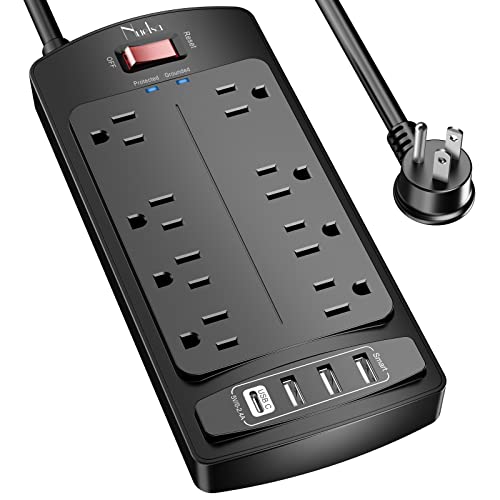
- Eight AC outlets plus four USB ports
- 2,700-joule surge protection
- Six-foot cord with mountable design
Best For: Busy desks and entertainment centers
Wall-Saving Pick
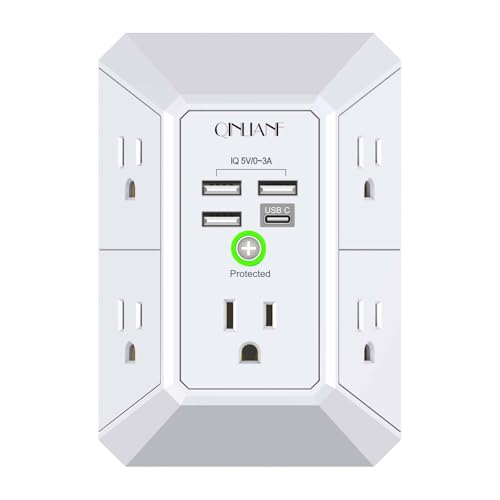
- Five AC outlets and four USB ports
- Secure screw-mounted duplex design
- 1,680-joule surge protection
Best For: Compact indoor wall charging
Long-Reach Station

- Six AC outlets and four USB ports
- Two USB-A and two USB-C ports
- 10-foot cord with flat angled plug
Best For: Distant outlets and dorm setups
Wide-Spaced Wall Pick

- Six widely spaced AC outlets
- Four USB ports with two USB-C
- Screw-secured duplex wall design
Best For: Bulky plugs and compact wall setups
Most Versatile
12-Outlet USB-A and USB-C Surge Protector

- 12 AC outlets plus six USB ports
- 1.7-inch spacing for bulky adapters
- 2400J protection with flat angled plug
Best For: Busy home offices, dorms, and multi-device charging stations
Highest Surge Rating
12-Outlet Power Strip with USB Charging

- 2700J surge protection
- 12 AC outlets and four USB ports
- 6-foot cord with ETL certification
Best For: TV cabinets, offices, and users prioritizing surge capacity
Best Compact Option
CHCORE 8-Outlet USB Charging Strip
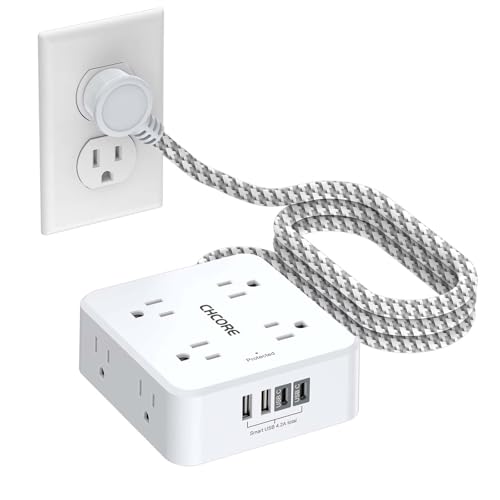
- Eight outlets plus four USB ports
- Two USB-C ports and flat right-angle plug
- Mountable design with ETL certification
Best For: Compact indoor workspaces, dorm rooms, and charging areas
Best for Spacious Charging

- Eight widely spaced AC outlets
- Four USB ports, including USB-C
- Six-foot cord and mountable design
Best For: Crowded desks, offices, and dorm rooms
Best Wall-Mounted Pick
5-Outlet USB Wall Surge Protector

- Five outlets from one wall receptacle
- Four USB ports with USB-C
- 1,680-joule surge protection
Best For: Bedside tables, dorms, and TV cabinets
Best Traditional Power Strip

- Six AC outlets with one spaced outlet
- Two USB-A ports and one USB-C port
- 1,680-joule protection with six-foot cord
Best For: Desks, workbenches, and indoor setups
High-Capacity Desk Hub – 8-Outlet USB-C Power Strip
For a home office, entertainment center, or workspace that needs plenty of connections, this surge protector with USB ports combines eight AC outlets with four USB charging ports, including USB-C. Its 6-foot cord and 2,700-joule rating make it a practical choice for powering several devices from one location.
Best For: Desks, media centers, and work areas with many plugged-in devices and USB chargers.
Pros:
- Eight AC outlets and four USB ports provide substantial charging capacity.
- Includes one USB-C port with up to 3A output and smart charging technology.
- 2,700 joules of surge protection, overload protection, and an ETL-listed design.
- Six-foot cord, flat profile, and mountable construction offer flexible placement.
Cons:
- The USB-C port is not a Quick Charge port and does not support devices requiring 9–22V charging.
- Its larger outlet count may be more than needed for a small setup.
This is the strongest capacity-focused option in the group, especially if you want high surge protection and enough outlets for a crowded workstation. The USB-C limitation is worth noting, but standard phones, tablets, and other compatible USB devices should fit its intended use.
Wall-Saving Pick – 5-Outlet USB Wall Extender
This surge protector with USB ports plugs directly into a duplex wall outlet, creating a compact charging station without a trailing extension cord. It offers five AC outlets, four USB ports, and 1,680 joules of surge protection for indoor home, office, or travel setups.
Best For: Users who want a secure, space-saving outlet extender for a standard duplex receptacle.
Pros:
- Five AC outlets and four USB ports expand a single wall outlet.
- Wide 2.1-inch outlet spacing helps accommodate larger plugs.
- The center screw secures the extender to a compatible duplex outlet.
- USB-A ports provide up to 2.4A, while USB-C provides up to 3A.
Cons:
- The wall-mounting screw works with duplex outlets, not GFCI outlets.
- The USB-C port is not Quick Charge 3.0 and does not support 9–22V devices.
- Its 1,680-joule rating is lower than that of the highest-rated option here.
Choose this model when keeping the installation close to the wall matters more than having a long cord. Check your receptacle type and spacing first, since the secure mounting design has specific compatibility requirements.
Long-Reach Station – 10-Foot USB-C Power Strip
If your outlet is far from the desk or furniture, this surge protector with USB ports adds reach with a 10-foot braided cord. It has six AC outlets, two USB-A ports, two USB-C ports, overload protection, and a flat angled plug designed to sit behind furniture.
Best For: Home offices, dorm rooms, and setups where a long extension cord and multiple USB-C connections are useful.
Pros:
- Ten-foot braided cord helps reach distant wall outlets.
- Four USB ports include two USB-A and two USB-C connections.
- Flat 45-degree plug helps reduce obstruction behind furniture.
- Wall-mountable body includes overload, short-circuit, over-current, over-voltage, and overheating protection.
Cons:
- Its 1,080-joule surge rating is lower than the other corded strip in this roundup.
- USB-C ports are specified for 5V/3A output rather than higher-voltage fast charging.
- It has six AC outlets, fewer than the Nuetsa strip.
The Mifaso is a practical reach-first choice: its 10-foot cable and furniture-friendly plug can solve placement problems that shorter strips cannot. It is best suited to standard USB charging and everyday home electronics rather than higher-voltage USB-C charging.
Wide-Spaced Wall Pick – 6-Outlet USB-C Wall Extender
This surge protector with USB ports turns a compatible duplex receptacle into a six-outlet charging hub. Its three-sided layout, 2.2-inch spacing, four USB ports, and screw-secured wall design make it useful where bulky plugs and a clean installation are priorities.
Best For: Duplex wall outlets in kitchens, offices, bedrooms, or dorm rooms where plug spacing is important.
Pros:
- Six AC outlets are arranged across three sides with generous spacing.
- Four USB ports include two USB-A and two USB-C connections.
- Center screw helps keep the extender secured to a duplex outlet.
- ETL-listed design includes a 900-joule surge protection rating.
Cons:
- The secure mounting feature is intended for duplex outlets and cannot be secured to GFCI outlets.
- The 900-joule rating is the lowest among these four products.
- USB-C ports are not Quick Charge 3.0 and do not support 9–22V charging devices.
This extender makes the most sense when wide spacing and direct wall installation outweigh maximum surge capacity. Confirm that your outlet is a compatible duplex receptacle before buying, and reserve it for devices suited to its standard 5V USB output.
Most Versatile – 12-Outlet USB-A and USB-C Surge Protector
If you need a surge protector with USB ports for a busy desk, entertainment center, or dorm room, this QKP model offers substantial connection capacity. It combines 12 AC outlets with three USB-A and three USB-C ports, plus wide spacing for bulky adapters.
Best For: Home offices, shared charging areas, and setups with many devices and oversized power bricks.
Pros:
- 12 AC outlets and six USB ports support up to 18 connected devices.
- Three USB-C and three USB-A ports reduce the need for separate charging bricks.
- 1.7-inch outlet spacing accommodates larger adapters.
- 2400-joule surge protection, overload protection, and a flat angled plug add practical convenience.
Cons:
- USB-A and USB-C charging are each limited to 5V/3.1A total output.
- The 15A/1875W rating may not suit high-demand equipment beyond typical household electronics.
Its standout advantage is flexibility: the three-sided layout, wide spacing, and six USB ports make it easy to organize a crowded setup. It is a strong choice when connection count matters more than compact size.
Highest Surge Rating – 12-Outlet Power Strip with USB Charging
For shoppers prioritizing surge capacity, the ALESTOR is a practical surge protector with USB ports and a heavy-duty 6-foot cord. It provides 12 AC outlets, four USB charging ports, and a 2700-joule surge rating for home, office, apartment, and TV-cabinet use.
Best For: Users who want a high surge-protection rating, long cord, and room for multiple standard and oversized plugs.
Pros:
- 2700 joules is the highest listed surge rating among these options.
- Includes 12 AC outlets and four USB ports, including one USB-C port.
- Two widely spaced outlets help accommodate larger adapters.
- ETL certified with overload protection and a 24-month warranty.
Cons:
- It has fewer USB ports than the QKP model.
- Only two of the AC outlets receive the extra-wide spacing.
- The USB-C port is limited to 3A maximum output.
The ALESTOR balances capacity and protection well, especially for a media cabinet or office where a 6-foot reach is useful. Its 2700-joule rating and ETL certification make it the most protection-focused pick in this group.
Best Compact Option – CHCORE 8-Outlet USB Charging Strip
The CHCORE is a compact surge protector with USB ports for smaller workspaces and charging areas. Its three-sided design combines eight AC outlets with four USB ports, including two USB-C ports, while the 5-foot braided cord and flat plug support flexible placement.
Best For: Dorm rooms, compact home offices, and indoor setups that need USB charging without a larger 12-outlet strip.
Pros:
- Eight AC outlets and four USB ports can power up to 12 devices.
- Two USB-C and two USB-A ports support a mix of newer and standard USB devices.
- Flat right-angled plug, braided cord, and mounting holes aid placement.
- ETL certified and equipped with overload protection.
Cons:
- 900-joule surge protection is lower than the other two models.
- The 10A maximum current rating provides less capacity than 15A alternatives.
- The USB-C ports do not support devices requiring 9–22V charging.
This model makes the most sense when space and mounting flexibility are more important than maximum outlet count or surge rating. Its USB-C mix is useful, but the lower protection and current ratings should be considered for demanding setups.
Best for Spacious Charging – 8-Outlet USB Surge Protector
If you need a surge protector with USB ports for a crowded desk, entertainment area, or dorm room, this YISHU model offers eight widely spaced AC outlets plus four USB ports. Its three-sided layout, six-foot cord, flat plug, and mounting holes make it flexible for both tabletop and installed use.
Best For: Homes, offices, and dorm rooms that need many outlets and generous plug spacing.
Pros:
- Eight AC outlets with 1.8-inch spacing help accommodate larger plugs.
- Four USB ports include USB-A charging up to 2.4A and USB-C charging up to 3A.
- 900-joule surge protection includes overload, short-circuit, over-current, over-voltage, and overheating protection.
- Six-foot cord, 45-degree flat plug, power switch, and mounting holes add installation flexibility.
Cons:
- Its 10A maximum current is lower than some higher-capacity wall extenders.
- The surge rating is lower than the 1,680-joule options in this roundup.
This is a practical choice when outlet count and spacing matter most. Choose it for versatile home or office placement, especially when you want both USB-A and USB-C charging in one compact unit.
Best Wall-Mounted Pick – 5-Outlet USB Wall Surge Protector
This wall-mounted surge protector with USB ports turns a standard duplex receptacle into five AC outlets and four USB charging ports without adding a trailing power cord. Its compact design is well suited to bedside tables, dorm rooms, TV cabinets, and other places where floor or desktop space is limited.
Best For: Apartments, dorm rooms, and bedside setups that need cord-free outlet expansion.
Pros:
- Five AC outlets and four USB ports expand a standard wall receptacle.
- USB-A ports provide up to 2.4A, while the USB-C port provides up to 3A.
- Its 1,680-joule surge rating and protected indicator support easy status monitoring.
- Screw-secured wall mounting and a fire-resistant casing add stability and protection.
Cons:
- It has no extension cord, so placement depends on the location of a grounded wall outlet.
- The wall-mounted format is less convenient if you need to position outlets across a larger desk or room.
For a clean, space-saving installation, this Lvetek extender is the standout option. It is especially useful when you want multiple charging ports near a bed or entertainment center without managing another power cable.
Best Traditional Power Strip – 6-Outlet USB Surge Protector
For a conventional extension-strip layout, the Yintar surge protector with USB ports combines six AC outlets with two USB-A ports and one USB-C port. The six-foot flat-plug cord, cable ties, mounting hole, and overload-protection switch make it a flexible option for desks, workbenches, and other indoor setups.
Best For: Users who want a standard power strip with mixed USB charging and a longer reach.
Pros:
- Six AC outlets include one widely spaced outlet for bulkier adapters.
- Two USB-A ports support up to 2.4A each, and the USB-C port supports up to 3A.
- Provides 1,680-joule surge protection with a surge indicator and 10A overload protector.
- Six-foot cord, flat plug, cable ties, and mounting hole support tidy placement.
Cons:
- It has three USB ports, fewer than the four-USB models in this roundup.
- Its 10A maximum current may be limiting for higher-demand setups.
This model balances everyday outlet expansion with useful cable-management features. It is a strong fit when you prefer a familiar horizontal power-strip design and need one USB-C port alongside USB-A charging.
How We Picked the Best Surge Protector with USB Ports
We focused on practical specifications that affect everyday use: the number and spacing of AC outlets, USB-A and USB-C availability, cord length, surge-energy rating, plug design, and overall versatility. We also considered whether each format suits a desk, nightstand, media center, kitchen counter, or travel setup.
Listed safety information matters, too. Look for recognized testing marks such as ETL where available, and treat surge protection as a supplement to—not a replacement for—safe electrical use. Avoid overloading any strip or connecting one power strip to another.
Quick Comparison
| Best For | Features to Prioritize | Recommended Format |
|---|---|---|
| Home office | Several outlets, USB-C, adequate spacing | Large power strip with a long cord |
| Nightstand or dorm room | Compact size, wall access, USB charging | Wall outlet extender |
| Entertainment center | Many AC outlets, wide spacing, higher joule rating | High-capacity strip |
| Remote workspace | Six- to 10-foot cord, flexible placement | Flat-plug extension strip |
Key Buying Factors for a Surge Protector with USB Ports
Outlet Count and Spacing
Count the devices you will connect now, then leave room for expansion. Widely spaced outlets are especially useful for bulky adapters. A high outlet count is less helpful if large plugs block neighboring sockets.
USB-A Versus USB-C
USB-A supports many older cables and accessories, while USB-C is more convenient for newer phones, tablets, and other devices. Check the product’s charging output before expecting fast charging; USB ports do not automatically provide the same power as a dedicated wall charger.
Surge Rating and Safety
Joule ratings indicate how much surge energy a device is designed to absorb, but they are only one consideration. Review the stated protection features, certification, warranty information, and any indicator light that confirms protection remains active.
Cord Length and Placement
A flat plug can fit behind furniture, while a six- or 10-foot cord can position the strip where outlets are most useful. Wall-mounted extenders reduce cable clutter but may not work well with oversized plugs or obstructed receptacles.
Who Should Buy Which Surge Protector with USB Ports?
Choose a compact wall extender for a bedside table, hotel-style setup, or small room where direct access to USB charging is more important than a long cord. Choose a multi-outlet strip with USB-C for a home office or study area with computers, monitors, lamps, and mobile devices.
For a media center or shared workstation, prioritize widely spaced outlets and a higher capacity design. If your outlet is far from the workspace, select a longer cord and a flat plug. Finally, buy based on the devices you actually use: more ports are useful only when the strip can safely support the connected load and provide the charging connections you need.