A good projector can still look washed out when daylight, ceiling fixtures, or nearby lamps compete with the image. The best projector screens with ambient light rejection are designed to redirect or absorb unwanted light while preserving contrast and color.
This roundup compares 10 ALR options for fixed-frame theaters, ultra-short-throw setups, portable outdoor viewing, and DIY installations. Pay close attention to projector throw type, screen size, gain, installation style, and the direction of surrounding light before choosing.
Best 10 Projector Screens with Ambient Light Rejection Picks for 2026
Best Fixed-Frame UST Pick
Paris Rhône 100-Inch ALR Screen

- Rejects up to 92% of ambient light
- 4K-ready fixed-frame design
- 160° wide viewing angle
Best For: Permanent home theaters and UST projector setups
Best Custom-Size Solution

- Turns a suitable surface into a screen
- 350–400 sq. ft. coverage per gallon
- Supports HD and 4K UHD projection
Best For: Custom built-in projection walls and UST setups
Best Eye-Comfort Features
NothingProjector 100-Inch ALR Screen

- Rejects up to 85% of ambient light
- 4K UHD and active 3D ready
- Slim, wrinkle-free 10mm frame
Best For: Bright-room UST viewing with reduced glare
Best Portable ALR Screen
100-Inch GAINVANE Anti-Light Screen

- 100-inch 16:9 display with 4K support
- Flexible wall, rope, or tripod setup
- 160-degree viewing angle for group viewing
Best For: Portable indoor and outdoor movie nights, presentations, and events
Best Premium UST ALR Screen
Elite Screens Aeon CLR2 123-Inch

- 123-inch 16:9 fixed-frame display
- Rejects up to 90% of overhead light
- Made for short-throw and UST projectors
Best For: Dedicated home theaters with compatible UST or short-throw projectors
Best ALR Screen With Stand
VISULAPEX 80-Inch Portable Screen

- 1.5-gain gray screen with black backing
- Tripod and wall-mount installation options
- Adjustable height and included carrying bag
Best For: Portable indoor and outdoor viewing with a freestanding setup
Bright-Room Long-Throw Pick
Valerion 100-inch Fresnel ALR Screen
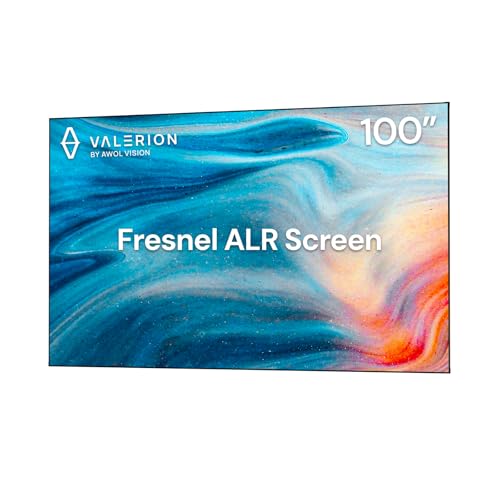
- Designed for long-throw projectors
- 1.8 gain with up to 85% light rejection
- Rollable, scratch-resistant surface
Best For: Bright rooms using long-throw projectors
Ultra-Short-Throw Daylight Choice
NexiGo 100-inch Fresnel ALR Screen

- Built for ultra-short-throw projectors
- 85% ambient and ceiling-light occlusion
- Active 3D and 4K/8K support
Best For: Ultra-short-throw laser TV setups
Standard-Throw Home Theater Pick
Elite Screens Aeon CineGrey 3D

- Designed for standard-throw projectors
- 65% rejection with 1.2 gain
- Edge-free fixed frame with ISF certification
Best For: Permanent standard-throw installations
Best Fixed-Frame UST Pick – Paris Rhône 100-Inch ALR Screen
If you want a permanent installation for an ultra-short-throw projector, this 100-inch model is a strong option among projector screens with ambient light rejection. Its black-grid, multilayer material is designed to reject up to 92% of ambient light in low-ambient-light rooms while preserving 4K detail and vivid color.
Best For: Home theaters, classrooms, and conference rooms using an ultra-short-throw projector.
Pros:
- Fixed-frame 16:9 design supports HD and 4K UST content.
- Black-grid ALR material is rated to reject 92% of ambient light.
- 160° viewing angle supports viewing from multiple seating positions.
- Includes installation hardware and instructions.
Cons:
- Designed for low ambient room lighting rather than strong daylight.
- Fixed-frame wall mounting is less portable than a foldable screen.
- Installation is recommended for at least two people.
Choose this screen when a clean, permanent installation and wide viewing angle matter more than portability. The slim aluminum frame and 100-inch size suit a dedicated viewing space.
Best Portable Outdoor Option – AAJK 120-Inch Foldable ALR Screen
For flexible indoor and outdoor viewing, this 120-inch foldable screen combines a large display with ambient-light resistance. Its six-layer PET optical coating is designed to improve brightness, contrast, and color saturation in bright settings, while the foldable construction simplifies storage and transport.
Best For: Outdoor movie nights, portable home theaters, and presentations that may take place in bright indoor or outdoor environments.
Pros:
- Large 120-inch 16:9 viewing surface.
- Foldable, wrinkle-resistant design supports transport and storage.
- Compatible with short-throw and ultra-short-throw projectors.
- Surface is stain-resistant and can be wiped clean with a microfiber cloth.
Cons:
- Includes only a 30-day warranty.
- Foldable material may need light steaming to reduce creases.
- The supplied details list wall mounting rather than a freestanding frame.
This is the practical choice when portability and screen size are priorities. Its stated 50° anti-glare angle and 160° viewing angle add flexibility, though setup may require extra attention to surface smoothness.
Best Custom-Size Solution – Paint On Screen UST ALR Paint
Instead of installing a conventional screen, this one-gallon matte-gray coating lets you create a projection surface on a wall or another suitable surface. It is formulated for UST projectors and high-ambient-light spaces, with stated support for 1080p HD, 4K UHD, wide-axis viewing, and improved contrast.
Best For: Viewers who want a built-in or custom-sized projection surface without a fixed screen frame.
Pros:
- Can transform any suitable surface into a projection screen.
- Coverage is listed at 350–400 square feet per gallon.
- Supports 1080 HD and 4K UHD projection.
- Can be wiped clean and reapplied if damaged.
Cons:
- Requires surface preparation and painting rather than simple mounting.
- Indoor use is specified, and the coating is not waterproof.
- Results depend on the quality and suitability of the painted surface.
This paint is appealing when a conventional screen would be too limiting or visually intrusive. It offers flexibility in screen size, but achieving the best result depends on careful application to an appropriate surface.
Best Eye-Comfort Features – NothingProjector 100-Inch ALR Screen
This 100-inch fixed-frame screen is designed specifically for ultra-short-throw projectors in bright rooms. Its PET Crystal multilayer surface is rated to reject up to 85% of ambient light, while the black light-absorbing core and protective layers aim to provide high-contrast 4K and 3D viewing with reduced glare.
Best For: Home theaters, classrooms, and offices using a UST projector in rooms with daylight or other ambient light.
Pros:
- Rejects up to 85% of ambient light.
- Supports 4K UHD and active 3D content.
- Wrinkle-free PET Crystal surface and slim 10mm frame.
- 160° viewing angle and protective layers are designed for comfortable viewing.
Cons:
- Fixed-frame wall mounting is not intended for frequent relocation.
- Its ambient-light rating is lower than the 92% claim of the Paris Rhône model listed here.
- Optimized for UST projectors, limiting its fit for other projector types.
This screen is a good match for buyers who value a flat, polished installation and stated glare-reduction features. Its 100-inch size and broad viewing angle work well for shared viewing spaces.
Best Portable ALR Screen – 100-Inch GAINVANE Anti-Light Screen
If you want projector screens with ambient light rejection for flexible home, office, or outdoor use, this 100-inch GAINVANE model emphasizes portability and broad compatibility. Its 16:9 format, 160-degree viewing angle, and wall-, rope-, or tripod-mounting options make it adaptable for movie nights and presentations.
Best For: Buyers who need a large, portable screen for indoor movies, outdoor viewing, sports, gaming, or presentations.
Pros:
- 100-inch, 16:9 display supports 4K Ultra HD projection.
- Designed to reduce the impact of ambient light in brighter rooms.
- Flexible setup with hooks, rope hanging, or a separate tripod.
- 160-degree viewing angle accommodates group viewing.
Cons:
- Tripod is not included.
- Manual wall-mounted setup may require additional hardware or support.
- Warranty coverage is limited to 90 days.
This screen is a practical choice when portability and a generous viewing area matter more than a permanent installation. Remember that the listed dimensions are approximately 89 by 50 inches and that a tripod must be supplied separately if you want freestanding use.
Best Premium UST ALR Screen – Elite Screens Aeon CLR2 123-Inch
For a dedicated home theater using a short-throw or ultra-short-throw projector, the Elite Screens Aeon CLR2 is a purpose-built option among projector screens with ambient light rejection. Its 123-inch, edge-free fixed frame is designed to absorb overhead light while preserving contrast in brighter rooms.
Best For: Home theater owners with a compatible short-throw or ultra-short-throw projector who want a large, permanently mounted screen.
Pros:
- Large 123-inch 16:9 viewing area for an immersive theater setup.
- CLR2 material is specified to reject up to 90% of overhead light.
- 0.9 gain and 160-degree viewing angle support clear group viewing.
- Includes wall-mount brackets and a two-year manufacturer warranty.
Cons:
- Designed exclusively for short-throw and ultra-short-throw projectors.
- Not compatible with triple-laser projectors.
- Fixed-frame installation is less portable than a tripod screen.
The Aeon CLR2 is the most specialized option here, pairing a large fixed frame with a material intended for ceiling-light rejection. Verify your projector’s throw type and laser configuration before purchasing, since compatibility is narrower than with general-purpose screens.
Best ALR Screen With Stand – VISULAPEX 80-Inch Portable Screen
The VISULAPEX 80-inch screen is a convenient pick if you need projector screens with ambient light rejection that can move between indoor and outdoor locations. It combines a 1.5-gain gray screen with a tripod, adjustable height, carrying bag, and a setup designed to take about two minutes.
Best For: Portable movie nights, camping, classrooms, meetings, and buyers who want a freestanding screen with adjustable height.
Pros:
- 1.5 gain and black backing are designed to limit ambient-light effects and light transmission.
- Tripod and wall-mount installation support indoor or outdoor use.
- Adjustable height ranges from about 45 to 89 inches.
- Includes a carrying bag and weighs about 10 pounds according to the product description.
Cons:
- The 70-by-39-inch viewing area is smaller than the listed 80-inch diagonal size.
- Indoor installation requires a space wider than 70 inches and taller than 89 inches.
- Manual tripod assembly still requires several included braces and hardware pieces.
This model offers a useful balance of ALR performance and portability, especially for viewers who do not want to buy a separate stand. Its adjustable height can help clear furniture and other obstacles, while the compact carrying setup suits frequent relocation.
Bright-Room Long-Throw Pick – Valerion 100-inch Fresnel ALR Screen
If you need projector screens with ambient light rejection for a bright room and use a long-throw projector, the Valerion 100-inch Fresnel ALR screen is built for that combination. Its 8-layer Fresnel structure, 1.8 gain, and claimed rejection of up to 85% of overhead and side light target brighter, more comfortable daytime viewing.
Best For: Home theater owners using long-throw projectors in rooms with significant overhead or side lighting.
Pros:
- Designed specifically for long-throw projection; it is not intended for ultra-short-throw projectors.
- 1.8 gain and an advertised 90-degree viewing angle support bright, detailed images.
- Supports 4K and 8K projection and includes a scratch-resistant, easy-to-clean surface.
- Rollable design can simplify transport and DIY installation.
Cons:
- Not compatible with ultra-short-throw projectors.
- At 33 pounds, installation may require careful wall mounting.
- The 90-degree viewing angle is narrower than some competing screens.
The Valerion stands out when daytime performance and long-throw compatibility matter most. Its high gain and strong stated ambient-light rejection are attractive for bright spaces, while the rollable construction adds flexibility during setup.
Ultra-Short-Throw Daylight Choice – NexiGo 100-inch Fresnel ALR Screen
The NexiGo 100-inch Fresnel screen is a strong option when projector screens with ambient light rejection must pair with an ultra-short-throw projector. Its Fresnel lens structure and ALFA technology are designed to direct projector light toward viewers while reducing unwanted ambient and ceiling-light interference.
Best For: Ultra-short-throw laser TV setups and home theaters that need a wide viewing area in daylight.
Pros:
- Specifically designed for ultra-short-throw projector use.
- Claims 85% ambient and ceiling-light occlusion for brighter-room viewing.
- Supports up to 4K/8K resolution and is ready for active 3D.
- A 0.35-inch ultra-narrow bezel provides a near-borderless appearance.
Cons:
- The 1.5 peak gain is lower than the Valerion screen’s stated 1.8 gain.
- Its 26.5-pound weight and ceiling-mount specification may require planning during installation.
- The supplied notes emphasize indoor and outdoor entertainment use but do not detail included installation hardware.
Choose the NexiGo when ultra-short-throw compatibility is non-negotiable. Its Fresnel optics, 85% stated rejection, and narrow bezel make it especially appealing for a daylight-friendly laser TV presentation.
Standard-Throw Home Theater Pick – Elite Screens Aeon CineGrey 3D
For standard-throw installations, the Elite Screens Aeon CineGrey 3D offers a fixed-frame alternative among projector screens with ambient light rejection. Its CineGrey 3D material provides 65% rejection, 1.2 gain, and a 90-degree viewing angle while retaining a slim, edge-free appearance.
Best For: Family rooms, conference rooms, classrooms, and home theaters using standard-throw projectors where lighting is difficult to control.
Pros:
- Compatible with standard-throw projectors and designed for ceiling and ambient-light rejection.
- ISF certification supports accurate color reproduction, while the material is rated for 4K/8K and active 3D.
- Permanently tensioned fixed-frame construction creates a flat, wrinkle-free surface.
- Edge-free styling and a lightweight six-piece aluminum frame provide a modern look and guided assembly.
Cons:
- Its 65% stated rejection is lower than the 85% claims of the other screens here.
- The 1.2 gain is comparatively modest for rooms requiring maximum image brightness.
- Fixed-frame installation is less portable than a rollable screen.
The CineGrey 3D is the practical fit for a permanent standard-throw setup. It trades some light rejection and gain for certified color performance, a taut fixed surface, and an unobtrusive edge-free design.
How We Picked the Best Projector Screens with Ambient Light Rejection
We evaluated these screens by matching their advertised design and specifications to common viewing needs. The lineup includes fixed-frame, portable, stand-mounted, painted, standard-throw ALR, and ultra-short-throw (UST) models. We also considered screen size, aspect ratio, gain, light-rejection claims, installation requirements, portability, and compatibility with bright-room viewing.
Because ALR performance depends heavily on projector placement and room lighting, no single screen is ideal for every setup. A screen optimized for a UST projector may produce poor results with a ceiling-mounted standard-throw projector, even when both products list similar sizes or gain figures.
Quick Comparison
- Best for a permanent home theater: Fixed-frame screens such as the Elite Screens Aeon series or Paris Rhône model.
- Best for UST projectors: Fresnel or UST-specific options from NothingProjector, Valerion, or NexiGo.
- Best for portability: A roll-up outdoor screen or a screen with a built-in stand.
- Best for a custom installation: Projector screen paint, provided the wall is smooth, flat, and properly prepared.
- Best for larger viewing: 120- and 123-inch options, assuming your room and projector support the required distance.
Key Buying Factors for Projector Screens with Ambient Light Rejection
Projector Type and Throw Distance
First identify whether your projector is standard throw, short throw, or UST. UST screens typically use specialized optical layers or Fresnel patterns that direct light toward viewers while reducing light from above. Standard-throw ALR screens use a different viewing geometry and may not perform correctly with a UST projector.
Ambient Light Direction
ALR is not the same as total light blocking. Many screens reject light most effectively from the ceiling or sides, while others are optimized for a particular angle. Check the product description for ceiling-light, side-light, or 360-degree claims, then compare those claims with your windows, lamps, and overhead fixtures.
Gain, Contrast, and Viewing Angle
Higher gain can make the image appear brighter, but it may narrow the optimal viewing angle or create hotspotting. A wide viewing angle is usually more important for family rooms with seating spread across the screen. Consider projector brightness, screen size, image uniformity, and whether you prioritize peak brightness or consistent viewing from the sides.
Installation and Screen Surface
Fixed-frame screens generally provide the flattest surface and best cinematic appearance, but they require permanent wall space. Portable screens are easier to store and move but can show wrinkles or require more setup. Paint offers a seamless look, though wall preparation is critical: texture, unevenness, and poor color matching can reduce sharpness and uniformity.
Who Should Buy Which Projector Screens with Ambient Light Rejection?
Choose a fixed-frame ALR screen if you are building a dedicated theater or want the most stable, wrinkle-free surface. Choose a UST-specific Fresnel screen when the projector sits close to the wall and you regularly watch during the day. A portable screen with a stand or outdoor model is better for movie nights, temporary rooms, and flexible storage. Screen paint makes sense for renters or DIY users who need a custom size, provided they can prepare the projection wall carefully.
Before ordering, confirm the exact diagonal size, 16:9 aspect ratio, mounting hardware, projector compatibility, return policy, and required viewing distance. These checks matter as much as the advertised ambient-light-rejection rating.