Upgrading to one of the best internal SSDs can make a computer feel faster, reduce loading times, and provide more dependable storage than an aging hard drive.
This roundup covers fast PCIe 4.0 NVMe drives, practical 2.5-inch SATA models, and high-capacity options so you can match performance, compatibility, and budget to your system.
Best 10 Internal Ssds Picks for 2026
Performance Pick

- PCIe 4.0 speeds up to 7,450/6,900 MB/s
- 2TB capacity for games and large projects
- Works with desktops, laptops, and PlayStation 5
Best For: Gamers, creators, and power users with PCIe 4.0 systems
Budget SATA Upgrade

- 1TB 2.5-inch SATA storage
- Rated speeds around 520 MB/s
- TLC NAND and three-year service
Best For: Affordable laptop and desktop upgrades
Compact Creator Option

- PCIe 4.0 M.2 2280 design
- Read speeds listed up to 6,600 MB/s
- Power-efficient with five-year warranty
Best For: Fast laptop storage and focused creative projects
Reliable SATA All-Rounder
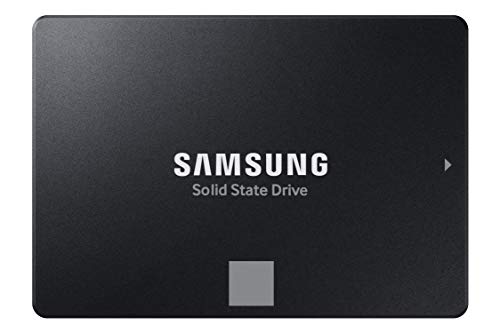
- Up to 560/530 MB/s read/write
- 1TB 2.5-inch SATA capacity
- Five-year warranty and Magician software
Best For: Compatible laptops, desktops, NAS, and everyday PCs
Balanced Gen 4 Speed

- PCIe 4.0 Gen 4x4 NVMe interface
- Up to 6,000MB/s read speed
- Includes Acronis cloning software
Best For: Fast 1TB storage upgrades for compatible laptops and desktops
Simple SATA Upgrade

- 2.5-inch SATA III design
- Up to 550MB/s read speed
- Low-power replacement for HDDs
Best For: SATA laptop and desktop upgrades
High-Speed Gaming Pick

- PCIe Gen 4x4 NVMe interface
- Read speeds up to 7,000MB/s
- Compatible with PS5, laptops, and desktops
Best For: Gaming and high-speed storage expansion
Best with Extra Features

- 256GB 2.5-inch SATA SSD
- Up to 500MB/s read speed
- SmartECC and thermal throttling
Best For: Affordable desktop and everyday PC upgrades
Versatile 1TB Upgrade
KingSpec 1TB 2.5-Inch SATA SSD

- 1TB 2.5-inch SATA III capacity
- Up to 550/520MB/s read/write
- 3-year warranty and broad compatibility
Best For: Laptop, desktop, and PS4 SATA upgrades
High-Capacity Gaming Storage

- 4TB 2.5-inch SATA SSD
- Up to 550/470MB/s read/write
- SLC cache with 3D NAND QLC
Best For: Large game libraries and video-editing storage
Performance Pick – Samsung 990 PRO 2TB
For demanding internal SSD workloads, the Samsung 990 PRO combines PCIe 4.0 bandwidth with rated sequential speeds of up to 7,450 MB/s read and 6,900 MB/s write. Its 2TB capacity suits gaming, video editing, data analysis, and other storage-heavy tasks.
Best For: Gamers, creators, and power users with a compatible PCIe 4.0 M.2 slot.
Pros:
- Very fast PCIe 4.0 performance, rated up to 7,450/6,900 MB/s read/write
- 2TB capacity provides room for games, projects, and large files
- Rated for up to 50% improved performance per watt over the 980 PRO
- Compatible with desktops, laptops, and PlayStation 5
Cons:
- Requires an M.2 PCIe 4.0-compatible system to reach its rated performance
- Its performance may be unnecessary for basic everyday computing
The 990 PRO is the strongest all-around performance option in this group, particularly when fast load times and heavy data transfers matter. Confirm your system supports an M.2 2280 PCIe 4.0 drive before buying.
Budget SATA Upgrade – fanxiang S101 1TB
The fanxiang S101 is a straightforward 2.5-inch SATA choice for upgrading older laptops and desktops. With 1TB of storage and speeds rated around 520 MB/s, it offers a practical improvement over a conventional hard drive without requiring an M.2 slot.
Best For: Everyday computing and budget-friendly laptop or desktop upgrades.
Pros:
- Standard 2.5-inch SATA form factor fits many laptops and desktops
- 1TB capacity offers useful room for applications and personal files
- 3D NAND TLC is designed for longer write life than QLC
- Includes three years of service and lifetime technical support
Cons:
- SATA performance is much slower than PCIe 4.0 NVMe drives
- Check that your device has a compatible 2.5-inch SATA bay and connection
The S101 makes the most sense when compatibility and affordability matter more than top-end transfer speeds. It is a sensible internal SSD replacement for systems still using hard drives or older SATA storage.
Compact Creator Option – SanDisk Optimus 5100 500GB
The SanDisk Optimus 5100 is a compact PCIe 4.0 M.2 2280 internal SSD aimed at fast application launches and creative workflows. This 500GB model is the entry capacity, while the product line extends to larger capacities and emphasizes power-efficient operation.
Best For: Laptop users, creators, gamers, and anyone needing a fast secondary drive in a compatible M.2 system.
Pros:
- PCIe 4.0 interface with listed read speeds up to 6,600 MB/s for this model
- Small M.2 2280 design suits compatible desktops and laptops
- Power-efficient architecture supports mobile productivity
- Includes a five-year limited warranty and SanDisk Dashboard software
Cons:
- 500GB capacity is less suitable for large game libraries or extensive media collections
- Rated speeds require a compatible PCIe 4.0 system
This drive is a good fit when fast NVMe performance and a compact installation are priorities, but its 500GB capacity calls for realistic storage planning. It can work well as a system drive or focused project drive.
Reliable SATA All-Rounder – Samsung 870 EVO 1TB
The Samsung 870 EVO is a dependable 2.5-inch SATA internal SSD for everyday computing, workstations, NAS use, and gaming systems that lack an M.2 slot. It reaches the SATA interface limit with rated speeds up to 560 MB/s read and 530 MB/s write.
Best For: Users seeking a well-supported 1TB SATA upgrade with strong compatibility and management tools.
Pros:
- Rated sequential speeds of up to 560 MB/s read and 530 MB/s write
- Broad compatibility with laptops, desktops, NAS, and video recording devices
- Up to 600 TBW endurance rating and a five-year limited warranty
- Samsung Magician software supports monitoring, updates, and drive management
Cons:
- Cannot match the transfer speeds of PCIe 4.0 NVMe internal SSDs
- Requires a compatible 2.5-inch SATA installation space
The 870 EVO is a strong choice for a proven SATA-format upgrade, especially when system compatibility and software support are important. It is well suited to extending the useful life of older PCs and laptops.
Balanced Gen 4 Speed – Kingston NV3 1TB
Kingston NV3 1TB M.2 2280 NVMe SSD | PCIe 4.0 Gen 4x4 | Up to 6000 MB/s | SNV3S/1000G
Check Price On AmazonThe Kingston NV3 is a practical choice for shoppers comparing internal SSDs for a compatible desktop or laptop. Its PCIe 4.0 Gen 4×4 interface delivers speeds up to 6,000MB/s read and 4,000MB/s write, while backward compatibility can simplify upgrades.
Best For: Users who want a fast, low-power 1TB NVMe drive for general computing, applications, and storage.
Pros:
- PCIe 4.0 Gen 4×4 NVMe performance
- Up to 6,000MB/s read and 4,000MB/s write speeds
- Includes Acronis cloning software
- Compact M.2 2280 design for desktops and laptops
Cons:
- Requires an M.2 PCIe-compatible system
- Warranty information in the supplied details varies between three and five years
Choose the NV3 when you want a modern PCIe 4.0 upgrade with useful cloning software and a 1TB capacity. Check your system’s M.2 and PCIe compatibility before buying.
Simple SATA Upgrade – PNY CS900 500GB
The PNY CS900 is a straightforward option among internal SSDs for laptops or desktops that use a 2.5-inch SATA bay. With sequential speeds up to 550MB/s read and 500MB/s write, it offers a substantial upgrade path from a traditional hard drive.
Best For: Budget-conscious users upgrading a SATA-based laptop or desktop for faster boot and application loading.
Pros:
- 2.5-inch SATA III form factor
- Up to 550MB/s read and 500MB/s write speeds
- Low power consumption
- Backward compatible with SATA II
Cons:
- Slower than PCIe NVMe drives
- 500GB capacity may be limiting for large game or media libraries
- Supplied details list a laptop as the compatible device, so desktop bay requirements should be checked
The CS900 makes sense when your system lacks an NVMe slot or you want a simple replacement for a 2.5-inch hard drive. Confirm the SATA connector and available capacity before installation.
High-Speed Gaming Pick – Fikwot FX991 1TB
The Fikwot FX991 targets shoppers seeking high-performance internal SSDs for a laptop, desktop, or compatible PS5. Its PCIe Gen 4×4 NVMe design is rated for read speeds up to 7,000MB/s, with HMB, SLC caching, and a graphite heatsink aimed at sustained everyday performance.
Best For: Gamers and power users who need a 1TB M.2 drive for compatible PCs or PS5 storage expansion.
Pros:
- PCIe Gen 4×4 NVMe performance with read speeds up to 7,000MB/s
- Supports PS5, laptops, and desktops
- Includes HMB and smart SLC cache
- Graphite heatsink and adaptive temperature management
Cons:
- Requires an M.2 2280 PCIe-compatible slot
- PS5 installation and clearance should be verified before purchase
- Supplied speed details vary, listing write speeds of 3,000MB/s and 6,100MB/s
The FX991 is the strongest performance-oriented choice in this group on its listed read speed, especially for gaming and demanding transfers. Confirm device compatibility and available heatsink clearance before installing it.
Best with Extra Features – Patriot P210 256GB
For shoppers seeking affordable internal ssds, the Patriot P210 is a compact 2.5-inch SATA option for desktops and compatible PCs. Its 256GB capacity suits a responsive operating-system drive or a focused everyday storage upgrade.
Best For: Budget-conscious desktop users, business tasks, and personal computing.
Pros:
- Up to 500MB/s sequential read and 400MB/s sequential write speeds.
- Includes end-to-end data path protection and SmartECC technology.
- Thermal throttling technology helps manage operating temperatures.
Cons:
- 256GB capacity is limited for large game or multimedia libraries.
- 2.5-inch SATA design is slower than modern NVMe alternatives.
The P210 is a practical entry-level choice when capacity needs are modest and SATA compatibility matters. Its protection features and straightforward form factor add value for basic upgrades.
Versatile 1TB Upgrade – KingSpec 1TB 2.5-Inch SATA SSD
The KingSpec 1TB is one of the more versatile internal ssds for replacing a laptop or desktop hard drive. With 3D NAND, SATA III connectivity, and advertised speeds up to 550MB/s read and 520MB/s write, it targets faster loading and transfers without requiring an NVMe slot.
Best For: Laptop, desktop, and compatible PlayStation 4 upgrades needing substantial SATA storage.
Pros:
- 1TB capacity provides room for applications, games, and media.
- 3D NAND and advertised sequential speeds up to 550/520MB/s.
- Supports TRIM, S.M.A.R.T., wear leveling, garbage collection, and NCQ.
- Backed by a 3-year limited warranty and lifetime technical support.
Cons:
- Performance depends on the host system and SATA interface.
- 2.5-inch SATA connectivity does not match NVMe interface speeds.
This drive balances capacity, broad compatibility, and useful maintenance features. It is a sensible midrange SATA replacement for systems that cannot use an M.2 NVMe drive.
High-Capacity Gaming Storage – T-Force Vulcan Z 4TB
For large game libraries and video projects, the TEAMGROUP T-Force Vulcan Z is a high-capacity choice among internal ssds. Its 4TB 2.5-inch SATA design uses 3D NAND QLC with SLC cache and delivers advertised read/write speeds of up to 550/470MB/s.
Best For: Gamers and video editors who need extensive SATA-based storage.
Pros:
- Generous 4TB capacity for games, media, and project files.
- Up to 550MB/s read and 470MB/s write performance.
- Features SLC cache and 3D NAND QLC storage.
- Shock- and vibration-resistant design with intelligent health monitoring.
Cons:
- 2.5-inch SATA interface limits throughput compared with NVMe drives.
- QLC NAND may be less suitable for especially write-intensive workloads.
The Vulcan Z prioritizes capacity and practical gaming performance over cutting-edge interface speeds. Its 4TB size makes it especially attractive when replacing a smaller SATA drive or consolidating a large library.
How We Picked These Internal Ssds
We selected these Internal Ssds across the main upgrade categories: PCIe 4.0 NVMe drives for high-speed desktops, laptops, and compatible consoles; 2.5-inch SATA SSDs for older systems; and budget-friendly capacities for everyday upgrades. We considered advertised sequential read and write speeds, interface and form factor, available capacities, flash type where disclosed, and the intended use case.
Specifications such as maximum transfer rates are measured under ideal conditions. Real-world performance depends on the computer, workload, thermals, available PCIe lanes, and whether the drive has sufficient free space.
Quick Comparison
- Fastest overall class: The Samsung SSD 990 PRO 2TB is aimed at demanding gaming, creative work, and high-performance PCs.
- Strong value NVMe options: Kingston NV3 1TB, SanDisk Optimus 5100 500GB, and Fikwot FX991 1TB offer PCIe 4.0 performance at different price and capacity points.
- Reliable SATA upgrades: Samsung 870 EVO 1TB is a well-rounded choice for systems limited to SATA.
- Budget SATA storage: PNY CS900, fanxiang S101, KingSpec 1TB, and Patriot P210 target basic upgrades and secondary storage.
- High-capacity SATA storage: TEAMGROUP T-Force Vulcan Z 4TB is suited to large game libraries, media collections, and general storage.
Key Buying Factors for Internal Ssds
Interface and Compatibility
Check whether your system accepts an M.2 NVMe drive or a 2.5-inch SATA drive. M.2 describes the physical shape, not necessarily the protocol, so verify that the slot supports NVMe PCIe drives. A SATA-only laptop cannot use a PCIe 4.0 NVMe model without the appropriate hardware.
Capacity
Choose at least 500GB for a basic operating-system drive, while 1TB is a better starting point for modern software and games. Consider 2TB or more when storing large projects, extensive media libraries, or multiple games. Keeping free space available can also help maintain consistent performance.
Speed, Endurance, and Thermals
NVMe drives are generally much faster than SATA models, but the difference is most noticeable in large file transfers and demanding workloads. For everyday browsing and office use, SATA is often sufficient. Check endurance ratings and warranty terms when available, and make sure high-speed NVMe drives have adequate airflow, especially in compact systems.
Who Should Buy Which Internal Ssds?
Choose a premium PCIe 4.0 model for demanding gaming, video editing, development, or frequent large-file transfers. Choose a 1TB NVMe drive for a balanced modern PC or laptop upgrade. Choose a 2.5-inch SATA SSD when upgrading an older laptop or desktop with no compatible NVMe slot. Choose a 4TB SATA model when capacity matters more than peak speed, such as for games, photos, videos, and secondary storage.
Before buying, confirm the drive’s physical dimensions, interface, operating-system support, and available mounting hardware. Back up important data before replacing an existing drive, and check whether your laptop requires a specific M.2 length or a SATA mounting bracket.