The right capture card can make Nintendo Switch gameplay easier to stream, record, and share without sacrificing responsive play. The best choice depends on your console setup, computer ports, preferred resolution, and whether low-latency passthrough matters.
We compare 10 capture cards across performance, connectivity, compatibility, and value to help you find a practical fit for streaming or recording Switch gameplay.
Best 10 Capture Card for Switch Picks for 2026
Premium Performance

- 4K60 capture with HDR10 support
- 1440p120 and 1080p240 passthrough
- 3.5mm analog audio input
Best For: Switch 2 creators seeking high-end capture
Best Versatility
- 2K30 and 1080p60 capture options
- USB-A and USB-C interfaces
- Broad OS and software compatibility
Best For: Multi-device Switch streaming setups
Best Portable Option

- 4K input with 2K30 or 1080p60 recording
- Plug-and-play with no external power
- Compact aluminum design with USB adapter
Best For: Portable Switch streaming and recording
Best Audio Flexibility

- 4K60 HDMI loop-out
- 1080p60 or 2K30 capture
- 3.5mm mic input for commentary
Best For: Switch streamers adding voice commentary
Best Plug-and-Play Pick
Mirabox HSV320 1080p Capture Card
- 1080p capture and passthrough up to 60Hz
- Driver-free setup for Windows, Mac, and Linux
- Broad compatibility with Switch and other HDMI devices
Best For: Beginners who want simple Switch streaming with low-latency passthrough
Best for Commentary
Acer OCB5B0 4K Loop-Out Capture Card

- 4K HDMI input with 1080p capture at 60Hz
- Built-in 3.5mm mic input for live commentary
- Supports Switch 2, consoles, cameras, and USB-A or USB-C
Best For: Creators who want built-in microphone support and flexible connectivity
Best Portable USB-C Option

- 4K/30Hz input and 1080p/60Hz capture
- USB-C connection with included USB 3.0 adapter
- Compact, driver-free design for portable streaming
Best For: USB-C laptop users who need portable Switch capture and recording
Best with Extra Features

- 1080p capture for HDMI devices
- USB 3.0 plug-and-play setup
- HDMI loop-out and TRS mic input
Best For: Simple Switch streaming on Windows or Mac
Best Higher-Resolution Pass-Through

- 1080p60 or 2K30 capture
- 4K60 HDMI pass-through support
- Mic, audio, headphone, and speaker ports
Best For: Flexible Switch streaming and monitoring setups
Best Versatile HDMI Input

- 1080p60 capture with 4K input support
- HDMI loop-out for low-delay viewing
- Plug-and-play Windows compatibility
Best For: Windows users capturing Switch, console, or camera video
Premium Performance – Elgato 4K S
The Elgato 4K S is a premium capture card for Switch 2 and other modern consoles, combining 4K60 capture with high-frame-rate passthrough. It is a strong choice when you want detailed recordings, HDR support, and near-zero-latency gameplay.
Best For: Switch 2 players, streamers, and creators who want high-end capture and passthrough performance.
Pros:
- Captures video at up to 4K60 with HDR10 support on Windows.
- Supports 1440p120 or 1080p240 passthrough for smooth gameplay.
- Includes a 3.5mm analog audio input for commentary or in-game chat.
- Works with Windows, macOS, iPadOS, PS5, Xbox Series X/S, and Switch 2.
Cons:
- Windows HDR tone mapping requires Windows 11.
- Its advanced features may be more than casual Switch users need.
The 4K S stands out for performance and flexibility, but its value is highest for users with a Switch 2 or another source capable of benefiting from high-resolution capture and high-refresh passthrough.
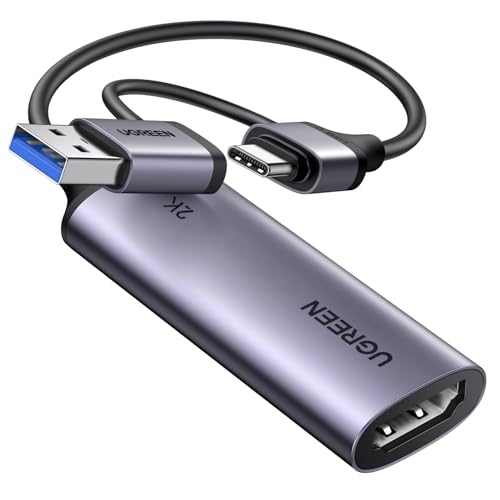
Best Versatility – UGREEN 2K HDMI Capture Card
The UGREEN 2K HDMI capture card is a versatile capture card for Switch, Switch 2, and other HDMI sources. It supports 1080p60 capture, 2K output, USB-A and USB-C connections, and a broad range of computers, tablets, and operating systems.
Best For: Users who want a flexible, driver-free capture setup for streaming Switch gameplay to a computer, iPad, or other compatible device.
Pros:
- Supports 4K input, 2K output at 30 fps, and 1080p at 60 fps.
- Provides both USB-A and USB-C connectivity.
- Works with Windows, macOS, Linux, Android, and iPadOS 17 or later.
- Compatible with OBS, XSplit, QuickTime, PotPlayer, and VLC.
Cons:
- Only accepts HDMI input and sends a one-way signal to USB output.
- Some consoles require HDCP to be disabled.
- iPad compatibility requires iPadOS 17 or later.
UGREEN is a practical choice for mixed-device setups. Its USB-A/USB-C support and software compatibility make it easier to reuse across Switch, consoles, cameras, and mobile workflows.
Best Portable Option – VIXLW 4K HDMI Capture Card
The VIXLW U168-1 is a compact capture card for Switch and other HDMI devices, offering 4K input with recording up to 2K30 or 1080p60. Its plug-and-play design, included USB adapter, and aluminum housing suit portable streaming and recording setups.
Best For: Gamers and creators who need an easy-to-carry capture card for Switch, consoles, cameras, or online meetings.
Pros:
- Accepts 4K30 HDMI input and records at 2K30 or 1080p60.
- Requires no driver or external power.
- Supports Windows, macOS, Linux, and Android.
- Includes a USB 3.0-to-USB-C adapter for added connection flexibility.
Cons:
- Capture output is limited to 2K30 or 1080p60.
- Tablet use requires OTG functionality to be enabled.
- Its specifications call for sufficient processing power for 1080p capture.
This model focuses on convenience rather than top-tier resolution. It is a sensible pick for Switch streaming, travel recording, and general HDMI capture when a small plug-and-play device is the priority.
Best Audio Flexibility – XIIXMASK USB 3.0 Capture Card
The XIIXMASK USB 3.0 model is a practical capture card for Switch that adds 4K60 loop-out and a 3.5mm mic input to a 1080p60 capture workflow. It is designed for streaming, recording, meetings, and commentary across several operating systems and HDMI devices.
Best For: Switch streamers who want microphone input, 4K passthrough, and USB-A/USB-C connectivity.
Pros:
- Supports 4K60 HDMI input and 4K60 loop-out.
- Captures up to 1080p60 or 2K30.
- Includes a 3.5mm mic-in for voice commentary.
- Works with OBS, VLC, PotPlayer, Zoom, and multiple operating systems.
Cons:
- The mic input does not record party chat.
- OBS may require a restart after audio setup.
- The supplied minimum requirements specify a Windows operating system.
Choose this capture card if passthrough and voice commentary matter as much as gameplay capture. Its 4K loop-out is useful for playing on a compatible display while recording at up to 1080p60.
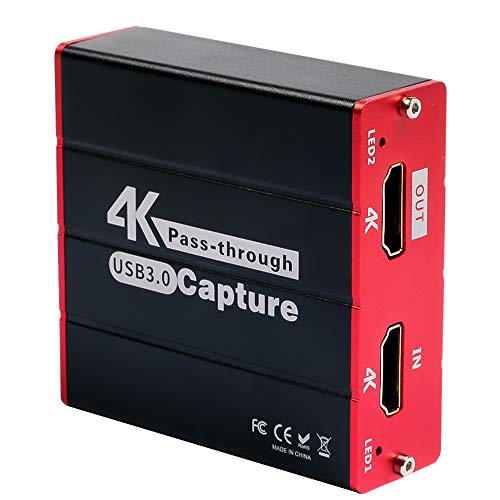
Best Plug-and-Play Pick – Mirabox HSV320 1080p Capture Card
If you want a straightforward capture card for Switch gaming, the Mirabox HSV320 offers 1080p capture and HDMI passthrough at up to 60Hz. Its driver-free setup and broad console compatibility make it practical for beginners using OBS, Twitch, or YouTube.
Best For: Beginners who want low-hassle Switch streaming with zero-latency HDMI passthrough.
Pros:
- Captures and passes through video at up to 1080p/60Hz.
- Driver-free plug-and-play setup for Windows, Mac OS, and Linux.
- Compatible with Switch, PS4, Xbox, cameras, and other 720p or 1080p HDMI devices.
- Compact design suits gaming, recording, meetings, and portable use.
Cons:
- Requires a USB 3.0 connection and a computer meeting the listed system requirements.
- The supplied notes focus on 1080p capture rather than 4K capture.
The HSV320 is a sensible all-around choice when reliable 1080p performance and easy setup matter more than advanced audio features or 4K input.
Best for Commentary – Acer OCB5B0 4K Loop-Out Capture Card
The Acer OCB5B0 is a versatile capture card for Switch with 4K HDMI input, 1080p/60Hz capture, and a built-in mic input. It is a strong fit for creators who want to add live commentary without relying on a separate audio adapter.
Best For: Switch streamers and content creators who need microphone input, broad device support, and 4K loop-out capability.
Pros:
- Accepts 4K input while capturing at up to 1080p/60Hz.
- Built-in 3.5mm mic input supports real-time gaming commentary.
- Works with Switch, Switch 2, PlayStation, Xbox, cameras, PCs, and multiple streaming apps.
- Includes USB Type-A and Type-C connectivity, with no extra drivers or external power required.
Cons:
- Capture resolution is listed as 1080p or 720p, not 4K.
- USB 3.0 is required for USB 3.0 operation.
Choose the Acer when commentary and connection flexibility are priorities. Its 4K input and 1080p capture combination is useful for modern setups, while the mic-in simplifies voice recording.
Best Portable USB-C Option – 4K HDMI to USB-C Capture Card
This compact capture card for Switch supports up to 4K/30Hz input and can deliver 1080p/60Hz capture through USB 3.0. With USB-C connectivity, an adapter included, and no driver or external power requirement, it is convenient for mobile setups and laptop-based recording.
Best For: Portable Switch recording, online meetings, and streaming setups that use USB-C devices.
Pros:
- Supports up to 4K/30Hz input, 2K/30Hz output, or 1080p/60Hz capture.
- Includes USB-C connectivity and a USB 3.0 to USB-C adapter.
- Driver-free and externally powered, with a compact aluminum-alloy design.
- Compatible with Switch, Switch 2, Xbox, PlayStation, cameras, OBS, VLC, and other software.
Cons:
- It is for capture only and does not directly cast to a monitor or TV.
- USB-C-to-HDMI conversion is not supported as a normal two-way connection.
- Software setup may require restarting OBS after audio configuration.
This model makes sense for users who value portability and USB-C flexibility. Confirm that your computer provides USB 3.0 bandwidth, and remember that capture software is required for operation.
Best with Extra Features – 1080p 60FPS Capture Card
This capture card for Switch is a straightforward option for recording or streaming HDMI gameplay at up to 1080p. Its USB 3.0 connection, plug-and-play setup, HDMI loop-out, and microphone input cover the basics for a simple streaming setup.
Best For: Switch players who want an easy Windows or Mac streaming setup with 1080p capture and HDMI pass-through.
Pros:
- Captures video at up to 1080p and supports 60FPS streaming workflows.
- Plug-and-play operation requires no driver or external power supply.
- HDMI loop-out is designed for low-delay gameplay viewing.
- Includes a 3.5mm TRS microphone input for commentary.
Cons:
- Capture resolution is limited to 1080p.
- The microphone input supports 3.5mm TRS microphones, not every headset type.
- A USB 3.0 computer port and compatible capture software are required.
This model is a sensible fit when reliable 1080p capture matters more than higher-resolution recording. The loop-out and mic input also make it practical for live gameplay and commentary.
Best Higher-Resolution Pass-Through – 2K30 Capture Card
This capture card for Switch stands out for its 4K60 HDMI pass-through and flexible audio connections. It captures up to 1080p at 60FPS or 2K at 30FPS while allowing gameplay to be viewed through an external display with minimal latency.
Best For: Streamers who want 4K pass-through, multiple audio ports, and compatibility with OBS, Streamlabs, VLC, Zoom, and similar software.
Pros:
- Captures up to 1080p at 60FPS or 1440p at 30FPS.
- Supports HDMI input and pass-through up to 4K60 in specified modes.
- Provides mic input, audio input, headphone monitoring, and speaker output.
- Works without drivers with common UVC/UAC software.
Cons:
- Capture performance varies with software and available USB bandwidth.
- 4K pass-through limits depend on color mode and refresh-rate settings.
- The mic input supports standard 3.5mm TRS microphones and may not support TRRS or USB microphones.
Choose this model if pass-through quality and audio flexibility are priorities. It offers more connection options than a basic capture dongle, but you should verify your desired resolution, color mode, and microphone type before buying.
Best Versatile HDMI Input – 4K60-Ready Capture Card
This capture card for Switch supports up to 1080p at 60FPS capture while accepting higher-resolution HDMI input for compatible setups. It also includes USB 3.0 connectivity, HDMI loop-out, and a 3.5mm TRS microphone input for streaming and commentary.
Best For: Windows users who want a compact capture card that accepts 4K input and supports multiple HDMI gaming and camera sources.
Pros:
- Supports 4K input up to 60Hz and 1080p input up to 120/144Hz.
- Captures video at up to 1080p 60FPS and outputs up to 2K30.
- Plug-and-play design works with Windows and common streaming software.
- HDMI pass-through is intended for low-delay gameplay.
Cons:
- Does not support 4K120Hz or 4K144Hz input.
- Output is limited to 2K30, while the primary capture mode is 1080p60.
- The listed minimum requirements call for Windows and a USB 3.0 port.
This is a good middle ground for users who need more input flexibility than basic 1080p-only hardware. Its limitations are clearly defined, so confirm that your console, monitor, and intended output settings fit within them.
How We Picked the Best Capture Card for Switch
We focused on the features that matter most for Nintendo Switch gameplay: HDMI compatibility, USB connection type, capture resolution, frame-rate support, passthrough, audio handling, and setup simplicity. Models advertising 1080p at 60 frames per second received particular attention because that is a useful target for smooth gameplay recordings and livestreams.
We also considered whether each device supports higher-resolution HDMI input or passthrough, since these features can improve flexibility with newer consoles and displays. Because specifications and included accessories can vary, confirm the product listing for current requirements before buying.
Quick Comparison
| Feature | What to look for | Why it matters |
|---|---|---|
| Capture quality | 1080p at 60 fps | Produces smooth, detailed Switch footage |
| Input and output | HDMI input with passthrough | Lets you play on a TV or monitor while capturing |
| Computer connection | USB 3.0 or USB-C | Supports reliable data transfer and broad compatibility |
| Higher-resolution support | 4K input or passthrough | Useful for mixed-console setups and future upgrades |
Key Buying Factors for a Capture Card for Switch
Capture Resolution and Frame Rate
For most Switch users, 1080p60 is the practical sweet spot. It provides fluid motion while keeping file sizes, computer demands, and streaming requirements manageable. A card that accepts 4K input may still capture at 1080p, so distinguish between input, passthrough, and actual recording resolution.
Passthrough and Latency
HDMI passthrough sends the console signal to a television or monitor while the computer records it. This is preferable for responsive play because you do not have to rely on the preview window. If you plan to play through software preview, check latency expectations and computer performance.
USB and Setup Requirements
USB 3.0 models generally offer the bandwidth needed for 1080p60 capture. USB-C can improve convenience on newer laptops, but some products use USB-C on the card and still require a USB-A adapter or compatible cable. Verify your computer has the required port and supports the chosen operating system and streaming software.
Audio and Accessories
Check whether game audio travels over HDMI and whether the card provides a headset, microphone, or audio-input option. Cable quality, included adapters, and the need for external software can affect the real setup cost.
Who Should Buy Which Capture Card for Switch?
Choose a premium model if you stream frequently, want dependable software support, or use several consoles. Choose a 1080p60 USB 3.0 model if you want the best balance for Switch recording and livestreaming. Choose a 4K-input or passthrough model if you also use a newer console or want more flexibility from your display chain. Choose a compact USB-C option if portability and laptop compatibility matter most.