The right mixer can make home recording easier by giving you practical control over microphones, instruments, monitoring, and playback in one setup.
We selected 10 options ranging from simple USB interfaces to feature-rich boards with Bluetooth, effects, phantom power, and bundled microphones, so you can match the features to your workflow and budget.
Best 10 Audio Mixers for Home Recording Picks for 2026
Best Overall
Mackie ProFX10v3+ 10-Channel Mixer

- 10 channels with Onyx mic preamps
- Bluetooth playback and USB-C recording
- 24 onboard GigFX+ effects
Best For: Flexible home recording, streaming, and band practice
Best Compact Interface
Focusrite Scarlett Solo 3rd Gen
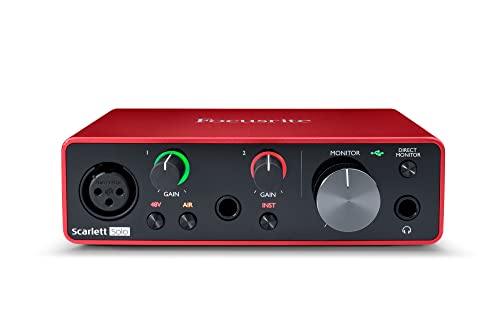
- 24-bit/192kHz recording support
- XLR mic and Hi-Z instrument inputs
- Compact USB interface with Air mode
Best For: Solo vocals, guitar, bass, and podcasts
Best Starter Bundle
MAONO Podcast Equipment Bundle

- Includes condenser mic and essential accessories
- Built-in and recordable sound effects
- Supports two-person multi-platform streaming
Best For: Beginner podcasting, streaming, and voice content
Best Budget Mixer

- Eight channels for microphones and instruments
- 48V phantom power and reverb
- Bluetooth, USB/MP3 playback, and LED display
Best For: Home karaoke, small events, and basic multi-input recording
Creator-Friendly Pick

- Mixer, condenser microphone, and accessories included
- Noise reduction, voice effects, and follow-singing mode
- USB, Bluetooth, and mobile-device compatibility
Best For: Beginners building a versatile streaming and recording setup
Multi-Input Recording Pick

- 12 microphone inputs plus two stereo channels
- Independent 48V phantom power and channel mutes
- USB recording, Bluetooth, and 99 DSP effects
Best For: Multi-microphone home studios and small live setups
Complete Podcast Bundle

- Two condenser microphones with suspension arms included
- DSP noise reduction, voice variations, and sound effects
- USB-C connectivity plus instrument inputs
Best For: Podcasters and streamers creating two-microphone productions
Best Compact Recording Pick

- USB-B computer recording with plug-and-play setup
- Three XLR inputs with 48V phantom power
- Bluetooth, USB playback, EQ, echo, and delay
Best For: Home recording, podcasting, and streaming
Best Effects-Focused Option

- Six channels for microphones, instruments, and stereo sources
- Three-band EQ with 16 built-in DSP effects
- USB playback and Bluetooth music streaming
Best For: Recording and live mixing with built-in effects
Best for Larger Setups

- Eight mic inputs with XLR and 1/4-inch support
- USB, Bluetooth, and USB-drive recording features
- Per-channel EQ, gain, FX, PFL, and fader controls
Best For: Multi-source recording, streaming, and small-band setups
Best Overall – Mackie ProFX10v3+ 10-Channel Mixer
For audio mixers for home recording, the Mackie ProFX10v3+ is a versatile choice when you want hands-on mixing plus easy computer, phone, and Bluetooth connectivity. Its 10 channels, USB-C recording, onboard effects, and mic preamps also suit streaming, podcasting, and band practice.
Best For: Home studios that need one mixer for recording, streaming, playback, and live-style rehearsals.
Pros:
- 10 channels with Onyx preamps on every mic channel
- Supports Bluetooth playback and multi-mode USB recording
- Includes 24 GigFX+ effects with tap tempo
- Works with microphones, instruments, phones, and computers
Cons:
- It is larger and heavier than a compact two-channel interface
- Its corded-electric design is less portable than battery-powered options
The ProFX10v3+ is a strong all-purpose option for creators who want mixer controls without giving up modern wireless and USB workflows. It is especially appealing if your home recording setup may expand beyond solo vocals or instruments.
Best Compact Interface – Focusrite Scarlett Solo 3rd Gen
The Focusrite Scarlett Solo 3rd Gen is a compact alternative to larger audio mixers for home recording. It provides one XLR mic preamp, one Hi-Z instrument input, Air mode, and recording support up to 24-bit/192kHz for focused vocal, guitar, and bass sessions.
Best For: Solo musicians, vocalists, and podcasters who need a simple two-channel USB recording setup.
Pros:
- Records at up to 24-bit/192kHz
- Includes an XLR mic input and high-headroom instrument input
- Air mode can add clarity to acoustic instruments
- Compact design with low-noise balanced monitor outputs
Cons:
- Only two channels, with one dedicated mic preamp
- It does not provide the onboard mixer effects or Bluetooth features listed for some mixer-style options
Choose the Scarlett Solo when recording simplicity and a small footprint matter more than multiple mixer channels. Its included software bundle and broad Mac, Windows, and iPadOS compatibility make it a practical starting point for a focused home setup.
Best Starter Bundle – MAONO Podcast Equipment Bundle
This MAONO bundle gives beginners a ready-to-use route into audio mixers for home recording, podcasting, and live streaming. It combines the S1 mixer with a condenser microphone, cables, tripod, windscreen, and built-in effects, while supporting smartphones and computers through 3.5mm connections and USB-C.
Best For: New podcasters and streamers who want an all-in-one setup for two-person content and live broadcasts.
Pros:
- Includes microphone, cable, tripod, windscreen, mixer, and charging cable
- Offers four recordable and eight built-in sound effects
- Supports up to two people, four devices, and four streaming platforms simultaneously
- Provides voice changing, reverb, monitoring, and denoise controls
Cons:
- The AM200 supports only 3.5mm microphone input and does not support phantom power
- Instruments such as guitars and keyboards require an additional adapter
- Phones without a 3.5mm jack need an OTG adapter
This is less suited to a traditional microphone-and-instrument studio than to content creation. Its included accessories and streaming-focused controls make it convenient for beginners, provided the 3.5mm input limitations fit your equipment.
Best Budget Mixer – CT-80S 8-Channel Sound Mixer
The CT-80S is a budget-oriented option among audio mixers for home recording, with eight channels for microphones, instruments, and other sources. It adds Bluetooth, USB/MP3 playback and recording, reverb, an LED display, and 48V phantom power for compatible microphone setups.
Best For: Home karaoke, small performances, conferences, and basic multi-input recording setups.
Pros:
- Provides eight channels for multiple connected sources
- Includes 48V phantom power and reverb
- Supports Bluetooth and USB/MP3 functions with an LED display
- Thin 1.57-inch design for a low-profile setup
Cons:
- The supplied details identify USB as the connectivity and output technology, so connection options are less fully specified
- At 3.3 kg, it is heavier than compact desktop interfaces
- The listed power specification is 110V with an American plug
The CT-80S makes sense when you need several inputs and entertainment-oriented features at a straightforward price. Verify your power and connection requirements before buying, especially if your home recording system relies on computer-focused I/O.
Creator-Friendly Pick – TENLAMP G10 Mixer Bundle
For beginners comparing audio mixers for home recording, the TENLAMP G10 stands out as an all-in-one option. It combines a two-channel mixer with a condenser microphone and supports USB, Bluetooth, auxiliary, TRS, XLR, and OTG/Type-C connections for recording, streaming, podcasting, and voice content.
Best For: New creators who want a ready-to-use setup for vocals, podcasts, live streaming, gaming, or singing.
Pros:
- Includes a condenser microphone and essential accessories.
- Offers noise reduction plus bass, treble, reverb, and pitch controls.
- Includes voice-changing effects, sound effects, and follow-singing mode.
- Works with Windows, Mac, iOS, and Android without requiring drivers.
Cons:
- Its two-channel design is less suitable for larger multi-microphone setups.
- Battery-powered operation requires attention to charging.
The G10 is a convenient choice when simplicity and creative streaming features matter more than extensive channel capacity. Its bundled microphone and broad device compatibility make it easy to start recording quickly.
Multi-Input Recording Pick – 12-Channel USB Audio Mixer
For home recording projects involving several microphones or instruments, this 12-channel mixer provides substantially more input capacity than compact creator boards. It pairs channel-level 3-band EQ with a 7-band main-output EQ, USB recording and playback, Bluetooth, and 99 selectable DSP effects.
Best For: Home studios, small live setups, meetings, karaoke, and recording sessions with multiple audio sources.
Pros:
- Provides 12 microphone inputs and two stereo line channels.
- Includes 3-band channel EQ and 7-band main-output EQ controls.
- Offers independent 48V phantom-power switches for condenser microphones.
- Includes individual channel mutes, USB recording, Bluetooth, and 99 DSP effects.
Cons:
- The larger 12.41-by-17.88-inch footprint needs more desk space.
- Its corded-electric design is less portable than battery-powered alternatives.
- The supplied details specify XLR output rather than a wider range of output connectors.
This mixer is the stronger fit when channel count and hands-on sound shaping are priorities. It offers the routing and EQ flexibility needed for multi-source recording, though its larger size favors a permanent setup.
Complete Podcast Bundle – V8SS Podcast Audio Interface
This V8SS package is designed for creators who want more than a basic mixer for home recording. It includes two condenser microphones with suspension arms, a live sound card with DSP processing, USB-C connectivity, voice variations, sound effects, and support for vocals, instruments, podcasts, and live broadcasts.
Best For: Podcasters, streamers, and small two-microphone productions that need included microphones and interactive effects.
Pros:
- Includes two broadcast-grade condenser microphones and anti-vibration arms.
- Provides noise reduction, DSP processing, four voice variations, and 10 sound effects.
- Supports PC, smartphones, iPad, PS5, Xbox, and multiple operating systems.
- Accepts electric guitar, bass, and electronic drum inputs.
Cons:
- The two-channel configuration limits larger multi-source sessions.
- The manufacturer recommends fully charging the battery before initial use or after long storage.
- Driver installation may require contacting the manufacturer’s support team if it does not start automatically.
The V8SS is a practical bundle for creators who value included microphones, mobile connectivity, and live voice effects. Its instrument inputs also give it more flexibility than a podcast-only package, while the two-channel layout keeps it focused on smaller productions.
Best Compact Recording Pick – Aveek 5-Channel USB Mixer
If you need audio mixers for home recording that can also handle streaming or podcasting, the Aveek 5-channel model offers a flexible setup in a compact format. It combines three XLR inputs, stereo line connections, USB-B computer recording, Bluetooth streaming, and USB-drive playback.
Best For: Home recording, podcasting, live streaming, and small setups using condenser microphones.
Pros:
- USB-B connection supports plug-and-play computer recording.
- Three XLR inputs include switchable 48V phantom power.
- Offers Bluetooth, USB-drive playback and recording, EQ, echo, and delay.
- Headphone output enables convenient monitoring.
Cons:
- Bluetooth, USB, and 4/5-channel functions cannot be used simultaneously.
- Outputs are intended for active speakers or powered amplification.
- Bluetooth range is listed at approximately 15 feet.
The Aveek is a practical choice when you want recording connectivity and useful playback features without moving to a larger console. Its simultaneous-use limitation is worth considering before planning a more complex setup.
Best Effects-Focused Option – 6-Channel DSP Bluetooth Mixer
For home recording setups that need more hands-on tone shaping and built-in effects, this six-channel mixer provides four XLR/1/4-inch input channels plus stereo channels. It also includes USB connectivity, Bluetooth, 48V phantom power, a three-band EQ, and 16 DSP effects.
Best For: Home studios, karaoke, live performance, streaming, and recording with reverb or delay effects.
Pros:
- Six input channels accommodate microphones, instruments, and stereo sources.
- Four XLR inputs support condenser microphones with 48V phantom power.
- Includes a three-band EQ and 16 built-in DSP effects.
- USB and Bluetooth support music playback and mixing.
Cons:
- The supplied warranty is listed as 90 days from purchase.
- USB-drive and Bluetooth functions require operation through the built-in controls.
- As an analog mixer, it may require more manual setup than a software-centered interface.
This model is appealing if onboard reverb, delay, and detailed channel controls matter more than a minimalist recording workflow. Its six-channel layout provides useful expansion for microphones and instruments.
Best for Larger Setups – 8-Channel USB Audio Mixer
When choosing audio mixers for home recording with room to connect several sources, this eight-channel console offers a broader input layout. It provides eight mic inputs with XLR and unbalanced 1/4-inch compatibility, USB audio connectivity, Bluetooth, three-band EQ, and built-in reverb and delay.
Best For: Larger home recording setups, live streaming, small bands, stage use, karaoke, and podcast production.
Pros:
- Eight input channels provide more connection capacity than the smaller mixers here.
- USB supports computer mixing and recording, while USB-drive recording is also available.
- Each channel includes gain, FX, PFL, EQ, and volume controls.
- Headphone monitoring and LED peak indicators aid hands-on mixing.
Cons:
- Its larger eight-channel layout may be more than a simple one- or two-microphone setup needs.
- The supplied notes do not specify the exact USB recording workflow or software support.
- Bluetooth and USB features add convenience but may increase setup complexity.
The eight-channel design makes this the most expandable option in the group. Choose it when you expect to connect multiple microphones or instruments and want independent channel controls for live or recorded mixes.
How We Picked the Best Audio Mixers for Home Recording
We focused on the features that matter most in a home studio: input count, connection options, USB recording support, microphone compatibility, monitoring controls, built-in effects, and overall versatility. The lineup includes traditional mixers, compact audio interfaces, and all-in-one creator bundles because “mixer” can mean different things depending on whether you record music, podcasts, streams, or voiceovers.
We also considered setup complexity and expansion potential. A simple interface may be the better choice for one microphone and guitar, while a mixer with multiple channels and 48V phantom power makes more sense for several microphones, instruments, or external audio sources.
Quick Comparison
- Best for flexible home studios: Mackie ProFX10v3+ with multiple inputs, USB recording, Bluetooth, and onboard effects.
- Best for simple solo recording: Focusrite Scarlett Solo for straightforward microphone and instrument recording.
- Best for podcasting and streaming: MAONO, TENLAMP, and other bundled creator systems with microphones and voice-focused controls.
- Best for larger setups: The 8- and 12-channel mixers, which provide more inputs for multiple performers or connected equipment.
- Best for budget flexibility: Compact Aveek and generic multi-channel boards with USB, Bluetooth, effects, or phantom power.
Key Buying Factors for Audio Mixers for Home Recording
Inputs and Recording Needs
Count how many microphones and instruments you will use at the same time, then leave room for future expansion. XLR inputs support microphones, while combination or line inputs are useful for instruments, keyboards, phones, and other sources.
USB Recording and Computer Compatibility
If you want to record directly into a computer, choose a model with a USB audio interface rather than a mixer intended only for live sound. Check the included cable, operating-system compatibility, and whether the device supports separate tracks or only a stereo mix.
Phantom Power and Microphone Type
Condenser microphones generally require 48V phantom power. Dynamic microphones usually do not, but they can benefit from a clean preamp with sufficient gain. Confirm that phantom power can be applied safely and appropriately for your equipment.
Effects, Bluetooth, and Monitoring
Reverb, voice effects, Bluetooth playback, and built-in DSP can be useful for streaming and casual production. For detailed music recording, prioritize quiet preamps, dependable monitoring, and clean conversion over a long list of novelty effects.
Who Should Buy Which Audio Mixers for Home Recording?
Solo musicians and beginners should favor a compact interface such as the Scarlett Solo or a small mixer with USB recording. Podcasters and streamers may prefer a bundle that includes a microphone, voice controls, and easy playback from a phone or computer. Home bands, interview teams, and creators using several sound sources should choose an 8- or 12-channel board. If you expect your setup to grow, select a mixer with extra inputs, phantom power, and a reliable computer connection rather than buying only for today’s needs.