The best dynamic microphones for broadcasting help spoken voices sound focused, controlled, and consistent in busy recording spaces. They are especially useful for podcasts, livestreams, radio-style production, and voiceover work where background noise can be a problem.
This roundup compares 10 broadcast-ready options, including USB/XLR hybrids, professional XLR microphones, wireless designs, and headset models. Use the guide below to match features, connectivity, pickup pattern, and budget to your setup.
Best 10 Dynamic Microphones for Broadcasting Picks for 2026
Broadcast Classic
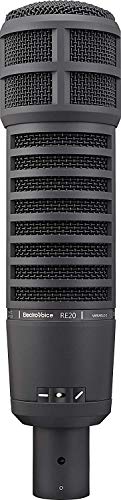
- Natural, controlled FM-radio vocal character
- Variable-D minimizes proximity effect
- True-cardioid XLR design
Best For: Radio studios and professional voice work
Flexible Podcast Desk Setup

- USB-C and XLR connectivity
- Built-in mute, noise cancellation, and monitoring
- Includes stand, swing mount, and two pop filters
Best For: Podcasters and streamers using computers or mobile devices
Simple Broadcast Workhorse

- Internal shock mount and pop filter
- Flexible yoke mounting with dual thread sizes
- Durable all-metal XLR construction
Best For: XLR podcasting and RØDECaster setups
Smart Hybrid Studio Mic

- USB-C and XLR connectivity
- Real-time denoiser and Auto Level Mode
- Includes stand, cable, and foam windscreen
Best For: Podcasting, streaming, and flexible hybrid setups
Studio Broadcast Favorite
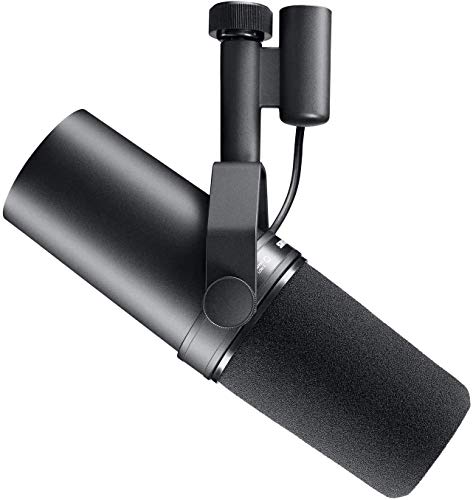
- Warm, balanced vocal sound
- Cardioid pickup with pop filtering
- XLR output and rugged metal build
Best For: Serious podcasting, broadcasting, and studio vocal work
Hands-Free Broadcast Pick

- Dynamic cardioid boom microphone
- Closed-back sound-isolating headphones
- Left- or right-side boom placement
Best For: Live sports and event broadcasting
Flexible Starter Option

- USB-C and XLR connectivity
- Includes stand, windscreen, and cables
- Unidirectional dynamic design
Best For: Beginners building a USB-to-XLR podcasting setup
Best XLR Value

- Speech-focused cardioid dynamic capsule
- Built-in pop filter and shock mounting
- Durable all-metal XLR design
Best For: XLR podcasting, streaming, and broadcast setups
Best Wireless Flexibility
MAONO PD200W Hybrid Wireless Mic

- Wireless, USB, and XLR connectivity
- Up to 60 hours of battery life
- Supports two-mic wireless conversations
Best For: Flexible podcasting, streaming, and mobile recording
Best Proven Vocal Sound

- Focused cardioid vocal pickup
- Integrated spherical grille pop protection
- Rugged metal build for professional use
Best For: Reliable XLR broadcast, podcast, and live vocals
Broadcast Classic – Electro-Voice RE20
The Electro-Voice RE20 is a proven choice among dynamic microphones for broadcasting, built for controlled, natural-sounding speech. Its Variable-D design helps minimize proximity-effect bass buildup, while the true-cardioid pattern limits off-axis coloration.
Best For: Radio announcers, broadcast studios, and voice professionals who want a classic FM-radio sound through an XLR connection.
Pros:
- Smooth, natural, controlled sonic character
- Variable-D design minimizes proximity effect
- True-cardioid pattern with reduced coloration at 180 degrees off-axis
- Durable metal enclosure and three-year warranty
Cons:
- XLR-only connectivity requires a compatible mixer, interface, or preamp
- At 2.9 pounds, it may need a sturdy stand or boom arm
The RE20 is a studio-focused broadcast microphone rather than an all-in-one USB solution. Choose it when established vocal character, off-axis consistency, and proximity-effect control matter more than plug-and-play computer connectivity.
Flexible Podcast Desk Setup – Saramonic MV-Pod-D
The Saramonic MV-Pod-D combines USB-C and XLR flexibility in a practical option for dynamic microphones for broadcasting. Its dynamic cardioid capsule is designed to focus on vocals and minimize room noise, while the included stand and two pop filters simplify desktop setup.
Best For: Podcasters, streamers, voiceover users, and broadcasters who need computer or mobile USB-C use alongside traditional XLR equipment.
Pros:
- USB-C digital output and XLR analog output
- 24-bit/48kHz digital audio with internal high-gain preamp
- Silent-touch mute, noise cancellation, and headphone monitoring
- Includes desktop stand, swing mount, and two pop-filter options
Cons:
- Its listed polar-pattern specification is inconsistent with the product description, which identifies the capsule as cardioid
- Desktop-oriented accessories may be less suitable for permanent studio boom-arm installations
The MV-Pod-D is a versatile starter-to-intermediate package for users moving between laptops, USB-C mobile devices, and XLR gear. Its included accessories reduce the need to assemble a separate desk recording setup.
Simple Broadcast Workhorse – RØDE PodMic White
The white RØDE PodMic is a straightforward choice among dynamic microphones for broadcasting, with a unidirectional cardioid design aimed at focused voice capture. Its internal shock mount and built-in pop filter help reduce handling noise and plosive sounds without requiring extra accessories.
Best For: Podcasting, broadcasting, and voice recording with an XLR mixer, interface, or RØDECaster production console.
Pros:
- Internal shock mount reduces knocks and vibration
- Built-in pop filter helps tame “p” and “b” plosives
- Integrated yoke mount supports standard 3/8-inch and 5/8-inch mounting threads
- Solid all-metal construction
Cons:
- XLR connectivity means it is not a direct USB microphone
- Optimized for use with quality interfaces, mixers, and RØDECaster consoles
The PodMic keeps the broadcast setup focused on the essentials: XLR output, mounting flexibility, and built-in vibration and plosive control. It is a sensible fit for users who already have, or plan to add, suitable XLR equipment.
Smart Hybrid Studio Mic – Shure MV7+
The Shure MV7+ is a feature-rich option among dynamic microphones for broadcasting, offering USB-C and XLR connections for flexible studio or streaming workflows. Voice Isolation Technology, real-time denoising, Auto Level Mode, and a digital pop filter are designed to keep speech clear with less manual adjustment.
Best For: Podcasters, streamers, gamers, and content creators who want both computer-friendly USB-C recording and traditional XLR connectivity.
Pros:
- USB-C and XLR outputs support beginner and professional setups
- Real-time denoiser and Voice Isolation Technology help reduce ambient sound
- Auto Level Mode adjusts gain based on voice volume and distance
- Includes adjustable desktop stand, USB-C cable, and foam windscreen
Cons:
- At 3.6 pounds, it is relatively heavy for a desktop microphone package
- Advanced controls and customization depend on the MOTIV Mix app for compatible computer setups
The MV7+ is suited to users who want a modern, adjustable broadcast workflow without giving up XLR. Its onboard processing and included stand make it particularly practical for streaming and podcasting spaces where room noise or changing speaking distance can be challenging.
Studio Broadcast Favorite – Shure SM7B
The Shure SM7B is a strong choice among dynamic microphones for broadcasting when you want warm, controlled vocals from an XLR setup. Its cardioid pattern, built-in pop filtering, shielding, and rugged metal construction suit podcasts, voiceovers, streams, and studio work.
Best For: Podcasters, broadcasters, streamers, and vocalists with an audio interface or mixer.
Pros:
- Warm, balanced vocal response with a wide frequency range.
- Cardioid pickup and air suspension help reduce room noise and handling vibrations.
- Built-in pop filtering and shielding support clean, reliable recordings.
- Durable all-metal body with flexible XLR gain and tone control.
Cons:
- Requires an XLR interface or mixer.
- At least 60 dB of gain is recommended for its commonly associated tone.
- Its 2.7-pound build is less convenient for lightweight desktop setups.
The SM7B offers refined, broadcast-ready sound and excellent isolation, but it is best matched with a suitably powerful preamp or interface rather than a basic plug-and-play setup.
Hands-Free Broadcast Pick – Audio-Technica BPHS1
The Audio-Technica BPHS1 combines a dynamic cardioid boom microphone with closed-back stereo headphones, making it a practical option among dynamic microphones for broadcasting. It is designed for intelligible speech while helping isolate crowd noise and other distractions.
Best For: Sports commentators, live event crews, and broadcasters who need monitoring and a boom mic in one headset.
Pros:
- Dynamic cardioid microphone is tailored for intelligible vocal reproduction.
- Closed-back ear cups provide sound isolation from background distractions.
- Boom can be positioned on the left or right side.
- Includes microphone and headphone outputs with a long cable.
Cons:
- Uses dedicated XLR and 1/4-inch connections rather than a simple USB connection.
- Designed primarily as a headset, so it is less suitable for studio-style microphone mounting.
- It is not water resistant.
For live broadcasting, the BPHS1’s integrated monitoring and boom design can simplify your setup. Choose it when mobility and isolation matter more than a standalone studio microphone format.
Flexible Starter Option – Samson Q2U
The Samson Q2U is a versatile entry point among dynamic microphones for broadcasting, with both USB-C and XLR connections. The included desktop stand, windscreen, and cables make it convenient for podcasting, recording, and computer-based setups.
Best For: New podcasters, home broadcasters, and creators who want USB convenience with an upgrade path to XLR.
Pros:
- Supports direct USB-C connection to a compatible computer.
- XLR output allows use with mixers and audio interfaces.
- Includes tripod stand, extension, clip, windscreen, USB-C cable, and XLR cable.
- Unidirectional pickup and metal construction suit desktop recording.
Cons:
- Its 50 Hz–15 kHz frequency range is narrower than some studio-focused options.
- USB-C compatibility depends on the computer or interface being used.
- The included tripod stand is intended for desktop use rather than full broadcast mounting.
The Q2U stands out for flexibility and included accessories. It is a sensible choice if you want to start over USB-C and retain the option to move to an XLR recording chain later.
Best XLR Value – RØDE PodMic
The RØDE PodMic is a practical choice among dynamic microphones for broadcasting when you want focused speech pickup and a durable XLR setup. Its cardioid capsule helps reject room noise, while the internal pop filter and shock mounting reduce plosives and desk thumps.
Best For: Podcasters, streamers, and broadcasters using an XLR interface, mixer, or RØDECaster.
Pros:
- Broadcast-tuned dynamic capsule focuses on speech and helps reject room noise.
- Internal pop protection and shock mounting reduce plosives and desk vibrations.
- All-metal construction is designed for long-term use.
Cons:
- Requires an XLR interface or mixer; it is not a USB microphone.
- Less convenient for users seeking a cable-free or plug-and-play setup.
Choose the PodMic if you already have compatible XLR equipment and want a straightforward broadcast microphone with useful built-in protection and a robust housing.
Best Wireless Flexibility – MAONO PD200W Hybrid Wireless Mic
The MAONO PD200W stands out among dynamic microphones for broadcasting because it combines wireless, USB, and XLR connectivity. Its cardioid capsule and three-stage noise cancellation are designed to keep voices focused, while the included receiver supports flexible recording for solo or two-microphone conversations.
Best For: Creators who want one microphone for wireless recording, computer use, smartphones, cameras, and XLR interfaces.
Pros:
- Supports wireless, USB, and XLR connections for adaptable workflows.
- Offers up to a 60 m wireless range and up to 60 hours of battery life with RGB off.
- Single receiver can connect two wireless desktop microphones with separate tracks.
- MaonoLink provides preset modes and adjustable EQ and reverb settings.
Cons:
- Its broader feature set may be more than needed for a simple fixed desk setup.
- Camera and Lightning accessories are sold separately.
The PD200W is the most versatile option here for creators moving between devices or recording locations. It is especially appealing when wireless freedom and multiple connection options matter as much as broadcast-focused voice clarity.
Best Proven Vocal Sound – Shure SM58
The Shure SM58 remains a dependable pick among dynamic microphones for broadcasting when clear, focused vocal reproduction and rugged construction are priorities. Its cardioid pattern concentrates on the speaker, while the spherical grille and integrated filter help reduce plosives, breath, and wind noise.
Best For: Broadcasters, podcasters, vocalists, and performers who want a proven handheld XLR microphone for studio or live use.
Pros:
- Cardioid pickup focuses tightly on the voice and helps minimize background noise and feedback.
- Built-in pop protection reduces plosives, breath, and wind noise.
- Rugged metal construction is suited to touring and professional use.
- Includes a swivel stand adapter and storage bag.
Cons:
- Requires an XLR interface or other compatible audio equipment.
- Its handheld design may be less convenient than a dedicated desktop broadcast microphone.
The SM58 is a sensible choice for users who value consistency, portability, and durability. It works across broadcast, podcasting, recording, and live vocal applications without relying on wireless or USB features.
How We Picked the Best Dynamic Microphones for Broadcasting
We focused on microphones designed for spoken-word recording, podcasting, streaming, and broadcast-style production. The selection includes established studio models and versatile newer options, with attention to voice clarity, off-axis noise rejection, connection types, monitoring features, construction, and setup flexibility.
Because broadcasting setups vary, no single microphone is ideal for everyone. USB/XLR models suit creators who may upgrade from a computer-based setup to an audio interface, while XLR-only microphones are often the better fit for established studios. Headset and wireless designs can be more practical for live or mobile use.
Quick Comparison
| Best For | What to Look For | Strong Match From This List |
|---|---|---|
| Professional studio broadcasting | XLR output, refined voice response, strong rejection | Electro-Voice RE20 or Shure SM7B |
| USB and XLR flexibility | Digital connection, analog output, headphone monitoring | Shure MV7+ or Samson Q2U |
| Budget podcasting | Simple setup, low cost, reliable dynamic capsule | Samson Q2U or Saramonic MV-Pod-D |
| Live and mobile broadcasting | Headset comfort or wireless connectivity | Audio-Technica BPHS1 or MAONO PD200W |
| Traditional vocal and speech use | Durability, familiar XLR workflow | Shure SM58 |
Key Buying Factors for Dynamic Microphones for Broadcasting
Connection and Compatibility
USB microphones connect directly to a computer, making them convenient for solo creators. XLR microphones require an audio interface, mixer, or compatible recorder but integrate more easily into professional signal chains. Hybrid USB/XLR models provide both options and can extend the useful life of your setup.
Voice Isolation and Room Acoustics
Dynamic capsules generally capture less ambient sound than sensitive condenser designs, but microphone placement still matters. A cardioid pattern helps reject sound from behind the microphone. In untreated rooms, position the mic close to your mouth and keep fans, keyboards, and reflective surfaces as far away as practical.
Gain, Proximity Effect, and Processing
Many broadcast dynamics need substantial clean gain. Check whether your interface can drive the microphone without excessive hiss, or consider an inline preamp. Close placement can add warmth and bass through proximity effect, so look for a mic with a controlled low-end response and plan for light EQ and compression.
Handling, Mounting, and Monitoring
A sturdy boom arm, shock mount, pop filter, and windscreen can matter as much as the capsule. Integrated headphone monitoring and mute controls are useful for streaming, while headset models simplify consistent mic positioning during live sessions.
Who Should Buy Which Dynamic Microphones for Broadcasting?
Choose the Electro-Voice RE20 or Shure SM7B if you want a proven professional XLR microphone for a dedicated broadcast or podcast studio. The Shure MV7+ is a strong choice for creators who want modern USB convenience alongside XLR expansion.
For affordable computer-based recording, consider the Samson Q2U or Saramonic MV-Pod-D. Choose the RØDE PodMic models for straightforward XLR podcasting, with the white version offering a different visual finish. The MAONO PD200W suits buyers who want hybrid connectivity with wireless flexibility.
Select the Audio-Technica BPHS1 when a broadcast headset is more practical than a desk-mounted mic. The Shure SM58 remains a dependable, durable option for speech, vocals, and general-purpose XLR use.