The best polyphonic synthesizers make it easier to build full chords, layered pads, evolving textures, and expressive arrangements without relying entirely on software instruments. This lineup covers compact hybrid keyboards, analog classics, modern digital designs, and performance-focused workstations.
Before choosing, consider voice count, keybed feel, synthesis architecture, sequencing tools, effects, connectivity, and whether you need a compact instrument or a full-size centerpiece for your setup.
Best 10 Polyphonic Synthesizers Picks for 2026
Best Hybrid Pick

- Six-voice polyphony in a compact 37-key design
- Hybrid digital-and-analog sound profile
- Includes a MiniFreak VST counterpart
Best For: Beginners and portable hybrid-synth setups
Best for Evolving Textures

- 60 voices and four stacked oscillators
- Built-in KAOSS Pad and Kaoss Physics
- Deep modulation with filters, LFOs, and processors
Best For: Sound designers and expressive live performers
Best Premium Keybed
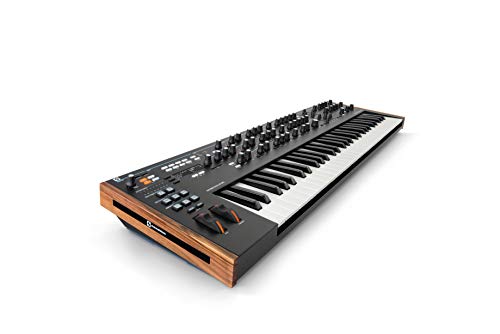
- 61-key semi-weighted keyboard with aftertouch
- 16 voices and two-part multitimbrality
- Subtractive, wavetable, and FM synthesis
Best For: Keyboard players needing a full-size performance synth
Best Experimental Compact Pick
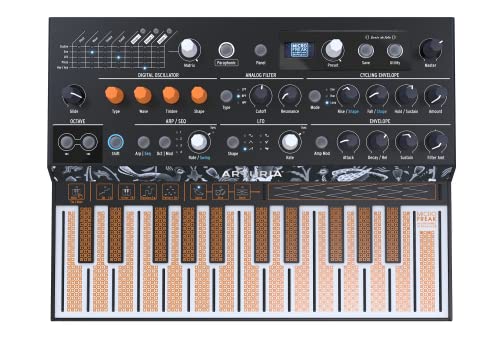
- Paraphonic engines span physical modeling to wavetable
- 25-key touch plate offers polyphonic aftertouch
- CV, MIDI, and USB connectivity for flexible setups
Best For: Experimental producers and modular-synth users
Best Analog Modeling Pick
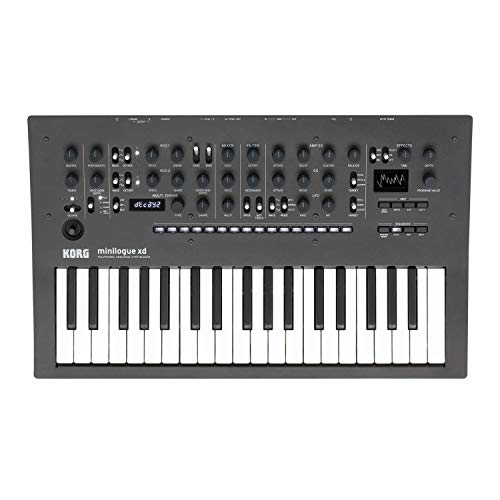
- Four-voice polyphony with versatile voice modes
- Dual-oscillator and digital multi-engine synthesis
- 16-step sequencer and OLED oscilloscope
Best For: Compact hands-on sound design and sequencing
Best High-Polyphony Option

- 12-voice polyphony for fuller arrangements
- Alloy-steel body and construction
- Large format for dedicated setups
Best For: Players prioritizing voice count and durability
Best Portable Performance Synth

- 18-voice polyphony and 37 mini keys
- Built-in vocoder with included microphone
- Animate buttons and real-time arpeggiator
Best For: Portable performance and vocal processing
Fat Analog Foundations

- Four VCOs deliver warm, bass-heavy analog tones.
- 4-voice mono, unison, polyphonic, and paraphonic modes.
- 37 velocity-sensitive full-size keys with sequencing tools.
Best For: Hands-on analog basses, leads, and compact chord performances
Wide Polyphonic Control
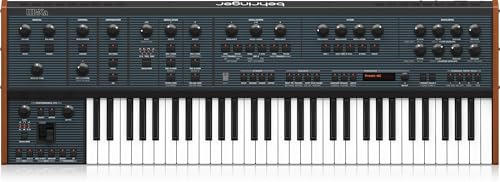
- 16-voice analog polyphony for substantial chord capacity.
- Bitimbral design supports two simultaneous sounds.
- 32 oscillators and extensive MIDI connectivity.
Best For: Studio players needing high polyphony and layered analog parts
Classic Eight-Voice Design

- Eight analog voices with two VCOs per voice.
- Unison mode creates 16-oscillator lead and bass sounds.
- Arpeggiator, sequencer, and 400 program memories included.
Best For: Eurorack users seeking vintage-style analog chords and sequencing
Best Hybrid Pick – Arturia MiniFreak
Arturia MiniFreak 37 Key Polyphonic 6-Voice Hybrid Synthesizer Keyboard (Standard, 37 Key)
Check Price On AmazonThe Arturia MiniFreak is a practical choice for shoppers seeking polyphonic synthesizers with a compact 37-key format and a hybrid digital-and-analog sound profile. Its six-voice design, USB connectivity, portability, and included VST counterpart make it suitable for both hands-on playing and computer-based production.
Best For: Beginners and producers who want a portable hybrid synthesizer with flexible sound-design potential.
Pros:
- Six-voice polyphony supports chords and layered parts.
- Hybrid sound engine offers digital and analog character.
- Includes a MiniFreak VST counterpart for software integration.
- Compact 37-key design is relatively portable.
Cons:
- Its 37-key range is smaller than a full-size keyboard.
- USB is the listed connectivity option, so broader hardware connections may require additional equipment.
The MiniFreak stands out as an approachable, space-conscious option for exploring varied synth textures without committing to a larger keyboard workstation.
Best for Evolving Textures – Korg MULTIPOLY
Korg multipoly Analog Modeling Synthesizer w/Four Oscillators, 60 Voices and built-in KAOSS Pad
Check Price On AmazonThe Korg MULTIPOLY is one of the more feature-rich polyphonic synthesizers in this group, combining analog modeling with four oscillators, 60 voices, and a built-in KAOSS Pad. Its modulation, sequencing, filtering, and performance tools are designed for players who want broad sound-design control in a compact instrument.
Best For: Sound designers and performers who want extensive modulation, layered oscillators, and interactive effects.
Pros:
- 60-voice polyphony is generous for complex chords and layers.
- Four stacked oscillators support rich, multidimensional sounds.
- Includes dual filters, four envelopes, five LFOs, and six modulation processors.
- Built-in KAOSS Pad, Kaoss Physics, and Motion Sequencing 2.0 add expressive control.
Cons:
- Its extensive feature set may be more than beginners need.
- The supplied notes do not specify a keyboard size or included power accessories.
With its high voice count and unusually deep modulation architecture, the MULTIPOLY is a strong fit for evolving textures, experimental patches, and performance-oriented sound manipulation.
Best Premium Keybed – Novation Summit
The Novation Summit is a full-size option among these polyphonic synthesizers, offering 16-voice polyphony, a five-octave semi-weighted keybed, and two-part multitimbrality. Its three New Oxford oscillators per voice support subtractive, wavetable, and FM synthesis, while dual analog filters and onboard effects broaden its production range.
Best For: Keyboard-focused players and producers who need a substantial instrument for layered, detailed performances.
Pros:
- 61 velocity-sensitive keys include aftertouch.
- Two-part multitimbrality supports independent layered or split sounds.
- Three oscillators per voice cover subtractive, wavetable, and FM synthesis.
- Per-part distortion, chorus, delay, and reverb are built in.
Cons:
- At 23.5 pounds, it is less portable than the compact models here.
- Its larger footprint requires more setup space.
The Summit is the most traditional performance-keyboard choice in this selection, pairing a premium five-octave keybed with substantial synthesis depth and multitimbral flexibility.
Best Experimental Compact Pick – Arturia MicroFreak
The Arturia MicroFreak is a compact choice for shoppers exploring polyphonic synthesizers with unconventional control and sound-generation features. Its paraphonic oscillator modes span physical modeling and wavetable synthesis, while the touch-plate keyboard provides polyphonic aftertouch, pressure control, and CV connectivity for modular setups.
Best For: Experimental producers and modular users who prioritize unusual sounds, sequencing, and compact portability.
Pros:
- Offers multiple paraphonic oscillator modes, including physical modeling and wavetable options.
- Touch-plate keyboard detects pressure and individual-note aftertouch.
- CV outputs support pitch, gate, and pressure signals for compatible gear.
- Includes a sequencer, arpeggiator, modulation matrix, and vocoder mode.
Cons:
- The 25-key touch-plate design may feel unfamiliar compared with conventional keyboards.
- Its paraphonic architecture is not the same as fully independent polyphony.
- The supplied notes identify it as better suited to advanced users.
The MicroFreak favors experimentation over conventional keyboard feel, making it an especially compelling small-format instrument for distinctive patches, generative patterns, and CV-based systems.
Best Analog Modeling Pick – Korg minilogue xd
The Korg minilogue xd is a compact choice for musicians seeking polyphonic synthesizers with a four-voice architecture, analog-style sound design, and hands-on sequencing. Its dual-oscillator engine, digital multi-engine, OLED oscilloscope, and built-in effects provide substantial sound-shaping flexibility in a portable format.
Best For: Musicians who want a compact four-voice synthesizer for layered sounds, sequencing, and detailed sound design.
Pros:
- Four-voice polyphony with POLY, UNISON, CHORD, and ARP/LATCH modes
- Dual-oscillator synthesis engine plus digital multi-engine with noise, VPM, and user slots
- Built-in 16-step polyphonic sequencer and OLED oscilloscope
- 500 programs, micro tuning, and multiple built-in effects
Cons:
- Four voices provide less polyphonic headroom than the other options here
- Its 37-key format may be limiting for players who prefer a larger keyboard
The minilogue xd balances portability with extensive synthesis tools. It is particularly appealing if you want tactile control, onboard sequencing, and visual feedback without moving to a larger instrument.
Best High-Polyphony Option – Behringer DEEPMIND 12X
The Behringer DEEPMIND 12X is designed for players who prioritize voice count when comparing polyphonic synthesizers. Its 12-voice design offers more stated polyphony than the other products in this roundup, while its substantial alloy-steel construction suits a more permanent studio or performance setup.
Best For: Keyboardists and producers seeking a 12-voice synthesizer with a larger, sturdier body.
Pros:
- 12-voice polyphony for fuller chords and layered parts
- Alloy-steel body and construction
- Large form factor suited to a dedicated studio or stage setup
Cons:
- At 35.55 inches wide and 22.1 pounds, it is less portable than the compact options
- The supplied notes provide fewer specific sound-design and performance details than the other models
The DEEPMIND 12X stands out primarily for its 12-voice polyphony and robust construction. Choose it when chordal range and a full-size footprint matter more than portability or detailed onboard feature information.
Best Portable Performance Synth – Novation MiniNova
The Novation MiniNova combines 18-voice polyphony with a compact 37-mini-key design, making it a flexible entry in the polyphonic synthesizers category. Its analog modeling engine, built-in vocoder, Animate buttons, arpeggiator, and 256 presets support both quick preset selection and expressive live manipulation.
Best For: Performers and producers who want portable polyphony, vocal processing, and fast-access performance controls.
Pros:
- 18-voice polyphony with sounds ranging from basses and leads to pads
- Built-in vocoder with included gooseneck microphone and VocalTune
- 256 presets, space for 128 user sounds, and search by type or genre
- Animate buttons, arpeggiator, pitch wheel, and modulation wheel support live performance
Cons:
- 37 mini keys may feel less substantial than a full-size keyboard
- Plastic construction may be less rugged than an alloy-steel instrument
The MiniNova is a strong fit for users who want a broad preset palette and performance-focused features in a six-pound package. Its vocoder and Animate controls also give it capabilities that the supplied notes do not list for the other models.
Fat Analog Foundations – Behringer POLY D
The Behringer POLY D is a practical choice for musicians seeking warm, bass-heavy polyphonic synthesizers with hands-on analog character. Its four VCOs, 4-voice operation, full-size keys, and onboard sequencing make it suited to both performance and sound design.
Best For: Players who want thick analog tones, flexible voice modes, and a keyboard-based workflow.
Pros:
- Four VCOs provide a fat, warm sound profile.
- Supports mono, unison, polyphonic, and paraphonic operation.
- Includes 37 velocity-sensitive, semi-weighted full-size keys.
- Built-in sequencer, arpeggiator, stereo chorus, and distortion expand its performance options.
Cons:
- Its 4-voice polyphony is more limited than higher-voice instruments.
- At 26.1 pounds, it is relatively substantial for a keyboard synthesizer.
The POLY D stands out when rich, classic analog tone and immediate performance controls matter more than extensive polyphony. It is a compelling option for basses, leads, and compact chord work.
Wide Polyphonic Control – Behringer UB-Xa
The Behringer UB-Xa is built for players who need broad polyphonic range from their polyphonic synthesizers. With 16 analog voices, bitimbral operation, and 32 oscillators, it offers substantial capacity for layered and multitimbral parts.
Best For: Keyboardists and studio users who prioritize high voice count and bitimbral analog performance.
Pros:
- 16-voice polyphony supports fuller chords and sustained parts.
- Bitimbral design allows two distinct sounds to be used simultaneously.
- 32 oscillators provide considerable analog sound-generation capacity.
- Includes 5-pin DIN MIDI In, Out, and Thru connections plus three TRS foot-switch jacks.
Cons:
- Its large 45.9-inch width requires significant setup space.
- The supplied notes do not specify onboard sequencing or arpeggiation features.
Choose the UB-Xa when maximum voice count and bitimbral flexibility are central to your setup. Its size makes it better suited to a dedicated studio or spacious performance rig than a compact workstation.
Classic Eight-Voice Design – Behringer PRO-800
The Behringer PRO-800 offers an eight-voice analog approach for musicians comparing polyphonic synthesizers in a compact Eurorack-format design. Its two VCOs per voice, pure analog signal path, arpeggiator, sequencer, and 400 program memories make it suitable for both classic tones and repeatable live setups.
Best For: Producers who want Prophet 600-inspired analog sounds, unison power, and substantial preset storage.
Pros:
- Eight-voice polyphony supports substantial chord textures.
- Two VCOs per voice produce fat, detuned sounds.
- Unison mode combines up to 16 oscillators for leads and basses.
- Includes an arpeggiator, sequencer, and 400 program memories.
Cons:
- Its Eurorack-format design may require more integration planning than a conventional keyboard.
- The supplied notes do not list included keys or a built-in keyboard.
The PRO-800 is a strong fit for users who value classic analog architecture and onboard pattern tools. Its voice count and deep program memory offer more flexibility than a basic vintage-style module.
How We Picked These Polyphonic Synthesizers
We selected instruments across several price, size, and design categories rather than treating voice count as the only measure of quality. The comparison considers synthesis type, available polyphony, keyboard and playing features, sequencing, modulation, effects, connectivity, and suitability for studio or stage use. Because these instruments serve different musicians, a compact hybrid synthesizer can be a better choice than a larger analog model if portability and hands-on experimentation matter most.
Specifications can vary by configuration and manufacturer updates, so verify current details such as key count, included software, MIDI implementation, and power requirements before ordering.
Quick Comparison
| Best For | What to Prioritize |
|---|---|
| Portable performance | Compact keys, manageable weight, presets, and flexible connectivity |
| Classic analog tone | Analog oscillators, filters, hands-on controls, and reliable patch storage |
| Complex sound design | Deep modulation, multiple oscillator types, effects, and automation |
| Arranging and songwriting | Sequencer, arpeggiator, chord-friendly polyphony, and immediate workflow |
| Live chord work | At least four useful voices, dependable patch changes, and a playable keybed |
Key Buying Factors for Polyphonic Synthesizers
Voice Count and Architecture
Polyphony determines how many notes can sound simultaneously, but the practical limit depends on patches, effects, unison modes, and sustain. Four voices may suit basses, leads, and simple chords, while eight or more voices provide greater freedom for sustained pads and layered parts. Also distinguish true polyphony from paraphony, where notes may share part of the signal path.
Keys, Aftertouch, and Playability
Full-size keys generally feel better for expressive performance, while mini keys reduce the footprint. Aftertouch or poly-aftertouch can add vibrato, brightness, or modulation without using another controller. If the synthesizer will be your main keyboard, test the key action and available octave range rather than choosing from specifications alone.
Sound Design and Workflow
Look for the controls you will actually use: oscillator variety, filter types, envelopes, modulation routing, effects, and patch memory. A deep instrument rewards programming time, whereas a simpler panel may be faster for recording ideas. Built-in sequencers, arpeggiators, vocoders, and motion controls can also reduce the need for additional hardware.
Connections and Integration
Check for MIDI, USB, audio outputs, sustain and expression inputs, and compatibility with your DAW or hardware setup. Stereo outputs, multiple MIDI options, and dependable preset management matter when the instrument is used onstage or integrated into a larger rig.
Who Should Buy Which Polyphonic Synthesizers?
Choose a compact hybrid or modeling instrument if you want portability, varied sounds, and fast access to unusual textures. A mid-sized four- to eight-voice model is a strong fit for beginners, producers, and musicians who want hands-on analog-style chords without a large footprint. Choose a higher-voice-count instrument when sustained pads, layered arrangements, or complex live parts are central to your work.
For experienced sound designers, prioritize modulation depth and oscillator flexibility over headline polyphony. For performers, prioritize key feel, patch recall, controls, and reliability. If you are building a hardware studio, confirm that the synthesizer fills a distinct role instead of duplicating sounds and features you already own.