Choosing your first podcast recorder can feel complicated when products range from pocket-sized handhelds to complete mixer bundles. The right option depends on how many people you record, which microphones you use, and whether you need portability or live-production controls.
We compared 10 beginner-friendly models and bundles to highlight practical choices for solo shows, interviews, video work, and growing podcast setups.
Best 10 Podcast Recorders for Beginners Picks for 2026
Best All-in-One Setup

- Four XLR mic inputs and four headphone outputs
- Automatic mix-minus for phone and remote interviews
- Sound Pads plus multitrack recording
Best For: Beginner teams recording multi-person podcasts
Best for Flexible Recording

- 32-bit float, four-track recording
- Built-in stereo mics and two XLR/TRS inputs
- USB-C recording or streaming with device backup
Best For: Creators recording podcasts, music, and video audio
Best Complete Starter Bundle

- Includes two condenser mics and suspension arms
- USB-C plug-and-play connectivity
- Voice variations, sound effects, and instrument inputs
Best For: New podcasters building a desktop streaming setup
Best Compact Two-Mic Recorder

- Two locking XLR/TRS inputs
- 32-bit/96kHz recording with waveform display
- Up to 10 hours of battery life
Best For: Portable one- or two-microphone podcasts
Best All-in-One Starter Kit
MAONO AU-AM200-S1 Podcast Bundle

- Includes mixer, condenser microphone, tripod, and accessories
- Four recordable pads plus built-in effects and voice changing
- Supports PC, smartphone, and two-person livestream setups
Best For: Beginners wanting a bundled podcast and livestreaming station
Best Clip-Free Handheld Recorder

- Three microphones offer nine mono, stereo, and surround patterns
- 32-bit float recording reduces the need to adjust gain
- Can record to SD while functioning as a USB microphone
Best For: Portable interviews, podcasts, music, and field recording
Best for Two-Person Podcasts

- Connects two USB microphones and two headphones
- Mix-Minus reduces echo for remote call-in guests
- Records to SD while streaming to a phone or computer
Best For: Co-hosted podcasts with USB microphones and remote guests
Best Expandable Recorder
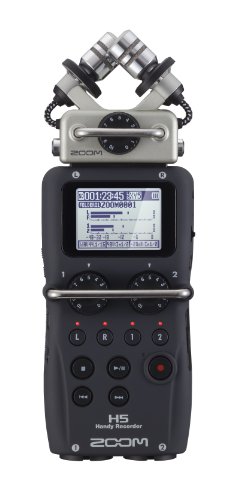
- Interchangeable input capsules
- Four-track recording with two XLR/TRS inputs
- USB interface and battery-powered operation
Best For: Beginners building toward more flexible podcast and field recording
Best Podcast-Focused Setup

- Four XLR inputs for group podcasts
- Four independent headphone outputs
- Includes two ZDM-1 Podcast Packs
Best For: Beginners recording interviews and multi-person shows
Best Simple Stereo Recorder

- Clip-free 32-bit float recording
- Built-in X/Y stereo microphones
- USB-C microphone mode and 10-hour battery life
Best For: Beginners recording solo content, interviews, and voiceovers
Best All-in-One Setup – Zoom PodTrak P4
The Zoom PodTrak P4 is a strong choice for beginners looking for podcast recorders for beginners that can handle a multi-person show. It provides four XLR microphone inputs, four independently controlled headphone outputs, and dedicated options for phone or remote interviews.
Best For: Beginner podcast teams recording up to four microphones, including call-in or remote guests.
Pros:
- Four XLR inputs with phantom power support multiple microphones.
- Four headphone outputs include individual volume control.
- Automatic mix-minus supports phone and remote interviews.
- Sound Pads and multitrack recording add flexibility for podcast production.
Cons:
- Battery life is listed at up to 3.5 hours on two AA batteries.
- Its larger input and headphone capacity may be more than a solo beginner needs.
Choose the PodTrak P4 if your priority is an uncomplicated setup for several hosts or guests. Its dedicated podcast features make it particularly practical for interview-focused shows.
Best for Flexible Recording – Zoom H4 Essential
The Zoom H4 Essential suits beginners who want podcast recorders for beginners that can also cover music, video audio, interviews, and field recordings. Its built-in stereo microphones, two XLR/TRS inputs, four-track recording, and 32-bit float capture provide room to grow.
Best For: Creators who want one portable recorder for podcasts, interviews, music, and video work.
Pros:
- 32-bit float recording helps capture loud and quiet sources without worrying about distorted takes.
- Built-in stereo microphones and two XLR/TRS inputs support varied setups.
- USB-C connectivity supports recording or streaming with a phone, tablet, or computer.
- Spoken menu guidance can make operation more accessible.
Cons:
- Its broader feature set may take more time to learn than a basic recorder.
- Only two external XLR/TRS inputs are provided.
The H4 Essential is a versatile pick for beginners who expect their recording needs to expand beyond a simple podcast. It can save to an SD card while also connecting to a device over USB-C.
Best Complete Starter Bundle – Podcast Equipment Bundle
This podcast equipment bundle gives beginners a ready-made route into podcast recorders for beginners, combining two condenser microphones, suspension arms, and a live sound card. Its plug-and-play USB-C connections and built-in effects are aimed at recording, streaming, and social content.
Best For: New creators who need microphones and a compact sound-effects interface in one package.
Pros:
- Includes two condenser microphones with anti-vibration suspension arms.
- USB-C connectivity supports PCs, smartphones, and iPads.
- Offers four voice variations and 10 sound effects for live content.
- Supports microphones and direct connections for electric guitars, bass, and electronic drums.
Cons:
- The bundle weighs 1.48 kg, making it less portable than a handheld recorder.
- Its sound effects and live-streaming controls may be unnecessary for straightforward podcast recording.
- The supplied notes recommend charging the battery before initial use or after extended storage.
This is best viewed as a complete desktop or streaming-oriented starter kit rather than a simple field recorder. It makes sense for beginners who value included microphones, voice effects, and broad device compatibility.
Best Compact Two-Mic Recorder – Zoom H1 XLR
The Zoom H1 XLR is a straightforward option for beginners comparing podcast recorders for beginners and needing two external microphones. It combines two locking XLR/TRS inputs with 32-bit/96kHz recording, an OLED waveform display, and a compact battery-powered design.
Best For: Solo creators or two-person podcast setups that need a small recorder with clear level monitoring.
Pros:
- Two locking XLR/TRS inputs accommodate microphones, instruments, and other sources.
- 32-bit/96kHz recording is suited to interviews, podcasts, and everyday recording.
- OLED waveform display helps users check levels at a glance.
- Supports SDXC cards up to 1TB and offers up to 10 hours of battery life.
Cons:
- It has only two XLR/TRS inputs, so it is not designed for larger panel discussions.
- The 0.96-inch screen is relatively small.
For a beginner podcast with one or two microphones, the H1 XLR keeps the recording chain compact without giving up external-input flexibility. Its waveform display and long stated battery life are useful for portable sessions.
Best All-in-One Starter Kit – MAONO AU-AM200-S1 Podcast Bundle
For beginners comparing podcast recorders for beginners, the MAONO AU-AM200-S1 is an all-in-one mixer and microphone setup designed to get a basic podcast, livestream, or recording session running quickly. It connects to PCs, smartphones, and tablets, though users may need an OTG adapter for phones without a 3.5mm jack.
Best For: New creators who want a bundled mixer, microphone, sound effects, and live-streaming controls in one setup.
Pros:
- Includes a condenser microphone, cable, tripod, windscreen, mixer, and charging cable.
- Offers four recordable pads, eight built-in effects, voice changing, reverb, and tone controls.
- Supports up to two people, four devices, and four platforms for simultaneous streaming.
- Includes real-time monitoring and a denoise function.
Cons:
- Supports only 3.5mm microphone input and does not support phantom power.
- Guitars and keyboards require a separate 6.35mm-to-3.5mm adapter.
- Setup may require consulting the user guide and manually selecting the MAONO AM200 in computer sound settings.
The AU-AM200-S1 is a feature-rich starting point for creators who value sound effects and streaming flexibility. Its bundled microphone simplifies entry, while the 3.5mm-only input and more involved setup may limit users seeking a straightforward USB microphone experience.
Best Clip-Free Handheld Recorder – Zoom H2 Essential
The Zoom H2 Essential is a flexible choice for beginners evaluating podcast recorders for beginners, especially those who want a portable device rather than a desktop mixer. Its three built-in microphones and 32-bit float recording help capture interviews, podcasts, and wider soundscapes without constant gain adjustment.
Best For: Beginners recording interviews, field sessions, music, or podcasts who want portable recording and USB microphone functionality.
Pros:
- Three built-in microphones provide nine selectable recording patterns.
- 32-bit float recording is designed for clip-free audio without manually setting gain.
- Works as a USB microphone while recording a backup to an SD card.
- Offers up to 20 hours of battery life and audible menu navigation in seven languages.
Cons:
- Its built-in microphone design may be less suitable for users who specifically want an included boom or desktop microphone.
- Requires two AA batteries for portable operation.
- The recorder’s 1.3-inch screen may feel limited for users who prefer a larger interface.
The H2 Essential stands out for simple, portable recording with minimal gain-management work. Its selectable microphone patterns make it adaptable, and USB microphone mode adds convenience for computer or mobile sessions.
Best for Two-Person Podcasts – Zoom PodTrak P2
The Zoom PodTrak P2 is a focused option for beginners searching for podcast recorders for beginners and planning to record with a co-host or remote guest. It accepts two USB microphones, provides two headphone outputs, and can record separate tracks to an SD card while streaming to a smartphone or computer.
Best For: Two-person podcasts that need simple USB microphone connections, guest call-ins, and portable battery operation.
Pros:
- Two USB microphone inputs and two headphone outputs simplify co-host recording.
- Mix-Minus helps prevent echo and feedback during phone or computer call-ins.
- AI noise reduction, tone shaping, compression, and de-essing reduce the need for post-production.
- Supports simultaneous streaming and SD-card recording, with USB or battery power options.
Cons:
- Battery life is up to four hours when using four AA batteries.
- It is designed around USB microphones, so users with other microphone connections may need additional equipment.
- Recording and streaming features still require compatible microphones and a phone or computer for remote guests.
The PodTrak P2 is a practical beginner recorder for a two-person format, with monitoring and guest-call features built into a compact unit. Its short battery runtime makes USB power or an AC adapter preferable for longer sessions.
Best Expandable Recorder – Zoom H5
For beginners comparing podcast recorders, the Zoom H5 is a flexible choice when you want room to grow beyond basic stereo recording. Its interchangeable capsule system, four-track recording, and two XLR/TRS inputs support microphones, instruments, and location audio.
Best For: Beginners who want an expandable recorder for podcasts, interviews, music, or video production.
Pros:
- Interchangeable input capsules make it adaptable to different recording needs.
- Two XLR/TRS combo inputs offer selectable phantom power and a -20 dB pad.
- Records up to four tracks simultaneously and works as a USB audio interface.
- Battery-powered recording to SD or SDHC cards is useful for mobile sessions.
Cons:
- Its broader feature set may be more than beginners need for simple voice recording.
- Storage support is limited to SD/SDHC cards up to 32GB.
The H5 is a practical middle ground for new creators who want straightforward portable recording today and added microphone flexibility later.
Best Podcast-Focused Setup – Zoom PodTrak P4 Bundle
Zoom PodTrak P4 Portable Multitrack Podcast Recorder Bundle with 2X Zoom ZDM-1 Podcast Pack
Check Price On AmazonAmong podcast recorders for beginners, the Zoom PodTrak P4 is designed around multi-person conversations. This bundle includes two Zoom ZDM-1 podcast packs, while the recorder provides four XLR inputs, separate headphone outputs, sound pads, and options for phone or USB call-ins.
Best For: Beginner podcasters recording interviews, roundtable shows, or remote guests with multiple headphones.
Pros:
- Four high-gain XLR microphone inputs support group conversations.
- Four independent headphone outputs let participants monitor individually.
- TRRS and USB call-in support accommodates phone or computer-based guests.
- Includes two ZDM-1 Podcast Pack microphones.
Cons:
- Its podcast-specific design is less suited to general-purpose stereo recording.
- The included bundle has two microphone packs, so additional participants may need extra microphones.
The P4 bundle is the most purpose-built option here for a new podcast team, especially if your priority is connecting several speakers and monitoring without extra hardware.
Best Simple Stereo Recorder – Zoom H1 Essential
The Zoom H1 Essential keeps podcast recording approachable with built-in X/Y stereo microphones and clip-free 32-bit float audio. It can record voices, interviews, and other content, then connect over USB-C for use as a microphone with a computer or smartphone.
Best For: Beginners who want a compact recorder for solo podcasts, interviews, voiceovers, and everyday content.
Pros:
- 32-bit float recording is designed for clip-free audio capture.
- Built-in X/Y microphones provide simple stereo recording without an external mic setup.
- USB-C microphone mode supports calls, livestreams, podcasts, and voiceovers.
- Runs for up to 10 hours on two AAA batteries.
Cons:
- Its stereo X/Y microphone design does not provide the multi-input setup of the PodTrak P4.
- It is less expandable than the H5 because the supplied notes do not list XLR inputs or interchangeable capsules.
For a first recorder, the H1 Essential offers a low-complexity way to capture clear stereo audio and use the device directly as a USB microphone.
How We Picked the Best Podcast Recorders for Beginners
We focused on setup simplicity, recording quality, input and headphone capacity, portability, monitoring features, and overall flexibility. The selection includes dedicated podcast mixers, handheld recorders, USB microphone systems, and all-in-one bundles so beginners can match the equipment to their actual workflow.
We also considered features that reduce common recording problems, including 32-bit float recording, built-in microphones, sound pads, effects, phone connectivity, and USB audio functionality. A beginner-friendly recorder should make it easy to capture clean audio without requiring extensive technical knowledge.
Quick Comparison
| Best For | Look For | Strongest Match |
|---|---|---|
| Solo podcasts | Simple controls and USB connectivity | Zoom H1 Essential or H1 XLR |
| Two-person shows | Two inputs and two headphone outputs | Zoom PodTrak P2 |
| Group interviews | Four microphone inputs and four headphone outputs | Zoom PodTrak P4 |
| Portable field recording | Built-in stereo microphones and battery power | Zoom H2 Essential or H4 Essential |
| Podcasting with complete equipment | Microphone, mixer, and accessories included | MAONO or studio bundle |
| Video and music production | XLR inputs, multitrack recording, and interface mode | Zoom H5 |
Key Buying Factors for Podcast Recorders for Beginners
Inputs and Headphone Outputs
Count how many people will speak at the same time. Two USB or XLR inputs suit a host and guest, while four inputs are more practical for roundtable discussions. Separate headphone outputs help every participant monitor the conversation without needing extra hardware.
Microphone Compatibility
USB microphones are generally the easiest starting point, while XLR microphones offer more long-term flexibility. Check whether the recorder supplies phantom power if you plan to use condenser microphones. A built-in stereo microphone is useful for quick field interviews, events, and voice notes.
Recording and Connection Options
Look for USB audio-interface support if you want to record directly into a computer. Phone inputs or Bluetooth-style remote workflows can simplify guest calls, but compatibility varies. Multitrack recording preserves separate voices for easier editing, whereas a stereo mix is faster for simple projects.
Portability and Protection Against Clipping
Battery-powered handheld recorders are better for travel and location work. 32-bit float recording can provide extra protection against unexpectedly loud audio, but it does not replace proper microphone placement or monitoring.
Who Should Buy Which Podcast Recorders for Beginners?
Choose a compact handheld model if you record alone, travel often, or want built-in microphones with minimal setup. Pick a two-input podcast recorder if your regular format is a host-and-guest conversation. For panel shows or multiple remote and local contributors, a four-input podcast mixer is the more convenient choice.
All-in-one bundles make sense when you need microphones and basic accessories immediately, though bundled components may offer less upgrade flexibility. Creators who also film videos, record music, or capture live events should favor a versatile handheld recorder with XLR inputs and interface functionality. Before buying, confirm the included cables, microphone type, storage requirements, power source, and compatibility with your computer or phone.