The best wireless microphones for smartphones make videos, interviews, livestreams, and social content sound cleaner without tying you to a phone. The right kit can reduce background noise, simplify setup, and give you enough battery life for a full recording session.
Our selection includes compact plug-and-play models, two-microphone systems for interviews, and handheld options for more traditional reporting. Below, compare the key differences before choosing the microphone that fits your phone, recording style, and budget.
Best 10 Wireless Microphones for Smartphones Picks for 2026
Best Long-Range Pick

- 9g transmitter with up to 1,000ft line-of-sight range
- 48kHz/24-bit audio and adjustable noise cancellation
- Up to 30 hours with the charging case
Best For: Vloggers and podcasters needing lightweight, long-range audio
Best for Automatic Audio Protection
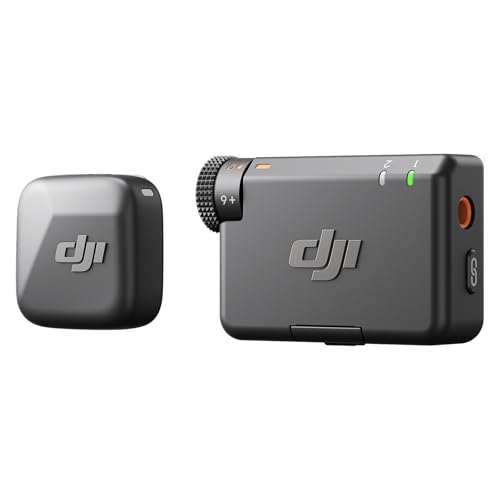
- 10g transmitter with up to 400m transmission
- Two-level noise cancellation and automatic limiting
- Includes USB-C mobile adapter and charging dock
Best For: Solo creators who want simple level protection
Best Two-Mic Setup

- Two pre-paired transmitters for dual-speaker recording
- GainAssist auto leveling and no app required
- Up to 21 hours with the charging case
Best For: Interviews and two-person smartphone videos
Best Solo USB-C Kit

- USB-C plug-and-play receiver for compatible phones
- 10g transmitter with noise cancellation and limiting
- Up to 48 hours with the charging case
Best For: Solo vloggers and livestreamers using USB-C phones
Best Overall
Hollyland LARK A2 Wireless Microphone
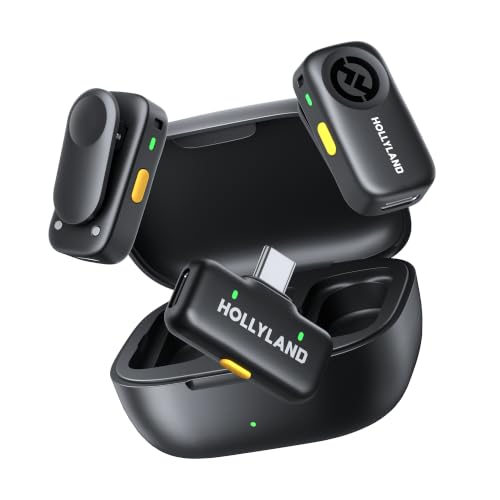
- 48kHz/24-bit audio with AI voice tuning
- Adjustable noise cancellation and clip protection
- Up to 42 hours with the charging case
Best For: Vlogs, interviews, podcasts, and mobile creators
Best Budget Pick

- Lightning and USB-C adapters included
- Two microphones for interviews and dual voices
- Automatic pairing with up to 20m range
Best For: Casual vlogs, TikTok, streaming, and interviews
Best for Two-Person Shoots

- Two transmitters for dual-speaker recording
- 48kHz/24-bit audio with adjustable AI noise cancellation
- Up to 200m wireless transmission range
Best For: Interviews, walk-and-talks, and two-person videos
Best Professional Handheld
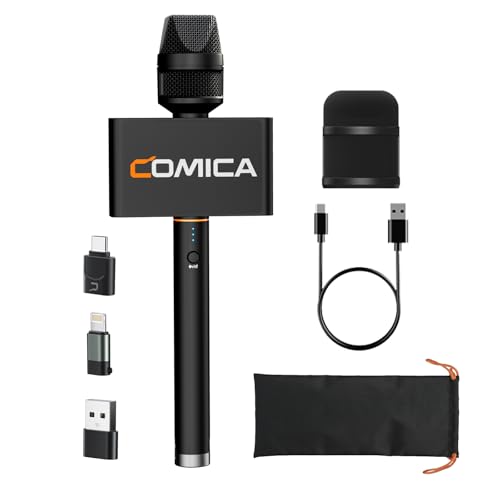
- Cardioid 14mm condenser capsule
- 48kHz/24-bit recording with one-key noise reduction
- Up to 15 hours of battery life
Best For: Interviews, podcasts, reporting, and handheld mobile recording
Best Portable Lavalier Kit

- Two wireless clip-on lavalier microphones
- USB-C and Lightning adapters included
- Up to six hours of use per charge
Best For: Social video, interviews, voiceovers, and lightweight recording
Best Phone-Case-Friendly Value

- Two wireless lavalier microphones included
- Longer receiver works with most phone cases
- Plug-and-play setup with noise reduction
Best For: Vlogging, livestreams, teaching, and two-person recordings
Best Long-Range Pick – Hollyland Lark M2
The Hollyland Lark M2 is a strong choice among wireless microphones for smartphones when you want a very small transmitter, high-resolution audio, and extended range. Its USB-C receiver is designed for compatible Android phones, iPhone 15 and newer models, action cameras, and computers.
Best For: Filmmakers, vloggers, and podcasters who need lightweight gear and up to 1,000 feet of line-of-sight transmission.
Pros:
- Exceptionally lightweight 9g transmitter with discreet design.
- 48kHz/24-bit audio, 70dB signal-to-noise ratio, and support for loud sound sources up to 115dB SPL.
- Adjustable noise cancellation with Strong and Low settings.
- Up to 30 hours of total runtime with the charging case.
Cons:
- The USB-C version is not the appropriate connector for Lightning-only iPhones.
- The advertised 1,000-foot range is line-of-sight and may vary in real use.
With instant factory pairing, direct phone connection, and optional app controls, the Lark M2 offers a well-rounded setup for mobile creators who prioritize range and battery life.
Best for Automatic Audio Protection – DJI Mic Mini
The DJI Mic Mini is a practical option among wireless microphones for smartphones, cameras, and computers. This single-transmitter kit combines a discreet 10g design with noise cancellation and automatic limiting to help manage changing recording levels.
Best For: Solo creators and interviewers who want a compact microphone with dependable level control and up to 400 meters of transmission.
Pros:
- Small 10g transmitter is comfortable and discreet on camera.
- Two noise-cancellation levels suit quieter rooms or noisier environments.
- Automatic limiting helps reduce clipping from overly loud input.
- Approximately 10 hours of operating time for both transmitter and receiver.
Cons:
- This package includes one transmitter, so it is less suited to two-person recordings.
- The listed 400m transmission figure is a maximum range.
The included USB-C mobile adapter, windscreens, charging dock, and camera cable make this a flexible starter system for general content creation.
Best Two-Mic Setup – RØDE Wireless Micro
The RØDE Wireless Micro is a convenient two-microphone choice among wireless microphones for smartphones. Its USB-C receiver is pre-paired, connects without an app, and uses GainAssist auto leveling to help keep voices at usable levels while recording.
Best For: Two-person interviews, conversations, and creators using iPhone 15 or newer and Android phones with USB-C.
Pros:
- Includes two transmitters for recording two speakers.
- Pre-paired receiver requires no app or pairing process.
- GainAssist automatically manages microphone levels.
- Charging case provides up to 21 hours of combined use and includes furry windshields.
Cons:
- USB-C phones only; it does not work with Lightning iPhones.
- The supplied notes do not list a transmission range.
For mobile creators who regularly record with another person, the two-transmitter configuration and straightforward setup are the main advantages, while USB-C compatibility should be confirmed before buying.
Best Solo USB-C Kit – DJI Mic Mini Mobile RX
The DJI Mic Mini Mobile RX is a streamlined option among wireless microphones for smartphones, pairing one transmitter with a dedicated USB-C mobile receiver. It is designed for plug-and-play use with compatible iPhone 15, iPhone 16, iPhone 17, and Android devices.
Best For: Solo mobile vloggers and livestreamers who want a compact setup with long battery life and simple phone connection.
Pros:
- Includes a dedicated USB-C mobile receiver for direct phone connection.
- Compact 10g transmitter with two noise-cancellation levels.
- Automatic limiting helps prevent clipping from excessive input levels.
- Charging case offers up to 48 hours of battery life.
Cons:
- Only one transmitter is included, limiting two-speaker recording.
- This version is intended for USB-C smartphones rather than Lightning-only models.
The long case-supported battery life makes this version particularly useful for travel, livestreaming, and extended recording sessions where a small, phone-focused kit is preferable.
Best Overall – Hollyland LARK A2 Wireless Microphone
For creators who want polished audio with minimal setup, the Hollyland LARK A2 is a strong choice among wireless microphones for smartphones. Its 48kHz/24-bit recording, adjustable AI noise cancellation, and automatic gain protection make it suitable for demanding mobile video work.
Best For: Vlogs, interviews, podcasts, ASMR, and creators who need dependable audio in changing environments.
Pros:
- Records detailed 48kHz/24-bit audio with a 68dB signal-to-noise ratio.
- AI noise cancellation offers three adjustable levels for noisy locations.
- AI Auto-Limit and a -6dB Safety Track help protect against clipping.
- Charging case provides up to 42 hours of total battery life.
Cons:
- Its advanced features may be more than casual users need.
- Some voice-tuning features rely on the HollyAudio app.
With pre-paired transmitters, lightweight 8.5g mics, and up to 200m of wireless range, the LARK A2 is built for creators who value sound quality, flexibility, and recording protection.
Best Budget Pick – Ordele Wireless Lavalier Mic
This Ordele set is a straightforward option for shoppers seeking affordable wireless microphones for smartphones. It includes two clip-on microphones, a receiver, Lightning and USB-C adapters, and accessories for recording with common phones, tablets, and computers.
Best For: TikTok, YouTube, live streaming, interviews, online meetings, and casual video recording.
Pros:
- Supports both Lightning and USB-C smartphone connections.
- Two microphones allow two-person recording.
- Automatic pairing simplifies setup.
- Includes windshields, sponge covers, charging cable, and adapters.
Cons:
- Wireless range is limited to up to 20m.
- Each microphone provides about 6 hours of use per charge.
- USB-C devices may require OTG to be enabled.
The Ordele H63 prioritizes convenience and broad device compatibility over long-range performance, making it a practical starter kit for everyday mobile content.
Best for Two-Person Shoots – Hollyland Lark A2 Mini Duo
The Hollyland Lark A2 Mini Duo is designed for creators who regularly record with two speakers. As wireless microphones for smartphones, its two transmitters, 48kHz/24-bit audio, adjustable noise cancellation, and 200m transmission range provide useful flexibility for interviews and dynamic shoots.
Best For: Two-person interviews, walk-and-talk videos, outdoor shoots, podcasts, and streaming.
Pros:
- Includes two transmitters and supports two-channel recording.
- Captures detailed 48kHz/24-bit audio with 68dB SNR.
- AI noise cancellation has Low, Medium, and High settings.
- Up to 200m transmission range supports movement during filming.
Cons:
- The listed 14-hour use is shorter than the charging-case version’s stated total.
- App-based voice tuning may add an extra step to the workflow.
Its dual-transmitter design makes this Mini Duo especially useful when one smartphone needs to capture two speakers clearly, while AI Auto-Limit and the Safety Track help manage sudden volume changes.
Best Professional Handheld – COMICA Revo S
For creators comparing wireless microphones for smartphones, the COMICA Revo S is a handheld option built around interview and reporting use. It combines a 14mm condenser capsule, cardioid pickup, 48kHz/24-bit recording, and one-key noise reduction for focused, detailed audio.
Best For: Interviews, podcasts, vlogs, live streams, and users who prefer a traditional reporter-style microphone.
Pros:
- Cardioid 14mm condenser capsule helps focus on the speaker’s voice.
- Supports 48kHz/24-bit recording and one-key CalMix noise reduction.
- Three gain levels provide useful recording control.
- Built-in battery provides up to 15 hours of use.
Cons:
- The handheld design is less discreet than a clip-on lavalier microphone.
- Lightning-port devices require an OTG-compatible USB-C-to-Lightning adapter.
The Revo S is a strong fit when clear, directional speech and long battery life matter more than a compact, hidden setup. Its included receiver, adapters, windscreen, and carrying bag make it practical for mobile recording kits.
Best Portable Lavalier Kit – Mini Mic Pro
The Mini Mic Pro is a compact choice for shoppers seeking wireless microphones for smartphones that can be clipped to clothing and used without an app or Bluetooth pairing. Its kit includes two lavalier microphones, USB-C and Lightning adapters, wind protection, and a rechargeable battery.
Best For: TikTok, YouTube, interviews, voiceovers, and creators who need a lightweight two-microphone setup.
Pros:
- Includes two clip-on lavalier microphones for flexible recording.
- USB-C and Lightning adapters support iPhone, Android, tablet, and laptop use.
- Noise reduction and included foam and deadcat wind protection help with outdoor recording.
- Compact design weighs under an ounce and offers up to six hours per charge.
Cons:
- Six-hour battery life is shorter than some larger wireless microphone systems.
- The omnidirectional pickup pattern may capture more surrounding sound.
With its small form factor and dual-mic configuration, the Mini Mic Pro is convenient for interviews and social video. It is especially appealing when quick setup and portability are priorities.
Best Phone-Case-Friendly Value – MAYBESTA Wireless Mini Mic
The MAYBESTA Wireless Mini Microphone is a practical two-mic option for shoppers comparing wireless microphones for smartphones across different devices. Its longer receiver is designed to work with most phone cases, while automatic connection and included USB-C and Lightning support simplify setup.
Best For: Vlogging, livestreaming, online teaching, video conferences, and two-person recordings.
Pros:
- Two lavalier microphones support interviews and multi-speaker recordings.
- Longer receiver interface can accommodate most phone cases without removal.
- Plug-and-play setup requires no app or separate adapter selection beyond the included connector.
- Noise reduction, windscreen protection, and a mute function add recording flexibility.
Cons:
- The omnidirectional pattern can pick up surrounding room noise.
- The supplied notes do not specify an exact wireless range or battery runtime.
The MAYBESTA stands out for convenience, especially for users who frequently switch between phones or record with a case installed. Its two-microphone package offers useful flexibility for interviews and collaborative content.
How We Picked These Wireless Microphones for Smartphones
We focused on microphone systems designed for direct smartphone use, prioritizing reliable wireless performance, clear voice capture, simple setup, portability, and useful battery life. We also considered whether each model includes one or two transmitters, a receiver or mobile connector, charging accessories, and features such as noise cancellation, automatic gain control, or safety limiting.
Because product bundles can vary, confirm the connector and included accessories before ordering. A USB-C kit may not work directly with an older iPhone that uses Lightning without the appropriate adapter.
Quick Comparison
| Best For | What to Look For |
|---|---|
| Solo videos and livestreams | One lightweight transmitter and direct phone connection |
| Interviews and two-person content | Two transmitters, stable range, and a charging case |
| Fast social content | Plug-and-play pairing and automatic audio leveling |
| Professional interviews | Handheld form factor, dependable wireless connection, and monitoring options |
| Travel and outdoor recording | Compact design, long battery life, and effective noise reduction |
Key Buying Factors for Wireless Microphones for Smartphones
Connector and Compatibility
Check whether the receiver uses USB-C, Lightning, or a direct mobile connection. Android phones and newer iPhones commonly use USB-C, but compatibility can still depend on the phone model, case clearance, and recording app.
One or Two Transmitters
A single transmitter is usually enough for solo creators. Choose a two-transmitter kit for interviews, podcasts, demonstrations, or videos with two speakers. A charging case is especially useful when recording away from an outlet.
Audio Controls and Noise Reduction
Noise cancellation can help in busy environments, while automatic gain or leveling helps prevent voices from becoming too quiet or distorted. These features are useful, but microphone placement still matters: clip the transmitter close to the speaker’s mouth and keep fabric from rubbing against it.
Range, Battery, and Monitoring
Longer advertised range can help outdoors, although walls and interference reduce real-world distance. Check total runtime, charging time, and whether the system supports headphones or app-based monitoring if you need to catch audio problems while recording.
Who Should Buy Which Wireless Microphones for Smartphones?
Solo creators: Choose a lightweight one-transmitter kit with plug-and-play phone support. It is easier to carry and faster to use for short videos and livestreams.
Interviewers and small production teams: Select a two-transmitter system with a case, stable range, and automatic leveling. This gives both speakers a dedicated microphone and reduces setup time.
Traveling vloggers: Prioritize compact transmitters, dependable battery life, and noise reduction. A small system is more likely to be packed and ready when an unexpected filming opportunity appears.
Reporters and formal interview users: Consider a handheld wireless microphone if you want a familiar interview style and more controlled positioning. For the simplest phone recording workflow, a direct USB-C lavalier system may be the better value.