The right equalizer can make a good audio system sound more balanced, detailed, and enjoyable without replacing your speakers or amplifier. Our 2026 roundup covers affordable car-audio and home-stereo models, from compact 7-band units to advanced 31-band rack-mount equalizers.
Use the guide below to compare control range, connectivity, installation requirements, and the features that matter most before choosing an equalizer for your setup.
Best 10 Audio Equalizers Under 200 Picks for 2026
Best Flexible Car Tuning
Taramps TEQ 7.4 Stereo Equalizer

- 7-band graphic EQ with ±12dB adjustment
- Two inputs and three stereo RCA outputs
- Compact 12V design with blue lighting
Best For: Flexible multi-channel car audio tuning
Best Straightforward Parametric Control
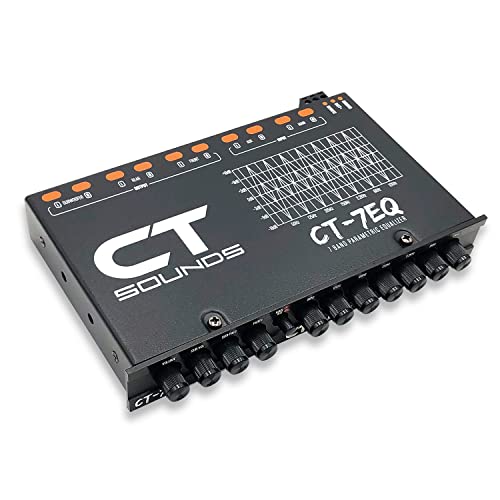
- Seven bands span 20Hz–20kHz
- Separate bass, mid, treble, and sub-bass controls
- Includes mounting brackets and hardware
Best For: 1/2-DIN car audio installations
Best Home and Studio Versatility

- 31 bands with real-time spectrum monitoring
- Optical, coaxial, and USB connectivity
- 12 modes with auto-save presets
Best For: Home, studio, KTV, and DJ audio systems
Best High-Voltage Car Preamp
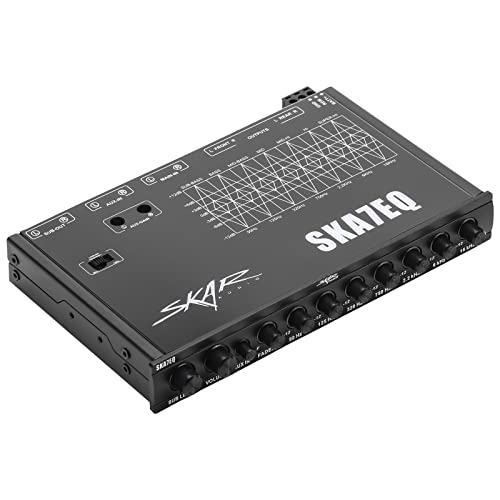
- Seven bands with ±12dB adjustment
- 7V RCA outputs for front, rear, and subwoofer
- Includes fader and variable subwoofer control
Best For: Multi-channel car audio with separate amplification
Professional Rack EQ
15-Band Stereo Graphic Equalizer
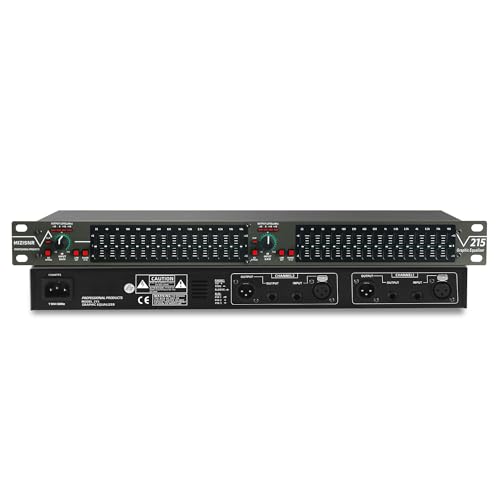
- 15 bands per channel with up to ±12dB adjustment
- Low-cut filter helps reduce unwanted low-frequency noise
- XLR and 1/4-inch connectivity in a 1U rack design
Best For: Home audio, DJ, studio, and live sound setups
Car Audio Tuning Pick

- Seven bands provide ±12dB adjustment from 63Hz to 12kHz
- Separate subwoofer volume and frequency controls
- Six-channel front, rear, and subwoofer output
Best For: Amplified car audio systems with a subwoofer
Compact Home Stereo Choice

- Seven bands with ±6dB adjustment for tonal shaping
- Simultaneous XLR and RCA input/output connectivity
- Compact aluminum casing with low stated distortion
Best For: Compact home stereo and computer speaker systems
Best for Precision Control
31-Band Stereo Graphic Equalizer

- 31-band adjustment on each channel
- Low-cut filter reduces unwanted low-end noise
- XLR and 1/4-inch TRS connectivity
Best For: Detailed sound shaping in live, studio, and installed systems
Best for Presets and Digital Features

- 10 preset modes with high, mid, and bass control
- Bluetooth 5.2 and USB playback support
- Real-time LED spectrum indication
Best For: Home theaters, KTV venues, studios, and DJ systems
Best for Flexible Low-End Control
15-Band Stereo EQ with Bass Output

- 15 bands per channel for focused sound shaping
- Adjustable low-cut frequency control
- Dedicated adjustable bass output
Best For: DJ, live, studio, and subwoofer-equipped audio systems
Best Flexible Car Tuning – Taramps TEQ 7.4 Stereo Equalizer
If you need audio equalizers under 200 for a 12V car system, the Taramps TEQ 7.4 offers practical control without taking up much space. Its seven-band graphic EQ, auxiliary gain, fader control, and separate front, rear, and subwoofer outputs make it useful for balancing a multi-channel setup.
Best For: Drivers who want flexible RCA connectivity and straightforward sound customization in a car audio system.
Pros:
- Seven adjustable bands spanning 50Hz to 12kHz, with ±12dB gain control.
- Two stereo RCA inputs and three stereo RCA outputs support main, auxiliary, front, rear, and subwoofer connections.
- Offers a wide 6Hz–55kHz frequency response and signal-to-noise ratio above 100dB.
- Compact 4 x 3 x 1-inch design with blue lighting.
Cons:
- Designed for 12V systems, so it is not a general-purpose home equalizer.
- Should be mounted in a ventilated, accessible location away from speakers.
The TEQ 7.4 is a strong choice when you want dedicated front, rear, and subwoofer control in a compact car-audio component. Its analog RCA layout is best suited to systems already built around RCA connections.
Best Straightforward Parametric Control – CT Sounds CT-7EQ
The CT Sounds CT-7EQ is one of the more focused audio equalizers under 200 for car installations where you want defined frequency segments and dedicated tone controls. This 1/2-DIN parametric unit divides 20Hz–20kHz into seven bands and includes installation hardware.
Best For: Car-audio builders who want seven-band parametric adjustment in a 1/2-DIN format.
Pros:
- Seven bands cover the 20Hz–20kHz audio range.
- Specified frequency points include 50Hz, 125Hz, 315Hz, 750Hz, 2.2kHz, and 12kHz.
- Provides ±10dB bass, mid, and treble adjustment, plus 43Hz and 60Hz sub-bass controls.
- Installation brackets and hardware are included.
Cons:
- The supplied notes do not specify the number of inputs or outputs.
- Its 1/2-DIN installation format may require a compatible mounting location.
Choose the CT-7EQ if you prefer clearly defined parametric frequency points over a more elaborate connectivity layout. Its included hardware and one-year manufacturer warranty add practical value for a conventional car-audio installation.
Best Home and Studio Versatility – 31-Band Graphic Equalizer
For shoppers comparing audio equalizers under 200 beyond basic car use, this 31-band graphic equalizer provides substantially more detailed adjustment. It combines real-time spectrum monitoring, customizable modes, noise and echo reduction, and optical, coaxial, and USB connectivity for home or professional setups.
Best For: Home theaters, recording setups, KTV systems, DJ booths, and users who want extensive digital sound-shaping controls.
Pros:
- 31-band tuning covers deep bass through treble with independent band adjustment.
- Includes a built-in spectrum analyzer and 12 customizable modes.
- Supports optical, coaxial, and USB connections for multiple devices and lossless playback.
- Auto-save presets simplify switching between music, movies, and live-use settings.
Cons:
- The supplied notes do not specify exact frequency points or output connections.
- Its broad feature set may be more than needed for simple tone adjustment.
This model stands out for users who need a central processing hub rather than a basic analog EQ. Its wide application range and preset management make it adaptable, though buyers should verify system compatibility before ordering.
Best High-Voltage Car Preamp – Skar Audio SKA7EQ
The Skar Audio SKA7EQ is a compelling option among audio equalizers under 200 for car systems that need preamp-level flexibility. Its seven adjustable bands, selectable main and auxiliary inputs, high-voltage RCA outputs, fader, and variable subwoofer control are designed for more involved multi-channel installations.
Best For: Car-audio enthusiasts building front, rear, and subwoofer systems around high-voltage RCA preamp outputs.
Pros:
- Seven bands offer ±12dB adjustment from 50Hz to 16kHz.
- Provides front, rear, and subwoofer RCA outputs, with variable subwoofer level control.
- Up to 7V output, 100dB signal-to-noise ratio, and 0.005% THD are specified.
- Includes a built-in fader, low-pass switch, mounting brackets, and hardware.
Cons:
- Its 1/2-DIN form factor requires a suitable installation space.
- The supplied specifications do not identify a power-source voltage.
The SKA7EQ is a strong fit when output control matters as much as frequency shaping. Its three RCA output paths and high-voltage preamp design make it particularly practical for systems with separate front, rear, and subwoofer amplification.
Professional Rack EQ – 15-Band Stereo Graphic Equalizer
If you need one of the more flexible audio equalizers under 200 for a home audio rack, DJ setup, or studio, this 15-band stereo model offers detailed tonal control. Its dual-channel design, low-cut filter, and balanced or unbalanced connections make it practical for varied audio systems.
Best For: Home audio, live sound, installations, and studio users who want extensive manual EQ control.
Pros:
- 15 adjustable bands per channel with up to ±12dB of control.
- Low-cut switch helps reduce wind noise, floor rumble, and electrical hum.
- XLR balanced and 1/4-inch TRS unbalanced inputs and outputs.
- 1U rack-mount format with a bypass switch for easier system debugging.
Cons:
- Its 1U rack-mount design is less suited to compact desktop systems.
- The broad feature set may be more than casual listeners need.
Choose this EQ when precise, hands-on shaping and installation flexibility matter more than a compact footprint. The dual-channel layout and low-cut function are especially useful for more demanding audio systems.
Car Audio Tuning Pick – 7-Band Car Graphic Equalizer
For drivers comparing audio equalizers under 200, this 12-volt car model adds dedicated controls for the front, rear, and subwoofer channels. Its seven adjustable bands, subwoofer crossover control, and CD/Aux switching make it a practical upgrade for a customizable in-car system.
Best For: Car audio systems with an amplifier, separate front and rear outputs, and a subwoofer.
Pros:
- Seven bands cover 63Hz to 12kHz with ±12dB adjustment.
- Dedicated subwoofer volume and 30Hz–120Hz frequency controls.
- Six-channel output supports front, rear, and subwoofer connections.
- Metal chassis and rotary controls are designed for regular in-car use.
Cons:
- Requires a DC 12V car-audio installation.
- Its controls and outputs are specialized for vehicle systems rather than home audio.
This is a focused choice for tuning an amplified car system. It offers more control over subwoofer integration than a basic standalone EQ, while the CD/Aux input switching adds everyday convenience.
Compact Home Stereo Choice – Douk Audio T7 7-Band EQ
The Douk Audio T7 is a compact option among audio equalizers under 200 for listeners who want straightforward home stereo signal shaping. It combines seven frequency bands with simultaneous XLR and RCA input/output support, making it easy to integrate with compatible amplifiers, computers, or powered speakers.
Best For: Home stereo users who need compact EQ control and flexible XLR/RCA connectivity.
Pros:
- Seven frequency bands offer ±6dB adjustment for detailed tonal changes.
- Provides both XLR and RCA inputs and outputs simultaneously.
- Rated signal-to-noise ratio exceeds 104dB with distortion as low as 0.003%.
- Compact aluminum alloy casing helps provide shielding and a clean appearance.
Cons:
- It does not include a volume control knob.
- The ±6dB adjustment range is narrower than some graphic equalizers.
The T7 suits buyers who value clean specifications, compact construction, and connection flexibility. Its fixed rated output keeps operation simple, but users needing volume adjustment on the EQ itself should plan to use a separate control.
Best for Precision Control – 31-Band Stereo Graphic Equalizer
If you need detailed tonal shaping, this professional 31-band stereo graphic equalizer is a strong option among audio equalizers under 200. Each channel offers extensive adjustment, while the low-cut filter and visual meters help you manage noise and monitor levels in live, studio, or installed audio systems.
Best For: Audiophiles, DJs, studios, and live setups that need extensive manual EQ control.
Pros:
- 31 bands per channel with a selectable ±6dB to ±12dB adjustment range
- Low-cut switch helps reduce wind noise, floor rumble, and electrical hum
- XLR balanced and 1/4-inch TRS unbalanced inputs and outputs
- LED ladders provide visual feedback for gain reduction and output levels
Cons:
- Manual 31-band operation may be more involved than preset-based models
- At 18.9 inches wide and 6.69 pounds, it requires suitable rack or shelf space
This EQ-231 prioritizes hands-on control and broad connectivity. It is a practical choice when fine adjustment and monitoring matter more than wireless or USB features.
Best for Presets and Digital Features – Digital 31-Band Equalizer
This digital model stands out among audio equalizers under 200 if you want flexible sound control with visual feedback and convenient playback features. It combines 31-band adjustment with 10 presets, Bluetooth 5.2, USB playback, and a real-time LED spectrum display for home theaters, KTV venues, studios, and DJ systems.
Best For: Users who want preset modes, wireless or USB playback, and rack-mounted spectrum monitoring.
Pros:
- Offers 10 saved preset modes plus independent high, mid, and bass adjustment
- Real-time 31-segment LED spectrum display shows frequency changes visually
- Built-in Bluetooth 5.2 and USB connection support playback options
- Includes a dedicated adjustable bass output and versatile XLR/TRS connections
Cons:
- The added digital features may be unnecessary for users seeking a simple analog EQ
- Its multiple functions can require more setup than a basic graphic equalizer
The EQ315 is a versatile choice for systems where quick presets and playback convenience are as important as tonal adjustment. Its rack-mount design and spectrum display also suit more permanent installations.
Best for Flexible Low-End Control – 15-Band Stereo EQ with Bass Output
For buyers comparing audio equalizers under 200, this dual-channel 15-band model offers a focused balance of adjustment and straightforward rack integration. It adds a selectable low-cut filter, adjustable dedicated bass output, and both XLR and 1/4-inch TRS connections for live, studio, and installed audio applications.
Best For: DJs, musicians, and audio enthusiasts who want practical EQ control with dedicated subwoofer management.
Pros:
- 15 bands per channel provide useful tonal adjustment without excessive complexity
- Adjustable low-cut frequency helps target unwanted low-end noise
- Dedicated bass output includes adjustable frequency control
- Compact 1U rack-mount design and included power and audio cables
Cons:
- Offers fewer bands than the 31-band models in this roundup
- Its corded 110-volt design may not suit every power setup
The EQX-215S is a sensible middle ground for systems that need more than basic tone control but do not require 31-band precision. Its dedicated bass output makes it especially useful when integrating a subwoofer.
How We Picked the Best Audio Equalizers Under 200
We evaluated these Audio Equalizers Under 200 based on practical performance and system compatibility rather than the number of sliders alone. Our comparison considers band count, input and output options, signal flexibility, installation format, noise-control features, and suitability for car, home, and DJ applications.
We also looked for useful features such as auxiliary inputs, subwoofer or fader outputs, balanced connections, spectrum displays, preamp controls, and rack-mount construction. Because every listening setup is different, the best choice depends on whether you need simple tone shaping, multi-zone control, or detailed room and system correction.
Quick Comparison
| Best For | Recommended Type | What to Look For |
|---|---|---|
| Car audio | Compact 7-band EQ | RCA outputs, fader control, auxiliary input, and preamp voltage |
| Home stereo | 7- or 15-band EQ | Compatible RCA connections, manageable controls, and low noise |
| DJ or studio-style setups | 15- or 31-band rack EQ | Dual-channel operation, rack mounting, and noise reduction |
| Balanced home systems | Balanced preamp EQ | XLR input and output alongside RCA connectivity |
| Visual listening setups | Digital EQ with analyzer | Display modes, presets, and spectrum visualization |
Key Buying Factors for Audio Equalizers Under $200
Band Count and Control Range
A 7-band equalizer is usually faster and easier to adjust, making it a strong choice for basic car-audio tuning or everyday home listening. Fifteen bands provide finer control, while 31 bands are better suited to detailed system correction, room work, or live and DJ applications. More bands also require more experience and careful adjustment.
Inputs, Outputs, and Signal Path
Confirm that the EQ matches your receiver, amplifier, or powered speakers. RCA connections are common in consumer systems; XLR connections are useful for balanced equipment and longer cable runs. Car-audio shoppers should check for front, rear, and subwoofer outputs, while home users should verify channel count and whether the unit works at the required line level.
Installation and Size
Half-DIN car units can integrate into compatible dashboards but may require additional wiring or mounting hardware. Home and DJ models commonly use a 1U rack format, so measure the available space before buying. A tabletop-friendly design may be more convenient if you do not own a rack.
Noise, Headroom, and Adjustability
Look for noise-reduction circuitry, clean controls, and sufficient output headroom. Avoid extreme boosts, which can introduce distortion or overload the next component in the signal chain. Small cuts are often a safer way to correct harsh or boomy frequencies.
Who Should Buy Which Audio Equalizers Under 200?
Choose a compact 7-band car EQ if you want straightforward control over bass, midrange, and treble, plus dedicated outputs for a subwoofer or rear channels. Choose a 15-band model if you need more precise shaping for a home stereo or DJ system without the complexity of a full 31-band unit.
Choose a 31-band rack EQ for detailed tuning, professional-style systems, or rooms with difficult frequency problems. Choose a balanced XLR/RCA model when your home setup includes pro-audio equipment or long cable runs. Finally, choose a digital analyzer-equipped unit if visual feedback, display effects, and convenient monitoring are more important than purely hands-on slider control.