The best short-throw projectors for home theaters deliver a large, cinematic image without requiring a deep room or ceiling-mounted installation. They are especially useful in living rooms, media spaces, and multipurpose rooms where a traditional projector may be impractical.
This roundup compares 10 noteworthy models across 4K laser, ultra-short-throw, portable, and gaming categories. Use the guide below to match image quality, brightness, sound, setup flexibility, and budget to your space.
Best 10 Short Throw Projectors for Home Theaters Picks for 2026
Best Premium UST

- Triple-laser 4K image with wide color gamut
- 80- to 150-inch ultra-short-throw projection
- Dolby Vision, Google TV, and Atmos support
Best For: High-end home theaters and large-screen TV replacements
Best for Bright Gaming

- 4K UHD resolution with UltraDetail technology
- Bright 3,600-lumen output for lights-on viewing
- Short throw supports images up to 300 inches
Best For: Bright-room gaming and large-screen entertainment
Best Cinematic Sound

- 4K tri-color laser with Dolby Vision and HDR10+
- 60W built-in stereo speakers with Atmos support
- 4K/120Hz input and reported 8ms input lag
Best For: Movie-focused rooms needing strong built-in audio
Best Budget Gaming Pick

- Native 1080p with 3,000-lumen brightness
- Low input lag for console gaming
- 100-inch image from approximately 5 feet
Best For: Affordable Full HD gaming and home entertainment
Best Overall
Formovie Theater 4K UST Projector

- Native 4K with Dolby Vision and HDR10+
- Triple-laser color with 107% Rec.2020 coverage
- Bowers & Wilkins-tuned Dolby Atmos audio
Best For: Movie-focused home theaters seeking premium HDR and built-in sound
Best Portable Pick

- 100-inch image from less than one foot
- Built-in battery with up to 1.5 hours of use
- Google TV, Google Cast, and certified streaming apps
Best For: Portable viewing in compact rooms or outdoor spaces
Best for Bright Rooms and Gaming

- 3,000 ANSI lumens with native 4K resolution
- Triple lasers cover 110% of BT.2020
- Xbox-focused high-refresh and low-latency features
Best For: Bright-room viewing, large screens, and console gaming
Best Bright-Room Value
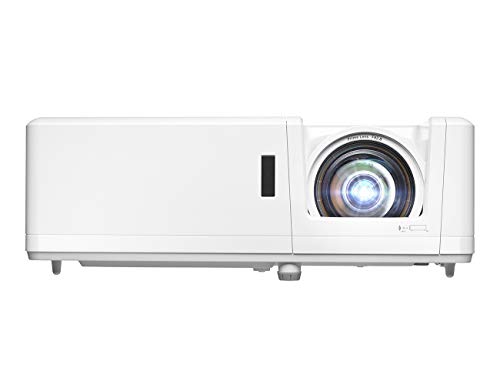
- 4,200-lumen laser projection
- 120 inches from about 4 feet 4 inches
- 1080p with 4K HDR input
Best For: Bright rooms, gaming, and low-maintenance operation
Best Living-Room Upgrade

- 4K PRO-UHD images up to 120 inches
- 3,600-lumen 3LCD brightness
- Android TV with voice search
Best For: Bright living rooms needing ultra-short placement and streaming
Best Built-In Entertainment System
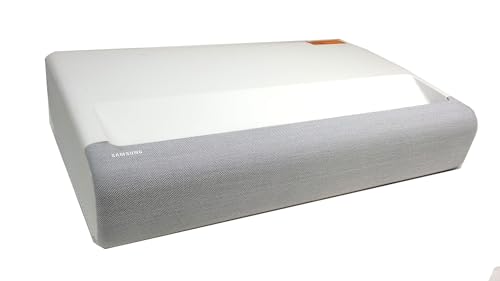
- Native 4K UHD triple-laser projection
- Up to 130 inches from inches away
- Tizen smart TV and 4.2-channel audio
Best For: Streamlined 4K home theaters with integrated sound
Best Premium UST – Hisense PX3-PRO
The Hisense PX3-PRO is a premium choice among short throw projectors for home theaters, combining native 4K resolution with a triple-laser light source. Its ultra-short-throw design creates an 80- to 150-inch image from close to the wall, making it practical for replacing a large TV without ceiling mounting.
Best For: Home theater buyers who prioritize color accuracy, HDR support, large-screen viewing, and integrated smart features.
Pros:
- Triple-laser LPU technology supports a wide BT.2020 color gamut and high color accuracy.
- Native 4K resolution, AI upscaling, Dolby Vision, and IMAX Enhanced support detailed, immersive viewing.
- Google TV, Dolby Atmos, Harmon Kardon speakers, active 3D, and gaming-console compatibility add versatility.
- Projects 80 to 150 inches from a tabletop position near the wall.
Cons:
- Its premium feature set may be more than needed for casual viewing.
- The 150-inch maximum image requires a suitable wall or screen and careful placement.
With 3,000 lumens and a 25,000-hour laser life, the PX3-PRO is built for a long-term, high-end entertainment setup. It is especially compelling when accurate color, Dolby Vision, and a compact installation matter more than keeping costs minimal.
Best for Bright Gaming – Optoma UHD35STX
The Optoma UHD35STX is a practical option among short throw projectors for home theaters when bright-room viewing and gaming are priorities. It combines 4K UHD output with 3,600 lumens and can produce a large image from a relatively short distance.
Best For: Gamers and home entertainment users who want a bright 4K projector with short-throw placement flexibility.
Pros:
- 4K UHD resolution and UltraDetail technology support a sharp image.
- Its 3,600-lumen brightness is suited to lights-on viewing.
- Short-throw projection can create an image up to 300 inches.
- Four-corner correction helps with image alignment during setup.
Cons:
- Its 10,000-hour light-source life is shorter than the laser models in this roundup.
- Connectivity is more limited in the supplied specifications, with HDMI and USB listed alongside RCA.
The UHD35STX makes sense for users who want a big, bright 4K picture without moving to an ultra-short-throw TV-style projector. Its tabletop form and gaming focus make it a flexible choice for entertainment rooms.
Best Cinematic Sound – NexiGo Aurora Pro
The NexiGo Aurora Pro stands out among short throw projectors for home theaters with its tri-color laser engine, Dolby Vision support, and built-in 60W stereo audio. Dynamic laser dimming is designed to deepen black levels, while the ultra-short-throw format keeps the projector close to the wall.
Best For: Movie fans and gamers seeking cinematic picture and sound without immediately adding external speakers.
Pros:
- 4K tri-color laser projection supports 107% Rec. 2020 color coverage.
- Dolby Vision, HDR10+, HLG, and dynamic laser dimming enhance supported content.
- Built-in 60W stereo speakers include dedicated woofers and tweeters, with Dolby Atmos and eARC support.
- Supports 4K at 120Hz input and reports 8ms input lag for responsive gaming.
Cons:
- Its 2,400-lumen brightness is lower than some competing models in this selection.
- The projector weighs 22 pounds, so it is less convenient to reposition frequently.
The Aurora Pro is a strong all-in-one cinema solution, especially for viewers who value deep blacks, advanced HDR formats, and substantial built-in audio. Its active 3D support also broadens its home theater appeal.
Best Budget Gaming Pick – BenQ TH671ST
The BenQ TH671ST is a straightforward choice among short throw projectors for home theaters, offering native 1080p resolution, 3,000 lumens, and gaming-oriented low input lag. It can create a 100-inch image from about 5 feet and supports screens up to 300 inches.
Best For: Console gamers and home entertainment buyers who want a simple, bright Full HD short-throw projector.
Pros:
- Native 1080p resolution and 92% Rec. 709 color accuracy suit movies and games.
- 3,000-lumen brightness supports a vivid image in a range of viewing conditions.
- Low input lag and a gaming-oriented refresh rate are designed for smooth console play.
- Dual HDMI, USB, a built-in speaker, and a three-year warranty add practical value.
Cons:
- It lacks the 4K resolution and laser light source found on the newer premium models.
- The listed 10,000-hour light-source life is shorter than the laser alternatives.
- Its short-throw range is less compact than an ultra-short-throw design.
The TH671ST remains a sensible pick for buyers who value gaming responsiveness and brightness over advanced HDR or smart-TV features. Its lighter 5.9-pound body also makes it easier to move between rooms or gaming setups.
Best Overall – Formovie Theater 4K UST Projector
For shoppers comparing short throw projectors for home theaters, the Formovie Theater is a feature-rich 4K option designed for a dedicated living-room or media-room setup. Its Dolby Vision support, triple-laser light source, built-in Bowers & Wilkins-tuned audio, and large 150-inch maximum image make it well suited to cinematic viewing.
Best For: Movie-focused home theaters that want 4K HDR support and strong built-in sound.
Pros:
- Native 3840 x 2160 resolution with Dolby Vision, HDR10+, HDR10, and HLG support.
- ALPD4.0 RGB+ laser technology covers 107% of the Rec.2020 color gamut.
- Dolby Atmos support and dual 15W speakers tuned by Bowers & Wilkins.
- Certified Android TV 11 with Google Play and Chromecast built in.
Cons:
- Its tabletop form factor and 22-inch width require dedicated shelf or cabinet space.
- Maximum brightness is listed at 1,800 ISO lumens, so strong ambient light may still affect image performance.
- The supplied specifications list a 1-year warranty.
The Formovie Theater stands out when picture format support and integrated audio matter more than portability. Its ultra-short-throw design can produce an 80- to 150-inch image from roughly 1.4 to 2.5 feet, making it a compelling centerpiece for a home cinema.
Best Portable Pick – Optoma ML1080UST Photon GO
The Optoma ML1080UST Photon GO is a practical choice among short throw projectors for home theaters when portability is a priority. It combines Full HD resolution, an ultra-short-throw image, built-in Google TV, wireless connectivity, and a rechargeable battery in a compact design.
Best For: Small rooms, bedrooms, dorms, patios, and other flexible viewing spaces.
Pros:
- Projects a 100-inch image from less than one foot away.
- Built-in battery provides up to 1.5 hours of cordless use and can charge devices through USB-A.
- Google TV and Google Cast support streaming, including certified Netflix and Disney+ apps.
- Triple RGB laser technology, HDR10 support, autofocus, and auto keystone simplify setup.
Cons:
- Its 1920 x 1080 native resolution is lower than the 4K models in this roundup.
- 650 ISO lumens may be less suitable for bright rooms or daytime viewing.
- The battery runtime is limited to up to 1.5 hours.
The ML1080UST is best viewed as a flexible entertainment projector rather than a permanent reference home-theater installation. Its low-lag Game Mode, 20W stereo speakers, and wireless features make it especially convenient for casual movie nights and gaming away from a fixed setup.
Best for Bright Rooms and Gaming – Hisense PX3-PRO Laser Cinema
The Hisense PX3-PRO is a high-brightness option for shoppers evaluating short throw projectors for home theaters. Its 4K resolution, 3,000 ANSI lumens, triple-laser system, Dolby Vision and Atmos support, and gaming-focused features give it the flexibility to handle movies, television, and console play.
Best For: Large-screen home theaters and gamers who want bright 4K projection with low-latency features.
Pros:
- 3,000 ANSI lumens and a 3000:1 native contrast ratio support a vivid image in varied lighting.
- Native 4K resolution with 4K AI upscaling for lower-resolution content.
- Triple pure-color lasers cover 110% of BT.2020, or approximately 151% of DCI-P3.
- Designed for Xbox with HSR 240, auto-low-latency mode, and support for an image up to 150 inches.
Cons:
- At 19.8 pounds and 21.7 inches wide, it is intended for a permanent tabletop setup.
- The supplied minimum throw distance is 0.46 meters, so careful placement and alignment are still important.
- Its 250W power rating is higher than the portable model’s.
The PX3-PRO is the strongest fit here for users who want one projector to cover bright-room viewing, large-screen movies, and serious console gaming. Its 80- to 150-inch range, advanced color coverage, and broad connectivity make it a versatile centerpiece for a dedicated media space.
Best Bright-Room Value – Optoma GT1090HDR
The Optoma GT1090HDR is a practical choice among short throw projectors for home theaters when you need a large image without darkening the room. Its 4,200-lumen laser engine, 1080p resolution, 4K HDR input, and short-throw lens suit movies, gaming, and flexible family-room setups.
Best For: Bright rooms, gaming spaces, and buyers who want low-maintenance laser operation.
Pros:
- 4,200 lumens supports viewing in bright rooms and outdoor spaces.
- Laser light source lasts up to 30,000 hours and avoids routine lamp and filter replacements.
- Projects a 120-inch image from about 4 feet 4 inches away.
- Includes HDR10, HLG, auto keystone, four-corner correction, and full 3D support.
Cons:
- Its native resolution is 1080p rather than native 4K.
- 3D glasses are required separately.
- It lacks the built-in smart streaming platform listed for some competing models.
Choose this Optoma if brightness, durability, and installation flexibility matter more than native 4K resolution. LAN and RS-232 control also make it suitable for integrated home-automation setups.
Best Living-Room Upgrade – Epson EpiqVision LS650
The Epson EpiqVision LS650 is designed for living rooms where a projector needs to sit close to the wall. It combines 4K PRO-UHD pixel shifting, 3,600 lumens of color and white brightness, Android TV streaming, and built-in speakers in a stationary ultra-short-throw design.
Best For: Living-room home theaters that need ultra-short placement, bright images, and integrated streaming.
Pros:
- Produces images up to 120 inches from an ultra-short distance.
- True 3-chip 3LCD technology provides 3,600 lumens of color and white brightness.
- Android TV supports streaming apps and voice search through Google Assistant.
- The Epson Setting Assistant app simplifies setup and display adjustment.
Cons:
- Its 4K PRO-UHD image uses pixel-shifting technology rather than a stated native 4K panel.
- It is a 16.3-pound stationary tabletop projector rather than a portable model.
- The listed light-source life is 20,000 hours, shorter than the Optoma’s stated rating.
The LS650 is a strong all-in-one option for a modern family room. Its ultra-short-throw placement, smart-TV interface, and built-in audio reduce the need for extra equipment, while 3LCD brightness helps in rooms with ambient light.
Best Built-In Entertainment System – Samsung The Premiere LSP9T
The Samsung The Premiere LSP9T is a premium-style option among short throw projectors for home theaters, placing a 4K UHD triple-laser projector inches from the wall. Its Tizen smart-TV platform, HDR support, Alexa and Bixby voice control, and integrated 40-watt 4.2-channel audio make it suited to streamlined home cinema setups.
Best For: Buyers seeking a large 4K smart-theater experience with built-in surround-style audio.
Pros:
- Native 3840 × 2160 resolution with triple-laser technology and HDR.
- Ultra-short-throw design delivers up to a 130-inch image from inches away.
- Tizen provides smart-TV apps and easy control.
- Integrated 40-watt 4.2-channel audio and multiple voice assistants reduce component clutter.
Cons:
- Its listed 2,800-lumen brightness is lower than the Optoma and Epson models here.
- At 25.4 pounds, it is relatively heavy for a tabletop projector.
- The supplied notes list a one-year manufacturer warranty.
The LSP9T makes the most sense when convenience and integrated entertainment are priorities. It offers the largest listed image size and native 4K resolution in this group, along with built-in streaming and room-filling audio.
How We Picked the Best Short Throw Projectors for Home Theaters
We focused on projectors suited to home entertainment rather than business presentations. The selection includes ultra-short-throw models designed for placement close to a wall, conventional short-throw projectors for flexible room layouts, and portable options for smaller spaces. We considered resolution, light source, brightness, HDR support, gaming performance, built-in audio, smart features, installation requirements, and long-term maintenance.
We also included products at different price and performance levels so shoppers can compare premium triple-laser systems with practical 1080p and lamp-free alternatives. Specifications such as brightness and contrast are not always measured identically between brands, so room conditions and screen choice remain important.
Quick Comparison
- Best premium all-rounders: Hisense PX3-PRO, Formovie Theater, NexiGo Aurora Pro, and Samsung The Premiere offer 4K-class images, laser light sources, HDR support, and strong built-in entertainment features.
- Best for gaming: The Optoma UHD35STX emphasizes 4K gaming performance, while the BenQ TH671ST and Optoma GT1090HDR provide short-throw flexibility for fast-moving content.
- Best for easy placement: Ultra-short-throw models such as the Epson LS650 and Samsung The Premiere can create very large images from a position near the wall.
- Best for portability: The Optoma ML1080UST is designed for buyers who want a compact projector that can move between rooms.
Key Buying Factors for Short-Throw Projectors for Home Theaters
Throw Distance and Room Layout
Check the manufacturer’s throw-ratio and screen-size requirements before buying. Ultra-short-throw projectors sit just inches from the wall, while standard short-throw models usually need more distance. A low coffee table, media console, or dedicated shelf may work, but precise placement is essential for a rectangular image.
Resolution, HDR, and Picture Quality
4K and 4K-enhanced projectors are generally the best fit for large screens because extra detail is easier to see. HDR support can improve highlights and color, but performance depends on brightness, tone mapping, and the source device. For casual viewing or smaller images, a quality 1080p projector may offer better value.
Brightness and Screen Choice
Brighter models handle ambient light better, although no projector fully replaces a television in a sunlit room. UST projectors perform best with an ambient-light-rejecting UST screen, while standard short-throw models can use compatible matte white screens. Avoid judging brightness by the lumen number alone; room lighting, image size, and calibration all matter.
Sound, Connectivity, and Maintenance
Built-in speakers are convenient, but a soundbar or AV receiver will provide a more convincing theater experience. Look for HDMI features that match your console or streaming setup, including sufficient bandwidth and eARC where applicable. Laser projectors generally reduce maintenance compared with lamp models and are a strong choice for frequent use.
Who Should Buy Which Short Throw Projectors for Home Theaters?
Choose a premium 4K triple-laser UST projector if you want a living-room cinema with vivid color, large images, and minimal throw distance. The Hisense, Formovie, NexiGo, Epson, and Samsung options are aimed at shoppers who value picture quality and integrated features.
Choose a short-throw gaming projector if low input lag, high refresh rates, or flexible console placement matters most. Optoma’s gaming-focused models and the BenQ TH671ST are better suited to players than feature-rich UST cinema systems.
Choose a portable or lower-cost model if you need occasional movie nights, temporary setups, or a secondary-room projector. Before purchasing, measure the available wall or screen area, account for ambient light, and confirm that the projector’s connectors and audio capabilities fit your equipment.