Choosing among synthesizers for beginners can be surprisingly difficult. Some models are complete instruments with built-in sounds, while others are MIDI controllers that need a computer, tablet, or sound module to make music.
This roundup covers 10 approachable options across those categories, including portable keyboards, compact analog instruments, controllers, and unconventional electronic instruments. Use the guide below to match features, workflow, and budget to the way you want to learn.
Best 10 Synthesizers for Beginners Picks for 2026
Portable Modeling Pick

- Physical-modeling engine with multiple synthesis types
- Eight-note polyphony plus mono mode
- 37 keys, speakers, looper, and battery power
Best For: Beginners wanting portable, hands-on analog-style synthesis
Standalone Beat-Making Pick

- Over 100 built-in drum and instrument sounds
- 25 velocity-sensitive keys and eight MPC pads
- Built-in speaker, battery power, and USB MIDI
Best For: Beginners combining keyboard playing with beat production
Minimalist Analog Experiment

- Compact, lightweight analog design
- Simple interface for quick sound adjustments
- Portable tool for modulation and experimentation
Best For: Beginners exploring compact analog sound design
Computer Production Starter

- 25 velocity-sensitive mini keys for virtual instruments
- Eight pads, eight knobs, thumbstick, and arpeggiator
- Includes MPC Beats, instruments, and sound content
Best For: Beginners starting computer-based music production
Best Expressive Pick

- Pitch correction supports easier learning
- Built-in tuner with LCD feedback
- 32 presets plus speaker and CV/MIDI
Best For: Beginners exploring theremin-style performance
Best All-Around Controller

- 37 velocity-sensitive mini keys
- Pads, knobs, sequencer, and DAW controls
- MIDI/CV/Gate connectivity with software included
Best For: Beginner producers building a computer-based setup
Best Compact Starter
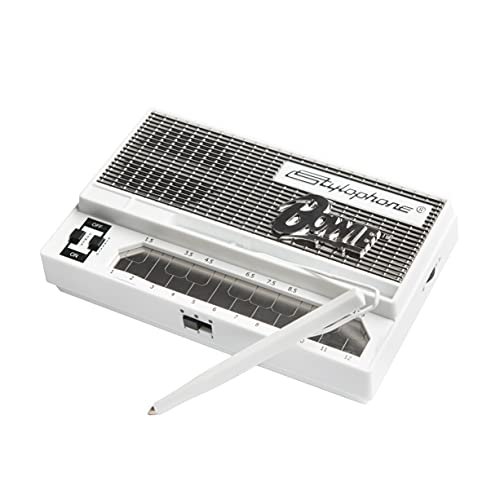
- Simple stylus-controlled interface
- Battery-powered and portable
- Three classic analog synth and bass modes
Best For: Casual beginners and Bowie fans
Portable FM Powerhouse

- 6-operator FM engine with 128 presets
- Sequencer, arpeggiator, effects, and 12-voice polyphony
- USB-C, Bluetooth MIDI, and battery-powered portability
Best For: Beginners wanting portable FM synthesis and flexible MIDI connections
Hands-On Chord Creativity
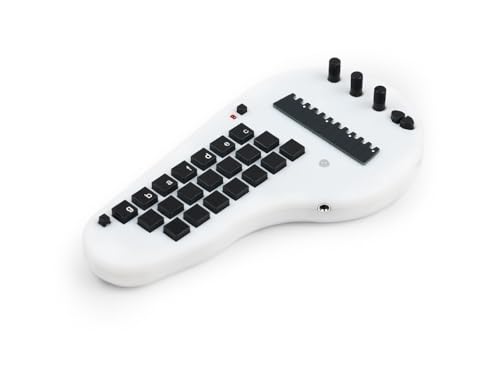
- 21 buttons for major, minor, and 7th chords
- 12-section harp touch zone for note triggering
- USB MIDI and open-source customization
Best For: Beginners exploring harmony through touch controls and chord buttons
Retro Pocket Starter

- Easy stylus control across three octaves
- Distinctive analog-style retro sound with vibrato
- Pocket-sized, battery-powered design with headphone output
Best For: Beginners seeking a simple, playful introduction to electronic sound
Portable Modeling Pick – Yamaha REFACE CS
For beginners seeking synthesizers for beginners, the Yamaha REFACE CS offers a hands-on introduction to analog-style sound design in a compact format. Its physical-modeling engine, 37-key keyboard, built-in speakers, and battery power make it practical for learning and playing away from a studio.
Best For: Beginners who want a self-contained, portable synthesizer with real keys and flexible analog-style sounds.
Pros:
- Physical-modeling engine supports multiple synthesis and oscillator types.
- Eight-note polyphony handles chords and pads, while mono mode suits bass and leads.
- Includes a 37-key mini keyboard, phrase looper, speakers, and battery operation.
Cons:
- Mini keys may feel less spacious than a full-size keyboard.
- At 6 pounds and nearly 30 inches wide, it is portable but not ultra-compact.
The REFACE CS is a strong learning instrument for beginners who want immediate control without relying on a computer. Its combination of performance-friendly controls, onboard sound, and looping makes it especially useful for experimenting with complete musical ideas.
Standalone Beat-Making Pick – Akai MPK Mini Play MK3
The Akai MPK Mini Play MK3 is a practical choice for beginners exploring synthesizers for beginners alongside beat production. It combines a 25-key velocity-sensitive keyboard, built-in sounds, drum pads, knobs, a speaker, and USB MIDI control in a compact unit.
Best For: Beginners who want built-in sounds and beat-making controls without needing a computer for every session.
Pros:
- Includes more than 100 internal drum and instrument sounds.
- Eight velocity-sensitive MPC pads, eight knobs, an arpeggiator, and note repeat support varied performance.
- Built-in speaker and battery operation make it easy to use on the go.
- Includes MPC Beats, AIR instruments, Melodics lessons, and other software.
Cons:
- The 25-key mini keyboard offers less range than a larger synthesizer.
- Batteries are not included.
This model is especially approachable for beginners who want to combine melodies, internal sounds, and programmed rhythms. Its standalone operation lowers the barrier to getting started, while USB connectivity leaves room to expand into computer-based production.
Minimalist Analog Experiment – Korg monotron DUO
The Korg monotron DUO is a highly compact option for beginners curious about synthesizers for beginners and basic analog sound exploration. Its lightweight ribbon-style format and simple interface make it suited to quick experimentation, modulation, and portable creative setups.
Best For: Beginners who want an inexpensive-feeling, highly portable way to explore compact analog sound shaping.
Pros:
- Compact and lightweight design is easy to transport.
- Analog sound profile provides a direct introduction to simple sound experimentation.
- Simple controls support quick adjustments and creative exploration.
Cons:
- The supplied notes do not indicate a conventional piano-style keyboard.
- Its compact feature set is less suited to full arrangements or traditional keyboard practice.
The monotron DUO makes the most sense as a small sound-design instrument rather than a complete beginner keyboard. Choose it when portability and playful analog experimentation matter more than polyphony, extensive connectivity, or a full set of keys.
Computer Production Starter – Akai MPK Mini MK3
For beginners looking at synthesizers for beginners as part of a computer-based setup, the Akai MPK Mini MK3 is a flexible USB MIDI controller. Its velocity-sensitive keys, pads, knobs, arpeggiator, and included production software provide a practical way to control virtual synthesizers and build beats.
Best For: Beginners building a home-studio setup around a computer, DAW, and virtual instruments.
Pros:
- 25 velocity-sensitive keys support expressive control of virtual synthesizers.
- Eight MPC-style pads include Note Repeat and Full Level for beat programming.
- Eight assignable knobs and a four-way thumbstick provide hands-on sound and effect control.
- Includes MPC Beats, virtual instruments, sound content, and additional software offers.
Cons:
- It is a MIDI controller, so it requires a USB-compatible device and software for sounds.
- The 25-key mini format provides limited range for two-handed playing.
The MPK Mini MK3 is a sensible starting point when the goal is learning synthesis through software rather than using a standalone instrument. It offers enough controls to grow from basic keyboard input into beat-making, plugin adjustment, and broader home-studio production.
Best Expressive Pick – MOOG Theremini
For beginners searching for synthesizers for beginners with an unusual performance style, the MOOG Theremini offers a guided introduction to theremin playing. Its pitch correction, built-in tuner, LCD feedback, speaker, and 32 presets make it easier to start exploring without traditional keys.
Best For: Beginners interested in expressive, touch-free performance and learning pitch accuracy.
Pros:
- Adjustable pitch correction helps beginners control the playing difficulty.
- Built-in tuner and LCD provide visual pitch feedback in real time.
- Includes a speaker, headphone output, 32 presets, and CV/MIDI connectivity.
Cons:
- Its theremin-style interface may require more practice than a conventional keyboard.
- It is corded electric rather than battery-powered.
The Theremini is a distinctive beginner instrument that combines guided practice with room to grow into live performance, software editing, and external gear control.
Best All-Around Controller – Akai MPK Mini Plus
For beginners choosing synthesizers for beginners in a computer-based setup, the Akai MPK Mini Plus provides a broad control surface rather than built-in sounds. Its 37 velocity-sensitive keys, pads, knobs, sequencer, and DAW connectivity support hands-on music production from the start.
Best For: Beginner beat makers and producers who want one compact controller for keys, drums, sequencing, and DAW control.
Pros:
- 37 keys provide three full octaves for melodic and chord-based playing.
- Eight RGB MPC pads, eight assignable knobs, and transport controls add practical workflow control.
- Built-in 64-step sequencer and MIDI/CV/Gate connections support computer-free and external-gear setups.
- Includes MPC Beats and additional software bundles.
Cons:
- It requires a computer, DAW, or external sound source to produce sounds.
- Its compact mini-key format may feel less familiar than full-size keys.
The MPK Mini Plus is a flexible starting point for beginners who want to learn production workflows and expand into software instruments, modular gear, or sound modules.
Best Compact Starter – Bowie Stylophone
The Bowie Stylophone is a simple, portable option for beginners looking for synthesizers for beginners without a large setup. Its stylus-controlled design, battery-powered format, and three sound modes make it approachable for quick experimentation.
Best For: Casual beginners, Bowie fans, and anyone wanting a compact instrument for simple analog-style sounds.
Pros:
- Unique stylus interface is simple to use and easy to carry.
- Battery-powered design supports portable playing.
- Three modes provide classic analog synth and bass sounds.
- Limited-edition Bowie design includes a white finish and embossed logo.
Cons:
- It offers fewer sound-shaping and control options than a full keyboard synthesizer.
- The compact format is better suited to casual exploration than extensive production.
The Bowie Stylophone works well as a low-complexity introduction to electronic sound, especially for learners who value portability and character over a full production feature set.
Portable FM Powerhouse – M-VAVE FM-1
For beginners seeking synthesizers for beginners with room to grow, the M-VAVE FM-1 combines a 6-operator FM engine with accessible controls, preset sounds, sequencing, and portable operation. Its compact design is especially practical for guitarists and producers who want MIDI flexibility without carrying a full-size keyboard.
Best For: Beginners who want portable FM synthesis, guitar-rig integration, and deeper sound-design tools.
Pros:
- Offers 128 factory presets, 32 FM algorithms, and FM SYSEX import.
- Includes an arpeggiator, 16-step sequencer, 12-voice polyphony, and six effects.
- Supports USB-C, Bluetooth BLE MIDI, and 3.5mm MIDI connectivity.
- Lightweight, battery-powered design provides up to 12 hours of play.
Cons:
- The 27-key silicone keyboard may feel less familiar than a conventional keyboard.
- Its extensive FM features may take time for complete beginners to learn.
The FM-1 is a strong choice if portability and connectivity matter as much as sound variety. It offers beginner-friendly access to presets while retaining enough synthesis depth for continued exploration.
Hands-On Chord Creativity – Minichord Synthesizer
The Minichord takes a different approach to synthesizers for beginners by emphasizing chord selection and touch-based playing rather than a traditional keyboard layout. Its dedicated chord buttons and harp-style touch zone make it approachable for experimenting with harmony and musical ideas.
Best For: Beginners, songwriters, and makers who want an intuitive chord-focused MIDI instrument.
Pros:
- Provides 21 chord buttons for selecting major, minor, and 7th chords.
- The 12-section harp touch zone enables expressive note triggering.
- Includes 12 internal presets and support for custom presets.
- USB MIDI connectivity works with compatible music software.
Cons:
- Its chord-focused interface is less suited to traditional keyboard technique.
- Using its open-source features may require extra technical interest or effort.
Choose the Minichord if you want a compact, unconventional way to build harmonies. It is particularly appealing for beginners who find chord buttons and touch controls more inviting than standard keys.
Retro Pocket Starter – Stylophone Original
The Stylophone Original is one of the simplest synthesizers for beginners to start playing immediately. Instead of conventional keys, you tap and slide a stylus across its touch-sensitive metal surface to produce notes, making it a compact and playful introduction to electronic sound.
Best For: Beginners, casual players, and anyone wanting a tiny battery-powered synth with a distinctive vintage sound.
Pros:
- Simple stylus-based playing method is easy to approach.
- Produces an iconic analog-style retro sound across three octaves.
- Includes optional vibrato, a built-in speaker, and a headphone socket.
- Compact battery-powered design fits easily in a pocket.
Cons:
- The touch-surface layout is less versatile than a conventional keyboard.
- It uses three AA batteries rather than a rechargeable battery.
- Its connectivity is limited to a 3.5mm stereo connection for recording and other gear.
The Stylophone is best viewed as a fun first instrument rather than a full production workstation. Its approachable controls, portability, and recognizable tone make it an inviting way to begin experimenting with synthesis.
How We Picked These Synthesizers for Beginners
We selected instruments that offer an accessible entry point without limiting the kinds of music a new player can explore. The lineup includes self-contained synthesizers with speakers and built-in sounds, MIDI controllers designed for computer-based production, and distinctive instruments that encourage experimentation.
Our comparison focuses on playability, portability, sound access, controls, learning curve, connectivity, and overall usefulness. Because these products serve different purposes, the best choice depends less on having the most features and more on choosing the right workflow.
Quick Comparison
| Type | Best For | What to Check |
|---|---|---|
| Portable keyboard synthesizer | Playing immediately and practicing without a computer | Built-in sounds, speakers, keys, and battery or power options |
| MIDI controller | Making music with software | Computer compatibility, included software, key size, pads, and controls |
| Compact analog or digital synth | Hands-on sound experimentation | Sound-shaping controls, connectivity, and limited keyboard formats |
| Novelty or expressive instrument | Creative performance and unusual techniques | Playing method, pitch control, learning curve, and output options |
Key Buying Factors for Synthesizers for Beginners
Standalone Operation Versus MIDI Control
A standalone synthesizer produces sound on its own, making it the simplest option for casual practice and immediate play. A MIDI controller does not generate sound by itself; it sends performance data to music software or another sound source. Controllers can be more flexible, but you should budget for a compatible device and learn a basic software setup.
Keyboard Size and Playing Feel
Compact mini keys save space and suit small hands, travel, and beat-making. A larger key count gives you more room for two-handed parts and melodies. Velocity sensitivity is especially useful because it lets playing dynamics affect volume or expression.
Controls, Sounds, and Connectivity
Beginners benefit from clearly labeled knobs, accessible presets, and controls that reveal how synthesis works. Check whether the instrument includes USB, MIDI, audio output, a speaker, headphones support, or CV connectivity. Built-in speakers are convenient, while headphone output is valuable for quiet practice.
Portability and Learning Curve
Small instruments are easier to keep nearby, which can encourage regular practice. However, very compact designs may use ribbon controllers, unusual layouts, or fewer traditional keys. Choose simplicity if you want immediate results, or a more unconventional interface if exploration is part of the appeal.
Who Should Buy Which Synthesizers for Beginners?
Choose a portable, self-contained keyboard if you want to play without extra equipment. A MIDI controller is the better fit for someone planning to use a laptop, tablet, virtual instruments, and a digital audio workstation. Look for a model with more keys if you expect to play chords and melodies with both hands.
Pick a compact analog-style instrument if turning knobs and learning synthesis sounds more appealing than working primarily in software. A theremin-style or ribbon-controlled instrument suits creative performers who enjoy an unusual playing technique, while pocket instruments are ideal for experimentation, travel, and inexpensive musical discovery.
Before buying, confirm the power requirements, software compatibility, included accessories, and whether the product makes sound independently. The best synthesizer for a beginner is the one that fits your available space, preferred learning style, and willingness to use additional gear.