Digital connectivity makes it easier to integrate studio monitors into modern desktop and home-studio systems. The best models combine clean near-field sound with practical inputs such as optical, USB, Bluetooth, or other digital-friendly connections.
We selected 10 options across compact desks, larger listening spaces, music production, and casual media use. Use the guide below to compare connectivity, room fit, sound priorities, and the features that matter most before buying.
Best 10 Studio Monitors with Digital Input Picks for 2026
Best Value

- Hi-Res sound with a stated 52Hz–40kHz response
- Bluetooth multipoint, balanced TRS, RCA, and AUX
- App EQ plus Music, Monitor, and Custom modes
Best For: Home studios, desktop monitoring, and flexible everyday listening
Best Detail

- U-ART tweeter and HPS waveguide for detailed sound
- 5-inch woofer with 70W output
- XLR/RCA inputs and adjustable shelf filters
Best For: Recording, mixing, podcast editing, and detailed analog monitoring
Best Pair

- Two matched 5-inch powered reference monitors
- Wide sweet spot from the Image Control Waveguide
- XLR/TRS inputs with Boundary EQ and HF Trim
Best For: Stereo production, podcasting, and cinematic sound design
Best Digital Connectivity

- Bluetooth 6.0 with LDAC and multipoint pairing
- Balanced XLR/TRS, RCA, AUX, and headphone output
- 80W RMS bi-amped design with DSP room tuning
Best For: Hybrid home studios using wireless and wired sources
Wide-Sweet-Spot Accuracy

- 6.55-inch woofer and 1.25-inch silk-dome tweeter
- Wide EBM waveguide for broad listening coverage
- RCA, TRS, and XLR inputs plus acoustic tuning
Best For: Home-studio mixing with an analog audio interface
Compact USB Versatility
Ortizan C7 Powered Studio Monitors

- 24-bit DAC with direct USB digital audio
- Bluetooth 5.3, RCA, AUX, and balanced TRS inputs
- Compact pair with front headphone output
Best For: Desktop production and multimedia setups needing USB input
Optical-Ready Desktop Monitoring

- Optical TOSLINK digital input
- Bluetooth aptX plus TRS and RCA inputs
- 5-inch woofer pair with subwoofer output
Best For: Desktop studios and entertainment systems using optical sources
Compact Yamaha Reference
HS4 Powered Studio Monitor Pair

- 4.5-inch woofer and 1-inch dome tweeter
- XLR/TRS, RCA, and stereo mini inputs
- Includes cables and anti-slip pads
Best For: Small music-production and video-editing workstations
Digital-Ready Desktop Pick

- Optical input plus Bluetooth 5.0
- Includes 1/4-inch TS, RCA, and 3.5mm inputs
- DSP-tuned 4-inch 2-way design
Best For: Compact studios, computers, TVs, and digital-source setups
Large Nearfield Authority
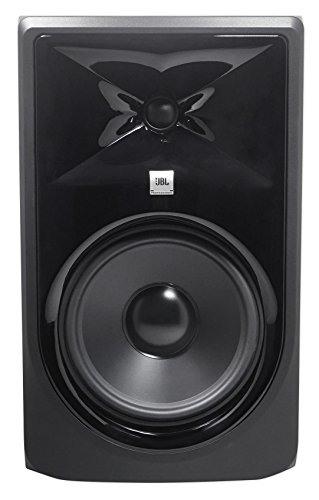
- 8-inch woofer and 1-inch tweeter
- Balanced XLR and 1/4-inch TRS inputs
- Boundary EQ for wall and desktop placement
Best For: Larger nearfield production setups with an audio interface
Best Value – Edifier MR3
The Edifier MR3 is a practical choice for shoppers seeking studio monitors with digital input through Bluetooth, alongside balanced TRS, RCA, and AUX connections. Its compact 3.5-inch drivers, selectable listening modes, and app-based EQ make it flexible for near-field monitoring, editing, and everyday listening.
Best For: Home studios, desktop monitoring, video editing, and versatile everyday audio.
Pros:
- Hi-Res Audio certification with a stated 52Hz–40kHz response.
- Bluetooth with multipoint pairing plus balanced TRS, RCA, and AUX inputs.
- Music, Monitor, and Custom modes with EDIFIER ConneX app adjustments.
- Includes a front headphone output and 18W-per-channel RMS power.
Cons:
- Its 3.5-inch mid-low drivers offer less low-end scale than larger monitors.
- Bluetooth is convenient, but wired connections remain the more direct monitoring option.
The MR3 stands out when connectivity and convenience matter as much as basic monitoring accuracy. It is a flexible desktop speaker system rather than a large, high-output professional monitor.
Best Detail – ADAM Audio T5V
The ADAM Audio T5V is built for listeners who prioritize revealing monitoring in recording, production, podcast editing, and mixing. While it does not offer a digital audio input, its XLR and RCA analog connections, U-ART tweeter, and room-adjustment filters provide a focused studio setup.
Best For: Recording, mixing, podcast production, and users who want detailed high-frequency monitoring.
Pros:
- U-ART tweeter and HPS waveguide are designed for detailed high-frequency reproduction.
- 5-inch woofer and 70W output provide a larger monitoring platform than compact desktop speakers.
- High- and low-shelf filters help adapt the monitor to difficult rooms.
- Offers both XLR and RCA analog connections.
Cons:
- No digital input is listed; connections are analog XLR and RCA.
- The rear-firing bass-reflex port may require placement consideration near walls.
The T5V is a strong fit for an accuracy-first workflow, especially when your interface or soundcard already provides analog outputs. Choose it over a connectivity-focused model if detailed studio monitoring is the priority.
Best Pair – JBL 305P MkII
This JBL 305P MkII package supplies two active 5-inch reference monitors for a conventional stereo studio setup. It is not a digital-input model, but its XLR/TRS connectivity, wide listening sweet spot, and room-tuning controls make it a capable choice for production, podcasting, and sound design.
Best For: Stereo studio monitoring, music production, podcasting, and cinematic sound design.
Pros:
- Package includes two 305P MkII powered monitors.
- Image Control Waveguide is designed for precise imaging and a wide sweet spot.
- Dual 41W Class-D amplifiers support dynamic playback from the 5-inch woofer.
- Boundary EQ and HF Trim help tailor the speakers to the room.
Cons:
- No digital input or Bluetooth connection is listed.
- The supplied package is relatively focused on studio use rather than casual wireless playback.
The JBL pair is a sensible option when you need two matched monitors and value stereo imaging. It works best with an audio interface or mixer that provides XLR or TRS outputs.
Best Digital Connectivity – Edifier MR4.5
The Edifier MR4.5 is the most connectivity-focused option here for shoppers seeking studio monitors with digital input via Bluetooth 6.0 and LDAC wireless playback. It also provides balanced XLR and TRS, RCA, AUX, and a headphone output, while DSP tuning and room-compensation controls support more precise near-field setups.
Best For: Home studios and desktop systems that need Bluetooth streaming alongside professional and consumer wired inputs.
Pros:
- Bluetooth 6.0 with LDAC and multipoint pairing provides high-resolution wireless playback.
- Includes balanced XLR/TRS, RCA, AUX, and a front headphone jack.
- 80W RMS bi-amped design with 4.5-inch drivers and 1-inch silk tweeters.
- Offers DSP tuning, app EQ, low-cut adjustment, and acoustic-space compensation.
Cons:
- Bluetooth is the listed digital-input pathway; no USB, optical, or coaxial input is specified.
- Its extensive controls may be more than casual listeners need.
The MR4.5 is the clearest match for a hybrid setup combining wireless devices with studio hardware. Its flexible inputs and calibration features make it easier to adapt to desktops, rooms, and mixed listening duties.
Wide-Sweet-Spot Accuracy – PreSonus Eris E7 XT
PreSonus Eris E7 XT 2-Way Active Studio Monitor with EBM Waveguide (Pack of 1)
Check Price On AmazonThe PreSonus Eris E7 XT is a strong choice for anyone seeking studio monitors with digital input alternatives through a computer or laptop setup, although its listed connections are analog RCA, TRS, and XLR rather than optical or USB. Its 6.55-inch woven-composite woofer, 1.25-inch silk-dome tweeter, and broad EBM waveguide are designed for detailed monitoring and a generous listening area.
Best For: Mixing and music production in home or desktop studios where wide imaging and flexible acoustic tuning matter.
Pros:
- 100° horizontal by 60° vertical waveguide creates a wide sweet spot and solid imaging.
- 6.55-inch woofer supports deep lows, while the silk-dome tweeter delivers smooth highs.
- Acoustic controls include high-pass filter, low- and high-frequency trim, and acoustic-space adjustment.
- Includes Studio One Prime and Studio Magic software valued by the listing at over $1,000.
Cons:
- Does not list a digital or USB input; connectivity is RCA, TRS, and XLR.
- Sold as a single monitor, so a stereo setup requires two units.
Choose the Eris E7 XT when accurate nearfield monitoring and room adjustment take priority over built-in digital connectivity. It is particularly appealing for producers who already have an audio interface with analog outputs.
Compact USB Versatility – Ortizan C7 Powered Studio Monitors
The Ortizan C7 is one of the more direct matches for shoppers seeking studio monitors with digital input, thanks to its built-in 24-bit DAC and USB audio support. It also combines Bluetooth 5.3, RCA, 3.5mm AUX, and balanced 6.35mm TRS connectivity in a compact pair suited to desktop work.
Best For: Compact home studios, content creation, gaming, and desktop listening with USB and wireless source flexibility.
Pros:
- Built-in 24-bit DAC accepts digital audio directly through USB.
- Bluetooth 5.3 enables wireless playback from compatible smartphones and tablets.
- Balanced 6.35mm TRS input works with mixers, consoles, and other professional equipment.
- 3.5-inch carbon-fiber mid-bass driver and 0.75-inch silk-dome tweeter are tuned for balanced playback.
Cons:
- Compact 3.5-inch drivers may provide less low-end scale than larger studio monitors.
- The supplied notes do not specify a USB connector type or detailed frequency-response figures.
The C7 stands out when digital convenience is central to your setup. USB audio, Bluetooth, analog inputs, and a front headphone output make it easy to move between production, entertainment, and personal monitoring without adding a separate DAC.
Optical-Ready Desktop Monitoring – Fluid Audio C5BT
The Fluid Audio C5BT is a practical option for shoppers comparing studio monitors with digital input, offering an optical TOSLINK connection alongside Bluetooth aptX, balanced TRS, and RCA inputs. Its matched pair uses 5-inch woofers and 1-inch PEI-diaphragm tweeters for audio production, home entertainment, and office listening.
Best For: Desktop users who want optical digital audio, Bluetooth streaming, and conventional analog connections in one pair.
Pros:
- Optical TOSLINK input supports high-quality digital audio from compatible devices.
- Bluetooth with aptX provides higher-quality wireless streaming than basic Bluetooth modes.
- Balanced TRS and unbalanced RCA inputs accommodate professional and consumer sources.
- Digital volume control, input selection, and a subwoofer output add everyday flexibility.
Cons:
- Bluetooth range is listed at 10 meters, which may limit placement flexibility.
- Output power is listed at 40 watts, so it may be less suited to large rooms or high-volume use.
- Optical input requires a compatible TOSLINK-equipped source.
The C5BT is a well-rounded pick when optical connectivity is more important than USB audio. Its multiple inputs and subwoofer output make it adaptable for a desk, small production space, or mixed computer-and-TV setup.
Compact Yamaha Reference – HS4 Powered Studio Monitor Pair
The Yamaha HS4 is a compact pair of studio monitors with digital input alternatives through compatible external devices, while its XLR/TRS, RCA, and stereo mini inputs accommodate common studio and desktop sources. Its 4.5-inch woofer, 1-inch dome tweeter, and room-control and high-trim controls suit music production and video editing in smaller workspaces.
Best For: Small music-production, video-editing, and desktop monitoring setups needing a complete pair.
Pros:
- Sold as a pair with speaker cable, stereo mini-to-RCA cable, and anti-slip pads included.
- Offers XLR/TRS combo, RCA, and stereo mini inputs.
- Room control and high-trim response controls help adapt the speakers to the room.
Cons:
- Its 4.5-inch woofer and 26-watt output are aimed at compact setups rather than high-output monitoring.
- The listed inputs are analog; a separate converter may be needed for a direct digital connection.
Choose the HS4 when space, simplicity, and a matched pair matter more than deep bass extension or built-in digital connectivity. It is a practical compact option for nearfield workstations.
Digital-Ready Desktop Pick – Rockville ASM4 Monitor Pair
The Rockville ASM4 is a strong fit for shoppers seeking studio monitors with digital input, thanks to its optical input alongside Bluetooth 5.0, 1/4-inch TS, RCA, and 3.5mm connections. This compact 4-inch, 2-way pair also combines DSP tuning, a silk-dome tweeter, and a rear-firing bass port for studio, computer, and TV use.
Best For: Desktop studios and entertainment systems that need optical connectivity plus flexible wireless and analog inputs.
Pros:
- Includes an optical input for TVs and other digital sources.
- Also supports Bluetooth 5.0, 1/4-inch TS, RCA, and 3.5mm aux connections.
- DSP tuning, a 1-inch silk-dome tweeter, and a rear-firing port support balanced full-range playback.
Cons:
- The 4-inch woofer may provide less low-end authority than larger monitors.
- Bluetooth range is listed at 35 feet, so wireless placement remains room-dependent.
For a compact setup where optical input is essential, the ASM4 is the most directly equipped option in this group. Its broad connectivity also makes it useful beyond strictly professional monitoring.
Large Nearfield Authority – JBL 308P MkII Powered Monitor
The JBL 308P MkII is a larger nearfield monitor for music production and desktop hi-fi applications. While it does not list a built-in digital input, its balanced XLR and 1/4-inch TRS connections, adjustable input sensitivity, and boundary EQ make it a capable choice when used with an external digital-to-analog interface.
Best For: Larger workstations and nearfield production setups prioritizing extended bass and flexible balanced analog connection.
Pros:
- Uses an 8-inch woofer and 1-inch tweeter for deeper bass and clear highs.
- Boundary EQ helps restore neutral low-frequency response near walls or on work surfaces.
- Provides balanced XLR and 1/4-inch TRS inputs with selectable +4 dBu/-10 dBV sensitivity.
Cons:
- Sold individually, so a stereo setup requires two speakers.
- No built-in digital input is listed.
- Its 8-inch cabinet is less suited to very small desktops than compact monitors.
The 308P MkII is best viewed as a high-output analog monitor for users who already have, or plan to add, an audio interface. Its size and boundary controls make placement planning especially important.
How We Picked the Best Studio Monitors with Digital Input
We focused on monitors that offer a useful digital connection or modern wireless pathway alongside credible powered-speaker performance. The selection covers compact 4-inch and 5-inch designs, larger 7-inch and 8-inch monitors, and models suited to both production and everyday listening.
We also considered amplifier design, frequency-response controls, connection variety, stereo-pair availability, maximum output, and how easily each monitor can fit a desktop or near-field setup. A monitor can be technically capable yet poorly suited to a small untreated room, so size and placement remain important parts of the comparison.
Quick Comparison
| Best For | What to Prioritize | Recommended Size |
|---|---|---|
| Desktop production | Compact cabinet, balanced sound, low noise | 4–5 inches |
| Bluetooth and casual listening | Bluetooth codec support and easy controls | 4–5 inches |
| Small-to-medium rooms | Room-adjustment controls and output headroom | 5–7 inches |
| Large rooms or extended bass | Higher SPL and larger woofer | 7–8 inches |
Key Buying Factors for Studio Monitors with Digital Input
Digital Connection Type
Optical input is useful for televisions, computers, and interfaces with optical output, while Bluetooth is convenient for phones and casual playback. Bluetooth is not always the ideal choice for critical mixing because of codec processing and possible latency. If you need the most dependable production workflow, confirm that the monitor’s digital connection matches your audio interface or source device.
Woofer Size and Room Compatibility
Larger woofers can deliver deeper bass and higher volume, but they also need more space and careful positioning. Compact monitors are usually easier to place on a desk and may behave better in a small room. Consider a subwoofer only after the main monitors are positioned correctly and the room’s low-frequency response is under control.
Adjustability and Placement
Look for high- and low-frequency trim controls, boundary switches, or DSP features when the speakers must sit near walls or on a desk. Use isolation pads or stands to reduce vibration, keep tweeters near ear level, and form a symmetrical listening triangle.
Inputs, Power, and Stereo Setup
Check whether the listing includes one monitor or a stereo pair. Also verify connector types, balanced input availability, amplifier power, and whether the controls are easy to reach. More power is helpful for clean peaks, but it does not replace proper room matching.
Who Should Buy Which Studio Monitors with Digital Input?
Choose Compact Monitors for a Desk or Bedroom Studio
Smaller models are the practical choice when space, placement, and listening distance are limited. They suit songwriting, editing, gaming, and content creation, especially when paired with headphones for checking deep bass.
Choose Flexible Bluetooth or Optical Models for Mixed Use
If the speakers will serve a computer, television, phone, and occasional production work, prioritize simple digital connectivity and broad input selection. These models offer convenience without requiring a dedicated interface for every source.
Choose Larger Monitors for Headroom and Bass Extension
Seven- and eight-inch monitors make more sense in medium-to-large rooms where you can sit farther away and control reflections. They are better for demanding monitoring, but their extra low end can exaggerate room problems if placement and acoustic treatment are neglected.
Before ordering, confirm the exact input specification, whether the price covers one speaker or two, and the return policy. Digital input labels vary by model, so matching the monitor to your source device is the final compatibility check.