Choosing studio monitors with subwoofer output can make a compact setup far more versatile, but not every pair offers the same connectivity, bass control, or room-filling performance.
This roundup covers affordable desktop monitors, dedicated powered subwoofers, and bundled systems so you can match your setup to your space, sources, and listening goals.
Best 10 Studio Monitors with Subwoofer Output Picks for 2026
Best Compact All-in-One
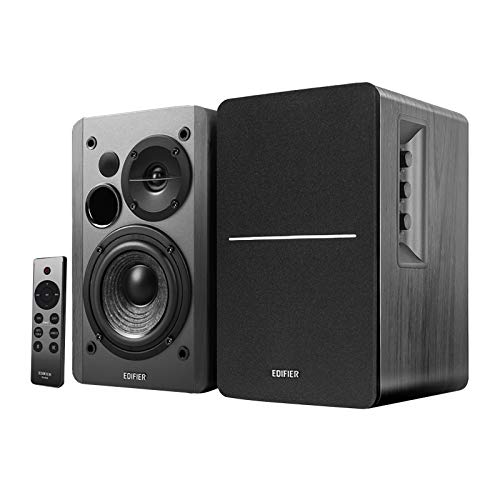
- Subwoofer output with auto crossover detection
- Bluetooth, optical, coaxial, and RCA inputs
- 42W compact bookshelf-speaker design
Best For: Desktops, small rooms, and flexible multimedia listening
Best for ADAM T-Series Systems

- 10-inch woofer with 28Hz low-end extension
- Adjustable crossover, phase, and volume
- XLR/RCA connectivity and bypass connection
Best For: ADAM T5V or T7V studio monitor setups
Best Small Desk Pair

- Compact pair with 3.5-inch woofers
- Tone knob and location switch
- Includes isolation pads and connection cables
Best For: Small desks, home studios, and multimedia setups
Best High-Output Studio Sub

- 8-inch woofer extends bass to 30Hz
- Front-firing port aids placement flexibility
- Footswitch control disables sub and crossover
Best For: Recording studios and production-focused monitoring systems
Deep-Bass Expansion
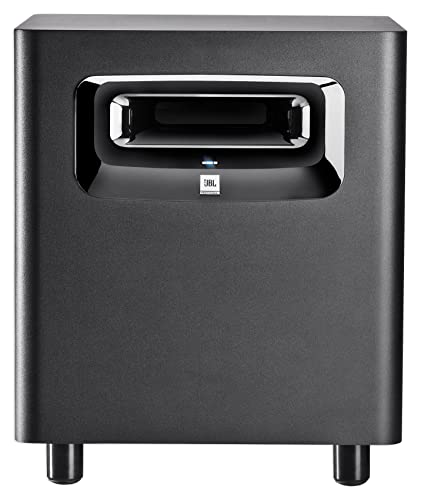
- 10-inch driver with bass response into the 20 Hz region
- Balanced XLR and TRS connectivity for monitor integration
- Selectable XLF tuning and input sensitivity
Best For: Bass-heavy studio production and LFE expansion
Compact Desktop Monitoring
PreSonus Eris 3.5 Powered Monitors

- Complete stereo pair with 50 watts of amplification
- Balanced TRS, RCA, auxiliary, and headphone connections
- Compact 3.5-inch woofer and adjustable acoustic controls
Best For: Small desktop production and everyday listening
Controlled Low-End Reference

- 8-inch bass-reflex subwoofer with a listed 22 Hz–150 Hz range
- 150-watt amplifier for powerful low-frequency monitoring
- Adjustable low/high cut controls plus phase switch
Best For: Recording and mixing systems needing crossover control
Complete 2.1 Bundle
Mackie CR3.5 Monitors with CR8SBT Subwoofer

- Includes monitors, subwoofer, and RCA cable
- Tone control and placement modes
- Bluetooth, remote, and adjustable crossover
Best For: Complete desktop music, gaming, and movie setups
Precision Bass Upgrade
PreSonus Eris Sub 8BT Studio Subwoofer

- 8-inch woofer reaches down to 30Hz
- Adjustable highpass and lowpass filters
- TRS, RCA, aux, and Bluetooth 5.0 connectivity
Best For: Tunable bass extension for production and listening
Simple CR-Series Expansion
Mackie CR8SBT 8-Inch Studio Subwoofer

- Built for Mackie CR Series monitors
- TRS, RCA, and Bluetooth inputs
- Remote volume, bypass, and crossover control
Best For: CR-series owners seeking an easy bass upgrade
Best Compact All-in-One – Edifier R1280DBs
The Edifier R1280DBs is a practical starting point for shoppers seeking studio monitors with subwoofer output in a compact bookshelf-speaker format. It combines a wired subwoofer line out with Bluetooth 5.0, optical, coaxial, and RCA connectivity, making it flexible for computers, TVs, and casual listening.
Best For: Desktops, home offices, small rooms, and mixed music or multimedia setups.
Pros:
- Dedicated subwoofer output with automatic crossover detection.
- Optical and coaxial inputs support lossless connections to compatible devices.
- Wireless remote plus onboard bass, treble, and volume controls.
- 42W continuous power with a 4-inch woofer and 13mm silk dome tweeter.
Cons:
- Plastic enclosure may feel less substantial than MDF studio monitors.
- Bluetooth range is listed at 10 meters, so placement flexibility is limited by the wireless connection.
- Its compact 4-inch driver is better suited to smaller spaces than high-output monitoring.
The R1280DBs stands out when convenience and connectivity matter as much as monitoring. Its subwoofer output makes future bass expansion straightforward, while the compact design keeps it suitable for a desk or shelf.
Best for ADAM T-Series Systems – ADAM Audio T10S
The ADAM Audio T10S is an active 10-inch subwoofer for listeners building a more complete studio monitoring system. With XLR/RCA connectivity, adjustable crossover settings, phase rotation, and dedicated volume control, it is designed to integrate with compatible monitors and extend low-frequency detail.
Best For: Studio owners using ADAM T5V or T7V monitors who need calibrated low-end extension.
Pros:
- 10-inch woofer reaches down to a listed 28Hz.
- Adjustable crossover, phase rotation, and volume support room and monitor matching.
- Subwoofer bypass connection allows quick switching with a footswitch.
- 130W active design delivers up to 104dB SPL according to the supplied specifications.
Cons:
- Its 27-pound cabinet requires more floor space than compact desktop solutions.
- The footswitch for bypass control is not included.
- It is a subwoofer rather than a complete pair of studio monitors.
The T10S is a strong choice for a dedicated monitoring chain where crossover and phase adjustment are important. It is especially logical for ADAM T-Series owners, though buyers will need separate monitors and should plan for floor placement.
Best Small Desk Pair – Mackie CR3.5
The Mackie CR3.5 is a compact pair of studio monitors for desks and small studios. While the supplied specifications do not list a dedicated subwoofer output, the pair offers RCA and TRS connectivity, a tone knob, and a location switch for adjusting the presentation to different placements.
Best For: Desktop music production, home studios, multimedia, and casual listening where space is limited.
Pros:
- Sold as a pair with cables and foam isolation pads included.
- Compact 3.5-inch woofers fit desk-oriented setups.
- Tone knob enables quick voicing adjustments without menus.
- Location switch helps correct bass response against a wall or in free space.
Cons:
- The supplied notes do not identify a dedicated subwoofer output.
- 3.5-inch woofers offer less physical low-end capability than larger monitor systems.
- The warranty is listed as one year.
The CR3.5 is worth considering when compactness and simple desk controls come first. However, shoppers specifically searching for studio monitors with subwoofer output should verify the connection options carefully, since a dedicated sub out is not listed in the supplied product details.
Best High-Output Studio Sub – KRK S8.4
The KRK S8.4 is a powered 8-inch studio subwoofer built for music production and recording environments. Its glass aramid composite woofer, front-firing port, XLR connectivity, and footswitch-enabled subwoofer and crossover control make it a focused low-frequency addition to a compatible monitoring system.
Best For: Recording studios and producers who want substantial bass extension with flexible placement.
Pros:
- 8-inch glass aramid composite woofer extends bass to a listed 30Hz.
- Front-firing bass port supports more placement flexibility.
- Footswitch control can disable the subwoofer and crossover filter.
- 109W Class D amplification and up to 112dB maximum SPL provide strong output potential.
Cons:
- Footswitch is not included.
- At 26.5 pounds, it is intended for a more substantial studio setup rather than a small desktop.
- It is a standalone subwoofer and requires compatible monitors.
The S8.4 is the most purpose-built option here for adding controlled low end to a production system. Its front port and bypass-style control are useful in real studio workflows, but buyers should confirm that their monitor chain supports the listed XLR connectivity.
Deep-Bass Expansion – JBL LSR310S Subwoofer
If you want studio monitors with subwoofer output support, the JBL Professional LSR310S is a dedicated way to extend a compatible monitor system into the low end. Its 10-inch driver, balanced inputs and outputs, selectable sensitivity, and 27 Hz listed frequency response make it suited to production setups that need more bass authority.
Best For: Producers and mixing setups that need powerful low-frequency extension or an LFE-capable subwoofer.
Pros:
- 10-inch driver delivers deep bass response into the 20 Hz region, with a 113 dB peak output specification.
- Balanced XLR and 1/4-inch TRS inputs plus XLR outputs integrate with many studio monitor systems.
- XLF mode provides a club-style bass tuning option for dance-music production.
- Sensitivity switching supports both -10 dBV and +4 dBu signal sources.
Cons:
- This is a subwoofer, not a complete pair of stereo monitors.
- Its 10-inch design may be more substantial than needed for a compact desktop setup.
- The supplied notes identify it as corded and floor-standing, so it requires dedicated space and power.
The LSR310S is a strong choice when low-end impact is the priority. Its connection options and XLF setting add flexibility, while the larger driver is better suited to systems that need substantial bass rather than a minimal desktop upgrade.
Compact Desktop Monitoring – PreSonus Eris 3.5 Powered Monitors
The PreSonus Eris 3.5 is a compact stereo pair for buyers considering studio monitors with subwoofer output support in a desktop environment. It combines 50 watts of built-in amplification with balanced TRS, RCA, and auxiliary connections, although the supplied notes do not specify a dedicated subwoofer output.
Best For: Desktop music production, gaming, streaming, and everyday listening where compact stereo monitors are the priority.
Pros:
- Sold as a complete stereo pair with 50 watts of built-in amplification.
- 3.5-inch woven-composite woofers and 1-inch silk-dome tweeters cover a listed 80 Hz–20 kHz range.
- Balanced TRS, RCA, front auxiliary, and headphone connections accommodate varied desk setups.
- High- and low-frequency controls help tailor the sound to the room.
Cons:
- The compact 3.5-inch woofers provide less low-end reach than a dedicated subwoofer system.
- The supplied specifications do not identify a dedicated subwoofer output.
- The listed 50-watt output is intended for desktop use rather than large-room playback.
The Eris 3.5 makes sense when space, simplicity, and a complete stereo pair matter most. It offers useful inputs and room-tuning controls, but shoppers specifically seeking a monitor system with a documented subwoofer output should verify the connection requirements before buying.
Controlled Low-End Reference – Yamaha HS8S Powered Subwoofer
The Yamaha HS8S is a powered 8-inch subwoofer for studio systems that need extended bass and adjustable crossover control. For anyone comparing studio monitors with subwoofer output support, its XLR connectivity, 22 Hz–150 Hz response, low-cut controls, high-cut control, and phase switch provide practical ways to integrate the subwoofer with a compatible monitoring chain.
Best For: Recording, mixing, and production setups that need adjustable low-frequency management and a high-power subwoofer.
Pros:
- 8-inch bass-reflex design reaches a listed 22 Hz–150 Hz frequency range.
- 150-watt amplifier provides substantial power for low-frequency monitoring.
- Low-cut switch, 80–120 Hz low-cut control, and 80–120 Hz high-cut control support system matching.
- Phase switch and XLR connectivity help with integration into a wired studio setup.
Cons:
- This is a standalone subwoofer, so compatible main monitors are required.
- Its 33.6-pound floor-standing enclosure may be excessive for a small desk.
- The supplied notes list only XLR connectivity, which may require adapters for systems using other connections.
The HS8S is built for users who want more than added bass volume: its filtering and phase controls allow more deliberate system integration. It is a sensible option for larger or more demanding monitoring environments, provided the main monitors and available connections are compatible.
Complete 2.1 Bundle – Mackie CR3.5 Monitors with CR8SBT Subwoofer
If you want studio monitors with subwoofer output in one ready-to-use package, this Audiosavings bundle combines Mackie CR3.5 powered monitors, an 8-inch CR8SBT subwoofer, and a 10-foot dual-RCA cable. It suits desktop setups that need flexible connections, adjustable tone, and stronger low-end performance.
Best For: Desktop music production, gaming, movies, and listeners who want a complete 2.1 system.
Pros:
- Includes the CR3.5 monitor pair, CR8SBT subwoofer, and RCA cable.
- CR3.5 speakers offer tone control plus desktop and bookshelf placement modes.
- CR8SBT adds Bluetooth, adjustable 40Hz–180Hz crossover control, and a desktop remote.
- Multiple monitor inputs include TRS, RCA, and 3.5mm connections, with front headphone output.
Cons:
- The compact 3.5-inch monitors may not provide the same output as larger studio monitors.
- The supplied package is relatively substantial for a desktop system.
This is the most convenient pick when you need both monitors and a subwoofer without assembling a system piece by piece. Its tone controls, crossover adjustment, Bluetooth, and included cabling provide useful flexibility for mixed listening and creative work.
Precision Bass Upgrade – PreSonus Eris Sub 8BT Studio Subwoofer
The PreSonus Eris Sub 8BT is a practical choice for adding controlled low end to studio monitors with subwoofer output. Its 8-inch woven-composite woofer reaches down to 30Hz, while adjustable highpass and lowpass filters help blend the subwoofer with your existing monitors.
Best For: Music producers, hi-fi listeners, gamers, and owners of compact monitors who need tunable bass extension.
Pros:
- 8-inch front-firing driver delivers low-frequency response down to 30Hz.
- Highpass and lowpass crossover controls support cleaner monitor integration.
- Offers balanced 1/4-inch TRS, unbalanced RCA, front aux input, and Bluetooth 5.0.
- Includes room-tuning controls and a front headphone output with built-in amplifier.
Cons:
- This is a subwoofer only, so compatible main monitors are required.
- Its many tuning and connection options may take setup time.
The Eris Sub 8BT stands out when accurate, adjustable bass matters more than a basic plug-and-play subwoofer. Its crossover controls and broad connectivity make it adaptable to both professional audio hardware and consumer listening devices.
Simple CR-Series Expansion – Mackie CR8SBT 8-Inch Studio Subwoofer
The Mackie CR8SBT is designed to add bass to Mackie CR Series monitors with subwoofer output. It connects through TRS or RCA, includes Bluetooth and a desktop remote, and provides adjustable crossover control for blending its 8-inch woofer with your existing speakers.
Best For: Mackie CR monitor owners who want a straightforward desktop or home-audio bass upgrade.
Pros:
- Designed specifically for use with CR Series monitors.
- Provides TRS, RCA, and Bluetooth connectivity.
- Desktop remote offers convenient volume control and subwoofer bypass.
- Adjustable crossover helps blend the subwoofer with the main monitors.
Cons:
- It is a standalone subwoofer and does not include monitor speakers.
- The supplied frequency response detail lists 40Hz, so it may not reach as low as some alternatives.
This is a sensible match for an existing CR-series setup, especially if convenient desktop control and wireless input are priorities. It adds dedicated low-frequency output without requiring a separate remote or external crossover controller.
How We Picked These Studio Monitors with Subwoofer Output
We selected products that support a practical path to extended low-frequency performance, whether through a dedicated subwoofer output, stereo line-level connection, monitor-specific sub integration, or a bundle that combines both. We also considered driver size, amplifier power, connectivity, crossover controls, desktop convenience, and suitability for near-field listening.
The list includes compact monitors for desks, subwoofers for upgrading an existing pair, and complete systems for buyers who want fewer compatibility decisions. Product specifications and intended use matter more than wattage alone, so room size and placement should guide the final choice.
Quick Comparison
- Best for compact desktops: PreSonus Eris 3.5 or Mackie CR3.5.
- Best for wireless convenience: Edifier R1280DBs or Mackie CR8SBT.
- Best for adding serious low end: JBL LSR310S, KRK S8.4, or ADAM Audio T10S.
- Best complete bundle: The Mackie CR3.5 and CR8SBT package.
- Best for a compact dedicated subwoofer: PreSonus Eris Sub 8.
Key Buying Factors for Studio Monitors with Subwoofer Output
Connection and Signal Routing
Check whether the monitors provide a subwoofer output, line-level pass-through, RCA connections, TRS inputs, XLR inputs, or only consumer-oriented connections. A dedicated sub output simplifies integration, while a subwoofer with input and output connections can often sit between your source and monitors.
Size, Bass Extension, and Room Balance
Smaller 3.5-inch monitors work well on desks and at short distances but benefit most from a compact subwoofer. Eight- to ten-inch subs can deliver deeper, stronger bass, though they need more space and careful placement to avoid overwhelming a small room.
Crossover and Level Controls
Adjustable crossover and volume controls help blend the subwoofer with the monitors instead of creating a boomy gap between them. Start with a moderate level, place the sub near the front wall, and adjust while listening to familiar recordings. For production, prioritize clean integration over maximum output.
Inputs, Convenience, and Intended Use
Bluetooth, optical input, remote controls, and front-panel controls are useful for gaming, movies, and casual listening. Balanced XLR or TRS connectivity is generally preferable for longer cable runs and noise-sensitive recording environments.
Who Should Buy Which Studio Monitors with Subwoofer Output?
Choose compact monitors if you mainly work at a desk, have limited space, or want clear near-field sound without excessive bass. Add a dedicated subwoofer if you already own capable monitors and need deeper bass for production, film, or gaming. Choose a bundled system if you want matched components and a simpler setup. Larger powered subs are best for bigger rooms or listeners who need substantial low-end output, while smaller subs are easier to balance in bedrooms, offices, and desktop studios.