The best portable capture cards make it easier to stream console gameplay, record clean footage, or turn a camera into a live video source without a bulky desktop setup. The right model depends on more than headline resolution: connection speed, pass-through performance, software compatibility, and portability all matter.
This roundup compares 10 options ranging from advanced HDMI 2.1 devices to affordable USB capture cards, helping you match features and cost to your streaming, recording, or content-creation setup.
Best 10 Portable Capture Cards Picks for 2026
Best for Next-Gen Console Capture

- 4K144 capture and passthrough
- HDMI 2.1 with VRR passthrough
- Ultra-low latency via USB 3.2 Gen 2
Best For: Competitive gamers and high-end streamers
Best for HDR Passthrough Controls
- 1440p60 or 4K30 capture
- HDR passthrough up to 1440p144
- Built-in mixer and control dial
Best For: Windows streamers wanting hands-on controls
Best for Camera-to-Computer Streaming

- 1080p60 and up to 4K60 capture
- Connects cameras, camcorders, and action cams
- Compact 20.14-gram design
Best For: Creators using cameras as webcams or streaming sources
Best Budget Multi-Device Option
- 4K input with 2K30 or 1080p60 output
- USB-A and USB-C connectivity
- Works with Windows, Mac, Linux, and mobile devices
Best For: Casual streamers using varied computers, tablets, and consoles
Best Established Option

- 1080p60 gameplay capture
- Zero-lag HDMI passthrough
- Flashback and unlimited recording
Best For: Console gamers seeking dependable Full HD capture
Best Plug-and-Play Value
Acer USB 3.0 HDMI Capture Card

- 4K input with 1080p60 output
- Built-in mic-in connection
- Broad console and app compatibility
Best For: Creators wanting an adaptable, easy-to-use capture card
Best Compact Premium Pick

- 4K60 HDR passthrough
- 1080p60 capture and streaming
- Compact 93 g design
Best For: Travel-friendly console setups needing HDR passthrough
Best Portable 4K-Input Capture Card
Compact USB-C Streaming Capture

- 4K HDMI input with 2K30 or 1080p60 recording
- Plug-and-play USB 3.0 or USB-C connection
- Works with consoles, cameras, OBS, and major operating systems
Best For: Mobile streaming, gaming, and recording setups
Best Easy-Carry Capture Card

- Captures up to 1080p60 or 2K30
- Small, bus-powered, and plug-and-play
- Supports consoles, cameras, OBS, Zoom, and Android
Best For: Travel streaming, meetings, and casual recording
Best Capture Card with HDMI Pass-Through

- HDMI loop-out for low-delay gameplay
- 1080p capture with 2K30 output support
- 3.5mm TRS microphone input for commentary
Best For: Console gaming and streaming with pass-through
Best for Next-Gen Console Capture – Elgato 4K X
For creators who want a high-end option among portable capture cards, the Elgato 4K X combines HDMI 2.1, 4K144 capture and passthrough, VRR passthrough, and USB 3.2 Gen 2 connectivity. It is built for gaming setups using PS5, Xbox Series X, Switch, or a PC, with support for OBS and other popular streaming apps.
Best For: Competitive gamers and streamers who need high frame rates, HDR10, and ultra-low-latency passthrough.
Pros:
- Captures up to 4K at 144fps and supports up to 1080p240 capture.
- HDMI 2.1 input and output with VRR passthrough help preserve smooth gameplay.
- Works with OBS, Streamlabs, Twitch Studio, Zoom, Teams, and multiple platforms.
- Compatible with Windows, macOS, iPadOS, PS5, Xbox Series X, Switch, and PC.
Cons:
- Requires a USB 3.2 Gen 2 port for its highest capture performance.
- Its advanced features may be more than casual streamers need.
The Elgato 4K X is the strongest fit here for modern HDMI 2.1 gaming systems and high-refresh-rate workflows. Its system requirements and premium feature set make it best suited to capable gaming PCs and serious creators.
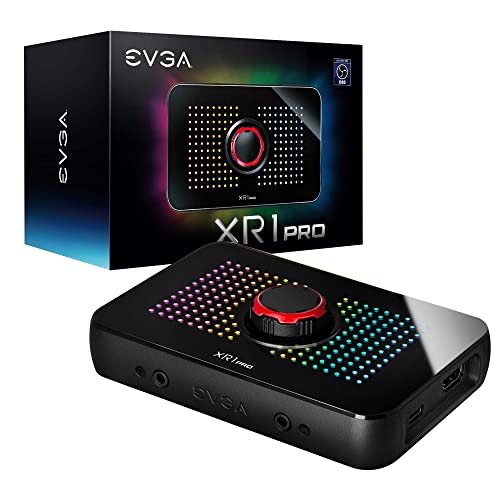
Best for HDR Passthrough Controls – EVGA XR1 Pro
The EVGA XR1 Pro is a practical choice among portable capture cards for creators who want high-resolution HDR passthrough without a complicated setup. It supports 1440p capture at 60fps, 4K capture at 30fps, and plug-and-play operation with OBS-certified compatibility.
Best For: PC and console streamers who value HDR passthrough, an onboard audio mixer, and physical controls.
Pros:
- Captures up to 1440p at 60fps or 4K at 30fps.
- Supports 1440p at 144Hz HDR and 4K at 60Hz HDR passthrough.
- Built-in audio mixer and control dial provide convenient hands-on adjustments.
- Plug-and-play setup requires no driver installation and is certified for OBS.
Cons:
- Its listed operating-system support is Windows-focused.
- Capture resolution and frame rate are below the Elgato 4K X for demanding high-refresh workflows.
The XR1 Pro balances useful capture specifications with accessible controls. It is a sensible middle ground for Windows users who want HDR passthrough and audio adjustments without installing drivers.
Best for Camera-to-Computer Streaming – Elgato Cam Link 4K
The Elgato Cam Link 4K is a compact option among portable capture cards for turning a DSLR, mirrorless camera, camcorder, action camera, or compatible iPhone into a computer-connected video source. It supports 1080p60 and 4K capture, with low latency for streaming, recording, and video calls.
Best For: Camera owners who want a simple HDMI-to-USB connection for streaming, conferencing, or iPad monitoring.
Pros:
- Supports 1080p60 and up to 4K60 with compatible cameras and the latest model.
- Works with DSLR, mirrorless, camcorder, action cam, and iPhone sources.
- Ultra-low latency helps keep video and audio synchronized.
- Compatible with OBS, Zoom, Discord, PC, Mac, and USB-C iPad monitoring.
Cons:
- Requires a compatible camera and HDMI output for camera-based use.
- The supplied details list Windows as a minimum operating-system requirement while also listing Mac compatibility.
Choose the Cam Link 4K when your priority is camera connectivity rather than console passthrough features. Its small 20.14-gram design and included USB 3.0 extension cable make it convenient for mobile desks and travel kits.
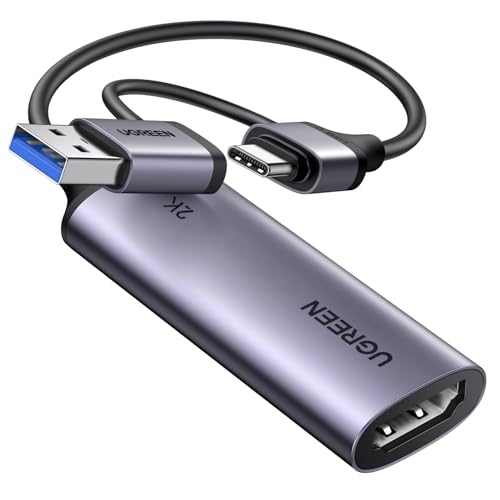
Best Budget Multi-Device Option – UGREEN 2K Capture Card
The UGREEN 2K capture card is a flexible pick among portable capture cards for everyday streaming across computers, tablets, and phones. It accepts 4K input, outputs up to 2K at 30fps or 1080p at 60fps, and includes both USB-A and USB-C interfaces for broader device compatibility.
Best For: Casual streamers and mobile creators connecting consoles, cameras, or other HDMI sources to modern devices.
Pros:
- Supports 4K input, 2K output at 30fps, and 1080p output at 60fps.
- USB-A and USB-C interfaces support laptops, tablets, smartphones, and desktops.
- Driver-free compatibility includes Windows, macOS, Linux, iPadOS 17 or later, and Android or iOS devices.
- Aluminum-alloy housing helps with heat dissipation and EMI shielding.
Cons:
- It supports only unidirectional HDMI input to USB output.
- PS4 and PS5 use requires HDCP to be disabled.
- iPad USB-C compatibility requires iPadOS 17 or later.
The UGREEN model is a practical, broadly compatible choice for routine 1080p60 streaming and occasional 2K workflows. Its limits are worth noting, but the dual USB connector options make it especially convenient for mixed-device setups.
Best Established Option – Elgato HD60 S
The Elgato HD60 S is a practical choice among portable capture cards for recording or streaming console gameplay at 1080p60. Its USB connection, HDMI passthrough, and low-latency workflow make it well suited to a straightforward gaming setup.
Best For: Console gamers who want reliable 1080p60 capture, lag-free passthrough, and tools for saving gameplay highlights.
Pros:
- Captures gameplay at 1080p60.
- True passthrough is designed for zero-lag play.
- Flashback Recording can save moments retroactively.
- Supports unlimited recording directly to a hard drive.
Cons:
- Listed operating-system support is Windows 10 and Mac, with Windows requirements including a fourth-generation quad-core Intel Core i5 or comparable processor.
- Capture resolution is listed as 1080p rather than 4K.
The HD60 S focuses on dependable Full HD capture and a familiar Elgato feature set. Choose it if 1080p60 is sufficient and you value passthrough plus flexible recording tools.
Best Plug-and-Play Value – Acer USB 3.0 HDMI Capture Card
For shoppers comparing portable capture cards, Acer’s USB 3.0 model offers 4K input, 1080p60 output, and a compact plug-and-play design. It also includes a mic-in connection, making it useful for commentary, classes, calls, and mobile streaming setups.
Best For: Budget-conscious creators and gamers who need broad device compatibility, 1080p60 output, and direct microphone input.
Pros:
- Accepts 4K input and provides 1080p at 60Hz output.
- Includes mic-in for voice commentary without an extra adapter.
- Works with OBS, XSplit, VLC, YouTube, Facebook, and other listed apps.
- Supports USB Type-A and Type-C connections and a wide range of consoles and cameras.
Cons:
- A USB 3.0 port is required for USB 3.0 operation.
- The supplied details list capture resolutions up to 1080p, not 4K capture.
The Acer stands out for flexibility and convenience rather than premium passthrough features. Its mic input, broad compatibility, and driver-free setup make it a versatile option for everyday streaming and recording.
Best Compact Premium Pick – Elgato Game Capture Neo
The Elgato Game Capture Neo is a compact option for portable capture card setups, measuring about the size of a smartphone. It preserves 4K60 HDR passthrough while capturing Full HD gameplay at 1080p60, and it works with consoles, computers, iPads, and several common applications.
Best For: Gamers who want a small Elgato capture device with 4K60 HDR passthrough and 1080p60 recording.
Pros:
- Compact design weighs 93 g and measures 4.8 by 2.6 by 0.8 inches.
- Supports 4K60 HDR passthrough without compromising console resolution.
- Captures or streams Full HD video at 1080p60.
- Works with Elgato software, OBS Studio, QuickTime, Discord, Teams, and Zoom.
Cons:
- The listed capture resolution is 1080p, so 4K is specified for passthrough rather than capture.
- Compatibility details specifically list Windows 10 and macOS Monterey 12 or later, rather than every operating system.
The Game Capture Neo is a strong fit when portability and high-resolution passthrough matter more than onboard 4K recording. It combines a travel-friendly form factor with low-latency use and a broad software lineup.
Best Portable 4K-Input Capture Card – Compact USB-C Streaming Capture
For shoppers comparing portable capture cards, this VIXLW model offers 4K HDMI input with recording up to 2K at 30fps or 1080p at 60fps. Its compact aluminum design, USB 3.0/USB-C connectivity, and plug-and-play setup suit mobile streaming and recording setups.
Best For: Streamers, gamers, and creators using consoles, cameras, or tablets with Windows, macOS, Linux, or Android.
Pros:
- Accepts up to 4K at 30Hz HDMI input.
- Records 2K at 30fps or 1080p at 60fps.
- No drivers or external power supply required.
- Supports OBS, Zoom, VLC, Twitch Studio, and multiple operating systems.
Cons:
- Maximum listed capture resolution is 1080p, despite higher-resolution input support.
- Tablet use requires OTG support to be enabled.
This is a versatile choice when portability and broad device compatibility matter. Confirm that your computer or tablet supports USB 3.0 or USB-C and that your source device outputs HDMI video and audio.
Best Easy-Carry Capture Card – 1080p60 HDMI to USB-C
This portable capture card is designed for straightforward HDMI-to-computer capture, supporting up to 4K30 input and recording up to 1080p at 60fps or 2K at 30fps. It is a practical option for streaming, online meetings, and outdoor recording when you need a small, bus-powered device.
Best For: Users who want a lightweight capture card for consoles, cameras, video calls, and OBS-based streaming.
Pros:
- Supports 1080p at 60fps and 2K at 30fps output.
- Compact aluminum body is easy to carry.
- Requires no driver or external power supply.
- Compatible with Windows, macOS, Linux, Android, OBS, Zoom, VLC, and popular HDMI devices.
Cons:
- Requires capture software and cannot directly cast to a monitor or TV.
- USB 3.0 is recommended for the intended bandwidth and resolution.
- Audio may require restarting OBS after setup.
Choose this model for a simple, travel-friendly capture workflow, but pay attention to connection direction: it is intended for one-way HDMI-to-USB-C transmission. Using the included adapter and a USB 3.0 port can help avoid recognition and bandwidth issues.
Best Capture Card with HDMI Pass-Through – 1080p60 Game Capture
Among portable capture cards, this Rybozen model stands out for its HDMI loop-out and microphone input. It captures HDMI sources at up to 1080p and supports 4K input at listed refresh rates, making it useful for gaming setups where pass-through and live commentary are important.
Best For: Console gamers and streamers who want HDMI pass-through plus a 3.5mm microphone connection for commentary.
Pros:
- Provides HDMI loop-out for gameplay without the capture path’s delay.
- Supports up to 1080p capture and 2K30 output.
- Plug-and-play operation without drivers or external power.
- Includes microphone input for external commentary.
Cons:
- Does not support 4K at 120Hz or 144Hz.
- Microphone input accepts 3.5mm TRS standard headsets only.
- Listed compatibility is centered on Windows and Mac OS workflows.
This is the most gaming-focused option in the group. Its loop-out connection and mic input are valuable for live play, while shoppers should verify their console’s output settings and ensure their computer has a suitable USB 3.0 port.
How We Picked These Portable Capture Cards
We focused on external capture devices that are practical for portable streaming and recording. The selection includes models for modern consoles, gaming PCs, DSLR and mirrorless cameras, and simple USB-C laptop setups. We considered advertised capture and pass-through resolutions, frame rates, HDR support, input and output standards, USB connectivity, operating-system and software compatibility, and setup convenience.
Because product specifications vary by source resolution, cable, computer, and software settings, treat maximum figures as upper limits rather than guaranteed performance in every configuration. A card that captures 1080p60 may be a better practical choice than a more expensive model if your workflow does not need 4K or HDR.
Quick Comparison
| Best For | Look For | Typical Priority |
|---|---|---|
| Competitive console gaming | Low-latency pass-through and high refresh-rate support | Responsiveness |
| Streaming at 1080p | 1080p60 capture and reliable USB 3.0 | Value and stability |
| 4K or HDR workflows | 4K input, HDR pass-through, and sufficient bandwidth | Image quality |
| Camera capture | Clean HDMI output and camera compatibility | Video production |
| Travel setups | Compact design, USB bus power, and simple connections | Portability |
Key Buying Factors for Portable Capture Cards
Capture Resolution and Frame Rate
Choose based on what you will publish, not only what your source device can output. Full HD at 60 frames per second remains a strong target for live streams and gameplay videos. If you record 4K footage or want more flexible editing, select a card with appropriate 4K input or capture support and verify the exact frame-rate limits.
Pass-Through and Latency
Pass-through lets you play on a monitor or television while the computer captures the signal. Competitive players should prioritize ultra-low latency, high refresh-rate support, and compatibility with their console or graphics card. Capture resolution and pass-through resolution can differ, so check both specifications.
Connections, Power, and Software
USB 3.0 or faster is generally preferable for high-quality video. USB-C describes the connector, not automatically the speed. Check whether the card includes HDMI loop-out, supports the cables you already own, and works with OBS or your preferred application. Some models may also need a suitable USB port or additional adapters.
HDR, Audio, and Camera Features
HDR support can improve pass-through and recording flexibility, but the entire signal chain must support it. For cameras, confirm clean HDMI output, uninterrupted power options, and whether on-screen menus can be removed. Audio mixing or separate audio inputs can be valuable when combining microphones, game sound, and commentary.
Who Should Buy Which Portable Capture Cards?
Choose a high-bandwidth HDMI 2.1 model if you use a current console or gaming PC and need high refresh rates, 4K workflows, or advanced pass-through. A 1080p60 USB 3.0 card is usually the sensible choice for new streamers who want dependable OBS performance without paying for unused features.
Camera-focused creators should favor a dedicated camera-link model with clean HDMI support. Travelers and occasional creators should look for compact bus-powered designs with USB-C or USB 3.0 connectivity. Before buying, confirm the ports on your computer, the output options on your source device, and the resolution you actually plan to stream or record.