The best podcast recorders make it easier to capture clear voices without building a complicated studio. The right model depends on how many people you record, which microphones you use, and whether you need portability.
Our selection covers compact handheld recorders, USB-focused podcast consoles, multitrack options, and complete starter bundles for creators at different experience levels.
Best 10 Podcast Recorders Picks for 2026
Best for Multi-Person Podcasts

- Four XLR inputs and four headphone outputs
- Automatic mix-minus for remote interviews
- Sound pads and USB interface mode
Best For: Multi-person podcasts and remote interviews
Best for Clip-Free Recording

- 32-bit float audio for changing sound levels
- Built-in stereo mics and two XLR/TRS inputs
- USB-C connection plus SD card recording
Best For: Podcasters and creators recording varied sources
Best All-in-One Streaming Bundle

- Includes mixer, condenser mic, and accessories
- Four recordable pads and built-in effects
- Compatible with PCs, smartphones, and tablets
Best For: Beginners creating podcasts and live streams
Best for Expandable Field Recording
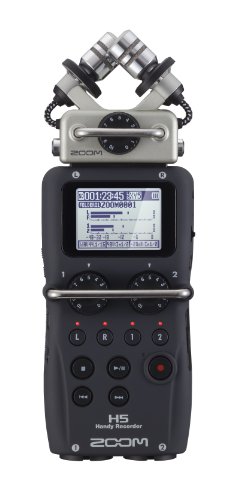
- Interchangeable microphone capsule system
- Two XLR/TRS inputs with phantom power
- Four-track recording and USB interface mode
Best For: Field recording, filmmaking, and smaller podcasts
Best Multitrack Podcast Recorder

- Four XLR inputs for multitrack recording
- AI noise reduction and tone tools
- Four headphone outputs with separate controls
Best For: In-person shows with multiple microphones
Best Compact XLR Recorder

- 32-bit/96kHz recording
- Two locking XLR/TRS inputs
- Waveform display and 3.5mm connections
Best For: Two-channel mobile recording
Best Podcast Recorder Bundle
Zoom PodTrak P4 with Two ZDM-1 Packs

- Includes two ZDM-1 Podcast Packs
- Four XLR inputs and headphone outputs
- Supports TRRS and USB call-ins
Best For: New two-person podcast setups
Best Portable Pick

- 32-bit float recording helps prevent clipping
- X/Y stereo mics capture voices and music
- USB-C mic mode and 10-hour battery life
Best For: Portable podcasting, interviews, music, and content creation
Best Two-Person Setup

- Two USB mic inputs and headphone outputs
- Mix-Minus supports echo-free remote guests
- AI noise reduction and SD card recording
Best For: Two-person podcasts and mobile USB-mic recording
Best Lightweight Recorder
- 32-bit float stereo recording needs no gain setting
- X/Y mics record up to 96kHz and 120 dB SPL
- USB-C works with computers and mobile devices
Best For: Lightweight solo recording and accessible USB microphone use
Best for Multi-Person Podcasts – PodTrak P4
The Zoom PodTrak P4 is a practical choice for podcast recorders when you need several microphones, separate headphone monitoring, and built-in support for remote guests. Its four XLR inputs, programmable sound pads, and battery-powered design suit interview shows and portable recording setups.
Best For: Multi-person podcasts, phone interviews, and creators who need four-person monitoring.
Pros:
- Four XLR microphone inputs with phantom power.
- Four headphone outputs with individual volume controls.
- Automatic mix-minus supports phone and remote interviews.
- Works as a 2-in/2-out USB audio interface and runs on two AA batteries.
Cons:
- Battery life is listed at up to 3.5 hours.
- Its feature set is more focused on podcast production than general field recording.
The P4 stands out for conversation-heavy shows where multiple guests need microphones and headphones. It is less compelling if you only need a compact recorder for one or two inputs.
Best for Clip-Free Recording – H4 Essential
The Zoom H4 Essential is one of the more flexible podcast recorders for creators who also capture music, video audio, interviews, or live performances. Its 32-bit float recording, built-in stereo microphones, and two XLR/TRS inputs help accommodate changing sound levels and different recording sources.
Best For: Podcasters, filmmakers, and musicians who want a portable four-track recorder with 32-bit float audio.
Pros:
- 32-bit float recording is designed to help avoid distorted takes.
- Built-in stereo microphones plus two XLR/TRS inputs support varied setups.
- Records to an SD card while connecting to phones, tablets, or computers by USB-C.
- Spoken menu guidance can make navigation easier and more accessible.
Cons:
- It has only two external XLR/TRS inputs, rather than four.
- It requires two AA batteries for battery-powered use.
The H4 Essential is a strong all-purpose option when your podcasting overlaps with field recording, filmmaking, or music. Choose a dedicated mixer-style recorder instead if your priority is four-person headphone monitoring and live podcast control.
Best All-in-One Streaming Bundle – Maono AU-AM200-S1
The MAONO AU-AM200-S1 is a convenient entry point for podcast recorders and live-streaming creators who want a mixer and microphone in one package. It combines a condenser microphone, sound pads, voice effects, monitoring, and PC or smartphone compatibility for a home setup.
Best For: Beginners building a home podcast or live-streaming station with included accessories.
Pros:
- Bundle includes the mixer, condenser microphone, cable, tripod, windscreen, and charging cable.
- Offers four user-recordable pads and eight built-in sound effects.
- Supports up to two people, four devices, and four streaming platforms simultaneously.
- Includes voice changing, reverb, tone controls, and a denoise function.
Cons:
- The AM200 supports 3.5mm microphone input and does not support phantom power.
- Phones without a 3.5mm jack require an OTG adapter, which is not included.
- Instruments using a 6.35mm connection require an additional adapter.
This bundle prioritizes ease of setup and real-time entertainment features over traditional XLR recording flexibility. It is a sensible fit for casual podcasts and streams, but more demanding microphone setups may need a different interface.
Best for Expandable Field Recording – Zoom H5
The Zoom H5 is a versatile option among podcast recorders for users who want interchangeable microphone capsules and a compact battery-powered design. It records up to four tracks, includes two XLR/TRS inputs, and can also function as a multichannel USB audio interface.
Best For: Filmmakers, musicians, and podcasters who may want to expand their microphone configuration over time.
Pros:
- Interchangeable input capsules provide flexibility for different recording needs.
- Detachable shock-mounted X/Y microphones help reduce handling noise.
- Two XLR/TRS inputs include selectable phantom power and a -20dB pad.
- Supports four-track recording and multichannel or stereo USB operation.
Cons:
- Records to SD or SDHC cards up to 32GB.
- It provides two external XLR inputs, which may limit larger podcast panels.
- Additional input capsules are not listed as included.
The H5 is a good long-term choice when modular microphone options matter. Its two-input layout is better suited to smaller conversations, field work, and production audio than to larger roundtable podcasts.
Best Multitrack Podcast Recorder – Zoom PodTrak P4next
For podcast recorders designed for a full room, the Zoom PodTrak P4next is built around four-person recording. It combines four XLR inputs, separate headphone monitoring, phone connectivity, and AI-assisted audio tools in a battery-powered unit.
Best For: In-person podcasts with up to four microphones and occasional remote or phone guests.
Pros:
- Four XLR inputs support multitrack recording for up to four people plus a call-in guest.
- AI noise reduction, Tone Enhancement, and COMP help simplify mixing.
- Four headphone outputs have separate volume controls.
- Up to +70dB of gain accommodates demanding microphones.
Cons:
- Its four-input design may be more than needed for solo or two-person recording.
- The supplied details do not specify the exact battery type or required battery count.
The P4next is a strong choice when multiple speakers need independent headphone monitoring and a streamlined recording workflow. Phone video connectivity is especially useful for creating synchronized social or video content.
Best Compact XLR Recorder – Zoom H1 XLR
The Zoom H1 XLR is a flexible option among podcast recorders for creators who want a compact two-channel setup. Its 32-bit/96kHz recording, locking XLR/TRS inputs, waveform display, and 3.5mm connections suit interviews, podcasts, and mobile production.
Best For: Solo creators, interviewers, and podcasters who need two external microphone or instrument inputs.
Pros:
- Records at up to 32-bit/96kHz for detailed audio.
- Two locking XLR/TRS combo inputs support microphones and instruments.
- OLED waveform display helps monitor levels while recording.
- 3.5mm stereo input and headphone output add connection flexibility.
Cons:
- Two XLR/TRS inputs limit it compared with four-input podcast recorders.
- It requires two AA batteries.
Choose the H1 XLR when portability and straightforward two-channel recording matter more than a larger podcast control surface. Its SDXC support up to 1TB and stated 10-hour battery life also make it practical for extended sessions.
Best Podcast Recorder Bundle – Zoom PodTrak P4 with Two ZDM-1 Packs
Zoom PodTrak P4 Portable Multitrack Podcast Recorder Bundle with 2X Zoom ZDM-1 Podcast Pack
Check Price On AmazonThis Zoom PodTrak P4 bundle gives podcast creators a ready-made two-microphone starting point. The recorder provides four high-gain XLR inputs, four independent headphone outputs, sound pads, and simultaneous TRRS and USB call-in support, while the bundle includes two Zoom ZDM-1 Podcast Packs.
Best For: New or growing podcast teams that want a recorder and two included podcast microphone packs.
Pros:
- Includes two Zoom ZDM-1 Podcast Packs.
- Four high-gain XLR inputs support future expansion.
- Four independent headphone outputs help each participant monitor audio.
- Sound pads and simultaneous TRRS and USB call-ins support interactive shows.
Cons:
- The bundle details do not specify the contents of each ZDM-1 Podcast Pack.
- The supplied information does not list battery life or recording-resolution specifications.
For buyers starting a two-person show, this bundle can reduce the need to source microphones separately while preserving room for additional speakers. Its multiple headphone outputs and call-in options also leave room for more involved formats.
Best Portable Pick – Zoom H1 Essential
The Zoom H1 Essential is a versatile choice among podcast recorders for creators who need a compact setup for interviews, voiceovers, music, and everyday recording. Its 32-bit float capture helps reduce concerns about setting gain, while the built-in X/Y stereo microphones and USB-C microphone mode support both portable and computer-based recording.
Best For: Solo podcasters, interviewers, musicians, and content creators who want one lightweight recorder for multiple types of audio.
Pros:
- 32-bit float recording provides clip-free audio capture.
- X/Y stereo microphones work well for voices, music, ambience, and room sound.
- USB-C microphone mode supports livestreams, calls, podcasts, and voiceovers.
- Runs for up to 10 hours on two AAA batteries.
Cons:
- Its stereo microphone design is less specialized for a two-person podcast than a recorder with multiple mic inputs.
- Requires separate AAA batteries.
Choose the H1 Essential if flexibility and portability matter more than a dedicated multi-person podcast layout. It is particularly practical for creators who switch between spoken-word recording, music, and location audio.
Best Two-Person Setup – Zoom PodTrak P2
The Zoom PodTrak P2 is one of the more purpose-built podcast recorders here, with two USB microphone inputs and two headphone outputs for a straightforward two-person show. It also supports remote guests, individual-track recording to an SD card, simultaneous streaming, and built-in processing to simplify production.
Best For: Two-person podcasts, interview shows, and mobile recording setups that use USB microphones.
Pros:
- Two USB mic inputs and two headphone outputs simplify co-hosted recording.
- Mix-Minus helps prevent echo and feedback with remote call-in guests.
- AI noise reduction, tone shaping, compression, and de-essing reduce the need for post-production.
- Supports SD card recording, simultaneous streaming, battery power, USB bus power, and an AC adapter.
Cons:
- Battery life is up to four hours on four AA batteries.
- Designed around USB microphones rather than the X/Y stereo microphones built into the portable recorders listed here.
For a two-person podcast, the P2 offers the most direct workflow in this group. Its separate headphone outputs, remote-guest handling, and built-in processing make it a strong fit when ease of setup is a priority.
Best Lightweight Recorder – Zoom H1essential Stereo
The Zoom H1essential Stereo is a lightweight option for podcast recorders when you want simple stereo capture without a complicated setup. It records 32-bit float audio to an SD card, includes X/Y microphones, and can function as a USB microphone with computers, tablets, and smartphones.
Best For: Solo voice recording, portable interviews, content creation, and users who value accessibility features.
Pros:
- 32-bit float recording avoids the need to set gain.
- X/Y microphones capture audio up to 120 dB SPL and support recording up to 96kHz.
- USB-C microphone functionality works with PC, Mac, iOS, and Android devices.
- Audio guidance supports visually impaired users.
Cons:
- The supplied specifications list no headphone jack.
- Its listed digital recording time is 120 minutes.
- It is better suited to stereo capture than managing multiple podcast microphones.
This H1essential is a practical pick for straightforward, lightweight recording and USB use. Consider it when portability and accessible operation are more important than headphone monitoring or multi-mic podcast controls.
How We Picked the Best Podcast Recorders
We focused on the features that have the greatest effect on recording quality and day-to-day usability: input type and count, headphone monitoring, multitrack capability, portability, computer and phone connectivity, power options, and ease of setup. We also considered newer safeguards such as 32-bit float recording and AI noise reduction, which can help reduce clipping or unwanted background sound in suitable recording situations.
The products span several use cases rather than competing in one identical category. Handheld models suit mobile recording and location work, while PodTrak and mixer-style systems are better for seated interviews, multiple guests, and live monitoring.
Quick Comparison
| Best For | Look For | Typical Advantage |
|---|---|---|
| Solo creators | Built-in stereo microphones or USB microphone support | Fast setup and low equipment cost |
| Two-person interviews | Two XLR or USB inputs and two headphone outputs | Independent voice capture and monitoring |
| Roundtable podcasts | Four microphone inputs and four headphone outputs | Better control for guests and hosts |
| Field recording | Compact body, battery power, and 32-bit float | Portable recording with more recovery from level mistakes |
| Streaming and hybrid workflows | USB audio interface, phone input, or sound pads | Easier integration with computers and mobile devices |
Key Buying Factors for Podcast Recorders
Inputs and Microphone Compatibility
Check whether the recorder accepts XLR microphones, USB microphones, 3.5mm sources, or only its built-in microphones. XLR inputs offer the most flexibility for dynamic podcast microphones, but USB models can be simpler for beginners. Count the inputs you need now and leave room for occasional guests.
Monitoring and Multitrack Recording
Separate headphone outputs are important when several people need to hear the conversation. Multitrack recording gives you more control during editing because each microphone is saved separately. A stereo mix may be enough for simple solo or two-person productions, but it offers less flexibility if one speaker is too loud.
Recording Protection and Connectivity
32-bit float can provide extra protection against clipped levels on compatible recorders, although it does not eliminate background noise or poor microphone technique. USB connectivity matters if you want to record directly into a computer, while phone inputs and sound pads can simplify remote interviews, music cues, or live production.
Portability and Power
For travel, prioritize weight, battery life, built-in microphones, and a straightforward control layout. For a permanent desk setup, larger controls, multiple outputs, and included accessories may be more valuable than the smallest possible design.
Who Should Buy Which Podcast Recorders?
Choose a compact handheld recorder if you record outdoors, make videos, capture live sound, or want a flexible backup device. A two-input model is a practical fit for solo creators and occasional interviews. Choose a four-input podcast recorder when you regularly host multiple guests and want every participant to monitor the session.
USB-focused podcast systems are best for creators who want a quick computer or smartphone workflow with minimal setup. A bundle can be worthwhile for beginners who need microphones and accessories immediately, while experienced users may prefer a recorder-only model that works with their existing microphone collection. Before buying, confirm the included cables, storage requirements, power source, and compatibility with your preferred recording software.