The best PC VR headsets can transform a gaming computer into a powerful virtual reality system, but the right choice depends on more than resolution alone. Tracking, lenses, comfort, connectivity, and software support all shape the experience.
We selected 10 notable options for different budgets and priorities, from standalone headsets with PC streaming to enthusiast models designed for simulators and demanding SteamVR libraries.
Best 10 PC Vr Headsets Picks for 2026
Best All-Around Pick
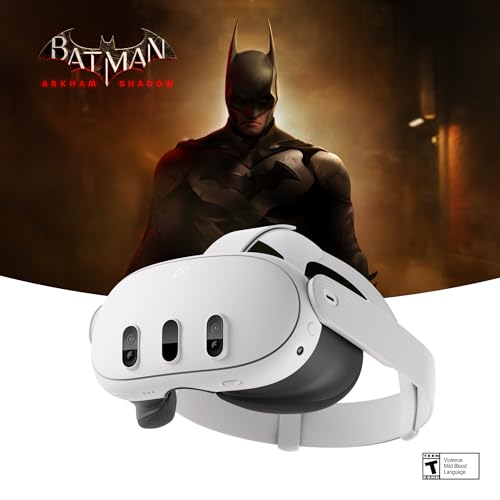
- 512GB storage with 8GB RAM
- Wireless mixed reality with RGB passthrough
- High-resolution display with pancake lenses
Best For: Standalone VR, PC compatibility, gaming, and fitness
Best for Room-Scale PC VR
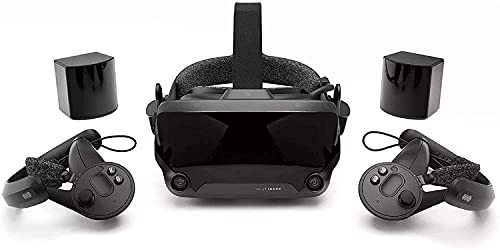
- Includes controllers and base stations
- Dedicated PC-only VR setup
- Professionally inspected renewed unit
Best For: PC gamers building a room-scale VR system
Best Budget Standalone Pick

- Standalone operation with no PC required
- 256GB storage and wireless design
- Hand tracking, audio, and haptic feedback
Best For: First-time VR users and casual gaming or fitness
Best for Dedicated PC Gaming

- PC-powered access to Oculus VR games
- Inside-out room-scale tracking
- Includes updated Touch controllers
Best For: Windows PC gamers who prefer wired VR
Best Mixed Reality Pick

- 3840x2160 high-resolution display
- Eye, hand, and motion tracking
- Adjustable fit with spatial audio
Best For: Mixed reality, productivity, and entertainment
Best for Sim Racing

- 3840x3840 resolution per eye
- 140-degree ultrawide field of view
- DisplayPort connection for PC VR
Best For: Flight and racing simulators
Best Wired PC VR Bundle
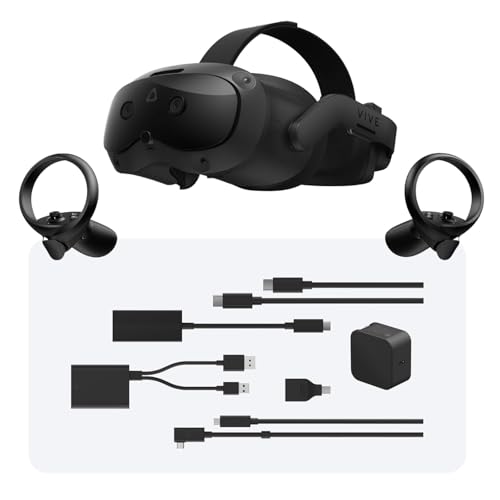
- DisplayPort PC VR streaming
- 2448x2448 resolution per eye
- Hot-swappable battery and eye tracking
Best For: PC VR gaming with standalone XR flexibility
Maximum Clarity Pick
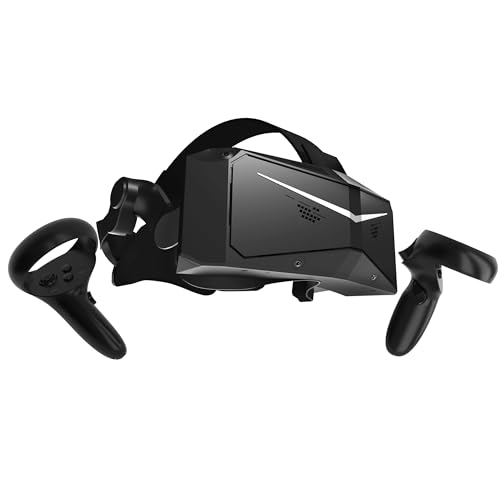
- 2880 × 2880 resolution per eye
- QLED with local dimming and HDR
- SteamVR-compatible inside-out tracking
Best For: High-detail flight sims, iRacing, and PC gaming
Comfort-Focused Value Pick

- Lightweight 285g construction
- Up to 120Hz refresh rate
- 6DoF inside-out SteamVR tracking
Best For: SteamVR gaming, arcades, training, and shared use
Business Deployment Pick
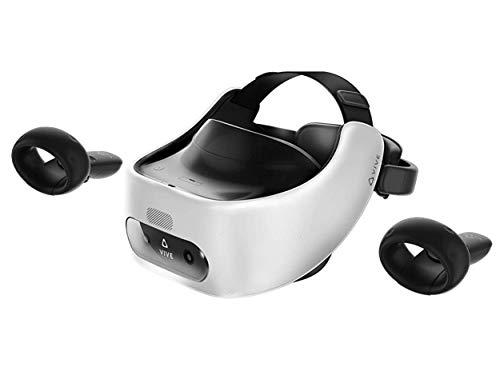
- Standalone 6DoF VR system
- 2880 × 1600 AMOLED display
- Enterprise tools including Kiosk mode
Best For: Training, visualization, and commercial VR deployments
Best All-Around Pick – Meta Quest 3 512GB
The Meta Quest 3 is a versatile choice among pc vr headsets, combining standalone play with PC compatibility. Its pancake lenses, higher-resolution display, mixed-reality features, and wireless design make it well suited to gaming and fitness without requiring a constant cable connection.
Best For: Buyers who want a modern, high-capacity headset for standalone VR, mixed reality, gaming, and fitness.
Pros:
- 512GB of storage and 8GB of RAM provide room for games and responsive performance.
- Wireless design, Touch Plus controllers, and inside-out tracking simplify setup and movement.
- Full-color passthrough and dual RGB cameras support mixed-reality experiences.
- 2064 x 2208 display resolution per eye and pancake lenses support detailed viewing.
Cons:
- Battery life is rated at about 2.4 hours.
- The headset is a standalone platform, but PC connectivity may still require additional setup or accessories.
Quest 3 is the strongest fit here for shoppers who want current hardware and flexibility rather than a headset limited to PC use. Its main compromise is the relatively short battery runtime.
Best for Room-Scale PC VR – Valve Index Full Kit
The renewed Valve Index Full Kit is a dedicated PC VR option for shoppers who want a complete setup with the headset, Knuckles controllers, and base stations. It is best considered when you already have a compatible computer and value the included room-scale hardware.
Best For: PC gamers seeking a bundled, room-scale VR system with dedicated controllers and base stations.
Pros:
- The full kit includes the headset, Knuckles controllers, and base stations.
- Knuckles controllers are designed for immersive hand interaction.
- Hand tracking is listed as an additional feature.
- The renewed product is professionally inspected and tested before sale.
Cons:
- It is PC-only and uses USB connectivity.
- The supplied resolution is 1440 x 1600 per eye.
- The renewed unit includes a 90-day limited warranty.
This Valve Index bundle remains a practical choice for a prepared PC VR space, especially if the included tracking hardware matters. Its renewed status and shorter warranty make condition and coverage important buying considerations.
Best Budget Standalone Pick – Meta Quest 2 256GB
The Meta Quest 2 remains an accessible entry point for pc vr headsets and standalone VR. It includes 256GB of storage, wireless operation, hand tracking, and access to a broad library without requiring a PC or console.
Best For: New VR users who want an affordable all-in-one headset for gaming, fitness, social experiences, and entertainment.
Pros:
- Standalone design works without a PC or console.
- 256GB storage supports a substantial selection of apps and games.
- Wireless use, hand tracking, haptic feedback, and 3D positional audio support immersion.
- Includes two Touch controllers and a glasses spacer.
Cons:
- The product is intended for ages 13 and above.
- Its 1832 x 1920 display resolution is lower than the Quest 3’s supplied resolution.
- The listed battery capacity is 3000 mAh.
Quest 2 is a straightforward way to start with VR, particularly if you want wireless play and a large range of uses at a lower-tier specification. Choose a newer model if display and processing improvements are priorities.
Best for Dedicated PC Gaming – Oculus Rift S PC VR Headset
The Oculus Rift S is a PC-powered option for shoppers focused on traditional computer-based VR gaming. It offers a 2560 x 1440 display, built-in Oculus Insight tracking, and Touch controllers, while requiring a Windows PC and USB 3.0 connection.
Best For: PC gamers who want access to the Oculus VR library and room-scale tracking without external sensors.
Pros:
- PC VR compatibility and access to hundreds of games and exclusives in the Oculus store.
- Oculus Insight provides room-scale tracking without external sensors.
- Updated Touch controllers support natural hand and gesture input.
- The redesigned halo headband is adjustable with a fit wheel.
Cons:
- It requires a personal computer running Windows.
- The headset connects by USB 3.0, so it is not a wireless PC VR option.
- Logging in requires a Facebook account according to the supplied notes.
Rift S makes sense for buyers who already have a compatible Windows gaming PC and want a focused PC VR library. Its wired design and account requirement are worth confirming before purchase.
Best Mixed Reality Pick – Galaxy XR Headset
The Galaxy XR is a versatile choice among PC VR headsets for users who also want mixed reality, productivity, entertainment, and virtual collaboration features. Its high-resolution display, eye and hand tracking, and adjustable fit support a broad range of immersive activities.
Best For: Mixed reality, entertainment, virtual meetings, productivity, fitness, and general VR use.
Pros:
- High-resolution 3840×2160 display with a 109-degree field of view.
- Eye tracking, hand tracking, passthrough video, and advanced motion sensors.
- Lightweight 545-gram design with adjustable head strap and soft facial cushion.
- Includes spatial audio and 256GB of storage.
Cons:
- Two-hour average battery life may limit longer sessions.
- Wi-Fi connectivity and Android XR platform may not suit users seeking a dedicated wired PC headset.
- Listed compatible device is a smartphone rather than a personal computer.
The Galaxy XR stands out for its combination of mixed reality and everyday-use features. Choose it if flexibility and comfort matter more than a specifically PC-focused wired setup.
Best for Sim Racing – Pimax Crystal Super
The Pimax Crystal Super is a high-end option among PC VR headsets, built for demanding gaming and simulation use. Its ultrawide field of view, sharp per-eye resolution, and DisplayPort connection are particularly suited to flight and racing simulators.
Best For: Flight simulators, racing simulators, and PC gamers prioritizing visual clarity and peripheral awareness.
Pros:
- 3840×3840 resolution per eye with QLED and Mini-LED display technology.
- Expansive 140-degree field of view helps improve situational awareness.
- 50 pixels per degree, aspherical lenses, and up to 90Hz refresh rate support sharp, smooth gameplay.
- Includes eye tracking, adjustable IPD, inside-out tracking, and integrated spatial audio.
Cons:
- Wired DisplayPort and USB connectivity limits freedom of movement.
- Its advanced specifications may require a capable gaming PC.
- Designed for Windows 10 and personal computers, with less standalone flexibility.
For simulation enthusiasts, the Crystal Super’s ultrawide view and extremely high per-eye resolution are its main advantages. It is a specialized PC VR headset rather than an all-purpose standalone device.
Best Wired PC VR Bundle – HTC Vive Focus Vision
HTC Vive Focus Vision Wired Bundle — XR Headset with DisplayPort PC VR Streaming Kit
Check Price On AmazonThe HTC Vive Focus Vision Wired Bundle combines standalone XR capabilities with DisplayPort PC VR streaming. For shoppers comparing PC VR headsets, it offers high-resolution visuals, eye and hand tracking, spatial audio, and a hot-swappable battery for longer play sessions.
Best For: PC VR gaming, SteamVR, mixed reality, and users who want both wired and standalone functionality.
Pros:
- DisplayPort mode provides low-latency, lossless PC VR visuals.
- 2448×2448 resolution per eye, 120-degree field of view, and 90Hz refresh rate.
- Auto-IPD adjustment, eye tracking, hand tracking, and depth-sensor-supported mixed reality.
- Hot-swappable battery supports extended sessions, while 3D spatial audio enhances immersion.
Cons:
- DisplayPort PC VR mode requires a compatible computer and wired connection.
- The headset weighs users down with a battery-based design, though the supplied notes do not specify total weight.
- Its 128GB storage is smaller than the Galaxy XR’s listed capacity.
The Focus Vision is a strong middle ground for users who want dedicated PC VR performance without giving up standalone and mixed reality features. Its replaceable battery and broad tracking capabilities add practical flexibility.
Maximum Clarity Pick – Pimax Crystal Light
For PC VR headsets focused on visual detail, the Pimax Crystal Light stands out with 2880 × 2880 resolution per eye, QLED color, and local dimming. Its SteamVR compatibility and 120Hz refresh rate make it particularly suited to demanding simulations and gaming.
Best For: Flight simulators, iRacing, and PC gamers prioritizing high-resolution visuals.
Pros:
- Very high 2880 × 2880-per-eye resolution with 16.6 million pixels
- QLED display with local dimming and HDR support
- Glass aspheric lenses designed for edge-to-edge clarity
- Inside-out tracking and compatibility with SteamVR setups
Cons:
- At approximately 815 grams, it is heavier than some PC VR headsets
- Designed for Windows PCs and requires a SteamVR setup
The Crystal Light is a strong choice when image quality matters more than minimizing headset weight. Its resolution, display technology, and simulation-focused compatibility make it a compelling premium PC VR option.
Comfort-Focused Value Pick – DPVR E4 PC VR Headset
The DPVR E4 is a practical option among PC VR headsets for users who want SteamVR access, adjustable refresh rates, and a lightweight design. Its 3664 × 1920 display, 6DoF inside-out tracking, and flip-up visor support both extended gaming and shared-use environments.
Best For: SteamVR gaming, VR arcades, training, and users who value a lighter headset.
Pros:
- Lightweight 285g design with adjustable IPD
- Supports 72Hz, 90Hz, and 120Hz refresh rates
- Inside-out 6DoF tracking for movement in 360-degree space
- Flip-up design makes it easier to switch between VR and the real world
Cons:
- Requires a compatible Windows PC with DisplayPort and USB 3.0
- Fresnel lenses may offer less edge-to-edge clarity than aspheric designs
The E4 balances comfort and functionality with a lightweight build, flexible refresh rates, and broad SteamVR access. Check your PC against the stated requirements before buying, especially the graphics card and DisplayPort connection.
Business Deployment Pick – HTC Vive Pro Focus Plus
The HTC Vive Pro Focus Plus is an all-in-one VR system that can also connect with a personal computer. Among PC VR headsets, it is especially notable for commercial use, with 6DoF controllers, world-scale tracking, hand and gesture tracking support, and enterprise-oriented deployment features.
Best For: Business training, visualization, portable demonstrations, and commercial VR deployments.
Pros:
- Standalone design with world-scale tracking out of the box
- 6DoF controllers plus support for gaze and hand tracking
- 2880 × 1600 AMOLED display with a stated 90Hz refresh rate
- Enterprise features such as Kiosk mode and content configuration support
Cons:
- Its 5.4-pound listed weight is notably heavier than many newer headsets
- Commercial and enterprise features may be unnecessary for casual home users
- Standalone platform may be less suitable for buyers seeking a dedicated SteamVR PC headset
The Focus Plus makes the most sense when portability, managed deployment, and business-focused VR features are priorities. Casual PC gamers may prefer a lighter headset built specifically around consumer SteamVR use.
How We Picked These PC Vr Headsets
We focused on headsets that can provide a meaningful PC VR experience, whether through a wired DisplayPort connection, USB streaming, or wireless PC compatibility. Our evaluation criteria included display clarity, refresh rate, field of view, tracking method, controller support, comfort, setup requirements, and overall value.
The list also covers a range of use cases: mainstream gaming, budget entry points, renewed hardware, mixed reality, and high-end flight or racing simulation. Compatibility matters, so buyers should confirm graphics-card, USB, DisplayPort, and room-space requirements before ordering.
Quick Comparison
| Best For | What to Prioritize | Connection Type |
|---|---|---|
| Everyday PC VR gaming | Comfort, tracking, broad software support | Wired or wireless streaming |
| Flight and racing simulators | Resolution, lenses, field of view | Usually wired PC VR |
| Budget buyers | Price, included controllers, condition | Wired or streaming |
| Mixed-reality users | Passthrough quality, sensors, ecosystem | Standalone and PC-compatible |
Key Buying Factors for PC Vr Headsets
Display and Lens Quality
Resolution affects fine detail, while lens design influences edge clarity and the size of the usable sweet spot. Higher-resolution displays are especially valuable for cockpit instruments, text, and distant objects. OLED or QLED panels may deliver stronger contrast, while LCD panels can offer sharp images at a lower cost.
Tracking and Controllers
Inside-out tracking is convenient and usually easier to set up. External base-station tracking can offer excellent precision but requires additional hardware and mounting space. Check whether controllers, charging accessories, and tracking equipment are included in the bundle.
Comfort and Connectivity
A comfortable head strap, balanced weight, adjustable lenses, and adequate ventilation matter during long sessions. Wired headsets can provide a stable, high-bandwidth connection, while wireless streaming reduces cable clutter but depends on a strong Wi-Fi network and capable PC.
Computer Requirements
PC VR performance depends heavily on the computer. Review the headset’s recommended graphics card, processor, memory, USB ports, and DisplayPort requirements. High-resolution headsets may require substantially more rendering power, particularly in simulators.
Who Should Buy Which PC Vr Headsets?
Choose a mainstream standalone headset with PC support if you want flexible access to both native and computer-powered VR. A renewed or older model can suit buyers who want to explore SteamVR at the lowest possible cost, provided the battery, lenses, controllers, and warranty are acceptable.
Simulation enthusiasts should prioritize high resolution, wide field of view, lens clarity, and a reliable wired connection over portability. Buyers interested in mixed reality should look for strong passthrough, spatial audio, sensor performance, and a comfortable fit. If you value competitive or highly precise tracking, investigate the headset’s tracking ecosystem and available accessories before purchasing.