Upgrading to 10GbE can eliminate network bottlenecks between servers, workstations, Wi-Fi access points, and networked storage. Adding PoE lets one switch deliver both high-speed connectivity and power to compatible devices.
We selected 10 network switches with 10GbE PoE across managed, unmanaged, multi-gig, RJ45, and SFP+ designs. The right choice depends on port speed, PoE budget, management features, noise, and how much room your network has to grow.
Best 10 Network Switches with 10gbe Poe Picks for 2026
Compact 10GbE Powerhouse

- Eight 10GbE RJ45 ports
- Two 10G SFP+ interfaces
- PoE++ with desktop or wall mounting
Best For: Compact high-speed desktop networks
Managed Multi-Gig Workhorse
QNAP QSW-M2130P 30-Port Switch

- 30-port managed design
- 90W 10GbE PoE++ support
- VLAN, QoS, and link aggregation tools
Best For: Business, surveillance, and Wi-Fi networks
Simple 2.5G Gateway
GigaPlus 6-Port Unmanaged Switch
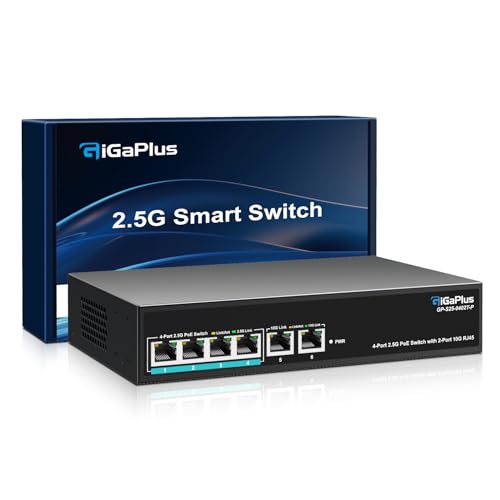
- Four 2.5GbE PoE ports
- Two 10G RJ45 uplinks
- Fanless plug-and-play design
Best For: Small NAS, PC, and Wi-Fi 6 networks
Premium 10GbE Expansion

- Professional 10GbE PoE++ design
- RJ45 and SFP+ interfaces
- Listed 12-port configuration
Best For: Professional high-speed PoE installations
Best PoE Choice
UniFi Enterprise 8-Port PoE+ Switch

- Eight 2.5GbE ports with PoE+
- Two 10GbE SFP+ uplinks
- Layer 3 and UniFi Controller support
Best For: UniFi networks powering access points, cameras, or VoIP devices
Best Plug-and-Play Value

- Eight 10Gb/multi-gig RJ45 ports
- Up to 160Gbps switching capacity
- Unmanaged plug-and-play operation
Best For: High-speed wired networks that do not need PoE or VLAN management
Best Managed Pick

- Managed switch with RJ45 connectivity
- Up to 10,000 Mbps data transfer
- Compact metal enclosure
Best For: Compact managed 10G desktop networks
Best Compact Value

- Two 10Gb RJ45 ports
- Four additional 2.5Gb ports
- Fanless plug-and-play design
Best For: Small mixed-speed home or office networks
Best for More Devices

- Ten total RJ45 ports
- Two 10Gb plus eight 2.5Gb ports
- Quiet fanless metal design
Best For: Larger mixed-speed networks with many wired devices
Compact 10GbE Powerhouse – Ubiquiti USW-Pro-XG-8-PoE
For a compact setup needing network switches with 10gbe poe, the Ubiquiti USW-Pro-XG-8-PoE combines eight 10GbE RJ45 ports with two 10G SFP+ interfaces. Its PoE++ design and desktop or wall-mount form factor make it practical for high-speed devices where space is limited.
Best For: Desktop workstations, compact high-speed networks, and installations needing both RJ45 and SFP+ connectivity.
Pros:
- Eight 10GbE ports support fast wired device connections.
- Two 10G SFP+ ports add flexible fiber or uplink options.
- PoE++ support helps power compatible devices over Ethernet.
- Designed for compact desktop or wall mounting.
Cons:
- The supplied information does not specify advanced management features.
- Its eight-port RJ45 layout may be limiting for larger installations.
This is a focused choice for buyers who want 10GbE and PoE++ in a compact Ubiquiti switch, especially when SFP+ expansion and flexible placement matter.
Managed Multi-Gig Workhorse – QNAP QSW-M2130P 30-Port Switch
QNAP QSW-M2130P-2C2S26T 30-Port L2 Managed Switch | 90-watt 10GbE PoE++, 45-watt 2.5GbE PoE++
Check Price On AmazonThe QNAP QSW-M2130P is a 30-port managed option for network switches with 10gbe poe, combining 10GbE, 2.5GbE, SFP+, and combo connectivity. Its PoE capabilities and management tools suit installations with cameras, access points, phones, and other business devices.
Best For: Business networks, surveillance deployments, Wi-Fi expansion, and multi-gig office upgrades.
Pros:
- Thirty ports provide substantial connection capacity.
- Supports 10GbE Base-T, 10GbE SFP+, combo, and 2.5GbE Base-T connections.
- Offers 90-watt 10GbE PoE++ and 45-watt 2.5GbE PoE++ support.
- Managed features include VLAN, QoS, link aggregation, and traffic controls.
Cons:
- The larger port count may be more than a small desktop network needs.
- As a managed switch, it may require more setup than a plug-and-play model.
With broad port flexibility and business-focused management, this QNAP is the strongest fit here for structured installations that need PoE power, multi-gig connectivity, and traffic control.
Simple 2.5G Gateway – GigaPlus 6-Port Unmanaged Switch
For an uncomplicated way to add network switches with 10gbe poe, this GigaPlus model provides four adaptive 2.5GbE PoE ports and two 10G RJ45 uplinks. Its unmanaged plug-and-play design, fanless construction, and 60Gbps switching capacity target small high-speed networks.
Best For: NAS and PC connections, Wi-Fi 6 access points, gaming setups, and small offices that do not need configuration software.
Pros:
- Four PoE ports support speeds from 100Mbps through 2.5Gbps.
- Two 10G RJ45 ports provide high-speed uplink capacity.
- Plug-and-play operation avoids configuration or software requirements.
- Fanless metal design supports quiet desktop or wall-mounted use.
Cons:
- It is unmanaged, so VLAN and traffic-control features are not provided in the supplied information.
- Only four ports provide PoE.
- The 10G connections are RJ45 rather than SFP+.
This GigaPlus switch is a practical value-oriented choice when straightforward installation and quiet operation matter more than advanced network management.
Premium 10GbE Expansion – Ubiquiti USW-Pro-XG-10-PoE
The Ubiquiti USW-Pro-XG-10-PoE is designed for buyers comparing network switches with 10gbe poe and wanting a professional 10GbE PoE++ platform. Its listed interfaces include RJ45, SFP+, and PoE+, while the product includes optional service-plan and extended-coverage details.
Best For: Professional desktop or business installations needing multiple 10GbE connections and PoE capability.
Pros:
- Professional 10GbE switch design with PoE++ capability.
- RJ45 and SFP+ interfaces support varied network connections.
- Listed 12-port count provides room for connected devices and uplinks.
- Optional UI Care information includes priority support and expedited replacements.
Cons:
- The supplied notes do not specify the exact split between RJ45 and SFP+ ports.
- Advanced management features are not detailed in the supplied information.
This model suits buyers who want a professional Ubiquiti 10GbE PoE++ switch and place value on available service coverage, while confirming the detailed port layout before purchase.
Best Managed 10GbE Hub – 5-Port 10Gb Web Managed Switch
If you need network switches with 10gbe poe, note that this model prioritizes 10GbE connectivity and management rather than PoE power delivery. Its five RJ45 ports support 10G, 5G, 2.5G, 1G, and 100M connections, making it a practical fit for a compact high-speed network with mixed devices.
Best For: Small 10GbE networks using NAS devices, gaming PCs, Wi-Fi 6 equipment, or 8K video systems where web-based management is useful.
Pros:
- Five 10Gb RJ45 ports with up to 100Gbps switching capacity.
- Web management includes VLAN, QoS, security, multicast, diagnostics, and SNMP features.
- Supports desktop or 19-inch rack installation with a metal casing and built-in fan.
Cons:
- Does not list PoE support, so powered access points or cameras need separate power.
- 10Gb performance requires CAT6A or higher pure copper Ethernet cable.
- Only five ports may be limiting for larger installations.
This switch is a strong choice when your priority is affordable, managed 10GbE over standard RJ45 cabling. Choose another model if integrated PoE is a requirement.
Best PoE Choice – UniFi Enterprise 8-Port PoE+ Switch
Among network switches with 10gbe poe, this Ubiquiti model is the most focused on powering network hardware. It provides PoE+ across eight 2.5GbE RJ45 ports and adds two 10GbE SFP+ uplinks for connecting Wi-Fi 6 access points and other devices to a faster network backbone.
Best For: UniFi deployments needing PoE+ for Wi-Fi 6 access points, IP cameras, or VoIP devices alongside 10GbE uplinks.
Pros:
- Eight 2.5GbE RJ45 ports provide PoE+ power delivery.
- Two 10GbE SFP+ ports support high-speed backbone or uplink connections.
- Layer 3 features include VLANs, routing, and traffic management.
- Integrates with the UniFi Controller for centralized monitoring and management.
Cons:
- The client-facing RJ45 ports are 2.5GbE rather than 10GbE.
- 10GbE uplinks use SFP+ rather than RJ45 copper ports.
- Its UniFi-oriented feature set may be more than needed for a simple plug-and-play network.
This is the strongest match here for deployments that genuinely need PoE+ and 10GbE uplinks. It is especially compelling if you already use UniFi management and compatible access points.
Best Plug-and-Play Value – TP-Link 8-Port 10G Switch
For buyers comparing network switches with 10gbe poe, the TP-Link TL-SX1008 offers extensive 10GbE capacity but does not provide PoE. Its eight RJ45 ports automatically negotiate between 100Mb, 1G, 2.5G, 5G, and 10G, making it easy to connect a mix of current and faster devices.
Best For: Homes, studios, and small offices that want multiple 10GbE ports for NAS systems, servers, gaming PCs, or Wi-Fi access points with separate power.
Pros:
- Eight 10Gb/multi-gig RJ45 ports with up to 160Gbps switching capacity.
- Auto-negotiates five speeds from 100Mb to 10G for broad compatibility.
- Plug-and-play operation requires no software installation or configuration.
- Metal desktop/rackmount design and an adjustable-speed fan support flexible placement.
Cons:
- No PoE power delivery is listed.
- Unmanaged design does not provide VLAN, QoS, or other advanced configuration.
- Requires separate power for connected access points and other powered devices.
The TL-SX1008 is a straightforward way to expand a high-speed wired network without learning switch management. It suits buyers who value port count and simple installation over integrated PoE or advanced controls.
Best Managed Pick – UniFi Flex XG 10G Switch
The Ubiquiti UniFi Switch Flex XG is a compact managed option for buyers comparing network switches with 10gbe poe, although the supplied specifications do not confirm PoE support. It offers a 10,000 Mbps data-transfer rate, RJ45 connectivity, and a metal case in a relatively small desktop-friendly enclosure.
Best For: Users who want a compact, managed 10G switch for desktop networking.
Pros:
- Managed switch design provides more control than an unmanaged model.
- Supports data transfer rates up to 10,000 Mbps.
- Metal construction and compact 5.3 x 7.3 x 1.3-inch dimensions.
Cons:
- Only five total ports are listed.
- PoE capability is not identified in the supplied specifications.
- Maximum power is listed at 25 watts, so connected-power requirements should be checked carefully.
This is the most suitable choice here for a small, managed 10G setup, but buyers specifically needing confirmed PoE should verify the product details before ordering.
Best Compact Value – NICGIGA 6-Port 10G Switch
This NICGIGA model is a practical unmanaged choice among network switches with 10gbe poe, though its supplied notes do not list PoE support. It combines two 10Gb RJ45 ports with four 2.5Gb ports, making it useful for mixed-speed networks serving NAS devices, wireless access points, PCs, and other equipment.
Best For: Home offices and small networks needing a mix of 10Gb and 2.5Gb connections.
Pros:
- Two 10Gb RJ45 ports and four 2.5Gb ports support mixed-speed equipment.
- Unmanaged plug-and-play setup requires no software or configuration.
- Fanless metal design supports quiet desktop or wall-mounted installation.
- Includes a one-year warranty and lifetime technical support.
Cons:
- PoE support is not specified.
- Unmanaged operation does not provide advanced switch configuration.
- Only six ports are available for expansion.
With a stated 60Gbps switching capacity and support for 10G, 5G, 2.5G, 1G, and 100Mbps connections on its faster ports, this is a straightforward way to add high-speed wired connectivity without configuring a managed switch.
Best for More Devices – NICGIGA 10-Port 10G Switch
The 10-port NICGIGA gives larger installations more room than the six-port version when evaluating network switches with 10gbe poe. Its supplied specifications list two 10Gb RJ45 ports and eight 2.5Gb ports, while PoE support is not specified, so it is best viewed as a high-speed data switch rather than a confirmed power-delivery solution.
Best For: Users connecting multiple 2.5Gb devices alongside a NAS, server, or other 10Gb equipment.
Pros:
- Ten total ports provide greater expansion capacity.
- Two 10Gb ports pair with eight 2.5Gb ports for mixed-speed networks.
- Unmanaged, plug-and-play operation simplifies installation.
- Fanless metal design supports quiet desktop or wall-mounted use.
Cons:
- PoE capability is not listed in the supplied product information.
- Unmanaged operation limits configuration options.
- The product details list 60Gbps data transfer despite an 80Gbps switching-capacity claim, so buyers should clarify performance terminology.
This is the strongest fit of the three when port count matters. It can accommodate more 2.5Gb endpoints while preserving two 10Gb links, but confirm PoE requirements and published throughput details before purchase.
How We Picked the Best Network Switches with 10gbe Poe
We focused on switches that combine 10GbE connectivity with practical options for powering network devices, while also including closely related multi-gig models for buyers comparing a broader upgrade. Our evaluation criteria included port configuration, PoE or PoE+ support, total power budget, switching capacity, management features, mounting flexibility, and compatibility with common Ethernet cabling.
Managed models are useful when you need VLANs, traffic monitoring, link aggregation, or centralized administration. Unmanaged switches are simpler and often better suited to desktops, home labs, small offices, and straightforward device expansion.
Quick Comparison
- Best for UniFi environments: Ubiquiti models with UniFi management and ecosystem integration.
- Best for advanced networks: The QNAP managed switch, with extensive Layer 2 controls and a larger port count.
- Best for simple 10GbE expansion: TP-Link, NICGIGA, and other unmanaged models.
- Best for mixed-speed networks: Multi-gig switches with 2.5GbE and 10GbE ports.
- Best for powered endpoints: PoE++ models with enough wattage for access points, cameras, phones, and other devices.
Key Buying Factors for Network Switches with 10gbe Poe
Port Types and Speeds
Check whether you need RJ45 copper ports, SFP+ slots, or both. RJ45 is convenient for existing twisted-pair cabling, while SFP+ can provide flexible fiber or direct-attach connections. A switch with 2.5GbE and 10GbE ports can be a practical fit when some devices are not ready for full 10GbE.
PoE Standard and Power Budget
Verify the supported PoE standard and the total wattage available across all ports. PoE+ is sufficient for many access points and cameras, while PoE++ may be preferable for higher-power wireless access points, lighting, displays, or specialized equipment. Per-port limits matter as much as the advertised total budget.
Management and Installation
Managed switches offer control over VLANs, quality of service, monitoring, and redundancy, but require more setup. Unmanaged models are plug-and-play. Also consider desktop versus rack mounting, fan noise, power consumption, and whether the switch fits your network cabinet or workspace.
Cabling and Upstream Capacity
Use cabling rated for the desired speed and length, and confirm that your router, server, NAS, and network adapters can support the switch’s uplink capacity. A 10GbE switch cannot remove a bottleneck elsewhere in the network.
Who Should Buy Which Network Switches with 10gbe Poe?
Choose a managed Ubiquiti or QNAP model if you operate multiple VLANs, several access points, cameras, servers, or a growing office network. Select an unmanaged TP-Link or NICGIGA switch when you mainly need additional high-speed ports with minimal configuration. For a UniFi installation, a compatible Ubiquiti switch can simplify monitoring and administration. Buyers powering demanding access points or multiple PoE devices should prioritize PoE++ and a generous power budget. Finally, choose a mixed 2.5GbE/10GbE model if your current devices have different speed capabilities but you want a smoother upgrade path.