The best DI boxes under $200 can solve hum, impedance, and connection problems without adding unnecessary complexity to your live or recording setup. The right model depends on your source, channel count, and whether you need passive simplicity or active flexibility.
We compare compact single-channel units, stereo boxes, and multi-channel options for instruments, keyboards, DJ controllers, backing tracks, and professional stage use.
Best 10 Di Boxes Under 200 Picks for 2026
Rugged Passive Pick
Radial Pro DI Passive Direct Box

- Passive mono DI with custom transformer
- Rugged I-beam construction
- Suitable for instruments and live or studio use
Best For: Durable mono signal routing for guitars, basses, keyboards, and drum machines
Flexible Active Option
Samson MDA1 Mono Active Direct Box

- Active DI with phantom or 9V battery power
- Impact-resistant all-metal design
- Includes attenuation and ground-lift controls
Best For: Guitar and bass setups needing flexible power and signal-control options
Stereo Keyboard Specialist
Mackie MDB-2P Passive Stereo DI Box

- Dual 1/4-inch inputs for stereo sources
- Passive operation needs no power
- 15 dB pads and ground lift included
Best For: Keyboards, DJ controllers, and backing-track rigs
Two-Channel Radial Choice
Radial ProD2 Passive 2 Channel Direct Box

- Passive stereo DI with two channels
- Isolation transformer and lift switch
- 15 dB pad for stronger signals
Best For: Stereo instrument and line-level setups needing isolation and padding
Feature-Rich Two-Channel Pick

- Two passive channels in one unit
- Three attenuation settings
- Phase, filter, and ground-lift controls
Best For: Flexible live and recording setups
Durable Budget Essential
- One-channel passive transformer design
- Handles line or instrument signals
- Compact and economical construction
Best For: Simple single-instrument connections
Hum-Control Value Pick

- Passive DI with hum cancellation
- Works with instruments and consumer sources
- Includes input attenuation and ground lift
Best For: Reducing hum in varied audio connections
Compact Signal Control
Livewire SPDI Passive Direct Box

- Variable attenuation for flexible input levels
- Balanced floating XLR output
- Lift and ground modes for connection control
Best For: Single-instrument setups needing attenuation and ground management
Dual-Channel Value
Pyle-Pro PDC22 Dual Passive Direct Box
- Two channels for multiple sources
- Steel chassis for durable use
- Ground-lift design helps reduce hum
Best For: Two-source live sound and recording setups
Rack-Ready Expansion
ART PDB4 Four Channel Passive DI Box

- Four fully isolated channels
- 0, -20, and -40 dB attenuation
- Routes a source to amp and mixer simultaneously
Best For: Multi-channel live rigs and studio signal routing
Rugged Passive Pick – Radial Pro DI Passive Direct Box
For musicians comparing DI boxes under 200, the Radial Pro DI is a straightforward passive mono option built for live and studio signal routing. Its transformer isolation, XLR connectivity, and rugged I-beam construction suit acoustic guitars, basses, keyboards, and other instrument sources.
Best For: Players and live sound setups needing a durable passive mono DI for instruments and professional snake systems.
Pros:
- Passive design with a custom transformer
- Rugged stainless-steel I-beam construction
- Works with guitars, basses, keyboards, and drum machines
- Backed by a 2-year warranty
Cons:
- Mono operation rather than stereo
- No wireless communication or waterproof protection
The Radial Pro DI emphasizes durability and dependable passive signal conversion. It is a practical choice when a compact, road-ready mono box is more important than extra channel or active-DI features.
Flexible Active Option – Samson MDA1 Mono Active Direct Box
Among DI boxes under 200, the Samson MDA1 stands out for its active design and flexible power options. It combines a 1/4-inch input and thru connection with a balanced XLR output, making it useful for routing guitar and bass signals into a mixer or stage system.
Best For: Guitarists, bassists, and performers who want an active DI with phantom-power and battery options.
Pros:
- Active design with 48V phantom or 9V battery power
- All-metal, impact-resistant enclosure
- Includes 0 dB/-15 dB attenuation switch
- Ground lift helps address connection noise
Cons:
- Listed as a mono direct box
- Heavier than some compact alternatives at 1.3 pounds
The MDA1 is a versatile pick when you value power flexibility and practical controls. Its attenuation switch, ground lift, and neutral/transparent sound profile make it adaptable to different instrument and stage setups.
Stereo Keyboard Specialist – Mackie MDB-2P Passive Stereo DI Box
For shoppers seeking DI boxes under 200 for stereo sources, the Mackie MDB-2P is designed around dual 1/4-inch inputs. Its passive, no-power-needed format suits keyboards, DJ controllers, and backing-track rigs while its ground lift and pad controls help manage hum and hot signals.
Best For: Stereo keyboards, DJ controllers, and backing-track systems that need simple passive XLR output.
Pros:
- Dual channels for stereo sources
- Requires no external power
- 15 dB pads help handle hot signals
- Ground lift helps reduce ground-loop buzz
Cons:
- Passive design may be less suitable where active DI features are needed
- Focused on stereo line and instrument routing rather than mono flexibility
The MDB-2P is especially practical for rigs built around stereo keyboards or playback equipment. Its dual inputs, pads, and ground lift address common stage-routing issues without adding a power requirement.
Two-Channel Radial Choice – Radial ProD2 Passive 2 Channel Direct Box
The Radial ProD2 is a strong contender among DI boxes under 200 when you need two passive channels in one unit. Its stereo configuration, isolation transformer, lift switch, and 15 dB pad are geared toward clean, adaptable connections for stereo instruments and line-level sources.
Best For: Performers and engineers needing a passive stereo DI with transformer isolation and signal-padding controls.
Pros:
- Two-channel passive stereo design
- Isolation transformer supports separated signal paths
- 15 dB pad accommodates stronger signals
- Includes a lift switch and stainless-steel construction
Cons:
- Heavier and larger than some compact DI boxes
- Passive design requires no active power features
The ProD2 is suited to stereo rigs where isolation and headroom control matter. Its dual-channel layout and sturdy enclosure make it a practical choice for keyboards and other stereo sources.
Feature-Rich Two-Channel Pick – ART DualZDirect
If you need flexible control in a DI box under 200, the ART DualZDirect provides two passive channels with useful signal-shaping and isolation controls. Its transformer design requires no battery and converts high-impedance inputs to balanced outputs.
Best For: Musicians, small setups, and live or recording applications needing two passive DI channels with adjustable attenuation.
Pros:
- Two-channel passive design requires no battery.
- Switchable 0, -20, and -40 dB input attenuation.
- Includes low-pass filter, phase invert, and ground-lift controls.
- Three-year manufacturer’s defect warranty.
Cons:
- Its tabletop format may be less convenient for compact pedalboard use.
- It offers more controls than users seeking a basic one-channel DI may need.
The DualZDirect stands out when versatility and channel count matter. Its passive transformer design and broad control set make it a practical choice for handling varied input levels while maintaining balanced outputs.
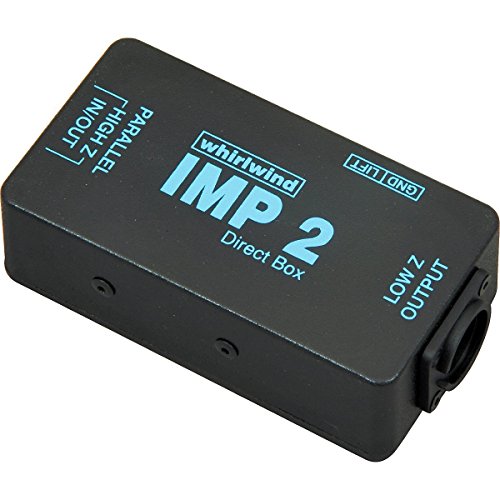
Durable Budget Essential – Whirlwind IMP 2
The Whirlwind IMP 2 is a straightforward option for shoppers comparing DI boxes under 200. This one-channel passive unit uses an inline transformer to convert unbalanced instrument or line signals into low-impedance, balanced mic-level output.
Best For: Players and audio users who want an economical, durable one-channel DI for basic instrument or line connections.
Pros:
- Simple passive operation for instrument or line-level signals.
- Converts unbalanced input to balanced, low-impedance mic-level output.
- Compact 8.8-ounce design with a practical footprint.
- TRHL transformer is riveted to the chassis rather than glued.
Cons:
- Only one channel is provided.
- The notes do not list attenuation, filter, phase, or ground-lift controls.
The IMP 2 focuses on the essentials instead of adding extra controls. Its compact construction and economical positioning make it a sensible pick for users who prioritize reliable basic conversion.
Hum-Control Value Pick – Pyle PDC21
For shoppers seeking DI boxes under 200 with a focus on connection flexibility, the Pyle PDC21 combines passive impedance conversion with hum and buzz cancellation. It accepts a 1/4-inch device connection and provides balanced and unbalanced XLR connectivity.
Best For: Connecting guitars, basses, keyboards, processors, or consumer audio sources to a PA or recording mixer.
Pros:
- Designed for unbalanced sources including instruments, keyboards, and submixers.
- Provides hum and buzz cancellation for cleaner connections.
- Includes an input attenuator and ground-lift adapter.
- Compact 1.8-by-3.3-by-5-inch enclosure.
Cons:
- The notes describe a detachable AC power cord, which may add setup complexity.
- Its feature set is aimed at connection and hum control rather than multi-channel operation.
The PDC21 is a versatile option when source compatibility and hum reduction are priorities. Its compact enclosure and broad connection use cases make it useful for both instruments and other unbalanced audio devices.
Compact Signal Control – Livewire SPDI Passive Direct Box
The Livewire SPDI is a practical choice for shoppers comparing DI boxes under 200 that need flexible input handling and straightforward ground control. It accepts a high-impedance 1/4-inch instrument signal and provides a balanced, floating low-impedance XLR output.
Best For: Instruments and setups that need adjustable attenuation, balanced XLR output, and ground-lift control.
Pros:
- Variable attenuation supports a wide range of input levels.
- Balanced, floating XLR output ignores +48V phantom power.
- Lift mode separates the input and XLR output ground connection.
Cons:
- Provides one primary instrument input rather than multiple channels.
- Its passive design may offer fewer features than powered DI units.
The SPDI stands out for flexible signal matching in a compact format. Its attenuation and lift controls make it a useful option when compatibility and ground management are priorities.
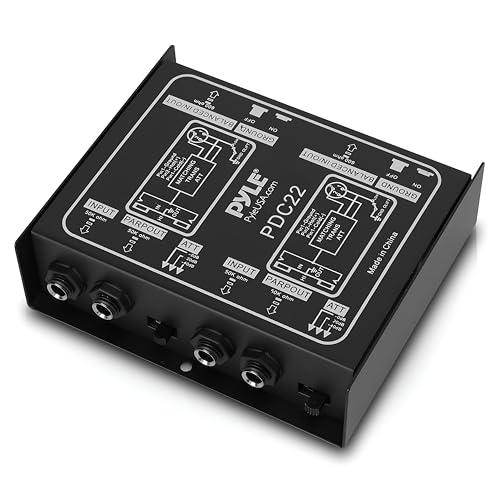
Dual-Channel Value – Pyle-Pro PDC22 Dual Passive Direct Box
The Pyle-Pro PDC22 is a useful budget-minded pick among DI boxes under 200, especially for connecting two unbalanced sources to a PA or recording mixer. Its two-channel steel chassis supports instruments, keyboards, processors, and consumer stereo sources.
Best For: Musicians and small live or recording setups connecting two unbalanced sources while reducing buzz and hum.
Pros:
- Two channels accommodate multiple instruments or signal sources.
- Supports guitars, basses, keyboards, processors, and consumer stereo outputs.
- Steel construction is designed for extended use.
- Ground-lift functionality helps with hum cancellation.
Cons:
- It is a passive unit rather than an active DI.
- The product weighs 1.12 pounds, making it less lightweight than some compact options.
With two channels and broad source compatibility, the PDC22 is a flexible choice for basic signal conversion and hum reduction. Its durable enclosure also suits repeated use in live sound applications.
Rack-Ready Expansion – ART PDB4 Four Channel Passive DI Box
The ART PDB4 is a strong option for shoppers comparing DI boxes under 200 who need four isolated channels. It combines switchable 0 dB, -20 dB, and -40 dB input attenuation with the ability to send a music source to an amplifier and mixer at the same time.
Best For: Multi-instrument rigs, studios, and live setups that need four isolated channels and selectable attenuation.
Pros:
- Four fully isolated channels support larger setups.
- Three attenuation settings handle different input levels.
- Can feed an instrument amplifier and mixer simultaneously.
Cons:
- Its four-channel format is more equipment than a single-source setup requires.
- The 19.02-inch width is less compact than small standalone DI boxes.
The PDB4 makes the most sense when channel count and routing flexibility matter more than portability. Its isolated channels and selectable attenuation provide useful control for complex signal paths.
How We Picked the Best Di Boxes Under 200
We focused on practical features that matter in live sound, home recording, rehearsal, and installation environments. Each selected DI box was evaluated for signal compatibility, channel count, passive or active operation, attenuation options, ground-lift functionality, connector flexibility, and overall value.
Because a DI box is often placed between an instrument and a mixer, interface, or stage snake, dependable construction and straightforward controls are just as important as headline specifications. We also included both single-channel models and multi-channel choices so buyers can match the box to their setup rather than overpaying for unused inputs.
Quick Comparison
| Setup | Best fit | What to prioritize |
|---|---|---|
| Electric guitar or bass | Single-channel passive DI | Reliable transformer isolation and ground lift |
| Keyboard or DJ controller | Stereo or dual-channel DI | Two channels, stereo inputs, and suitable headroom |
| Several instruments | Four-channel DI | Space efficiency and consistent outputs |
| Weak passive sources | Active DI | Battery or phantom-power operation and input impedance |
Key Buying Factors for Di Boxes Under 200
Passive Vs. Active Design
Passive DI boxes are simple, durable, and usually do not require batteries or phantom power. They are a strong choice for keyboards, mixers, DJ gear, and many active instruments. Active models can better accommodate low-output passive pickups and may offer higher input impedance, but they depend on an available power source.
Channel Count and Source Type
A single-channel box is suitable for a guitar, bass, or mono output. Keyboards, stereo playback rigs, and DJ controllers generally benefit from a dual-channel or stereo DI so left and right signals remain separate. A four-channel unit can reduce clutter when several sources need balanced outputs.
Ground Lift, Attenuation, and Connections
Ground lift can help reduce hum caused by electrical ground loops. An attenuation pad is useful when connecting hot outputs from mixers, keyboards, or playback equipment. Check whether the unit provides the 1/4-inch inputs and XLR outputs your system requires, and confirm that the output is balanced for long cable runs.
Build Quality and Portability
For touring or frequent gigging, choose a rugged enclosure with clearly labeled controls and sturdy jacks. A compact unit is easier to carry, while a multi-channel model may be more convenient for permanent racks, studios, or larger stage setups.
Who Should Buy Which Di Boxes Under 200?
Guitarists and bassists who need a dependable, uncomplicated connection should start with a sturdy single-channel passive model. Keyboard players, DJs, and musicians running backing tracks should look for stereo or dual-channel designs with ground lift and enough headroom. Choose an active DI when your passive instrument needs a high-impedance input or when preserving the source’s character is especially important.
If you regularly connect multiple sources, a four-channel DI can simplify cabling and save rack or stage space. For occasional home use or basic hum isolation, an affordable passive model may provide everything necessary. Before buying, verify your source output level, required channel count, available phantom power, and the number of balanced inputs on your mixer or interface.