Audio interfaces with DSP processing can handle monitoring effects, mixing, and signal routing before the sound reaches your computer, helping reduce latency during recording and streaming.
These 10 models cover compact two-input setups, podcasting and streaming systems, and larger interfaces for multitrack production. Compare their I/O, DSP tools, connectivity, and workflow before choosing.
Best 10 Audio Interfaces with Dsp Processing Picks for 2026
Premium UAD Recording

- Unison preamps for real-time analog emulations
- Access to 200+ UAD DSP and Native plug-ins
- Sonarworks monitoring, Auto-Gain, and bass management
Best For: Computer-based producers seeking UAD analog-style processing
Creator-Friendly DSP
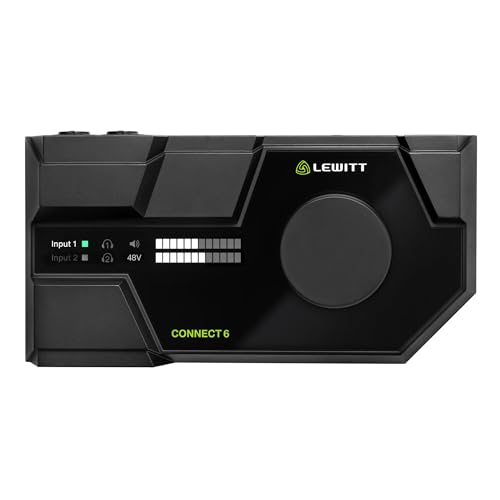
- 72 dB gain with low-noise -133 dBV EIN
- Built-in expander, compressor, EQ, and maximizer
- Virtual channels, mixer, and loopback for streaming
Best For: Streamers and mobile-friendly recording setups
Portable Synergy Core Studio

- Four preamps with up to 75 dB gain and two Hi-Z inputs
- 37 included real-time Synergy Core effects
- Dual USB-C, ADAT, S/PDIF, and bus-powered operation
Best For: Mobile producers and creators needing flexible real-time effects
High-I/O Monitor Mixing

- 18x22 USB interface with analog, S/PDIF, and optical I/O
- Six separate DSP monitor mix busses
- Built-in reverb, EQ, and dynamics processing
Best For: Engineers needing extensive routing and multiple monitor mixes
Compact DSP Starter
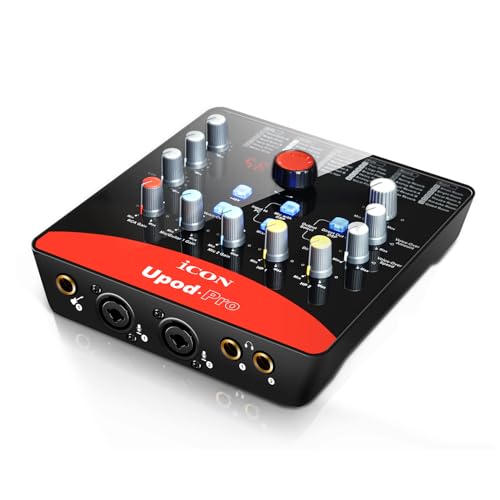
- Built-in 72-DSP effect control
- Two mic inputs and guitar input
- 16-bit/48 kHz 2x2 USB recording
Best For: Small home-recording and guitar setups
Streaming DSP Specialist

- Real-time DSP for vocals and guitar
- Loopback and dual headphone mixes
- 123 dB, 192 kHz/32-bit conversion
Best For: Streaming, podcasting, and processed vocal or guitar recording
Multitrack DSP Workhorse

- 6x4 I/O with MIDI connectivity
- 32-bit/192 kHz USB-C recording
- DSP reverb, channel strip, and amp effects
Best For: Small studios and multichannel recording setups
Best All-Around Pick
Focusrite Scarlett 2i2 4th Gen

- Two mic preamps plus two Hi-Z inputs
- Auto Gain, Clip Safe, and Air modes
- Includes a broad recording software bundle
Best For: Solo musicians and compact home studios
Best for Straightforward Monitoring

- Two preamps in a 2-in/2-out format
- Hardware monitoring for recording workflows
- 24-bit/192kHz USB-C operation
Best For: Compact computer-based recording setups
Best DSP-Focused Option

- Built-in DSP for latency-free monitoring
- 6-in/4-out connectivity with dual USB-C ports
- Touchscreen and bundled Steinberg software
Best For: Performers and studios needing DSP and expanded I/O
Premium UAD Recording – Apollo Twin X DUO Gen 2
Universal Audio Apollo Twin X DUO Gen 2 with UAD Analog Classics Thunderbolt 3 Audio Interface
Check Price On AmazonThe Universal Audio Apollo Twin X DUO Gen 2 is a strong choice among audio interfaces with dsp processing for producers who want real-time analog-modeled recording and mixing. Its Thunderbolt 3 connection, Unison preamps, and access to UAD plug-ins make it especially suited to computer-based studio work on Windows or macOS.
Best For: Producers and vocalists who want UAD analog emulations, low-latency tracking, and polished monitoring tools.
Pros:
- Unison preamps support real-time emulations of Neve, API, Avalon, Manley, Fender, and other classic gear.
- Access to more than 200 UAD DSP and Native plug-ins, including Capitol Chambers and Sound City Studios.
- Monitor Correction powered by Sonarworks, Auto-Gain, and bass-management features support more controlled mixing.
Cons:
- Thunderbolt 3 connectivity may require a compatible computer and setup.
- The broad UAD plug-in ecosystem may involve additional software purchases beyond the included Analog Classics bundle.
Choose the Apollo Twin X DUO Gen 2 if its UAD workflow and analog-style processing are central to your recording process. It is less focused on broad mobile connectivity, but compelling for a dedicated Windows or macOS studio.
Creator-Friendly DSP – LEWITT Connect 6
The LEWITT Connect 6 combines studio-grade preamps with practical onboard processing, making it one of the more approachable audio interfaces with dsp processing for recording, streaming, and hybrid setups. Its USB connection, virtual channels, mixer, and loopback support work across Windows, Mac, and mobile devices.
Best For: Creators who need automatic setup, onboard vocal processing, loopback, and flexible computer or mobile integration.
Pros:
- 72 dB of gain and -133 dBV EIN support high-gain, low-noise recording.
- Onboard expander, compressor, four-band EQ, and maximizer provide useful DSP processing.
- DSP virtual channels, mixer, loopback, and CONTROL CENTER software support streaming and routing workflows.
- Integration with Windows, Mac, iOS, and Android expands device flexibility.
Cons:
- Its maximum sample rate is 96 kHz, below some competing models in this roundup.
- The listed channel count is six, so larger recording sessions may need a more expandable interface.
The Connect 6 is a practical pick when easy setup and built-in creator tools matter more than a large studio I/O count. Auto Setup and loopback make it particularly convenient for users who record and stream from multiple devices.
Portable Synergy Core Studio – Antelope Audio Zen Quadro
The Antelope Audio Zen Quadro is a portable option for shoppers comparing audio interfaces with dsp processing and real-time effects. Dedicated DSP and FPGA hardware run its Synergy Core effects with near-zero latency, while dual USB-C, bus-powered operation, and broad I/O support computer, mobile, streaming, and small-session workflows.
Best For: Traveling producers, performers, and creators who need real-time effects, four preamps, and flexible dual-device routing.
Pros:
- Four Discrete mic preamps offer up to 75 dB of gain, with two Hi-Z inputs for guitar and bass.
- Includes 37 Synergy Core effects, with more than 90 available, running on dedicated DSP and FPGA hardware.
- Dual USB-C supports computer-plus-mobile or two-computer workflows and loopback routing.
- Expandable 14-in/10-out design includes ADAT, S/PDIF, two headphone outputs, and standalone presets.
Cons:
- The compact four-channel interface may be more capability than a basic one- or two-input setup requires.
- Its advanced routing and effect ecosystem may take time to configure.
The Zen Quadro stands out when portability and real-time processing need to coexist with serious expansion options. Its bus-powered design and dual USB-C connectivity make it especially adaptable for mobile and streaming-oriented rigs.
High-I/O Monitor Mixing – MOTU UltraLite-mk5
MOTU UltraLite-mk5 18x22 USB Audio Interface 3 for Mac, Windows and iOS with mixing and effects
Check Price On AmazonThe MOTU UltraLite-mk5 is designed for users who need extensive routing and monitor control alongside audio interfaces with dsp processing. Its 18×22 USB architecture, DSP-driven CueMix mixing, onboard effects, and optical expansion make it well suited to larger recording, monitoring, and live-input setups.
Best For: Musicians and engineers who need multiple output mixes, flexible I/O, and onboard monitoring effects.
Pros:
- Provides 18 inputs and 22 outputs, with analog, S/PDIF, and eight-channel optical I/O.
- DSP-driven monitor mixing can create separate mixes for six output pairs.
- Onboard reverb, four-channel parametric EQ, and dynamics processing support inputs and bus mixes.
- CueMix 5 control works from Mac, PC, or iOS, while USB compatibility extends across modern computer connections.
Cons:
- The larger I/O feature set may be unnecessary for simple solo recording.
- The supplied details list a 96 kHz frequency response while also specifying a 192 kHz maximum sample rate, so buyers should confirm the desired operating mode.
The UltraLite-mk5 is a strong fit when routing flexibility matters as much as recording inputs. Its separate monitor mixes and onboard effects give engineers useful control without relying entirely on host-based processing.
Compact DSP Starter – UPod Pro USB Interface
The iCON UPod Pro is a compact option for shoppers comparing audio interfaces with dsp processing. It provides two microphone inputs, a guitar input, 2×2 analog I/O, phantom power, and a built-in 72-DSP effect with top-panel control.
Best For: Basic home recording, guitarists, and mobile users who want built-in effects in a small USB interface.
Pros:
- Built-in 72-DSP effect with a dedicated control knob.
- Includes two mic inputs, one guitar input, and 2×2 analog I/O.
- Supports +48V and +5V phantom power.
- Works with Windows, macOS, iOS, Android, and Linux software environments.
Cons:
- Recording is limited to 16-bit/48 kHz.
- Its compact I/O layout is better suited to smaller setups than larger sessions.
The UPod Pro emphasizes straightforward recording and onboard effects rather than extensive routing or high-resolution specifications. Its small footprint and broad operating-system support make it a practical entry-level choice.
Streaming DSP Specialist – Zenith 2 USB-C Interface
The Antelope Audio Zenith 2 is aimed at creators seeking audio interfaces with dsp processing for vocals, guitar, podcasting, and streaming. Its onboard DSP supports real-time effects, while loopback, dual headphone mixes, USB-C connectivity, and class-compliant operation support flexible recording and content workflows.
Best For: Streamers, podcasters, vocalists, and guitarists who want real-time processing and standalone control.
Pros:
- Onboard DSP enables zero-latency monitoring through effects.
- Includes a Smart Vocal Chain, loopback, and guitar amp, cab, and pedal-style processing.
- Two independent headphone mixes support collaboration and podcast sessions.
- Offers two console-grade preamps with up to 75 dB of gain and USB-C bus power.
Cons:
- The extensive effects and software features may be more than a simple recording setup requires.
- Some computer-based control features use the optional Software Control Panel.
With its display, onboard controls, DSP effects, and creator-focused routing, the Zenith 2 is especially versatile for live content and vocal production. It also provides high-resolution 192 kHz/32-bit conversion for more demanding studio work.
Multitrack DSP Workhorse – Yamaha URX44C Interface
The Yamaha URX44C is a strong fit for buyers comparing audio interfaces with dsp processing and more extensive I/O. It combines six inputs and four outputs with four combo inputs, two HI-Z inputs, MIDI, 32-bit/192 kHz support, and latency-free DSP monitoring effects.
Best For: Home studios, small bands, and producers who need multiple inputs, MIDI, and DSP-assisted monitoring.
Pros:
- Provides 6×4 analog I/O, MIDI I/O, and four XLR/TRS combo inputs.
- Includes Class-A D-PRE preamps, +48V phantom power, two HI-Z inputs, and two line inputs.
- DSP-powered monitoring includes REV-X reverb, Channel Strip, and Guitar Amp Classics.
- Supports 32-bit/192 kHz audio and includes Cubase AI, Steinberg Plus, and dspMixFx.
Cons:
- Its larger I/O set may be unnecessary for users recording only one source at a time.
- The listed warranty is limited to one year and has authorized-retailer and regional conditions.
The URX44C prioritizes expansion and studio flexibility, making it better suited to multichannel recording than compact entry-level interfaces. Its full-metal housing and DSP monitoring features add practical value for a more permanent setup.
Best All-Around Pick – Focusrite Scarlett 2i2 4th Gen
The Focusrite Scarlett 2i2 4th Gen is a practical choice for musicians and creators seeking audio interfaces with dsp processing features for streamlined recording. It offers two mic preamps, two Hi-Z instrument inputs, high-resolution recording, Auto Gain, Clip Safe, and Air modes in a compact USB-C interface.
Best For: Solo musicians, vocalists, guitarists, and home studios that need simple two-channel recording.
Pros:
- Two mic preamps and two Hi-Z instrument inputs support flexible recording.
- 24-bit/192kHz operation and 120dB dynamic range provide high-resolution capture.
- Auto Gain and Clip Safe help manage recording levels, while Air modes add tonal options.
- Includes Pro Tools Intro+, Ableton Live Lite, Cubase LE, and Hitmaker Expansion.
Cons:
- It has only two inputs and is designed for smaller recording setups.
- The supplied notes do not identify onboard DSP processing as a feature.
Choose the Scarlett 2i2 when ease of use, useful level-management tools, and a strong included software bundle matter more than expanding beyond two simultaneous inputs.
Best for Straightforward Monitoring – MOTU M2 USB-C
The MOTU M2 is a compact 2-in/2-out USB-C interface for buyers comparing audio interfaces with dsp processing capabilities and wanting a simple recording setup. Its supplied specifications include two preamps, hardware monitoring, and 24-bit/192kHz operation for computer-based recording.
Best For: Users who want a compact two-channel interface with hardware monitoring for macOS, Windows, or iOS workflows.
Pros:
- Two preamps and a 2-in/2-out design suit basic recording needs.
- Hardware monitoring supports direct monitoring during recording.
- Supports 24-bit/192kHz audio and USB-C connectivity.
- Includes more than 6GB of free content.
Cons:
- The supplied notes do not list built-in DSP effects or processing.
- Two input channels may be limiting for larger ensembles or multi-mic sessions.
The M2 is a sensible fit if you prioritize a focused two-channel workflow and hardware monitoring, but shoppers specifically requiring onboard DSP should verify the feature set before buying.
Best DSP-Focused Option – Yamaha URX44 6-In/4-Out
The Yamaha URX44 is the clearest match here for shoppers seeking audio interfaces with dsp processing. Its built-in DSP processor is designed for professional sound and latency-free monitoring, while the 6-in/4-out format, touchscreen, dual USB-C ports, and microSD slot support more involved setups.
Best For: Producers, performers, and project studios that need built-in DSP, multiple connections, and flexible monitoring.
Pros:
- Built-in DSP provides professional sound processing and latency-free monitoring.
- 6-in/4-out connectivity offers more expansion than a basic two-channel interface.
- 4.3-inch touchscreen and five control knobs support hands-on operation.
- Includes Cubase AI, WaveLab Cast, Basic FX Suite, and Steinberg Plus software.
Cons:
- At 1.9 kg, it is less portable than the smaller interfaces in this roundup.
- The supplied notes list a one-year manufacturer warranty.
If onboard processing and latency-free monitoring are priorities, the URX44 stands out. Its expanded I/O and touchscreen also make it better suited to more complex recording or performance configurations.
How We Picked These Audio Interfaces with Dsp Processing
We selected interfaces that offer onboard or software-assisted digital signal processing for practical tasks such as low-latency monitoring, headphone mixes, channel effects, routing, and live production. The lineup includes compact USB-C models, Thunderbolt interfaces, and higher-I/O systems for musicians, creators, and small studios.
We also considered preamp count, input and output flexibility, instrument connectivity, compatibility with Mac, Windows, or iOS, included software, control interfaces, and the overall fit for each type of user. DSP features vary significantly, so a model with more processing power is not automatically the best choice for a simple recording setup.
Quick Comparison
- Best for premium studio recording: Universal Audio Apollo Twin X DUO Gen 2.
- Best for flexible creator workflows: LEWITT Connect 6.
- Best for extensive I/O and effects: Antelope Audio Zen Quadro.
- Best for compact multitrack production: MOTU UltraLite-mk5.
- Best for simple two-channel recording: Focusrite Scarlett 2i2 4th Gen or MOTU M2.
- Best for streaming and podcasting: Antelope Audio Zenith 2 or iCON UPod Pro.
- Best for Yamaha and Steinberg workflows: Yamaha’s DSP-equipped USB-C interfaces.
Key Buying Factors for Audio Interfaces with Dsp Processing
Inputs, Outputs, and Expansion
Count the sources you plan to connect at the same time. Two mic or instrument inputs suit solo creators, while four or more preamps are better for bands, interview setups, and external hardware. Line outputs, headphone outputs, ADAT, MIDI, and digital I/O can extend the system later.
DSP Effects and Monitoring Control
Check which effects are included and whether they run on the interface, through a dedicated mixer app, or through a computer-based ecosystem. Look for useful tools such as compression, equalization, reverb, amp simulation, and feedback-resistant monitor mixing. Confirm whether DSP effects can be recorded or are monitoring-only.
Latency, Connection, and Compatibility
Near-zero-latency monitoring is valuable for vocals, guitar, and live broadcasts. Thunderbolt may suit a dedicated studio, while USB-C offers broader device compatibility. Verify operating-system support, iOS requirements, power needs, and software installation before buying.
Audio Quality and Controls
Higher sample-rate and bit-depth specifications do not guarantee better recordings, but quality preamps, clean gain control, reliable drivers, and accessible meters matter in daily use. Physical knobs, touchscreen controls, or a well-designed mixer application can make DSP routing much easier.
Who Should Buy Which Audio Interfaces with Dsp Processing?
Choose a compact two-input interface if you record one or two microphones, guitar, or stereo sources. A creator-focused model with loopback, multiple headphone mixes, and onboard effects is more suitable for streaming and podcasting. Musicians who record several microphones at once should prioritize preamp count and line outputs over headline sample-rate figures.
For a larger project studio, choose an interface with generous I/O, flexible routing, and expandable digital connections. If you already use a particular software ecosystem, staying within that platform can simplify plug-in access and workflow. Finally, buy only as much DSP capacity as your monitoring and production needs require; simpler hardware may deliver the better value when you do not need extensive real-time effects.