A well-designed enclosure can make 3D printing cleaner, quieter, and more consistent. The best models combine ventilation with practical features such as filtration, temperature control, lighting, fire-resistant materials, and space for your specific printer.
We compared 10 3D printer enclosures with ventilation for FDM and resin workflows, focusing on fit, airflow, odor management, build quality, and everyday usability. Use the guide below to narrow the list by printer type, workspace, and printing priorities.
Best 10 3d Printer Enclosures with Ventilation Picks for 2026
Best for Resin Filtration
Multifunctional Resin Printer Ventilation Tent

- Adjustable-speed 12V fan and three-layer filter
- UV-blocking viewing window
- Designed for small LCD resin printers
Best For: Resin printing setups focused on odor and fume management
Best Large Resin Setup
SKOUPHY Double-Space Resin Enclosure
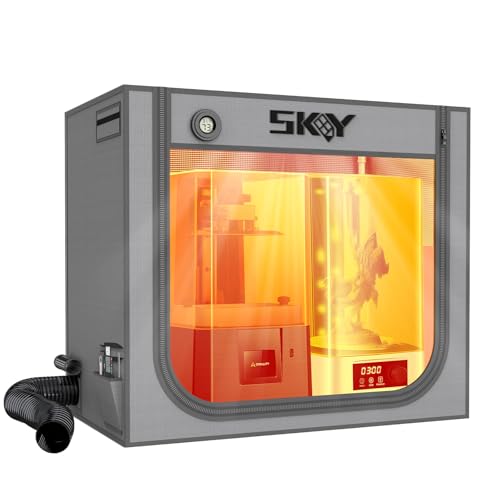
- Fits a resin printer and curing box
- High-speed exhaust with activated-carbon odor box
- LED lighting and thermo-hygrometer included
Best For: Large resin-printing workstations with odor-control needs
Best for Bambu Lab A1

- Purpose-built for Bambu Lab A1 with AMS Lite
- 8025 ventilation fan for smoke and dust exhaust
- LED lighting with fire- and dust-resistant materials
Best For: Bambu Lab A1 users running the AMS Lite setup
Best for Large-Format Setups
Oversized Ventilated 3D Printer Enclosure

- Fits large printers or multiple smaller machines
- Sealed design helps contain odors
- Ventilation kit sold separately
Best For: Large-format printers and multi-printer workspaces
Best for Dual Resin Printing
YOOPAI Double-Space Resin Enclosure

- Accommodates two resin devices
- Combines carbon filtration and exhaust
- Clear window supports closed-door monitoring
Best For: Two-printer resin setups or printer-and-curing stations
Best Compact Filtered Option
Speed-Controlled Resin Printer Enclosure

- 12V fan offers adjustable airflow
- Three-layer filter helps manage dust and gases
- Fits many standard Ender and resin printers
Best For: Compact workspaces and standard-size printers
Best Adjustable-Ventilation Enclosure
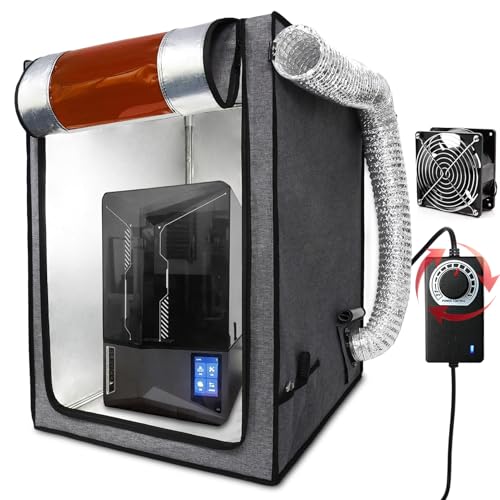
- Adjustable 12V fan helps exhaust fumes and smoke
- UV-blocking brown window protects resin materials
- Spacious fire-resistant enclosure fits resin and FDM printers
Best For: Resin and FDM users needing adjustable airflow and UV protection
Best Protective Design
VEVOR Ventilated 3D Printer Enclosure
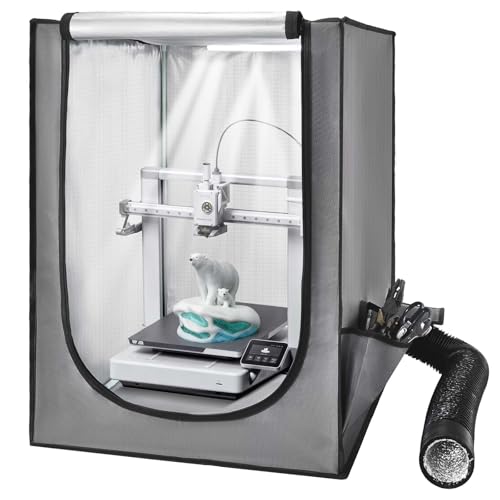
- Ventilation system helps remove smoke and dust
- Constant-temperature design supports adhesion and print stability
- Flame-retardant cover, LED, and viewing window add convenience
Best For: Small compatible LCD or FDM printers needing protection and ventilation
Best Overall – YOOPAI Ender 3 Enclosure with Ventilation
If you need 3d printer enclosures with ventilation for a compatible FDM printer, the YOOPAI combines an LED light, temperature and humidity monitoring, and a ventilation-ready enclosed workspace. Its fire-resistant construction and broad compatibility make it a practical all-purpose option, but measure your printer with the spool holder first.
Best For: Ender 3 owners and users who want lighting, environmental monitoring, noise reduction, and a stable enclosed printing area.
Pros:
- Built-in LED strip improves visibility while monitoring prints.
- Temperature and humidity readings help track printing conditions.
- Six-sided enclosure helps reduce noise, dust, and accidental contact.
- Supports many Creality, Neptune, Anycubic, and AnkerMake models within the stated size limit.
Cons:
- Compatibility depends on staying below 21.6 x 25.6 x 29.5 inches, including spool-holder height.
- The notes emphasize enclosure features but do not specify a detailed filter system.
This is a well-rounded enclosure for users prioritizing visibility, monitoring, and general protection. Confirm the dimensions before ordering, especially if your printer has a tall or externally mounted spool holder.
Best for Resin Filtration – Multifunctional Resin Printer Ventilation Tent
This resin-focused option is among the more specialized 3d printer enclosures with ventilation, pairing an adjustable-speed 12V fan with a three-layer filter and exhaust setup. The UV-blocking window, fire-resistant fabric, and compatibility with several small LCD resin printers make it suited to contained resin-printing workspaces.
Best For: Small LCD resin printers and users who want adjustable airflow, odor control, and a filtered ventilation setup.
Pros:
- Adjustable fan speed supports customized airflow.
- Three-layer filtration is designed to capture dust and harmful gases.
- UV-blocking window allows print monitoring while helping shield resin prints.
- Stainless-steel frame pipes and fire-resistant fabric support long-term, safer use.
Cons:
- A plastic adapter must be printed to replace the steel fan bracket.
- It is not water resistant.
- Printer dimensions should be checked because compatibility varies by model and size.
Choose this enclosure when filtration and adjustable ventilation matter more than broad FDM compatibility. It includes the enclosure and ventilation kit, but the printer itself is not included.
Best Large Resin Setup – SKOUPHY Double-Space Resin Enclosure
For resin users who need room for both a printer and curing box, the SKOUPHY is one of the larger 3d printer enclosures with ventilation in this roundup. It adds a high-speed exhaust fan, activated-carbon odor box, LED lighting, and a switchable Fahrenheit/Celsius thermo-hygrometer.
Best For: Resin printing workstations that need space for a printer and curing machine while managing odors and visibility.
Pros:
- Large 31.5 x 18.1 x 28.3-inch internal space accommodates a printer and curing box.
- Ventilation fan reaches up to 4500 RPM and works with an activated-carbon box.
- LED lighting and switchable temperature units improve monitoring.
- Double-layer Oxford fabric is described as waterproof, dustproof, and noise reducing.
Cons:
- The large footprint requires substantial workbench space.
- You must measure both the printer and curing machine before ordering.
- The supplied notes do not identify specific printer models as compatible.
This is the strongest fit for a dedicated resin station rather than a compact printer-only enclosure. Its generous interior and carbon-assisted exhaust are useful, provided your workspace can accommodate its size.
Best for Bambu Lab A1 – Large A1 AMS Lite Enclosure
This enclosure is purpose-built for the Bambu Lab A1 with AMS Lite and adds an 8025 ventilation fan, LED lighting, and fire- and dust-resistant materials. Among these 3d printer enclosures with ventilation, it is the most targeted choice, so compatibility must be verified carefully before purchase.
Best For: Bambu Lab A1 owners using AMS Lite who want ventilation, lighting, dust protection, and a more consistent printing environment.
Pros:
- Designed specifically around the Bambu Lab A1 with AMS Lite.
- 8025 fan helps exhaust smoke and dust from printing.
- Built-in LED lights make print monitoring easier.
- Fire-resistant and dustproof construction helps protect the printer and workspace.
Cons:
- The notes warn not to order if you do not have AMS Lite because the enclosure may be too short.
- Its stated size creates a large footprint.
- Compatibility with other printer models is not established in the supplied information.
This is a focused solution rather than a universal enclosure. If you own the specified A1 and AMS Lite combination, its ventilation and lighting package is compelling; otherwise, choose a model with broader compatibility.
Best for Large-Format Setups – Oversized Ventilated 3D Printer Enclosure
For shoppers comparing 3d printer enclosures with ventilation, this oversized cover stands out for its room to accommodate a large-format printer or several smaller machines. Its enclosed, insulated fabric structure helps contain odors, support a warmer printing environment, and reduce dust and operating noise. Note that the ventilation kit is not included and must be ordered separately.
Best For: Large-format FDM printers, multiple smaller printers, or users who need flexible printer and exhaust positioning.
Pros:
- Very large 800 × 1000 × 1200 mm interior, with space for large printers or multiple machines.
- Sealed openings and airtight zippers help contain plastic and resin odors.
- Insulated enclosure can help reduce warping, cracking, and nozzle-clogging issues in colder conditions.
- Includes a viewing window and lighting bar for monitoring prints.
Cons:
- The 4-inch ventilation kit is not included.
- Its 47.2-inch height and large footprint require substantial room and a suitable work surface.
- Assembly is easier with a second person.
This is the most spacious option of the three, making it practical for extensive setups rather than compact workspaces. Verify your available countertop and room clearance before ordering, and budget separately for the exhaust hardware.
Best for Dual Resin Printing – YOOPAI Double-Space Resin Enclosure
This YOOPAI model is a practical choice among 3d printer enclosures with ventilation when you want room for two resin machines or a printer and curing unit. It combines a built-in carbon filter, exhaust fan, expandable pipes, and a transparent viewing panel to help manage odors while keeping the enclosure closed during observation.
Best For: Resin-printing setups that need space for two printers or a printer plus a wash-and-cure machine.
Pros:
- Double-width interior measures 30 × 19.7 × 28.3 inches.
- Built-in carbon filter helps absorb resin odors, while the fan and pipes provide exhaust options.
- Large transparent front window allows monitoring without opening the cover.
- Fully enclosed, insulated structure helps limit dust and support more stable resin printing.
Cons:
- Airflow slows when exhaust passes through the activated carbon filter.
- Users may need to wait before opening the enclosure or add exhaust piping on both sides.
- Printer and curing-machine dimensions should be checked carefully before purchase.
Its main advantage is usable capacity for resin workflows, especially where odor control and a curing station need to share one enclosure. Measure both devices and allow for the reduced airflow associated with carbon filtration.
Best Compact Filtered Option – Speed-Controlled Resin Printer Enclosure
If you need 3d printer enclosures with ventilation for a standard-size machine, this compact tent offers a built-in 12V fan, speed control, and a three-layer filter system. Its 25 × 21 × 29.5-inch enclosure supports several Ender, resin, and similarly sized printers while adding a dustproof, waterproof, and insulated covering.
Best For: Users seeking an affordable-size enclosure for Ender 3-family, compatible resin, or similarly sized printers with adjustable airflow.
Pros:
- 12V fan includes speed control for adjusting airflow to your needs.
- Three-layer filter is designed to absorb larger dust particles and harmful gases.
- Brown filter membrane helps filter ultraviolet rays while retaining print visibility.
- Stainless steel frame pipes and fireproof interior material support durability and heat retention.
Cons:
- The plastic adaptor fan bracket is not included; the manufacturer directs users to download a Thingiverse file if needed.
- Its dimensions limit it to standard-size printers and may not suit larger machines.
- The ventilation system requires the included power adapter and fan setup.
This is a sensible space-conscious option when adjustable fan speed matters more than extra interior room. Confirm your printer dimensions and whether the included filtration arrangement meets your ventilation needs before buying.
Best Adjustable-Ventilation Enclosure – Large Resin Printer Enclosure
The Makacces enclosure is a practical option for shoppers comparing 3d printer enclosures with ventilation for resin or FDM machines. Its fire-resistant fabric, adjustable fan, UV-blocking window, and included exhaust hose help create a more controlled printing area.
Best For: Resin and FDM users who want adjustable airflow, UV protection, and a spacious enclosure.
Pros:
- 12V fan with adjustable speed controller helps vent fumes and smoke.
- Brown UV-protection window helps shield resin from premature curing.
- Fire-resistant fabric and stainless steel frame provide durable construction.
- Large 25 x 21.06 x 29.53-inch design fits many LCD and FDM printers.
Cons:
- The large footprint may require substantial workspace.
- Ventilation performance depends on connecting and positioning the included pipe properly.
Choose this model if adjustable ventilation and resin-focused UV protection matter more than a compact footprint. The included storage and tool bags also make it easier to keep the surrounding workspace organized.
Best Monitoring Features – LED Smoke-Exhaust Printer Tent
The Skouphy enclosure stands out among 3d printer enclosures with ventilation by combining a high-speed exhaust fan with monitoring and visibility features. Its thermo-hygrometer, LED light, constant-temperature design, and multi-window layout are useful for users who actively monitor print conditions.
Best For: Bambu Lab A1, Eufymake E1, and other compatible printer users who value airflow, temperature tracking, and print visibility.
Pros:
- Up to 4000 RPM ventilation fan helps exhaust particles and odors.
- Three-layer exhaust pipe material is designed to reduce odor residue.
- Thermo-hygrometer provides temperature and humidity readings.
- LED lighting and an openable side window improve observation and maintenance.
Cons:
- Compatibility should be verified for the specific printer before ordering.
- The feature-rich design may be more than needed for basic enclosure users.
This is a strong fit when print monitoring is a priority. The combination of high-speed ventilation, environmental readings, LED illumination, and a maintenance window gives it a more equipment-focused design than a basic printer tent.
Best Protective Design – VEVOR Ventilated 3D Printer Enclosure
The VEVOR enclosure is a versatile choice among 3d printer enclosures with ventilation, offering constant-temperature support, a dustproof and waterproof Oxford cloth exterior, and a built-in exhaust system. Its transparent window and LED light also make print monitoring easier.
Best For: Photon Mono, Mars 3, and other compatible LCD or FDM printer users seeking protection from dust, fumes, and temperature changes.
Pros:
- Ventilation system helps expel smoke and dust after printing.
- Constant-temperature design can help reduce warping and cracking.
- Flame-retardant materials and a stable frame add protective structure.
- Transparent window and LED light support visibility during printing.
Cons:
- Its 21.65 x 25.59 x 29.53-inch size requires careful space planning.
- Printer dimensions should be measured before purchase to confirm fit.
- The listed design is aimed at small printers and compatible LCD resin models, so larger machines may not fit.
Consider this VEVOR model if you want enclosure protection alongside ventilation and visibility. Its broad compatibility claims are useful, but measuring your printer remains essential because the enclosure is sized for smaller machines and specific resin-printer formats.
How We Picked the Best 3d Printer Enclosures with Ventilation
We evaluated these enclosures against the needs of typical home, workshop, and small studio users. Our comparison emphasized ventilation design, fan performance, filtration or exhaust options, enclosure dimensions, temperature retention, visibility, access, and material quality.
We also considered compatibility with common FDM and resin printers, including Creality, Bambu Lab, and larger-format machines. Features such as LED lighting, thermo-hygrometers, speed controls, noise reduction, and fire-resistant or dustproof construction were treated as useful advantages rather than substitutes for safe printer operation.
Quick Comparison
- Best for enclosed FDM printing: Choose a model with generous clearance, stable airflow, and room for the printer’s moving components.
- Best for resin printing: Prioritize effective fume extraction, a compatible filter or exhaust port, chemical-resistant access, and enough space for handling prints.
- Best for larger printers: Measure the printer, spool path, cables, and door clearance before choosing a large or double-space enclosure.
- Best for convenience: LED lighting, viewing windows, tool pockets, fan-speed control, and a built-in temperature or humidity display can simplify daily use.
Key Buying Factors for 3d Printer Enclosures with Ventilation
Fit and Usable Space
Check internal dimensions rather than relying on a product’s size label. Leave clearance around the bed, gantry, ventilation hose, power connections, and spool holder. Resin users should also allow workspace for removing the vat and handling prints safely.
Ventilation and Filtration
Ventilation should move fumes away from the printing area without creating excessive drafts or rapidly losing heat. A controllable fan is helpful because different materials and printer types require different airflow. For resin printing, confirm whether the enclosure includes a filter, duct connection, or only a basic exhaust fan.
Temperature and Safety
Enclosures can help reduce drafts and stabilize printing conditions, but they are not a substitute for supervision, correct printer settings, or a suitable fire-safety setup. Look for heat-resistant or fire-retardant fabric, strong zippers, stable framing, and openings that do not obstruct emergency access.
Noise, Dust, and Maintenance
Oxford-cloth and insulated designs may reduce fan and printer noise while limiting dust. Choose removable or replaceable filters where possible, and make sure the ventilation path can be cleaned. Transparent windows and interior lighting are especially useful when checking first layers or resin exposure.
Who Should Buy Which 3d Printer Enclosures with Ventilation?
FDM beginners should choose a straightforward enclosure with adequate clearance, a ventilation kit, and easy access. Resin users should favor stronger fume extraction and filtration over decorative features. Bambu Lab owners should verify that the enclosure accommodates the printer, AMS or spool arrangement, cable routing, and required door movement.
Users in small rooms benefit most from controllable ventilation, odor reduction, and noise-dampening construction. High-volume or multi-printer users should consider a larger enclosure with reinforced framing, better airflow management, and enough room to service equipment without dismantling the setup. Before ordering, compare the listed dimensions with your printer and confirm where the exhaust hose will lead.