The right enclosure can make 3D printing cleaner, quieter, and easier to manage. It can help contain dust and odors, stabilize the printing environment, and add a layer of protection around your printer.
This roundup compares 10 options for resin and filament printers, from compact fabric tents to larger cabinets with ventilation, lighting, and storage. Focus on printer fit, airflow, and the materials you plan to print before choosing.
Best 10 3d Printer Enclosures Picks for 2026
Best Budget Tent
Creality Fireproof 3D Printer Enclosure

- Flame-resistance tested materials
- Supports steadier printing temperatures
- Folding, portable design
Best For: Ender 3 users wanting an affordable protective tent
Best for Resin Workspaces
SKOUPHY Double-Space Resin Enclosure
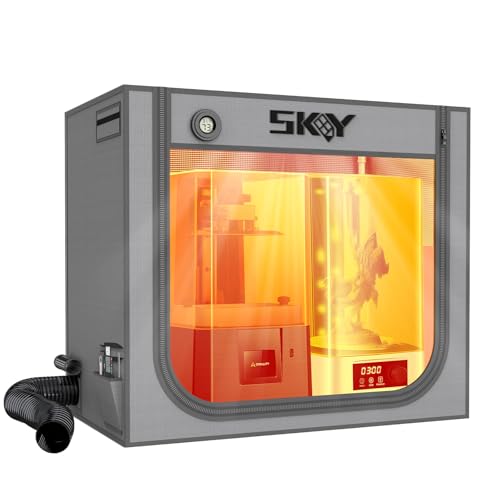
- Fits a printer and curing box
- Includes exhaust fan and carbon box
- Adds LED light and thermo-hygrometer
Best For: Resin users needing ventilation and extra workspace
Best Flexible Fit
YOOPAI Constant-Temperature Printer Enclosure

- Broad compatibility across listed brands
- Dedicated exhaust and filament ports
- Quick setup with noise reduction
Best For: Multi-brand printer owners wanting adaptable enclosure features
Best for Bambu Lab A1

- Designed for A1 Combo with AMS Lite
- Includes viewing window and LED light
- Tested internal temperature below 40°C
Best For: Bambu Lab A1 users wanting a fitted, quieter enclosure
Best Resin Ventilation Pick

- UV-blocking viewing window
- Adjustable fan with three-layer filter
- Fire-resistant fabric and stainless-steel frame
Best For: Small LCD and resin 3D printers
Best Spacious Enclosure
Medium LED Constant-Temperature Cover

- 21.7 × 25.6 × 30.7-inch interior
- Built-in LED lighting
- Fire-resistant, dustproof, and noise-isolating design
Best For: Compatible medium-to-large FDM printers
Best for Filament Storage
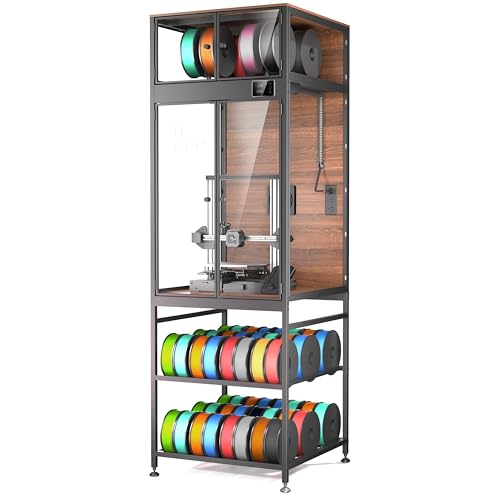
- Stores up to 48 filament spools
- Top compartment holds 8 spools
- Stable cabinet includes LED and manual ventilation
Best For: Large, organized FDM printing workspaces
Best Resin Setup

- Fits a resin printer and curing machine
- Includes carbon filtration and exhaust fans
- Clear window enables closed-enclosure monitoring
Best For: Larger resin printing and curing workflows
Best Budget Tent – Creality Fireproof 3D Printer Enclosure
If you need a straightforward 3d printer enclosure for an Ender-style machine, this Creality tent focuses on temperature stability, dust protection, and easy setup. Its folding design and broad compatibility make it a practical choice for a home workshop.
Best For: Ender 3 owners seeking an economical enclosure for steadier printing and basic protection.
Pros:
- Flame-resistance tested, with flame-retardant exterior and aluminum-film interior.
- Helps maintain a more consistent printing temperature and may support high-temperature filament use.
- Folding construction, tool pockets, and observation access make it convenient to install and use.
Cons:
- Compatibility and dimensions should be checked carefully for your specific printer and spool setup.
- The tent-style construction provides protection but is less substantial than a rigid cabinet.
With a 480 × 600 × 720 mm storage space and a listed weight of 3.5 pounds, this enclosure is a useful low-cost way to organize and shield a compatible printer without taking up a permanent workshop footprint.
Best for Resin Workspaces – SKOUPHY Double-Space Resin Enclosure
This SKOUPHY 3d printer enclosure is designed around resin workflows, with room for both a resin printer and curing box. Its ventilation kit, carbon filter, lighting, and temperature-humidity display make it a more complete workstation enclosure than a basic printer tent.
Best For: Resin printing setups that need extra workspace and dedicated odor ventilation.
Pros:
- 31.5 × 18.1 × 28.3-inch internal space accommodates a printer and curing box.
- 4500 RPM exhaust fan and activated carbon box help remove and absorb resin odors.
- Integrated LED lighting and switchable Fahrenheit/Celsius thermo-hygrometer improve visibility and monitoring.
- Double-layer aluminum Oxford cloth is described as waterproof, dustproof, and noise reducing.
Cons:
- Its larger footprint requires more bench space than a compact printer enclosure.
- You should measure both your printer and curing machine before ordering.
For resin users, the combination of storage capacity and ventilation accessories is the main attraction. Confirm the internal dimensions first, then consider whether its 7.6-pound size suits your workbench.
Best Flexible Fit – YOOPAI Constant-Temperature Printer Enclosure
Among these 3d printer enclosures, the YOOPAI model stands out for broad compatibility and convenient accessory openings. It is designed to help stabilize temperature, reduce dust and noise, and support optional exhaust and external filament feeding.
Best For: Owners of compatible Creality, Anycubic, or ELEGOO printers who want flexible setup options.
Pros:
- Supports a wide range of listed printer models, including several Ender 3 variants.
- Right-side exhaust opening and left-side filament port support customized setups.
- Quick installation and disassembly make it convenient to relocate or maintain.
- Six-sided enclosure helps reduce dust, accidental contact, and printing noise.
Cons:
- It is not water resistant according to the supplied specifications.
- Printer dimensions, including spool-holder height, must remain below 29.5 × 25.6 × 21.6 inches.
The YOOPAI is a practical middle-ground enclosure for users who value compatibility and future modifications. Measure the complete printer setup before buying, especially if the spool holder sits high.
Best for Bambu Lab A1 – TOPCUBE Enclosure with LED
Designed specifically for the Bambu Lab A1 Combo with AMS Lite, the TOPCUBE is a focused 3d printer enclosure rather than a universal cover. It combines temperature control, a transparent viewing window, LED lighting, and noise reduction in a purpose-built format.
Best For: Bambu Lab A1 Combo users who want a fitted enclosure with visibility and quieter operation.
Pros:
- Designed for the Bambu Lab A1 with AMS Lite and measures 580 × 670 × 670 mm.
- Long-term testing cited in the notes indicates the internal temperature will not exceed 40°C.
- Transparent viewing window and integrated LED strip make monitoring easier.
- Fully enclosed design is claimed to reduce noise from 60 to 40 decibels.
Cons:
- Its dimensions and design are specifically oriented toward the Bambu Lab A1 Combo, so other models require careful verification.
- The enclosure may not suit users who need a larger, more universal workspace.
For the intended Bambu Lab A1 setup, TOPCUBE offers a polished combination of visibility, lighting, protection, and sound reduction. Verify your printer and AMS Lite configuration before ordering.
Best Resin Ventilation Pick – Filtered UV-Window Enclosure
For resin users comparing 3d printer enclosures, this model focuses on ventilation, filtration, and UV protection. Its fire-resistant fabric, adjustable fan system, and viewing window make it a practical fit for compatible LCD and resin printers, provided you confirm the dimensions first.
Best For: Small LCD/resin 3D printers and wash machines, including compatible Photon Mono, Elegoo Mars/Saturn, and Creality Halot setups.
Pros:
- UV-blocking window helps protect resin prints while keeping them visible.
- Includes adjustable-speed 12V ventilation and a three-layer filter system.
- Uses fire-resistant fabric and updated stainless-steel frame pipes.
- Designed for common resin printer sizes and includes the ventilation kit.
Cons:
- Printer is not included.
- Fit is limited to compatible printer dimensions, so measuring is essential.
- The fan bracket may require a 3D-printed plastic adapter.
This is the most ventilation-focused option in the group, especially for resin printing. The included filtration and speed control add flexibility, but buyers should verify fit and be prepared for the adapter requirement.
Best Model-Specific Option – YOOPAI AD5X/AD5M Enclosure
Among 3d printer enclosures, this YOOPAI cover is tailored specifically to the Flashforge AD5M and AD5X. It combines a built-in LED strip with a dustproof, fire-resistant enclosure that helps stabilize the printing environment and reduce noise.
Best For: Flashforge AD5M and AD5X owners who want a purpose-built enclosure with lighting and a quick setup.
Pros:
- Fully compatible with the Flashforge AD5M and AD5X.
- Built-in LED lighting improves visibility during printing.
- Fire-resistant, dustproof construction helps protect the printer and prints.
- Installs in about five minutes and can be disassembled for moving.
Cons:
- Compatibility is specifically stated for the AD5M and AD5X.
- The left-side ventilation kit is sold separately.
- Exact interior dimensions are not provided in the supplied details.
This is a sensible choice when you own one of the supported Flashforge models and value convenience. Its built-in light, noise isolation, and stable enclosure design are useful, but it is less flexible than a broadly compatible cover.
Best Spacious Enclosure – Medium LED Constant-Temperature Cover
This medium enclosure is a versatile choice for shoppers seeking 3d printer enclosures with built-in lighting and a more controlled printing environment. Its spacious interior is designed for several popular FDM printers, while the six-sided cover helps reduce dust, noise, and accidental contact.
Best For: Owners of compatible medium-to-large FDM printers, including selected Creality, ELEGOO, PRUSA, and AnkerMake models.
Pros:
- Spacious 21.7 × 25.6 × 30.7-inch interior supports a wide range of printers.
- Built-in LED strip improves visibility in low-light conditions.
- Fire-resistant, dustproof structure helps protect prints and equipment.
- Quick five-minute installation and six-sided noise isolation.
Cons:
- Printer compatibility still depends on checking your machine’s dimensions.
- The supplied details do not specify a ventilation or filtration system.
- Its large footprint may require substantial workspace.
This is the strongest general-purpose option for users who need extra room and integrated lighting. It emphasizes temperature consistency, protection, and reduced noise, though buyers seeking active fume extraction should consider a model with a specified ventilation system.
Best All-Around Enclosure – YOOPAI Ender 3 Enclosure with LED
If you want one of the more versatile 3d printer enclosures for a standard FDM setup, this YOOPAI model combines lighting, environmental monitoring, noise reduction, and protective construction. Its enclosure fits printers up to 21.6″ W × 25.6″ D × 29.5″ H, including the spool-holder height, so measuring first is essential.
Best For: FDM users who want a monitored, enclosed workspace for compatible Ender 3, Neptune, AnkerMake, or Anycubic printers.
Pros:
- Built-in LED strip improves visibility while monitoring prints.
- Temperature and humidity readings help track printing conditions.
- Six-sided enclosure helps reduce noise, dust, and accidental contact.
- Fire-resistant materials and quick installation add practical convenience.
Cons:
- Compatibility depends on the printer and spool-holder dimensions.
- Its enclosed size may not suit larger printers beyond the stated limits.
With useful monitoring and a broad compatibility list, this is a practical choice for improving visibility, cleanliness, and consistency around a compatible FDM printer. Confirm the full dimensions before ordering.
Best for Filament Storage – Crafit 3D Printer Cabinet
This Crafit cabinet stands out among 3d printer enclosures for combining a printer enclosure with substantial filament organization. It is designed for printers up to 21.6″ W × 22″ D × 28.7″ H, with compatibility noted for models such as the Bambu Lab P1S/X1, Creality K1 Max, and Ender 3 series. Measure your printer before purchase.
Best For: High-volume users who want a stable printer cabinet plus organized storage for a large filament collection.
Pros:
- Base storage system holds up to 48 standard filament spools.
- Top compartment stores up to 8 spools and supports up to four feed-through filaments.
- Carbon steel frame and composite walls provide a stable, draft-shielded setup.
- LED lighting, PET panels, and a manually controlled fan support monitoring and ventilation.
Cons:
- At 66 pounds and 70 inches tall, it requires substantial space.
- Ventilation is manually controlled rather than automatically managed.
- Printer fit depends on the stated interior size and your setup.
This is the most storage-focused option in the group. Its large footprint makes it less suitable for compact workspaces, but the cabinet design can significantly simplify filament organization while providing a steady printing environment.
Best Resin Setup – YOOPAI Large Resin Enclosure
For resin users comparing 3d printer enclosures, this YOOPAI model is designed around odor control and extra working space. Its interior measures 30″ × 19.7″ × 28.3″ and can accommodate a resin printer plus a curing machine, but both devices should be measured before ordering.
Best For: Resin printing setups that need room for both a printer and curing machine, along with filtered and vented airflow.
Pros:
- Double-width interior is designed to hold two resin-related devices.
- Carbon filter sheet helps adsorb resin odors.
- Exhaust fans and expandable pipes support removal of fumes and emissions.
- Large transparent window allows observation without opening the enclosure.
Cons:
- Airflow slows when exhaust passes through the activated carbon filter.
- The enclosure requires careful measurement for both the printer and curing machine.
- Users may need to wait before opening or add exhaust pipes to increase airflow.
This enclosure is a focused choice for resin workflows where odor containment and space for curing equipment matter. Its ventilation guidance is important: plan for slower filtered exhaust and allow air to clear before opening.
How We Picked These 3d Printer Enclosures
We selected enclosures across several common use cases: compact filament printers, resin setups, Bambu Lab and Flashforge machines, and larger workstations with storage. We looked for practical differences in printer compatibility, enclosure dimensions, ventilation options, lighting, temperature management, dust control, and day-to-day accessibility.
Because enclosure performance depends on the printer and material, product claims should be treated as starting points rather than guarantees. Always confirm the interior dimensions, port locations, and ventilation requirements for your specific setup.
Quick Comparison
| Best For | Look For | Notable Features |
|---|---|---|
| Basic filament printing | Compatible dimensions and sturdy frame | Dust protection and temperature retention |
| Resin printing | Effective extraction and sealed access | Ventilation kit, LED lighting, odor management |
| Bambu Lab A1 | Model-specific fit and cable clearance | Dedicated enclosure design and lighting |
| Flashforge printers | Exact AD5X or AD5M compatibility | Printer-specific fit and LED lighting |
| Organized workspaces | Load capacity and cabinet footprint | Filament storage, ventilation, and monitoring |
Key Buying Factors for 3d Printer Enclosures
Size and Printer Compatibility
Measure the printer, spool holder, power cables, and any external accessories—not just the printer’s advertised dimensions. Leave room for the bed or gantry to move freely and verify that the enclosure’s front, side, and rear openings align with your machine.
Ventilation and Filtration
Ventilation is especially important for resin printing and materials that produce noticeable odors or airborne emissions. A fan and duct port can direct air toward a window or suitable filtration system. Do not assume a small built-in fan replaces proper room ventilation, and avoid exhausting into occupied areas.
Temperature, Materials, and Fire Safety
An enclosure can reduce drafts and help maintain a more consistent temperature, which may benefit materials such as ABS, ASA, and nylon. However, excessive heat can damage electronics or affect print quality. Use temperature monitoring where possible, keep ventilation paths clear, and never leave a running printer unattended. “Fireproof” fabric is not the same as a fireproof containment system.
Access, Lighting, and Cable Management
Clear windows, LED lights, wide doors, and cable openings make setup and troubleshooting easier. Check whether the enclosure allows convenient access to the build plate, resin vat, filament path, emergency controls, and maintenance points.
Who Should Buy Which 3d Printer Enclosures?
Choose a basic tent-style enclosure if you mainly want dust control, noise reduction, and a more stable environment for a compact filament printer.
Choose a ventilated resin enclosure if you print with resin and need space for odor management, lighting, and safer workflow separation. Pair it with appropriate personal protective equipment and room ventilation.
Choose a model-specific enclosure for a Bambu Lab A1, Flashforge AD5X, AD5M, or similar printer when fit, cable routing, and access matter more than universal compatibility.
Choose a cabinet-style enclosure if you need filament organization, a larger footprint, humidity monitoring, or a dedicated printing station. It costs and occupies more space, but can make a busy workspace easier to manage.