The best multitrack recorders make it easier to capture ideas, rehearse with a band, produce demos, or record complete sessions without relying on a computer. Today’s options range from compact battery-powered units to full mixer-recorders with USB connectivity and extensive track counts.
We’ve compared 10 standout multitrack recorders from Tascam, Zoom, Boss, and Roland, focusing on recording capacity, inputs, portability, workflow, monitoring, and useful features for different types of creators.
Best 10 Multitrack Recorders Picks for 2026
Best All-in-One Mixer Recorder

- 12 channels with 12-in/10-out USB
- Built-in compressors, EQ, MIDI, and click output
- Dual headphone outputs with independent controls
Best For: Home studios and bands wanting a mixer-style recording hub
Best Touchscreen Multitrack Recorder
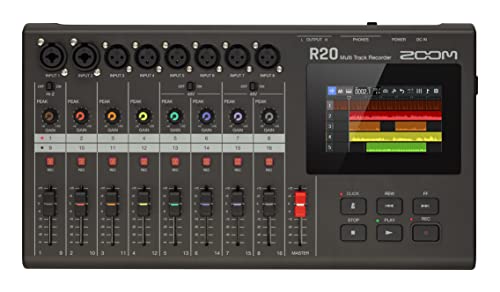
- Up to 16 tracks and eight simultaneous tracks
- Six XLR plus two XLR/TRS combo inputs
- Computer-free touchscreen editing and mixing
Best For: Musicians building complete projects without a computer
Best Pocket Songwriting Recorder

- Eight-track portable recording format
- Built-in stereo microphones and WAV recording
- Four AA batteries provide portable operation
Best For: Songwriters capturing ideas away from a studio
Best Portable Touchscreen Recorder

- Eight tracks with touchscreen editing
- Two combo inputs with phantom power and Hi-Z
- Drum loops, synths, effects, and five-hour battery use
Best For: Mobile songwriting and portable music production
Classic Portable Studio

- Eight playback tracks and 64 V-Tracks
- Built-in effects, drum machine, and stereo mic
- Battery-powered with CompactFlash recording
Best For: Mobile guitarists and songwriters building layered demos
Clip-Free Layering Pick

- 32-bit-float recording helps prevent clipping
- Four-track recording with bounce and undo
- Two combo inputs, rhythms, and USB interface
Best For: Portable layering, rehearsals, and quick instrument or vocal capture
Multi-Mode Practice Recorder
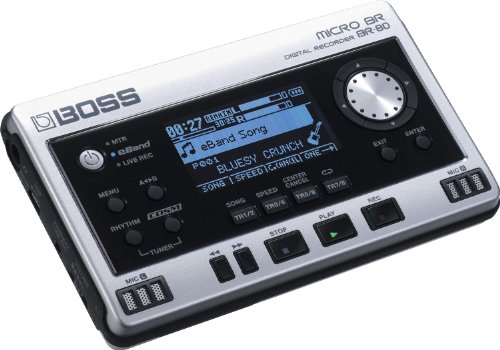
- MTR, eBand, and Live Recorder modes
- Eight playback tracks and 64 V-Tracks
- Built-in mic, effects, rhythms, and USB interface
Best For: Guitarists combining recording, practice, and live capture
Best Portable Multitrack Recorder

- Records 12 tracks at up to 24-bit/96kHz
- Four headphone outputs with three monitor mixes
- Battery-powered SD and USB recording
Best For: Bands, podcasters, and mobile recording setups
Best Large-Format Multitrack Recorder

- Records 14 tracks at up to 24-bit/96kHz
- 32-bit float master for clip-free mixing
- 12 channels with physical faders and personal monitoring
Best For: Musicians and live sessions needing expanded control
Best Clip-Free Multitrack Recorder

- Records 10 tracks plus stereo mix to 1TB SD cards
- 32-bit float capture avoids manual gain setting
- Battery-powered with MIDI, USB, and sound pads
Best For: Mobile musicians, streamers, and compact live setups
Best All-in-One Mixer Recorder – Tascam Model 12
The Tascam Model 12 is a strong choice among multitrack recorders for musicians who want a mixer-style workflow alongside computer-based recording. It provides 12 channels, a 12-in/10-out USB interface, onboard MIDI, and hands-on mixing features.
Best For: Home studios, bands, and creators who want a mixer, recorder, USB interface, and DAW controller in one unit.
Pros:
- 12 channels with 12-in/10-out USB connectivity
- Built-in one-knob compressors and three-band EQ on input modules
- Dual headphone outputs with individual volume and source selection
- Includes click output with tap tempo and onboard MIDI functionality
Cons:
- At 13.3 pounds, it is less portable than compact tabletop recorders
- Requires corded power
The Model 12 is best suited to a permanent or semi-permanent setup where hands-on control matters. Its broad connectivity and mixer-focused design make it a versatile centerpiece for multitrack recording, though its size and corded operation limit grab-and-go use.
Best Touchscreen Multitrack Recorder – Zoom R20
The Zoom R20 makes multitrack recording approachable without requiring a computer. Its touchscreen workflow supports recording, editing, and mixing directly on the device, while six XLR inputs and two XLR/TRS combo inputs support larger recording sessions.
Best For: Musicians who want computer-free project recording with touchscreen editing, onboard effects, and rhythm tools.
Pros:
- Records up to 16 tracks, with up to eight tracks simultaneously
- Six XLR inputs plus two XLR/TRS combo inputs
- Touchscreen supports drag, drop, swipe, and pinch editing
- Includes 150 rhythm patterns and an 18-sound onboard synth
Cons:
- Maximum sample rate is 44.1 kHz
- Its feature set may be more than needed for simple songwriting capture
For musicians who prefer a self-contained workflow, the R20 combines substantial input capacity with accessible touch controls. It is especially appealing for demos and full project sketches when editing and mixing away from a computer are priorities.
Best Pocket Songwriting Recorder – Tascam DP-008EX
The Tascam DP-008EX is a compact eight-track option for songwriting and portable multitrack recording. Built-in stereo microphones, WAV recording, a 2GB SD card, and AA battery operation make it practical for capturing ideas without a larger studio setup.
Best For: Songwriters who want a lightweight recorder with built-in microphones and battery-powered operation.
Pros:
- Eight-track digital pocketstudio format
- Built-in stereo microphones for quick idea capture
- Runs on four AA batteries and offers up to 6.5 hours of digital recording time
- Includes a 2GB SD card and USB cable
Cons:
- Uses a small 2-inch screen
- 3.5 mm headphone connection may be less convenient for some setups
- More limited in track count than the 12- and 16-track options here
The DP-008EX favors portability and simplicity over extensive connectivity. Its built-in microphones and battery operation make it a convenient songwriting companion, particularly for recording ideas away from a full studio.
Best Portable Touchscreen Recorder – Zoom R12
The Zoom R12 is a portable multitrack recorder built around an eight-track touchscreen workflow. It combines onboard editing, effects, drum loops, USB-C DAW control, and two XLR/TRS combo inputs in a compact battery-powered design.
Best For: Musicians who want to record, edit, and develop song ideas on the go with built-in rhythms and effects.
Pros:
- Eight-track recording with a full-color touchscreen
- Both inputs provide 48V phantom power; input 1 also offers Hi-Z
- Includes 150 drum loops and 18 FM synth instruments
- Runs for up to five hours on four AA batteries
Cons:
- Only two XLR/TRS combo inputs are provided
- USB-C operation is a stereo audio interface and DAW control surface rather than a multichannel interface
The R12 is a flexible sketchpad for musicians who value mobility and hands-on editing. Its limited input count makes it less suited to larger ensemble tracking, but the touchscreen, battery operation, rhythms, and synth sounds support fast idea development.
Classic Portable Studio – Boss BR-600
The Boss BR-600 is a compact choice for musicians seeking multitrack recorders with traditional track-based production features. It offers eight simultaneous playback tracks, 64 V-Tracks, built-in effects, and a drum machine, while its stereo microphone and battery operation support recording away from a desk.
Best For: Guitarists and songwriters who want an all-in-one, battery-powered recorder with effects and built-in rhythms.
Pros:
- Eight simultaneous playback tracks and 64 V-Tracks provide flexible project storage.
- Built-in guitar, vocal, and pitch-correction effects support polished demos.
- Built-in stereo microphone, drum machine, and battery power enable mobile recording.
- Includes a 128MB CompactFlash card for recording media.
Cons:
- The included 128MB card offers less storage than the larger capacities listed for newer recorders.
- Requires four 9V batteries for battery-powered use.
- Its 3.5mm headphone connection may be less convenient for users needing other headphone formats.
The BR-600 is a feature-rich older-style multitrack workstation for hands-on songwriting and portable demos. Choose it if dedicated effects, V-Tracks, and a built-in rhythm section matter more than modern 32-bit-float recording.
Clip-Free Layering Pick – Zoom R4
The Zoom R4 is one of the most flexible multitrack recorders for quick layering and portable sessions. Its 32-bit-float recording is designed to avoid clipping without manual gain adjustments, while two XLR/TS combo inputs, built-in effects, rhythms, and USB connectivity cover a wide range of recording setups.
Best For: Musicians who want simple, clip-resistant recording, track bouncing, and battery-powered use with microphones or instruments.
Pros:
- Records up to four tracks and uses stereo bouncing to make room for additional layers.
- 32-bit-float recording helps avoid clipping without requiring gain adjustments.
- Two XLR/TS combo inputs accept microphones, instruments, keyboards, and other sources.
- Works as a 2-in/2-out USB audio interface and includes more than 80 rhythm patterns.
Cons:
- Four-track recording is less expansive than recorders offering eight simultaneous playback tracks.
- Battery operation requires four AA batteries.
- Its feature set may be more than needed for simple stereo recording.
The R4 stands out for modern, low-stress capture and repeatable layering workflows. It is a strong fit when clip resistance, portable power, and computer or smartphone connectivity are higher priorities than a large number of simultaneous tracks.
Multi-Mode Practice Recorder – Boss BR-80
The Boss BR-80 combines multitrack recording with practice and live-capture features. It provides MTR, eBand, and Live Recorder modes, eight simultaneous playback tracks, 64 V-Tracks, built-in effects and rhythms, and SD/SDHC support up to 32GB, making it useful beyond standard studio-style recording.
Best For: Guitarists who want one portable device for multitrack demos, play-along practice, backing patterns, and live stereo recording.
Pros:
- Three operating modes support multitrack, eBand practice, and live recording.
- Offers eight simultaneous playback tracks and 64 V-Tracks for layered projects.
- Built-in stereo condenser microphone enables quick audio capture.
- Includes COSM amps, effects, backing patterns, and USB audio-interface functionality.
Cons:
- SD/SDHC recording media is not included.
- Requires a single AAA battery for battery-powered operation.
- The listed warranty is 90 days.
The BR-80 is a versatile option for players who want recording and practice tools in the same compact unit. Its eBand mode, backing library, and amp modeling make it particularly appealing to guitarists who need more than a basic multitrack recorder.
Best Portable Multitrack Recorder – Zoom LiveTrak L-8
The Zoom LiveTrak L-8 is a practical choice for musicians and podcasters who need multitrack recorders with mixing controls in a portable format. It records 12 tracks simultaneously at up to 24-bit/96kHz to an SD card and can record to a computer at the same time.
Best For: Bands, podcasters, and mobile recording setups needing multiple headphone mixes.
Pros:
- Records 12 tracks simultaneously at 24-bit/96kHz.
- Six preamps provide up to +54dB of gain, with EQ and effects on every channel.
- Four headphone outputs support three independent monitor mixes.
- Battery-powered design records to SD card and computer simultaneously.
Cons:
- Offers eight channels, fewer than the L12next.
- Its listed noise floor is higher than the L12next’s specification.
The L-8 balances useful live-mixing features, headphone flexibility, and portability. It is especially appealing when battery operation and simultaneous SD-card and USB recording matter.
Best Large-Format Multitrack Recorder – Zoom LiveTrak L12next
The Zoom LiveTrak L12next combines a 12-channel digital mixer with multitrack recorder functionality for musicians who need hands-on control. It records up to 14 tracks at 24-bit/96kHz and mixes them in 32-bit float for a clip-free master.
Best For: Musicians and live-session users who want extensive channel capacity, physical faders, and personal monitoring.
Pros:
- Records up to 14 tracks at 24-bit/96kHz.
- 32-bit float mixing helps produce a clip-free master.
- Studio-grade preamps offer up to +70dB of gain, Hi-Z, PAD, and +48V phantom power.
- 60mm faders, scenes, effects, and personal monitoring support hands-on live control.
Cons:
- Requires corded electric power rather than battery operation.
- The optional BTA-1 adapter is required for wireless app control.
With its higher track count and physical channel controls, the L12next is suited to larger recording and performance setups. Choose it when control and input flexibility take priority over maximum portability.
Best Clip-Free Multitrack Recorder – Zoom LiveTrak L6
The Zoom LiveTrak L6 is a compact option among multitrack recorders, offering 10 discrete tracks plus a stereo mix on SD cards up to 1TB. Its 32-bit float workflow is designed to avoid clipping without requiring manual gain setting.
Best For: Mobile musicians, streamers, podcasters, and performers who need a compact battery-powered recorder.
Pros:
- Records 10 discrete tracks plus a stereo mix to SD cards up to 1TB.
- 32-bit float recording provides clip-free capture without setting gain.
- Records to an SD card and computer simultaneously while functioning as a USB audio interface.
- Includes MIDI, sound pads, EQ, AUX sends, pan, and onboard effects.
Cons:
- Has fewer channels than the L12next.
- Provides two combo inputs plus four stereo inputs rather than six combo inputs.
The L6 stands out for portable, low-fuss recording and broad connectivity in a small enclosure. Its clip-free 32-bit float operation is particularly useful for unpredictable live levels.
How We Picked the Best Multitrack Recorders
We evaluated these recorders according to the features that most affect real-world recording: simultaneous input count, available tracks, sound quality, ease of use, portability, onboard editing, effects, monitoring options, and computer connectivity. We also considered whether each model is best suited to songwriting, live band recording, podcasting, rehearsals, or standalone production.
Because a higher track count does not automatically make a recorder better, we included compact two-input models alongside larger mixer-style systems. The right choice depends on how many sources you record at once and how much hands-on control you want.
Quick Comparison
| Best For | What to Look For |
|---|---|
| Solo songwriters | Built-in microphones, portability, overdubbing, and simple editing |
| Full-band sessions | Multiple microphone preamps, headphone outputs, and enough simultaneous tracks |
| Live recording | Mixer controls, scene recall, reliable monitoring, and strong input flexibility |
| Podcasters and streamers | Easy routing, sound pads, multiple headphone outputs, and USB audio support |
| Computer-free production | Touchscreen or physical controls, onboard effects, and built-in editing |
Key Buying Factors for Multitrack Recorders
Track Count and Simultaneous Inputs
Track count describes how many recorded parts a device can manage, while simultaneous inputs determine how many microphones or instruments you can capture at once. A recorder with many tracks but only two inputs is ideal for overdubbing, not necessarily for recording a full band live.
Portability and Power
Battery operation and compact designs are valuable for field recording, rehearsals, and songwriting away from a desk. Larger mixer-recorders usually offer more connections and hands-on control but take up more space and may be better suited to a studio or permanent setup.
Workflow and Editing
Touchscreens can speed up navigation, while physical faders and dedicated buttons make live mixing more immediate. Check whether the recorder supports punch-in recording, bouncing, effects, scene storage, and non-destructive editing if you plan to finish songs without a computer.
Connectivity and Monitoring
USB audio functionality lets a recorder work as an interface with a computer. Multiple headphone outputs are especially useful for bands, guests, and podcast teams. Also check the balance of XLR, combo, stereo, and line-level inputs for your equipment.
Audio Quality and Headroom
Higher-resolution recording and 32-bit float features can provide extra protection against clipping in compatible workflows, but microphone quality, gain staging, room acoustics, and monitoring still have a major effect on the final result.
Who Should Buy Which Multitrack Recorders?
Choose a compact portable recorder if you mainly write songs, capture ideas, or overdub one or two sources at a time. Models with built-in microphones and battery power are convenient for quick sessions.
Choose a larger standalone recorder if you want a computer-free songwriting setup with more tracks, onboard editing, effects, or a touchscreen workflow.
Choose a mixer-recorder for live bands, rehearsals, small venues, podcasts, or production setups that need hands-on mixing and several inputs. These models are also a strong fit when you want recording and monitoring in one central device.
Choose a USB-capable model if you want flexibility between standalone recording and computer-based production. This hybrid approach lets you sketch ideas without a computer and later refine tracks in a DAW.